Locating and establishing a resilient battery supply chain presents many challenges. You’ll face raw material shortages due to limited deposits and environmental restrictions that slow mining efforts. Infrastructure development requires significant investment and managing complex regulations. Environmental and regulatory hurdles can delay projects, while workforce shortages in specialized skills add further obstacles. Geopolitical factors like trade policies and tariffs also influence supply chain stability. If you want to understand how these challenges can be addressed, keep exploring the key issues involved.
Key Takeaways
- Limited local mineral deposits and environmental restrictions hinder raw material sourcing.
- Developing specialized processing infrastructure requires significant capital and regulatory approvals.
- Ensuring environmental compliance complicates both extraction and infrastructure development.
- Building a skilled workforce demands long-term training and technology transfer efforts.
- Trade policies, tariffs, and geopolitical factors impact supply chain stability and project viability.
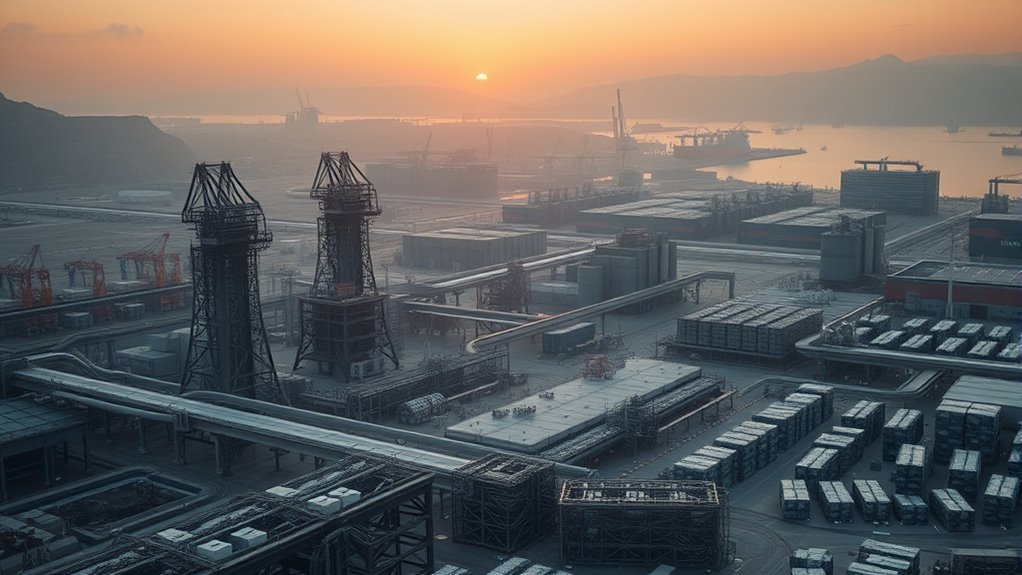
As the demand for electric vehicles and renewable energy storage grows, companies are increasingly trying to localize their battery supply chains. This shift aims to reduce dependency on distant suppliers, cut costs, and improve supply security. However, establishing a local supply chain isn’t straightforward. You face significant challenges, especially in raw material sourcing and infrastructure development. Securing the necessary raw materials—like lithium, cobalt, and nickel—locally can be difficult due to limited deposits, environmental restrictions, and regulatory hurdles. You might find that existing mineral resources in your region are insufficient or that mining operations face opposition from local communities or environmental groups. Developing a stable, ethical, and cost-effective supply of these critical materials requires long-term planning, investment, and often, innovative extraction methods. You may need to establish new mining projects, which can take years to approve and develop, delaying your entire supply chain localization effort.
Localizing battery supply chains faces hurdles like limited mineral deposits, environmental restrictions, and lengthy approval processes.
Infrastructure development presents another major hurdle. You need specialized facilities for processing raw materials into battery-grade components, which demands significant capital and technical expertise. Building such infrastructure involves not only constructing manufacturing plants but also upgrading transportation networks to guarantee smooth, reliable logistics. Ports, railways, and roads must be capable of handling heavy, hazardous materials safely and efficiently. If your region lacks these facilities, you’ll need to collaborate with local governments or private investors to develop them from scratch. This process can be slow and costly, and regulatory approvals may add further delays. Additionally, you must verify that your infrastructure aligns with environmental standards, which can complicate development plans. Ensuring environmental compliance is therefore a crucial aspect of infrastructure development.
Furthermore, you face the challenge of creating a skilled workforce capable of supporting complex battery manufacturing processes. Training programs, partnerships with educational institutions, and technology transfer become essential to build capacity locally. Without a qualified labor force, even the best infrastructure and raw material sourcing strategies fall short. You also need to steer geopolitical considerations, trade policies, and potential tariffs that could affect your supply chain’s stability and costs.
In essence, localizing your battery supply chain demands a comprehensive approach, balancing the immediate need for raw materials with long-term infrastructure and workforce development. While enticing in theory—reducing supply disruptions and fostering regional economic growth—the reality involves navigating a web of technical, environmental, and political challenges. Success hinges on your ability to coordinate these elements effectively and commit to a strategic, multi-year effort.
Frequently Asked Questions
How Do Geopolitical Tensions Affect Battery Supply Chain Localization?
Geopolitical tensions can disrupt your efforts to localize the battery supply chain by increasing trade barriers, making it harder to access key materials. These tensions may lead to resource scarcity, forcing you to seek alternative sources or face delays. You might also encounter tariffs or restrictions that raise costs, complicating your supply chain stability. Staying alert to geopolitical shifts helps you adapt quickly and maintain a resilient, localized battery supply network.
What Role Does Government Policy Play in Localizing Battery Production?
Did you know that government policies can boost local battery production by up to 40%? Policy incentives and clear regulatory frameworks play a pivotal role in this. They encourage investments, reduce costs, and streamline approvals. By establishing supportive policies, you can attract manufacturers and suppliers to your region, making battery supply chains more resilient and localized. Strong government commitment ultimately drives innovation and helps meet the growing demand for sustainable energy solutions.
How Does Technological Innovation Influence Localization Strategies?
Technological innovation drives your localization strategies by enabling smart manufacturing and material innovation. With smart manufacturing, you can optimize production processes, reduce costs, and improve quality locally. Material innovation allows you to develop advanced, sustainable battery components that meet regional demands. By embracing these innovations, you can establish more resilient supply chains, cut dependency on imports, and stay competitive in the growing battery market.
What Are the Environmental Impacts of Localizing Battery Supply Chains?
You may notice that localizing battery supply chains can reduce environmental footprint by cutting transportation emissions. However, it can also lead to increased resource depletion locally, as more raw materials are needed for production. While shorter supply routes help the environment, you’ll want to take into account the overall impact on ecosystems and resource sustainability. Balancing these factors is essential for minimizing environmental harm while supporting local industry growth.
How Can Small Companies Compete in Localized Battery Markets?
Think of the market as a crowded garden; to stand out, you need the right seeds. You can compete in localized battery markets by focusing on targeted market entry strategies and forging strong supplier partnerships. By differentiating your offerings and building relationships, you’ll grow faster and more resilient. Small companies can carve their niche, adapt quickly, and build loyalty, turning challenges into opportunities for sustainable growth.
Conclusion
As you navigate the maze of battery supply chain localization, remember it’s like forging a new path through uncharted terrain. Every obstacle you face echoes the ancient explorers’ challenges, yet with resilience and innovation, you can carve out a route to success. Embrace the journey with the spirit of the pioneers, knowing that each hurdle overcome lights the way toward a future where your supply chain stands strong, resilient, and truly localized.