To prepare for the future of the battery industry, you’ll need strong technical skills in operating advanced equipment, understanding battery chemistry, and ensuring quality control. Embrace continuous learning in automation, robotics, and data analysis to stay ahead of technological shifts. Soft skills like teamwork, communication, and adaptability are also essential. As the industry evolves, staying updated on safety standards and sustainability practices will boost your career. Keep exploring, and you’ll discover even more ways to thrive in this dynamic field.
Key Takeaways
- Proficiency in advanced manufacturing technologies such as automation, robotics, and data analytics is essential.
- Strong understanding of battery chemistry, chemical processes, and quality control improves manufacturing outcomes.
- Continuous learning in safety, environmental regulations, and sustainability ensures compliance and industry relevance.
- Effective communication, teamwork, and adaptability are vital soft skills for a collaborative work environment.
- Ongoing professional development prepares workers for emerging roles and drives innovation within the industry.
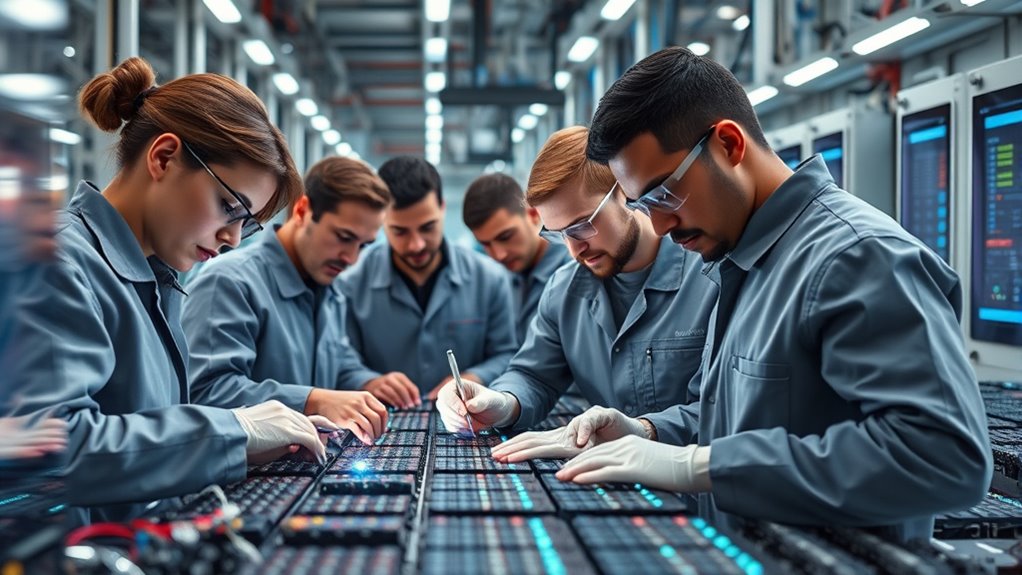
The battery industry is rapidly expanding, creating a surge in demand for skilled workers. As the need for advanced energy storage solutions grows, so does the importance of specialized talent in battery manufacturing. You’ll find that companies are increasingly looking for individuals who can operate sophisticated equipment, understand complex chemical processes, and guarantee quality control throughout the production line. To meet these demands, workforce training has become a critical component in preparing the next generation of battery industry professionals. It’s not just about knowing how to assemble components anymore; it’s about mastering new technologies, safety protocols, and efficiency practices that keep production both safe and cost-effective.
In battery manufacturing, your skills need to evolve alongside technological advancements. Modern factories rely heavily on automation, robotics, and data analytics to optimize production. This means you must be comfortable working with high-tech machinery and interpreting data to troubleshoot issues quickly. Workforce training programs are designed to equip you with these skills, often combining hands-on experience with classroom learning. These programs emphasize understanding battery chemistry, manufacturing processes, and quality assurance measures, which are essential to maintaining high standards in product output. By actively participating in training, you position yourself as a valuable asset who can adapt to new methods and contribute to innovation within the industry.
As demand increases, employers are investing heavily in training initiatives to bridge skill gaps. You should seek out opportunities that focus on skill development in areas like safety procedures, environmental compliance, and sustainable manufacturing practices. These are increasingly important as the industry shifts toward greener energy solutions and stricter regulations. Workforce training isn’t a one-time event; it’s a continuous process that keeps you updated on the latest breakthroughs and industry standards. Staying engaged with ongoing education ensures you stay relevant and competitive, opening doors to new roles and responsibilities as the industry evolves.
Moreover, your ability to work effectively within a team and communicate technical information clearly will set you apart. Collaboration is essential in battery manufacturing, especially when integrating new technologies or troubleshooting complex issues. The industry values workers who can learn quickly, adapt to changes, and contribute to a culture of safety and efficiency. As the industry grows, so does the need for skilled professionals who understand the intricacies of battery manufacturing and have invested in workforce training. By honing your skills now, you’ll be better positioned to thrive in this dynamic field and help drive the future of energy storage solutions. Recognizing the importance of skilled workforce development is crucial for staying competitive.
Frequently Asked Questions
What Emerging Technologies Will Impact Battery Manufacturing Skills?
Emerging technologies like battery material innovation and recycling technology advancements will critically impact your battery manufacturing skills. You’ll need to adapt to new materials that improve performance and sustainability, while mastering recycling techniques to recover valuable components efficiently. Staying updated on these innovations helps you maintain competitiveness, guarantees safety, and meets environmental standards. Developing expertise in these areas will be essential for your success in the evolving battery industry landscape.
How Can Workers Transition From Traditional Manufacturing to Battery Industry Roles?
To shift from traditional manufacturing to battery industry roles, you should participate in retraining programs that focus on new technologies and skills. Leverage industry partnerships, which often offer specialized training and apprenticeships, to gain relevant experience. Staying proactive in learning and networking helps you adapt quickly, making your skills more valuable in this evolving sector. Embrace continuous education to smoothly shift into the battery industry workforce.
What Certifications Are Most Valuable for Future Battery Industry Jobs?
Think of certifications as your toolkit in the battery industry’s evolving landscape. Earning credentials in battery recycling shows your commitment to sustainability, while safety protocols certifications prove you prioritize secure work environments. These certifications are like a sturdy bridge, helping you cross into future roles confidently. Stay current with industry standards, and you’ll stand out as a skilled, reliable professional prepared for tomorrow’s battery industry challenges.
How Will Automation Influence Skill Requirements in the Battery Sector?
Automation impact in the battery sector means you’ll need to adapt your skills to stay relevant. As automation takes over repetitive tasks, you’ll focus more on technical expertise, troubleshooting, and maintaining automated systems. Skill adaptation is essential; you should learn to work alongside robots and advanced machinery. Embracing continuous learning guarantees you can handle new technologies, making you more valuable and prepared for evolving roles in the industry.
What Soft Skills Are Critical Alongside Technical Expertise in This Industry?
You need strong soft skills like team collaboration and problem solving to succeed in the battery industry. As automation advances, working well with others becomes essential for innovation and efficiency. Your ability to communicate effectively, adapt to new challenges, and contribute to team efforts will set you apart. Problem solving helps you tackle complex issues quickly, ensuring smooth operations and continuous improvement in this rapidly evolving sector.
Conclusion
If you don’t adapt your skills now, you’ll be left in the dust as the battery industry revolutionizes everything. The future demands mastery in cutting-edge technology, innovation, and sustainability—skills that will make you unstoppable. Don’t just keep up; lead the charge or risk becoming obsolete in a world powered by batteries you barely understand. Get ready to propel your career into the stratosphere—because the future of energy depends on YOU!