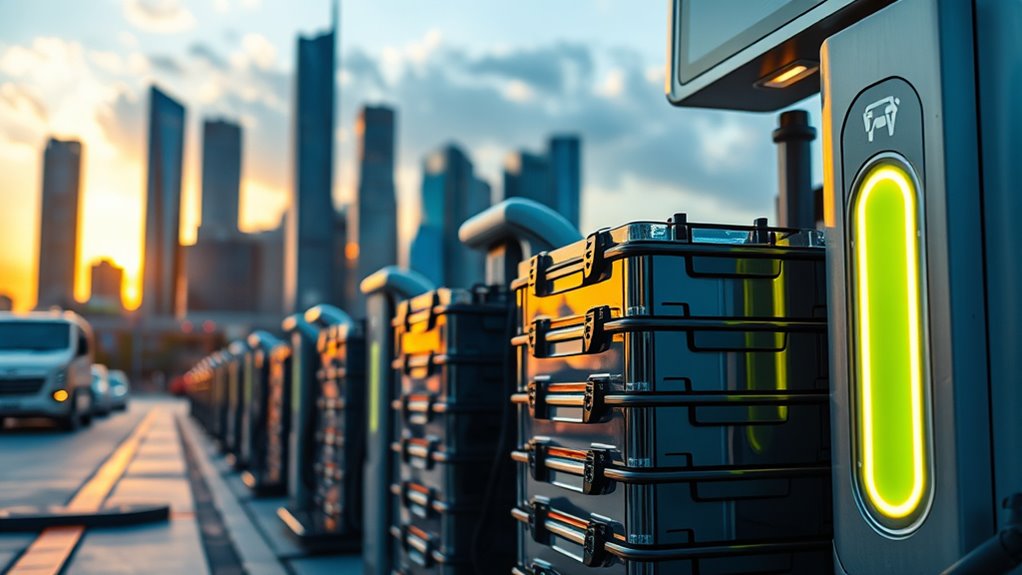

As EV adoption accelerates worldwide, you’ll see a surge in battery demand, which can push up prices and strain supply chains. Raw materials may become scarcer and more expensive, making battery costs climb. Recycling and new technologies will help mitigate some pressures, but supply chain complexities will grow. To understand how these factors will shape the market and what to expect next, keep exploring how industry trends evolve and influence prices.
Key Takeaways
- Increasing EV adoption significantly boosts global battery demand, driving up raw material requirements.
- Elevated raw material demand may lead to higher battery prices due to supply constraints.
- Recycling and secondary markets will become crucial for meeting demand sustainably and controlling costs.
- Supply chain complexities and raw material scarcity could cause price volatility in battery markets.
- Technological innovations and circular economy practices will influence future battery supply stability and pricing.
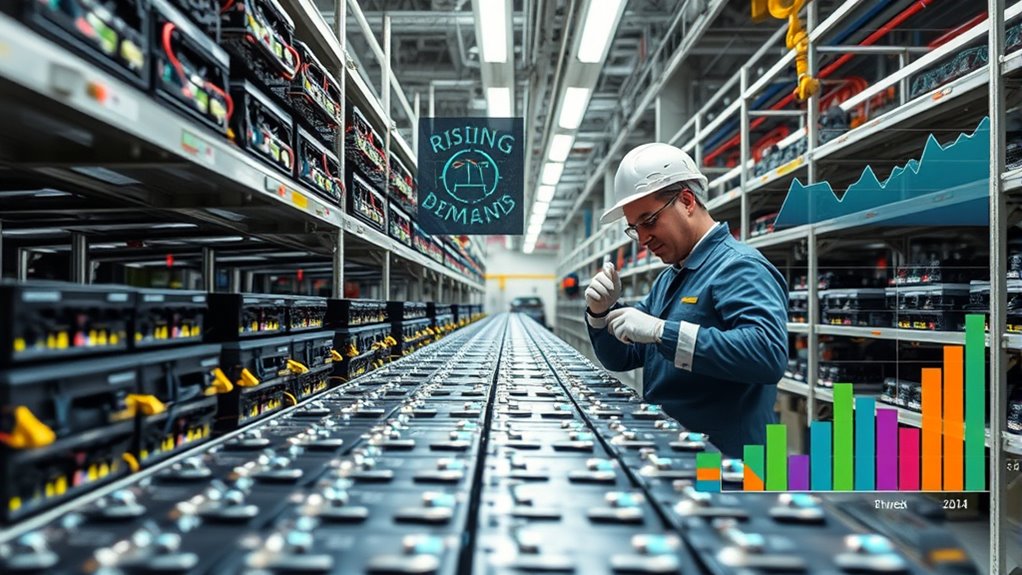
As electric vehicle (EV) adoption accelerates worldwide, the demand for batteries is set to surge dramatically. This rapid growth presents both opportunities and challenges, especially in how we source raw materials and manage battery lifecycle. You’ll find that battery recycling becomes an essential component in meeting future demand, helping to reduce the pressure on raw material sourcing. This process not only cuts costs but also minimizes environmental impacts, addressing concerns about the ecological footprint of raw material extraction. Additionally, advancements in battery technology are expected to improve energy density and lifespan, further supporting sustainable growth in the industry.
As the number of EVs on the road climbs, the strain on raw material sourcing will intensify. You may notice that the supply chain becomes more complex, with increased competition for scarce resources. This could lead to higher raw material prices, which in turn could drive up battery costs. To counter this, the industry is increasingly turning to innovative recycling techniques, which enable you to reclaim a significant portion of the materials needed for new batteries. By improving battery recycling efficiency, manufacturers can lessen their dependence on geopolitically sensitive regions where raw materials are often mined, reducing supply chain vulnerabilities.
The shift toward a circular economy for batteries means you’ll see a future where used EV batteries are not simply discarded but repurposed. This approach extends battery life and creates a secondary market for recycled materials, helping to stabilize prices. As more batteries reach the end of their first lifecycle, recycling becomes a strategic priority, ensuring you have access to the raw materials necessary for manufacturing new batteries without exacerbating environmental concerns. Governments and companies are investing in infrastructure and policies that promote battery recycling, recognizing its importance in balancing supply and demand.
In the face of rising EV adoption, the importance of sustainable raw material sourcing and effective recycling will only grow. You’ll need to stay informed about technological advancements and regulatory changes that can impact supply chains and costs. Battery recycling not only helps meet the increasing demand but also plays a pivotal role in making EVs more affordable and environmentally friendly. As the industry evolves, your role as a consumer or stakeholder will involve supporting innovations that make raw material sourcing more sustainable and recycling more efficient, ensuring the long-term viability of electric mobility.
Frequently Asked Questions
How Will Raw Material Shortages Affect Future Battery Prices?
Raw material shortages will likely drive up future battery prices because raw material scarcity causes supply chain disruptions. As demand for EV batteries increases, limited resources like lithium and cobalt may become more expensive and harder to secure. You might see higher costs pass on to consumers, and manufacturers could face delays. To stay ahead, consider sourcing alternative materials or investing in recycling technologies to mitigate these supply chain disruptions.
What Innovations Could Reduce Battery Manufacturing Costs?
You can reduce battery manufacturing costs through innovations like battery recycling and manufacturing automation. Recycling materials from old batteries decreases reliance on raw materials, cutting costs and environmental impact. Automation streamlines production, enhances precision, and lowers labor expenses. By adopting these technologies, you’ll make battery production more efficient, sustainable, and affordable, helping to meet the growing demand for EV batteries and stabilize prices in the evolving market.
How Might Government Policies Influence EV and Battery Markets?
Government policies like incentives and regulatory standards can markedly influence EV and battery markets. You might see increased adoption as incentives lower costs and standards push manufacturers to innovate. These policies can stimulate demand, encourage investment, and accelerate technological advancements. By offering tax credits or setting stricter emissions rules, governments help create a more favorable environment, ultimately boosting EV sales and driving down battery prices through higher production volumes.
What Are Potential Environmental Impacts of Increased Battery Production?
The early bird catches the worm, but increased battery production raises environmental concerns. You might face recycling challenges as batteries wear out, and mineral extraction for raw materials can harm ecosystems. This surge in demand could lead to resource depletion and pollution if not managed responsibly. It’s essential to innovate in recycling tech and sustainable mining practices to offset these impacts and keep the environment healthy amid rising EV adoption.
How Will Second-Life Batteries Impact Overall Demand and Pricing?
Second-life batteries will help stabilize demand and keep prices in check, as they provide a cost-effective alternative for energy storage. By repurposing used EV batteries, you reduce the need for new battery production, easing supply pressures. This boosts demand stability, preventing sharp price fluctuations. Overall, second-life batteries support a more sustainable and affordable energy ecosystem, making EV adoption more accessible and environmentally friendly.
Conclusion
As electric vehicles accelerate into the future, their batteries will become the heartbeat of a greener world. Your journey toward sustainability depends on this silent revolution, where demand fuels innovation and prices may rise like a rising tide. Embrace this transformative wave, knowing that each charge is a step closer to a cleaner Earth. The road ahead is charged with promise—powering your drive and shaping a brighter, more resilient planet.