
TL;DR

Get backup power and energy gear delivered free with Prime
- Fast, free delivery on millions of items
- Prime Video, Amazon Music and more included
- Member-only deals all year
CRRC Zhuzhou Institute has introduced a new liquid-cooled energy storage system featuring 25% higher energy density and more than 20% smaller site footprint. The system aims to address space constraints and improve efficiency across European markets. The company also showcased its 200 MWh Bohot BESS project in Bulgaria, now operational since April 2026.
CRRC Zhuzhou Institute has unveiled its new 6.X Liquid-Cooled Energy Storage System at The smarter E Europe 2026, showcasing a 25% increase in energy density and over 20% reduction in site footprint. The launch highlights the company’s focus on enhancing efficiency and space utilization for European energy storage projects, with the system supporting diverse applications including utility, grid, and industrial uses.
The 6.X Liquid-Cooled Energy Storage System, introduced at the trade show, delivers three key technical improvements: a 25% increase in energy density, a site footprint reduction of more than 20%, and optimized thermal performance that cuts thermal management energy consumption by over 10%. These advancements directly address the land constraints and strict planning regulations faced by developers across Europe.
CRRC Zhuzhou Institute’s new system features a top-discharge heat-dissipation design with temperature-adaptive control, improving overall efficiency and reducing auxiliary power draw. It is designed for full-scenario application coverage, supporting power-side, grid-side, and commercial/industrial projects, enabling asset owners to maximize returns across various deployment contexts.
The company also highlighted its recent successful deployment of the 200 MWh Bohot BESS project in Bulgaria, which reached full grid connection in April 2026. Built with modular architecture, the project complies with Europe’s stringent interconnection standards and has gained recognition from local authorities, strengthening CRRC Zhuzhou’s position in European markets.
Implications for European Energy Storage Development
The improvements in energy density and site footprint are significant for European energy storage development, where space constraints and regulatory hurdles are common. The new system’s higher efficiency and smaller land requirements could accelerate deployment and reduce costs, making large-scale storage more feasible in densely populated or land-limited areas. Additionally, the successful grid connection of the Bohot project demonstrates CRRC Zhuzhou’s capability to meet Europe’s strict interconnection standards, potentially giving the company a competitive edge in the region.
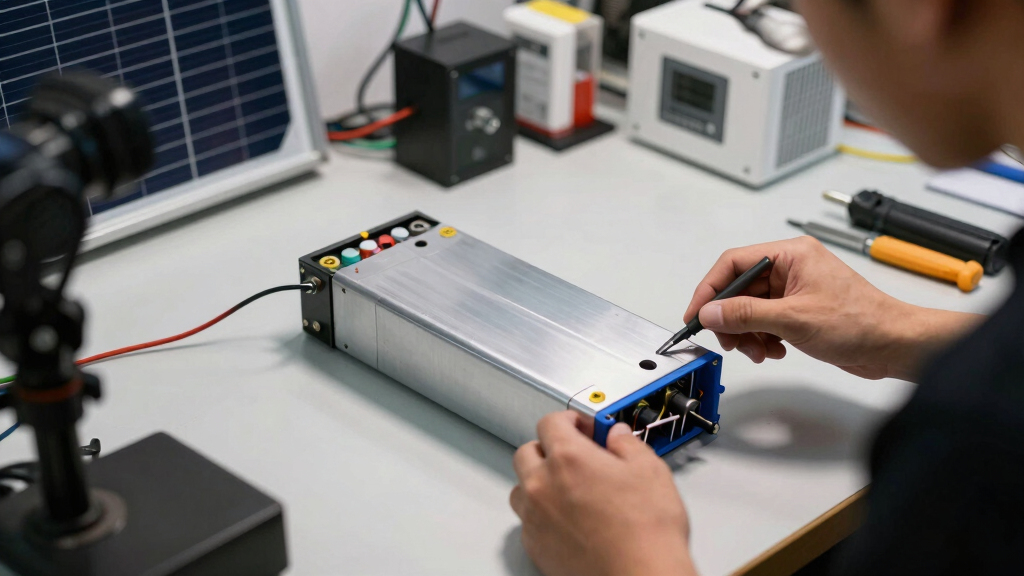
liquid cooled energy storage system
As an affiliate, we earn on qualifying purchases.
As an affiliate, we earn on qualifying purchases.
European Storage Market Challenges and CRRC Zhuzhou’s Response
Europe’s rapid deployment of energy storage is driven by increasing renewable integration, requiring solutions that maximize space efficiency and operational performance. Prior to this, many systems faced limitations in energy density and land use, hindering large-scale projects. CRRC Zhuzhou Institute’s recent innovations respond directly to these challenges, aligning with Europe’s push for more compact and efficient storage technologies. Its deployment of the Bohot BESS project in Bulgaria exemplifies its ability to deliver fully compliant, large-scale systems that meet local standards.
“The 6.X system’s 25% higher energy density and reduced footprint could significantly impact how storage projects are planned and executed across Europe.”
— an anonymous researcher
Remaining Questions on System Performance and Deployment
It is not yet clear how the 6.X system will perform in long-term operational conditions across diverse European environments. Details on cost reductions, installation timelines, and scalability are still emerging. Additionally, the extent to which these technical improvements will influence market adoption remains to be seen.
Upcoming Deployment and Market Adoption Milestones
CRRC Zhuzhou Institute plans to continue expanding its European footprint, with upcoming project deployments expected to showcase the new system’s capabilities. Further performance data and cost analysis will be released in the coming months, providing clearer insights into its market impact. The company also aims to participate in more European tenders, leveraging its recent successes and technological advancements.
Key Questions
How does the new energy storage system improve space efficiency?
The system increases energy density by 25%, allowing more energy to be stored in a smaller footprint, which reduces land use by over 20% compared to previous models.
What are the key technical features of the 6.X system?
It features enhanced thermal management with top-discharge heat dissipation, temperature-adaptive control, and supports multiple application scenarios including utility, grid, and industrial uses.
Has the system been tested or validated for safety?
Yes, the system’s safety has been validated through large-scale fire testing and six-tier extreme-safety validation under UL 9540A:2026 and NFPA 855:2026 standards.
What is the significance of the Bulgarian Bohot BESS project?
The project, with 200 MWh capacity, is fully operational since April 2026, demonstrating CRRC Zhuzhou’s ability to deliver large, compliant systems that meet European standards.
What are the next steps for CRRC Zhuzhou’s European expansion?
The company will focus on deploying more projects using the new system, gathering operational data, and participating in regional tenders to expand its market share.
Source: PV Magazine
Halloween Picks
halloween
As an affiliate, we earn on qualifying purchases.