
TL;DR

Get backup power and energy gear delivered free with Prime
- Fast, free delivery on millions of items
- Prime Video, Amazon Music and more included
- Member-only deals all year
A solar backup power station stores electricity in a rechargeable battery and supplies it through an inverter, but the station may not include solar panels. Choose capacity for how long your devices need to run and continuous plus surge output for what they draw; real runtime and solar charging speed are lower and less steady than simple ratings suggest.
A refrigerator can keep humming through an outage while your phone charger goes dark—but only if your backup battery can handle both the energy demand and the starting surge. A solar backup power station gives you stored electricity without the noise and exhaust of a fuel generator during normal battery use.
This guide explains how to estimate runtime, read inverter and solar-input ratings, and compare battery options. You’ll also see where a portable station helps, where it falls short, and what to check before connecting one to panels or home circuits.
Estimate energy in Wh from device watts and hours, then leave room for inverter losses and changing loads.
Check continuous and surge inverter ratings; capacity alone does not prove an appliance will run.
Treat panel wattage as a rating, not a constant output, and match panel voltage and connectors to the station.
Add panels, expansion batteries, cables, and transfer equipment to the total cost before choosing a system.
Use approved transfer equipment and a licensed professional when connecting backup power to household circuits.
What a solar backup power station actually does
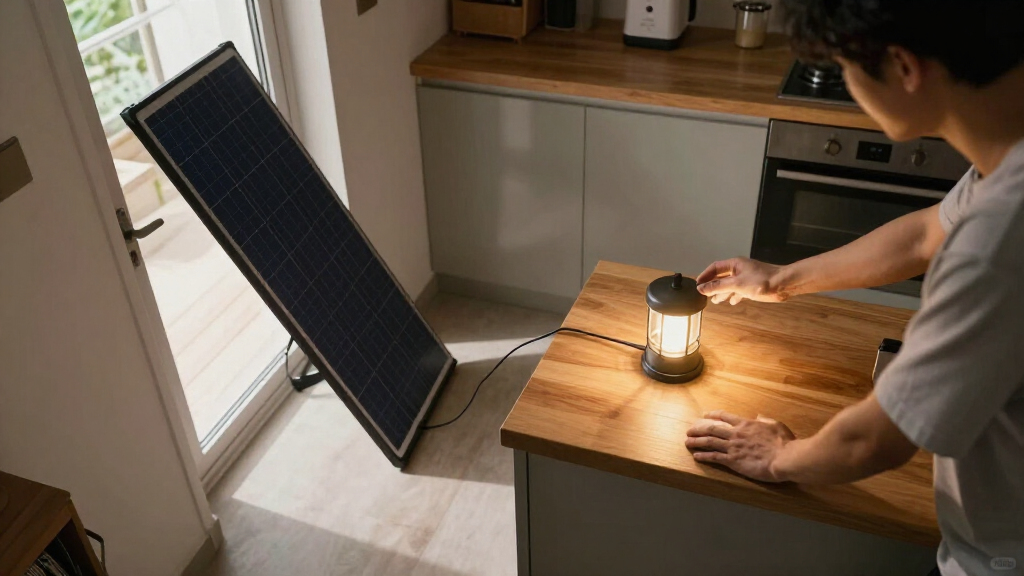
A solar backup power station is a rechargeable battery system that stores electricity and supplies it to devices through an inverter. Most models accept power from a wall outlet, a vehicle socket, or compatible solar panels, and many let you choose among those charging methods.
Think of the battery as a water tank and the inverter as a pump: the tank holds a finite supply, while the pump sets how much power can flow at once. A station’s name can mislead you, though—a product labeled “solar” may be sold without panels. For example, before planning a weekend cabin trip, check whether your kit includes a folding panel or just the battery unit and cables.
The station’s watt-hour (Wh) capacity describes how much energy it stores, while its inverter’s watt rating limits the load it can power at one time. Those numbers answer different questions: how long your devices can run, and whether they can run together.
Estimate runtime before the lights go out
Solar backup power stations can run a device for a rough estimate of usable battery capacity in Wh divided by device power in watts. Real runtime is shorter because inverter conversion, battery reserves, and changing device loads use some of the stored energy.
For example, a 50 W router running for 10 hours needs about 500 Wh before losses. A station with 500 Wh of listed capacity may not provide ten full hours, so leave a margin instead of counting on the label as your usable supply.
For a refrigerator, its running-watt label may not tell the whole story. The compressor cycles on and off, its startup can draw a brief surge, and a warm kitchen can make it work harder. If you can, use measured energy consumption over a typical day; that gives you a better estimate than assuming the fridge runs at its listed wattage every minute.
Quick check: Capacity estimates runtime; inverter output determines whether the station can power the device in the first place.
Match inverter output to the appliances you need
Choose an inverter with enough continuous output for the devices running at the same time and enough surge output for motors that briefly draw extra power when they start. A large battery can still fail to run an appliance if the inverter cannot supply its starting demand.
Imagine plugging in a refrigerator, modem, and a few lights during an evening outage. Add the running wattage of the devices you’ll use together, then check the fridge’s startup needs against the station’s surge rating. High-power appliances such as space heaters, microwaves, and air conditioners can drain the battery quickly even when the inverter can run them.
Some stations offer UPS or EPS-style backup switching, which can keep equipment powered when the grid cuts out. Transfer time and behavior vary by model, though; check the maker’s specifications before relying on one for a computer, medical device, or other critical equipment.
Compare the features that change everyday use
The right station balances energy capacity, inverter output, charging options, and portability. Compare the ratings against the devices and charging conditions you expect, because one impressive number rarely tells the whole story.
| Feature | What to check | Why it matters |
|---|---|---|
| Capacity | Usable Wh or kWh | Estimates how long devices can run |
| Inverter | Continuous and surge watts | Shows which devices can start and run together |
| Solar input | Maximum input, voltage, and connector | Sets which panels can connect and how much power they can accept |
| Battery chemistry | Cycle-life claim, warranty, and test conditions | Helps compare expected service life across models |
| Expansion | Compatible batteries and added cost | May extend runtime, but adds weight and expense |
Many newer stations use lithium iron phosphate (LFP), valued for thermal stability and long cycle life; other lithium-ion chemistries can weigh less for a given energy capacity. Cycle-life claims depend on operating conditions and how the maker defines end of battery life, so check the warranty and the fine print alongside the headline figure.
A camper carrying a unit in a small car may value lighter weight more than expansion capacity. Someone preparing for several days without grid power may prefer a modular station, even if the extra battery costs more and takes up valuable storage space.
Recharge from the sun without overestimating
Solar charging time depends on the station’s solar-input limit and the power your panels actually produce through changing sunlight, shade, heat, and angle. A panel’s advertised wattage is a laboratory rating, not a promise of steady output from dawn to dusk.
As a rough best-case estimate, divide the battery’s Wh by the actual solar watts reaching the station. A 1,000 Wh battery receiving 200 W of solar input would take about five hours in ideal conditions; real charging usually takes longer because output changes and conversion losses add up. Clouds, a chimney’s shadow, or a panel facing away from the sun can cut the flow.
Before you buy, compare the station’s voltage and connector requirements with the panel’s specifications. For example, a panel that seems powerful enough may still be incompatible with the station’s input limits. Also check wall and vehicle charging times, whether the unit can charge while powering devices, and whether panels or cables come in the box.
Set up outage backup with a simple load plan
- List essential devices. Write down what must stay on, such as a modem, phone, lights, or refrigerator, and note each device’s watts or measured energy use.
- Add simultaneous loads. Total the devices you plan to run at the same time, then check that total against the station’s continuous output and any startup surges.
- Estimate the hours you need. Multiply each device’s watts by its intended run time, add the energy estimates, and leave room for losses and changing use.
- Plan a recharge route. Check wall, vehicle, and solar charging times. Confirm that every panel and cable matches the station’s input specifications.
- Read placement and connection instructions. Follow the manual’s guidance on temperature, ventilation, charging, and storage. Never connect a portable station to home wiring through an improvised connection.
This load plan can prevent a familiar mistake: using the battery for a microwave and heater on the first evening, then discovering the router and lights have little energy left. If you want to power household circuits, use compatible transfer equipment and have a licensed professional handle installation; local electrical rules and permits may apply.
Know where a portable station falls short
A portable station suits selected devices and modest backup loads better than an entire home. Whole-home backup calls for enough capacity and output, compatible transfer equipment, and often professional installation; a portable unit by itself usually cannot provide all three.
Battery stations run quietly and produce no exhaust during normal battery operation, but they store a finite amount of energy and need time to recharge. Fuel generators can supply power while fuel is available, but they create noise and exhaust and require careful fuel handling and outdoor operation. The better fit depends on how long you expect an outage to last and what you need to keep running.
For an apartment resident who needs phone charging, lights, and a modem, a portable station may cover the most useful loads. A homeowner who wants to power a furnace circuit or several rooms should first discuss approved equipment and installation with a licensed electrician, rather than relying on a cable improvised from the station to a wall outlet.
Frequently Asked Questions
Do solar panels come with a solar backup power station?
Sometimes, but many stations are sold without panels. Check the package contents and confirm that any panel you buy matches the station’s voltage, connector, and solar-input limits.
How long will a power station run my refrigerator?
Runtime depends on the refrigerator’s average energy use, compressor cycling, startup surge, and room temperature. Use measured energy consumption where possible; the running-watt label alone may not predict how long it will last.
Can a portable power station run a microwave, heater, or air conditioner?
Check the appliance’s running demand against the station’s continuous output and its startup demand against the surge rating. Heaters and air conditioners can also use stored energy quickly, even if the station can power them.
Can I connect a power station to my home’s wiring?
Do not use an improvised connection to household wiring. Powering selected home circuits requires compatible transfer equipment and may require a licensed professional and permits, depending on the installation and local rules.
Can I use a solar power station as a UPS?
Some models offer UPS or EPS-style backup, but transfer time and output behavior differ. Read the manufacturer’s compatibility details before relying on one for sensitive or critical equipment.
Conclusion
Choose a station by starting with the devices you need, the hours they must run, and the inverter output they require. Then confirm your charging plan, panel compatibility, and safe connection method before an outage forces a rushed decision.
A good backup plan leaves you with more than a glowing battery icon: it keeps the right essentials humming while the street outside goes quiet.
Halloween Picks
halloween
As an affiliate, we earn on qualifying purchases.