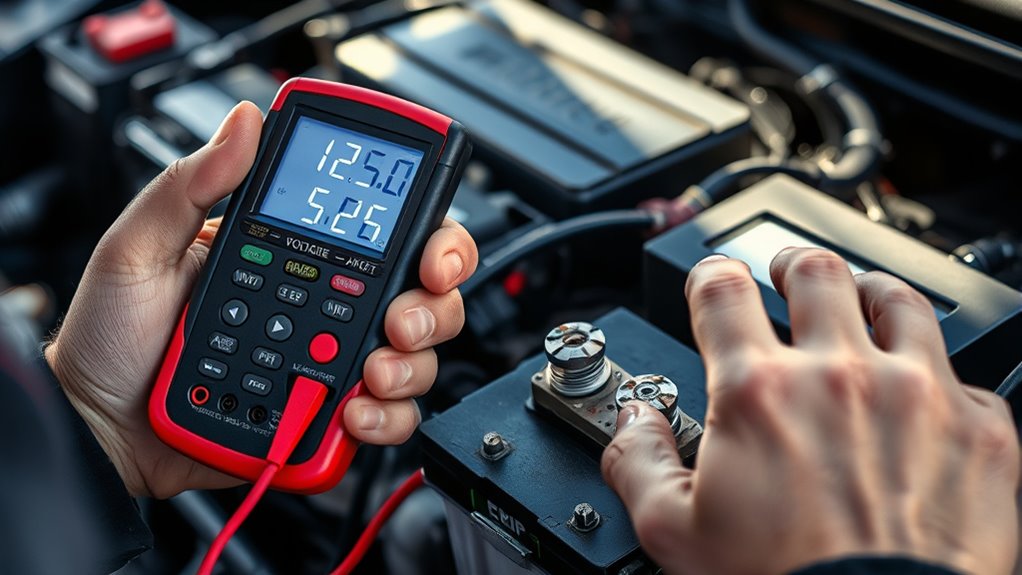

To diagnose car battery failure, start by measuring the voltage with a multimeter—around 12.6 volts indicates a good battery when the engine’s off, while under 12 volts suggests weakness. Check the charging system by testing voltage while the engine runs; a healthy system shows 13.8–14.4 volts. For a thorough assessment, perform a load test to see how the battery performs under stress. Keep exploring to learn how these tests reveal the true condition of your battery.
Key Takeaways
- Use a multimeter to measure voltage across battery terminals with the engine off; 12.6V indicates a healthy battery.
- Check voltage during engine startup; 13.8–14.4V suggests proper charging, while lower voltages may indicate alternator issues.
- Conduct load testing by applying a load while measuring voltage; a significant drop reveals a weak or failing battery.
- Observe dashboard warning lights or flickering headlights as signs of charging system problems.
- Regularly perform voltage and load tests to accurately diagnose battery health and prevent unexpected failures.

A car battery often fails when you least expect it, leaving you stranded or facing unexpected starting issues. One common cause of sudden battery failure is corrosion buildup on the terminals. When battery corrosion occurs, it creates a barrier that hampers the flow of electricity between the battery and the vehicle’s electrical system. This corrosion appears as a white or bluish-green powder on the terminals and can substantially reduce the battery’s ability to supply power, especially during cold weather or when the car is under heavy electrical load. If you notice sluggish starts or dimming headlights, corrosion might be the culprit. Regularly inspecting and cleaning your battery terminals can prevent these issues and improve overall performance.
However, even if your battery looks clean, it may still be failing due to underlying issues with the vehicle’s charging system, particularly the alternator. Alternator issues are a frequent cause of battery failure and can lead to inadequate charging, leaving your battery drained and unable to start the engine. A failing alternator may produce inconsistent voltage output, which can cause your battery to overwork or not charge properly. Symptoms of alternator problems include warning lights on your dashboard, flickering headlights, or a dead battery despite recent charging. To confirm whether your alternator is causing the problem, performing a voltage test is essential. Monitoring the voltage output helps determine if the alternator is functioning correctly and can prevent further damage to your battery.
A voltage test involves using a multimeter to measure the voltage across your battery terminals. With the engine off, a healthy battery should read around 12.6 volts. When you start the engine, this voltage should rise to about 13.8 to 14.4 volts, indicating that the alternator is charging the battery correctly. If the voltage remains below this range or fluctuates substantially, it suggests alternator issues or a poor connection. Performing a load test adds another layer of diagnosis by applying a load to the battery while measuring voltage. If the voltage drops below acceptable levels under load, your battery may be weak or failing, regardless of its appearance.
Frequently Asked Questions
How Often Should I Test My Car Battery?
You should test your car battery at least once a year to guarantee its health and extend its lifespan. If you frequently drive in extreme weather or use lots of electronics, consider testing more often—every six months. Regular testing helps catch issues early, preventing unexpected breakdowns. Keep in mind that a well-maintained battery lasts longer, so monitoring its condition through consistent testing is key to avoiding surprises on the road.
Can a Battery Be Partially Functional?
You might think a partially functional battery is like a car with a misfiring engine — it’s not running at full capacity. Yes, a battery can appear to work but struggle to start your vehicle, often caused by corrosion or a weak charge. To be sure, check for corrosion on terminals and perform an alternator check. Don’t ignore the signs, or you might find yourself stranded when you need it most.
What Are Signs of a Failing Car Battery?
If your car battery shows signs like slow engine start, dim headlights, or electrical issues, it might be failing. Check for battery corrosion on terminals, which hampers charging capacity. A failing battery often has reduced ability to hold a charge, leading to frequent jump-starts or difficulty starting your vehicle. These signs indicate it’s time to test your battery’s health or replace it to guarantee reliable performance.
Do All Cars Require the Same Battery Maintenance?
Not all cars require the same battery maintenance. You should regularly check your battery electrolyte levels if it has removable caps, and keep the battery terminal connections clean and tight to prevent corrosion. Different vehicles may have specific recommendations, so consult your owner’s manual. Maintaining proper electrolyte levels and ensuring secure terminals helps your battery perform efficiently and lasts longer, regardless of your car’s make or model.
How Does Temperature Affect Battery Performance?
Imagine a battery as a tiny engine, where temperature acts like a conductor’s baton, influencing its performance. Cold weather hampers battery chemistry, slowing chemical reactions and reducing capacity, while heat accelerates these reactions, causing faster wear through thermal effects. You’ll notice your battery struggles in extreme temperatures, making it essential to maintain and test it regularly, especially during seasonal shifts, to guarantee reliable starts and ideal performance.
Conclusion
When your car’s starting feels a bit sluggish, think of it like a fading glow in a night sky—subtle signs hinting at a quiet shift. Conducting voltage and load tests acts like a gentle breeze, revealing hidden clouds of trouble before they fully obscure your drive. By paying attention to these signals, you’re guiding your vehicle back to smooth sailing, ensuring your journey remains bright and trouble-free. A little care now keeps your road ahead shining clear.