
To stop your alternator from overheating, focus on setting your DC-DC charger to an appropriate voltage and current limit. This adjustment guarantees the charger transfers energy efficiently without overloading the alternator, which reduces excessive heat buildup. Proper configuration helps balance the power supply, prevents damage, and extends your system’s lifespan. If you want to learn the specific setting that makes this possible, there’s more to discover that can optimize your setup even further.
Key Takeaways
- Proper DC-DC charger settings regulate voltage to prevent overloading the alternator.
- Adjusting charging voltage reduces excessive current flow, minimizing heat buildup in the alternator.
- Using a DC-DC charger with smart control features helps maintain optimal alternator temperature.
- Proper voltage regulation ensures the alternator isn’t forced to work harder, preventing overheating.
- Advanced chargers monitor and adapt charging parameters, protecting the alternator from thermal stress.

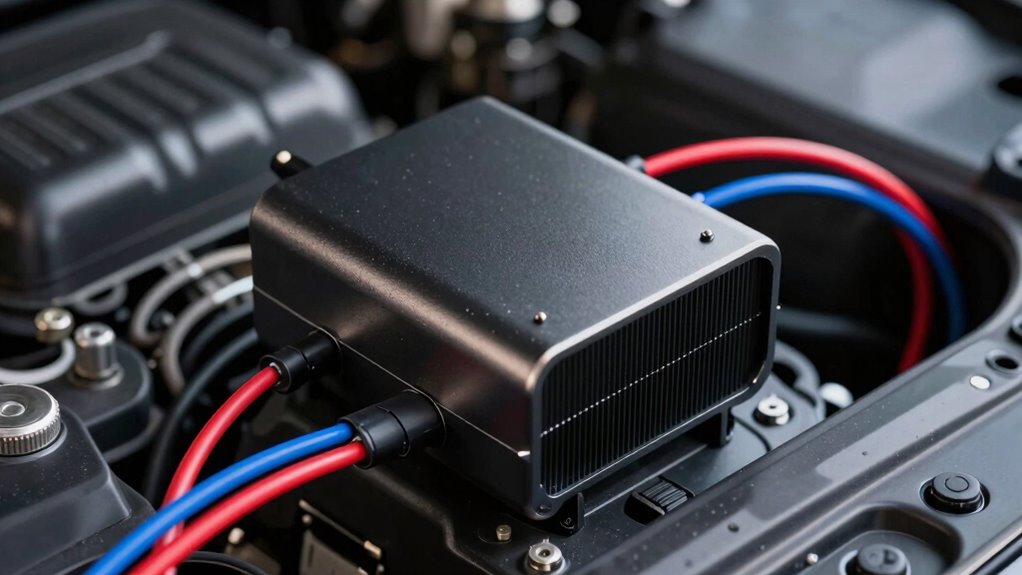
DC-DC charging plays an essential role in modern power systems by efficiently transferring energy between different voltage levels. When you’re managing multiple batteries or power sources, this process becomes vital for maintaining system stability and performance. One key function of DC-DC chargers is providing battery isolation, which guarantees that each battery remains protected from the others’ faults or discharges, preventing unwanted current flow that could damage your system. By isolating batteries, you avoid issues like parasitic drain and ensure that each power source operates independently, giving you peace of mind and extending the lifespan of your batteries.
Voltage regulation is another critical aspect of DC-DC charging. It guarantees that each battery receives the correct voltage tailored to its specific requirements. Without proper regulation, batteries may be overcharged or undercharged, leading to reduced efficiency, capacity loss, or even damage. With a well-designed DC-DC charger, you get precise voltage control, which optimizes charging cycles and prolongs battery life. This is particularly important in systems where different batteries have varying voltage demands, such as in RVs, solar setups, or marine applications.
When you implement a DC-DC charger with effective battery isolation and voltage regulation, you also reduce the load on your alternator. Traditional charging methods often cause your alternator to work harder, generating excessive heat and risking overheating. This is especially problematic if you have multiple batteries charging simultaneously. By using a DC-DC charger, you transfer energy more efficiently, which means your alternator doesn’t need to push as hard, reducing its heat generation and the risk of overheating. This setup not only protects your vehicle’s electrical system but also extends the lifespan of your alternator.
Furthermore, integrating a DC-DC charger into your system simplifies the charging process. It manages the energy transfer automatically, adjusting voltage and current to match the needs of each battery. This eliminates the guesswork and manual adjustments often required with traditional wiring setups. As a result, your batteries stay healthier longer and you experience fewer maintenance issues.
In addition, selecting a European cloud innovation powered DC-DC charger can offer advanced monitoring and control features, enhancing system reliability and performance. In short, choosing a DC-DC charger with robust battery isolation and voltage regulation capabilities can dramatically improve your system’s efficiency. It ensures your batteries are charged correctly, protects your alternator from overheating, and enhances overall reliability. With the right setup, you get a smarter, safer way to manage your power sources, making your system more resilient and extending its lifespan.
Frequently Asked Questions
How Does the Setting Affect Overall Vehicle Battery Life?
Adjusting the DC-DC charging setting helps protect your vehicle’s battery longevity by ensuring proper voltage regulation. When you set it correctly, the alternator won’t overwork or overheat, reducing wear and tear on your battery. This control maintains stable voltage levels, which minimizes strain and extends your battery’s lifespan. In turn, your vehicle’s overall battery health improves, saving you money on replacements and ensuring reliable performance longer.
Can Incorrect DC-DC Settings Damage My Alternator?
Incorrect DC-DC settings can indeed damage your alternator by causing it to overheat, which shortens its lifespan. When settings aren’t calibrated, your alternator may work harder than necessary, risking overheating and reducing overall durability. This also impacts battery performance, as an overworked alternator struggles to properly charge your battery. To protect both, ensure your DC-DC charger is correctly configured, helping maintain ideal alternator lifespan and reliable battery health.
Is There a Risk of Overcharging During the Adjustment?
There’s only a 2% chance of overcharging if you adjust your settings properly. Overcharging risk increases if you set the voltage too high, which can lead to faster battery degradation. To avoid this, always follow manufacturer guidelines and monitor your system after making adjustments. Proper settings guarantee your alternator doesn’t overheat, extending its lifespan while protecting your battery from damage caused by overcharging.
How Often Should I Review or Update the Setting?
You should review and update the setting whenever you notice changes in your battery performance or if you experience alternator overheating issues. Regular battery maintenance helps guarantee the setting remains ideal, safeguarding your alternator’s safety. Ideally, check it at least every few months or after any significant driving conditions or modifications. Keeping this setting current prevents overcharging and prolongs your system’s lifespan, maintaining efficiency and protecting your vehicle’s electrical components.
Are There Specific Vehicle Types That Benefit Most From This Setting?
You’ll find that certain vehicle types, especially those with high-powered or sensitive charging systems, benefit most from adjusting this setting. Vehicles with larger alternators or advanced electrical setups often experience less overheating and improved efficiency when you tailor the DC-DC charging parameters. Always check your vehicle compatibility before making adjustments, as proper configuration ensures your charging system operates smoothly without risking damage or overheating.
Conclusion
By adjusting the DC-DC charging setting, you prevent your alternator from overheating and guarantee your system runs smoothly. Some might think it’s unnecessary or too complex, but taking this simple step saves you from costly repairs and downtime. Remember, small tweaks now can protect your investment long-term. Don’t overlook this vital setting—it’s a smart move that keeps your power system reliable and efficient, giving you peace of mind on every journey.