Conductance testing is essential for ensuring your automotive battery stays reliable and avoids unexpected failures. It quickly checks the battery’s ability to conduct electrical current, helping you spot potential problems early. This simple, non-invasive test prevents breakdowns, extends your battery’s lifespan, and keeps your vehicle performing its best. By understanding your battery’s health, you can plan replacements more accurately and avoid costly repairs. Keep exploring to discover how this testing can safeguard your vehicle’s dependability.

Get backup power and energy gear delivered free with Prime
- Fast, free delivery on millions of items
- Prime Video, Amazon Music and more included
- Member-only deals all year
Key Takeaways
- Conductance testing quickly assesses a battery’s ability to deliver electrical current, aiding early problem detection.
- It provides a reliable, non-invasive measure of remaining battery capacity without discharging the battery.
- Regular testing prevents unexpected failures and extends battery lifespan through timely maintenance.
- Low conductance indicates declining performance, helping identify when a replacement is necessary.
- Overall, conductance testing ensures vehicle reliability, safety, and optimal electrical system performance.
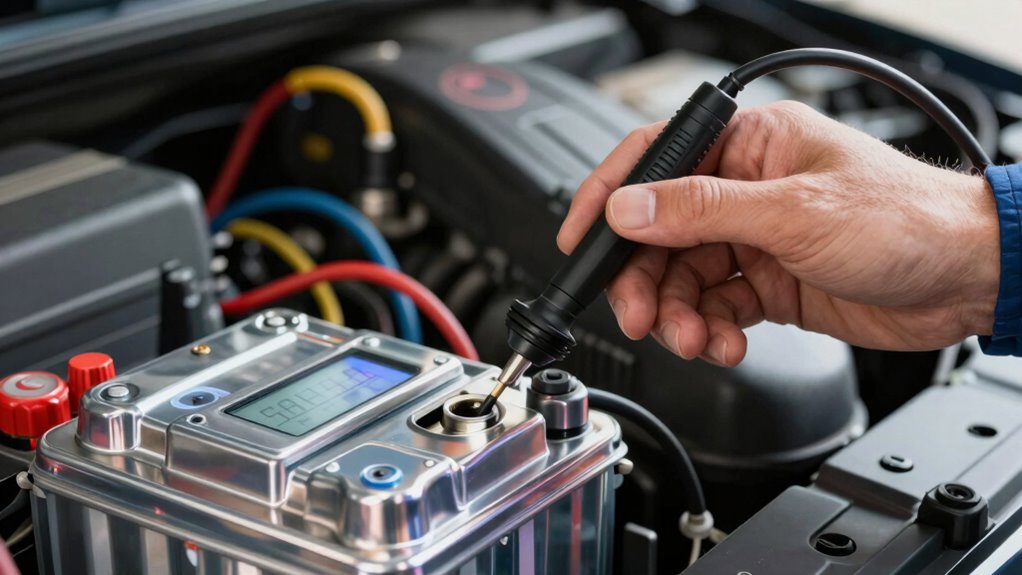
When your car struggles to start or the battery warning light illuminates, it’s a clear sign you need to check your battery’s health. Many drivers overlook this warning, but understanding the importance of conductance testing can save you time and money. Conductance testing is a quick, non-invasive way to assess your battery’s condition by measuring its ability to conduct electrical current. This method offers valuable insights into your battery’s overall health, especially regarding its charging efficiency. If your battery isn’t holding a charge properly, it can lead to starting issues and unexpected failures, so catching problems early is vital.
Conductance testing quickly reveals your battery’s health, helping prevent breakdowns and save you time and money.
Unlike traditional testing methods that may require removing the battery or performing load tests, conductance testing is simple and fast. It works by applying a small electrical signal to the battery terminals and measuring the resulting conductance. This provides a reliable estimate of the battery’s remaining capacity without draining it or risking damage. As a result, you can quickly determine whether your battery is still functioning well or if it’s time for a replacement. This is particularly useful because batteries can appear fine on the surface but have underlying issues affecting their ability to deliver power when needed. Regular battery health assessment can also help you stay ahead of potential failures and extend the lifespan of your vehicle’s electrical system.
Battery health isn’t just about whether your car starts; it’s about how well the battery can sustain its charge over time. Conductance testing helps you understand this aspect by revealing the internal condition of the battery, which directly impacts charging efficiency. If a battery’s conductance is low, it indicates a decline in its ability to hold and deliver power efficiently. This means your alternator has to work harder to keep it charged, which can strain your vehicle’s electrical system and reduce overall performance. Early detection through conductance testing allows you to address these issues before they escalate into costly repairs or breakdowns. Additionally, regular testing can help you plan for replacements more effectively, saving you money in the long run.
Furthermore, conductance testing is a proactive approach that can extend your battery’s lifespan. By regularly monitoring its health, you can time replacements more accurately, avoiding premature disposal or dangerous failures. It also helps you identify weak batteries before they leave you stranded, especially in extreme weather conditions where reliable starting power is essential. Regularly checking battery health not only improves safety but also enhances the overall performance of your vehicle, ensuring dependable operation in all conditions. Understanding the importance of battery maintenance and how conductance testing fits into it can greatly enhance your vehicle’s performance and longevity. Overall, understanding your battery’s health and charging efficiency through conductance testing empowers you to maintain your vehicle better, ensuring smooth starts and dependable operation every time you turn the key.
automotive battery conductance tester
As an affiliate, we earn on qualifying purchases.
As an affiliate, we earn on qualifying purchases.
Frequently Asked Questions
How Often Should Conductance Testing Be Performed on My Car Battery?
You should perform conductance testing on your car battery every 3 to 6 months, especially if you notice starting issues or after extreme weather. Regular testing helps you monitor your battery’s lifespan and charging efficiency, preventing unexpected failures. By checking it periodically, you guarantee your battery stays in good shape, extends its life, and keeps your vehicle running smoothly. Don’t wait until it’s too late—stay proactive with routine conductance tests.
Can Conductance Testing Identify All Types of Battery Issues?
While conductance testing offers valuable insights into your battery’s health, it’s not a crystal ball for every issue. It primarily assesses battery lifespan and charging efficiency, helping you catch potential problems early. However, some hidden or complex issues might slip past this test. Regular testing is a smart move, but don’t rely solely on it—combine it with other checks for an all-encompassing view of your battery’s condition.
Is Conductance Testing Suitable for All Vehicle Types?
Conductance testing is suitable for most vehicle types because it quickly assesses battery health, helping you understand its lifespan and charging efficiency. You’ll benefit from accurate readings regardless of whether you own a traditional car, hybrid, or electric vehicle. Regular testing ensures you catch potential issues early, extend your battery’s life, and maintain ideal charging performance, making it a valuable tool for vehicle maintenance.
How Does Conductance Testing Compare to Other Battery Testing Methods?
Think of conductance testing like a quick health check for your battery, offering instant insights into its condition. Compared to traditional load testing or voltage measurements, conductance provides a faster, non-invasive way to gauge battery health. It helps you predict battery lifespan more accurately and enhances electrical diagnostics. While other methods may be more thorough, conductance testing’s speed and ease make it ideal for regular maintenance and early problem detection.
What Are the Limitations of Conductance Testing for Automotive Batteries?
You should know that conductance testing has limitations, especially when it comes to evaluating battery aging and test accuracy. It primarily measures surface conditions and internal resistance, which can sometimes overlook deeper issues. As a result, it might give false positives or negatives, leading you to underestimate or overestimate your battery’s health. Relying solely on conductance testing could cause you to miss early signs of deterioration or aging in your battery.
Conclusion
In the end, conductance testing isn’t just about checking your battery; it’s about safeguarding your journey. You might never realize how a simple test could prevent a roadside emergency or save you from unexpected costs. Sometimes, the smallest details—like the health of your battery—hold the power to keep you moving. So, don’t overlook this quick check; it’s a small step that can make a big difference when you least expect it.
Halloween Picks
halloween
As an affiliate, we earn on qualifying purchases.