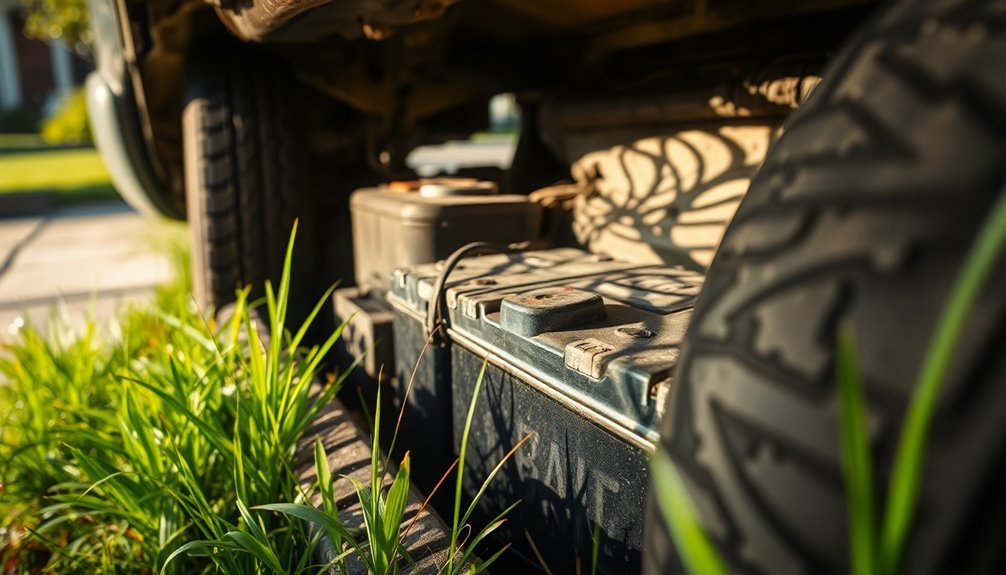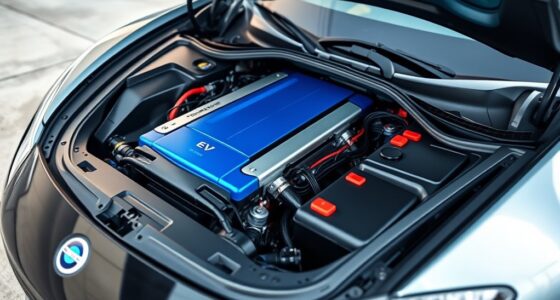
If your car battery is failing, you’ll notice warning signs like slow engine starts, dimming headlights, flickering dashboard lights, or the battery warning light. Corrosion around terminals, a draining battery, or trouble starting after idling can also signal issues. Regular inspection and cleaning can help prevent breakdowns, but if these signs appear, it’s wise to get your battery tested and replaced if needed. Keep going to learn more about maintaining your battery’s health.
Key Takeaways
- Look for corrosion around battery terminals, such as white, green, or bluish powdery deposits.
- Watch for dashboard warning lights, flickering headlights, or electrical system irregularities.
- Notice if the car is difficult to start or stalls after idling, indicating reduced battery power.
- Regularly inspect and clean terminals, and have the battery tested by professionals every few years.
- Replace the battery if it shows signs of failing or has reached its typical lifespan of 3-5 years.
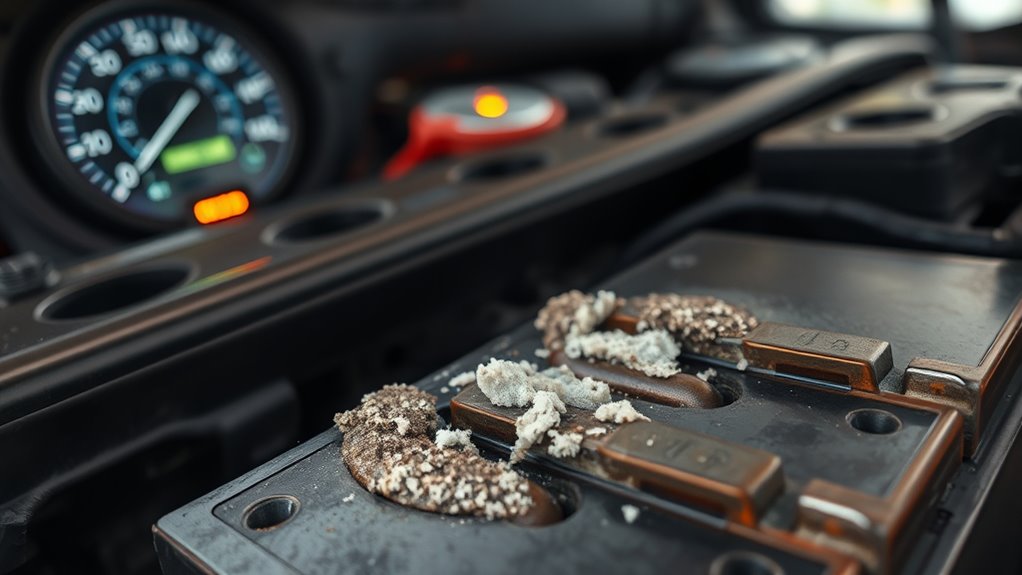
Your car battery is essential for starting your vehicle and powering its electrical systems, so recognizing early signs of failure can save you from unexpected breakdowns. One of the most common issues to watch for is battery corrosion. Over time, you might notice a white, green, or bluish powdery substance around the battery terminals. This corrosion occurs due to acid leaks or electrochemical reactions, which hinder the connection between the battery and the cables. If left unchecked, corrosion can cause poor electrical contact, resulting in difficulty starting your car or dimming headlights. Regularly inspecting your battery terminals and cleaning off corrosion with a mixture of baking soda and water can prevent further issues. It’s a simple step that can extend your battery’s lifespan.
Another sign that your battery is failing involves issues with your vehicle’s alternator, which is responsible for charging the battery while you drive. If your car’s electrical systems start acting erratically—such as flickering dashboard lights, strange noises, or a recurring battery warning light—it could point to alternator problems or a failing battery. When the alternator isn’t functioning properly, it may not recharge the battery efficiently, causing it to drain faster and lose its ability to hold a charge. This leads to frequent stalling or difficulty starting your vehicle, especially after it’s been sitting idle for a while. If you notice these symptoms, it’s essential to have your charging system checked promptly to diagnose whether the issue stems from a weak battery, a malfunctioning alternator, or both. Additionally, battery lifespan can vary depending on usage and environmental factors, but most batteries typically last around 3 to 5 years before replacement is needed.
If you’re experiencing any of these issues, it’s best to get your battery tested by a professional. They can check for corrosion, test the charge capacity, and evaluate the alternator’s performance. Addressing problems early on can prevent complete battery failure, saving you from being stranded or facing costly repairs. Taking a proactive approach by maintaining your battery and electrical system is key to keeping your vehicle running smoothly.
Frequently Asked Questions
How Long Does a Typical Car Battery Last?
A typical car battery lasts about 3 to 5 years. To extend its life, you should consider proper maintenance, like checking for corrosion and ensuring your alternator is working well. When it’s time to replace it, recycle your old battery responsibly. Exploring alternative power sources, such as hybrid or electric vehicles, can also reduce reliance on traditional batteries, making your driving more sustainable and less prone to unexpected failures.
Can Extreme Temperatures Damage My Car Battery?
Extreme temperatures can indeed damage your car battery. Cold weather causes the electrolyte to thicken, reducing capacity, while heat accelerates corrosion and wears down internal components. Poor charging habits can worsen these effects, leading to battery corrosion and decreased lifespan. To protect your battery, avoid exposing your car to extreme temperatures when possible, and maintain proper charging habits, including regular checks and ensuring the terminals are clean and corrosion-free.
Is It Safe to Jump-Start a Failing Battery?
Jump-starting a failing battery can be safe if you follow proper jump start safety procedures. Make sure you use quality battery jumper cables and connect them correctly—positive to positive and negative to a metal ground on your vehicle. Avoid contact between the cables, and never attempt to jump-start a damaged or leaking battery. If you’re unsure, consult a professional to prevent potential hazards or damage to your vehicle.
How Often Should I Have My Battery Tested?
You should have your battery tested at least once a year, especially if you notice signs like corrosion or dimming headlights. Regular testing helps catch issues early. Also, check for battery corrosion around terminals and make certain your alternator is functioning properly, as it keeps your battery charged. If you drive frequently or in extreme weather, consider testing more often to prevent unexpected failures.
Are There Maintenance Tips to Extend Battery Life?
To extend your battery life, regularly check its charge and keep the terminals clean. Make sure to prevent corrosion by applying a protective spray or coating on the terminals, and clean any corrosion that appears. Avoid letting your battery drain completely by turning off accessories when the engine isn’t running. Additionally, guarantee your charging system works properly, as consistent battery charging helps maintain ideal performance and longevity.
Conclusion
If you notice signs like slow engine starts or dim headlights, don’t ignore them. For example, Sarah ignored her battery’s warning signs until her car wouldn’t start on a cold morning. Regular checks and timely replacements can save you from unexpected breakdowns. Stay proactive and keep an eye on your battery’s health—it’s better to replace it early than be stranded when you least expect it. Your car will thank you for it!