
Reconditioning your automotive battery can be worthwhile if it’s mainly suffering from sulfation, which slows performance but doesn’t damage the internal parts. With proper techniques like slow, controlled charging, you might restore capacity and extend its life, saving money over replacement. However, if your battery has severe damage or structural issues, reconditioning might not work. To decide if it’s worth your effort, understanding the underlying chemistry and safety is key—more details follow if you keep exploring.
Key Takeaways
- Reconditioning can restore capacity and extend battery life if sulfation is the main issue.
- Proper techniques, like slow charging and desulfation, are essential for effective reconditioning.
- If the battery is severely damaged or has internal faults, reconditioning may be ineffective.
- Safety precautions are critical to prevent hazards during the reconditioning process.
- Cost-effectiveness depends on battery condition; replacement might be better if damage is extensive.

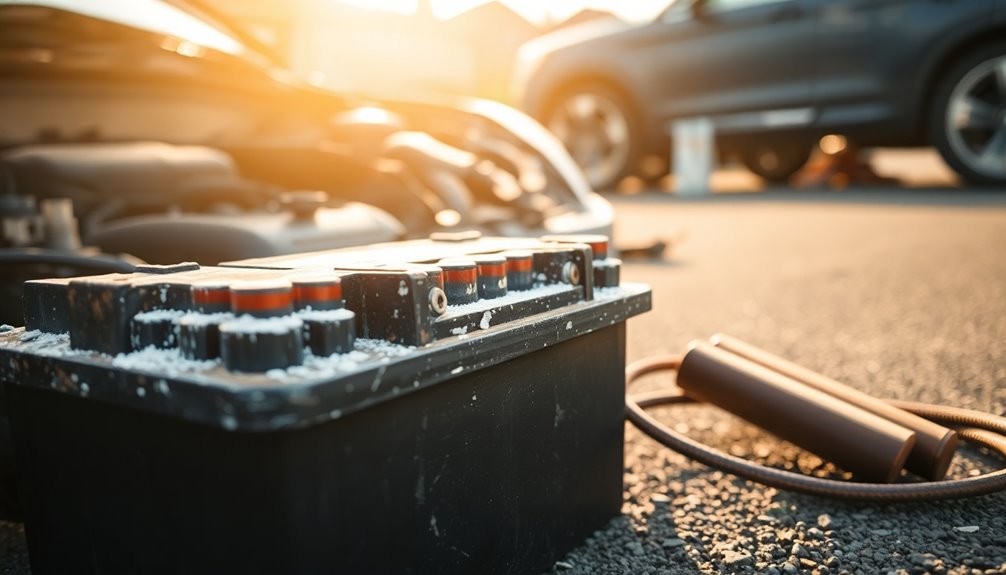
Reconditioning automotive batteries is a practical way to extend their lifespan and save money. When you understand the fundamentals of battery chemistry, you gain insights into how batteries function and why they fail over time. Automotive batteries rely on lead-acid chemistry, where lead plates and sulfuric acid work together to generate electrical power. Over repeated cycles of use, the plates can become sulfated — a buildup of lead sulfate crystals that hampers performance. By learning about this chemistry, you can better grasp how reconditioning methods can reverse some of these effects, restoring capacity and efficiency.
Reconditioning car batteries extends lifespan by reversing sulfation in lead-acid chemistry.
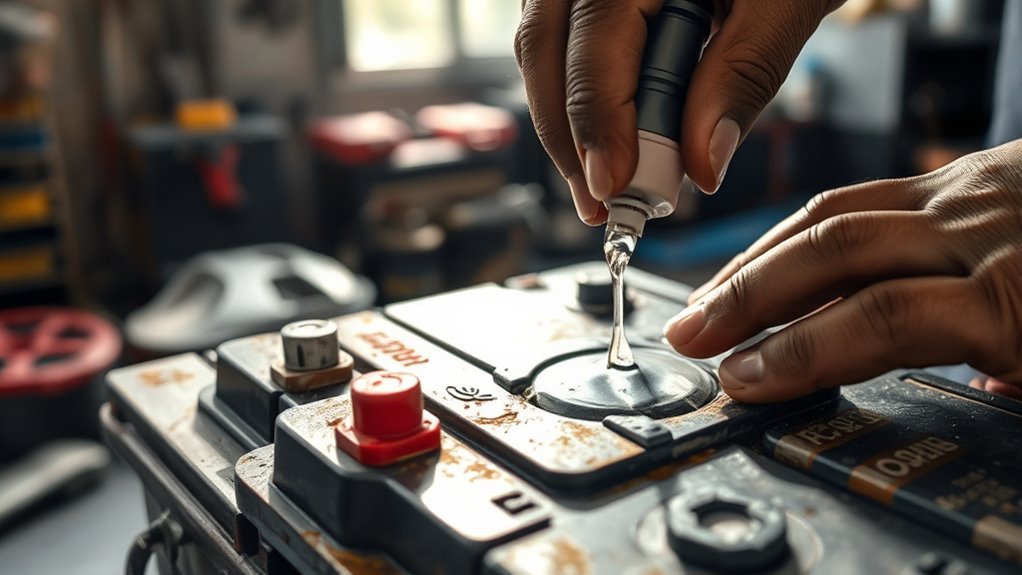
One of the key steps in reconditioning involves proper charging techniques. Many people overlook how vital charging is to revitalizing a worn-out battery. Instead of simply replacing the battery, you can carefully apply a controlled charge to break down sulfation deposits. This often involves slow, steady charging at a lower current, which helps to reverse lead sulfate buildup and restore active material to the plates. Using a multimeter to monitor voltage and current during charging ensures you don’t overcharge or damage the battery further. It’s essential to follow specific charging protocols, such as applying a desulfation charge or using specialized chargers designed for reconditioning, to maximize effectiveness.
You might be tempted to jump straight into reconditioning without considering the battery chemistry. However, understanding the different stages of the chemical reactions within the battery helps you make informed decisions. For instance, if you notice the battery doesn’t hold a charge after reconditioning attempts, it could be due to irreversible damage to the lead plates. In such cases, reconditioning might not be worth the effort, and replacing the battery could be more cost-effective. Conversely, if the chemistry is still intact but sulfation is the main issue, proper charging techniques can markedly improve performance.
It’s also important to remember safety when working with batteries. Always wear protective gloves and goggles, and work in a well-ventilated area. Handling the acid and sulfuric solution requires caution, and proper disposal of old or damaged batteries is essential to avoid environmental harm. Additionally, understanding the contrast ratio of a projector can help you create a better home cinema environment by adjusting your lighting and screen setup for optimal viewing conditions.
Frequently Asked Questions
How Long Does a Reconditioned Battery Typically Last?
A reconditioned battery typically lasts between 2 to 4 years, depending on its initial condition and how well you maintain it. You can expect improved battery lifespan and reconditioning longevity if you regularly check the connections, keep it charged, and avoid deep discharges. While it may not match a brand-new battery, a properly reconditioned one offers a reliable, cost-effective solution that can extend the overall lifespan of your vehicle’s power source.
Are There Safety Risks Involved in Reconditioning Batteries?
Yes, there are safety risks involved in reconditioning batteries. You could face chemical hazards from exposure to corrosive acids and toxic fumes, so wearing protective gear is essential. Additionally, fire risks are present if you mishandle the battery during reconditioning, especially if sparks or heat are involved. Always work in a well-ventilated area, follow safety guidelines, and handle batteries carefully to minimize these dangers.
Does Reconditioning Improve Battery Performance Significantly?
Reconditioning can considerably boost battery performance through chemical restoration, often making it feel almost new. You’ll notice better starting power and longer lifespan. When you consider the cost analysis, reconditioning is usually more affordable than replacing the battery outright. While it might not fully restore a worn-out battery, it’s a worthwhile effort that offers noticeable improvements, helping you save money and extend your battery’s life.
Can All Types of Automotive Batteries Be Reconditioned?
Not all automotive batteries can be reconditioned, as battery chemistry varies. Lead-acid batteries are the most commonly reconditioned through recycling processes that restore their capacity. However, lithium-ion and other advanced chemistries often require specialized equipment and may be less suitable for reconditioning. Before attempting, you should assess the battery’s chemistry and condition, since some types might be beyond repair or recycling efforts.
Is Professional Reconditioning More Effective Than DIY Methods?
Professional reconditioning is typically more effective than DIY methods because experts use specialized tools and knowledge, ensuring better results. While the cost comparison might favor DIY upfront, professional reconditioning often saves you money long-term by extending battery life and reducing replacement costs. Plus, it’s more environmentally friendly, as professionals minimize hazardous waste and improve battery recycling processes. So, if you want reliable, eco-conscious results, investing in professional reconditioning is the smarter choice.
Conclusion
Reconditioning automotive batteries is like giving a tired engine a fresh start—you breathe new life into a worn-out part. While it takes effort, it can save you money and reduce waste, making it a worthwhile endeavor if you’re willing to put in the work. Think of it as reviving a classic car; with patience and care, you can restore its power and extend its journey. Sometimes, the effort is worth more than buying new.