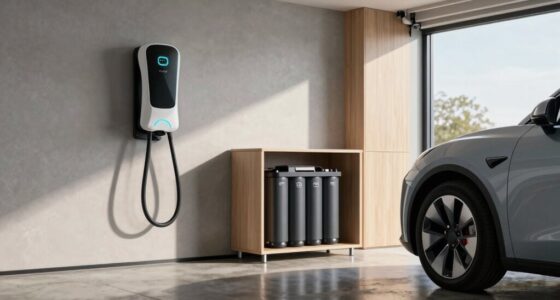
TL;DR

Get backup power and energy gear delivered free with Prime
- Fast, free delivery on millions of items
- Prime Video, Amazon Music and more included
- Member-only deals all year
A generator wattage calculator helps you determine the right size generator by summing simultaneous loads, considering startup surges, and adding a safety margin. Proper sizing prevents overloads and ensures reliable backup power.
Always include both running and starting watts in your calculations to prevent overloads.
Add a safety margin of 10–25% to handle fluctuations and future needs.
Compare continuous and surge wattage ratings to pick a generator that can handle your peak demands.
Know your voltage needs—240 V loads require special sizing considerations.
Avoid running your generator indoors—carbon monoxide safety must come first.
What is a generator wattage calculator and why does it matter?
A generator wattage calculator is a tool that helps you estimate how much power your backup system needs. It considers all your appliances, tools, and systems, then figures out the right generator size. This process is crucial because choosing too small a generator can lead to overloads and power failures during critical moments, risking damage to your appliances and compromising your safety. On the other hand, oversizing your generator results in unnecessary expenses, higher fuel consumption, and increased noise and maintenance costs. By accurately calculating your power needs, you ensure your generator provides reliable backup power without waste. For example, correctly sizing your generator to handle a refrigerator, sump pump, and lights means you won’t be caught unprepared or overspend on an overly powerful unit. It’s about finding the balance that maximizes efficiency and reliability while minimizing costs and environmental impact.
According to energy experts, a properly sized generator can cut fuel use and extend its lifespan. It’s like fitting the right shoe—comfortable, efficient, and reliable. Without it, you risk damaging your appliances or facing power failures when you need them most.
portable generator wattage calculator
As an affiliate, we earn on qualifying purchases.
As an affiliate, we earn on qualifying purchases.
How to use a generator wattage calculator in 3 simple steps
- List all the appliances and tools you want to run during an outage. Include their running and starting watts if known. Understanding the difference between these two is vital because many appliances draw significantly more power at startup, which can trip your generator if not accounted for. This initial surge, or startup wattage, is often 2-3 times the running wattage and can cause overloads if ignored. Recognizing this helps you select a generator that can handle peak demands without risking damage or outages.
- Add up the total running watts of all devices likely to operate at the same time. This sum gives you the continuous load your generator must support. However, remember that simultaneous operation is key—running multiple appliances together increases the total load, and underestimating this can result in insufficient power, leading to appliance shutdowns or generator overloads. Accurately summing these loads ensures your generator can handle your expected usage pattern.
- Identify the appliance with the highest starting wattage. Add that surge to your total running watts to find the peak load. Then, multiply this sum by a safety margin of 1.1 to 1.25 to account for unexpected surges and future expansion. This step is critical because appliances like refrigerators, sump pumps, or air conditioners can have unpredictable surges, and a safety margin ensures your generator won’t be pushed to its limits during peak demands. The tradeoff here is slightly higher initial investment versus the risk of overload or damage during power surges, making this margin a worthwhile safeguard.
For example, if your refrigerator uses 600 W while running and needs 1,800 W to start, and your sump pump uses 1,000 W running and 2,500 W starting, you’ll want a generator that can handle the highest surge plus the simultaneous load. This might mean a 3,500-watt inverter or a 5,000-watt portable generator. Choosing the right size ensures your appliances operate smoothly without risking overloads, and it balances cost with reliability.
Compare generator types and how they affect your sizing decision
| Generator Type | Best For | Pros | Cons |
|---|---|---|---|
| Portable | Temporary backup, small loads | Affordable, easy to move, wide fuel options | No automatic start, noise, limited runtime |
| Inverter | Electronics, sensitive devices | Quiet, clean power, lightweight | Lower wattage capacity, higher cost |
| Standby | Whole house backup | Automatic, permanent installation, reliable | Expensive, complex setup |
For example, a 2000-watt portable generator might power essential lights and small appliances, while a 3500-watt inverter can run your laptop, fridge, and TV smoothly. Larger 5000-watt units handle bigger loads like central AC or multiple circuits. Your choice should reflect your specific needs, considering both the power requirements and the tradeoffs in cost, convenience, and noise. An undersized generator may struggle or fail during peak demands, while an oversized one can lead to unnecessary expenses and inefficiency. Understanding these differences ensures you select a generator that aligns with your power needs and budget, providing peace of mind during outages.
Avoid common sizing mistakes that can leave you in the dark
- Adding only the running watts without considering startup surges. Failing to account for startup surges can cause your generator to trip or stall when appliances turn on, especially with motors and compressors. This oversight can lead to unexpected outages and potential damage to your equipment. Properly including surge wattage ensures your generator can handle peak demands without stress.
- Ignoring the need for a safety margin—don’t run your generator at 100% capacity all the time. Operating continuously at maximum load accelerates wear and reduces lifespan. A safety margin of 15-25% provides buffer for unexpected loads, power fluctuations, or future expansion, promoting reliability and longevity of your generator.
- Using generic appliance wattage estimates instead of actual labels or specifications. Appliance labels provide precise data, which is crucial because actual wattage can vary based on model, age, and condition. Relying on generic estimates risks underestimating or overestimating your needs, leading to either insufficient power or unnecessary expense. Accurate data ensures your calculations are reliable.
- Forgetting to balance loads between 120 V and 240 V circuits. Different appliances and systems require specific voltage levels for safe and efficient operation. Ignoring this can cause overloads or damage, especially with high-power tools or HVAC systems. Proper load balancing ensures even distribution and safe operation.
- Overlooking altitude, temperature, and future expansion needs. High altitude reduces engine efficiency, and higher temperatures can cause overheating. Planning for future expansion avoids the need for costly upgrades later. Considering these factors ensures your generator remains effective under varying conditions and as your power needs grow.
For example, running a refrigerator (600 W) and a sump pump (1,000 W) simultaneously might seem manageable, but start both at once and your 3,000-watt generator could strain or trip. Adding a margin of 15% keeps you safe and ready for unexpected demands, preventing costly damage or outages.
Key tips for accurate generator sizing and safe operation
- Always check appliance labels for exact wattage and startup surge ratings. Relying on actual specifications rather than estimates ensures your calculations are accurate, preventing overloads or undersizing.
- Include a 10–25% margin for future needs or unexpected surges. This buffer accounts for unforeseen power demands and allows room for expansion, enhancing reliability and reducing stress on your generator.
- Factor in the voltage requirements—240 V loads need special consideration. High-voltage appliances demand specific wiring and transfer switch setups; neglecting this can cause unsafe conditions or equipment damage.
- Use a professional for complex installations or high-demand systems. Expert assessment ensures your setup is safe, compliant, and optimized for your specific needs, avoiding costly mistakes or safety hazards.
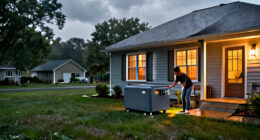
- Never operate portable generators indoors or in enclosed spaces—carbon monoxide is deadly. Proper outdoor placement and ventilation are essential for safety, as these gases can accumulate quickly and cause poisoning.
For instance, a well-placed carbon monoxide detector can save lives when running a generator outdoors at recommended distances, away from vents and windows. Ensuring safe operation and correct sizing protects your property and loved ones.
Frequently Asked Questions
How many watts does my generator need to run my fridge and lights?
Add the fridge’s running watts—usually around 600 W—and the total watts for your lights and electronics. Then, add 20–25% for safety. For example, a 100 W light plus 600 W fridge equals about 720 W, so a 1,000-watt generator would suffice, with margin.Can I run my central air conditioner on a portable generator?
Probably not with a small portable. Central AC units often need 2000+ watts just to run, plus additional surge power for startup. A 5000-watt or larger generator with proper voltage regulation is usually needed, along with appropriate transfer switches and wiring.What happens if my generator is too small for my loads?
It will overload, trip circuit breakers, or stall. This can damage both the generator and appliances. Always size your generator to handle the peak surge plus the simultaneous running loads, plus a safety margin.Are inverter generators better for sensitive electronics?
Yes. Inverter generators produce cleaner, more stable power with low harmonic distortion, making them safer for computers, medical devices, and modern electronics. They’re quieter and more fuel-efficient, too.How does altitude affect generator size?
Higher elevations reduce engine power because of thinner air, typically by 3–4% per 1,000 feet. If you’re at high altitude, consider a derating factor or an altitude-ready generator to ensure it provides the rated wattage.Conclusion
Choosing the right generator size isn’t about guesswork. Use a wattage calculator, consider all loads, and add a safety buffer. That way, when the lights go out, you’re ready—quietly confident, not dreadfully underpowered. Think of it as fitting a puzzle piece—perfectly, every time.Generator Wattage Calculator
Estimate running and starting watts for a short list of common backup loads.
Your selected load fits the small-generator range. Compare 2,000 watt portable generators for essentials-only backup.
See small-generator matchesYour surge load points to a mid-size inverter generator. Compare 3,500 watt options and verify each appliance label.
See mid-size generator matchesYour list needs a larger generator class. Compare 5,000 watt portable generators and plan circuits with a qualified pro.
See larger generator matchesEstimate only. Check product specs, local rates, and site conditions before buying or planning around these numbers.
Halloween Picks
halloween
As an affiliate, we earn on qualifying purchases.