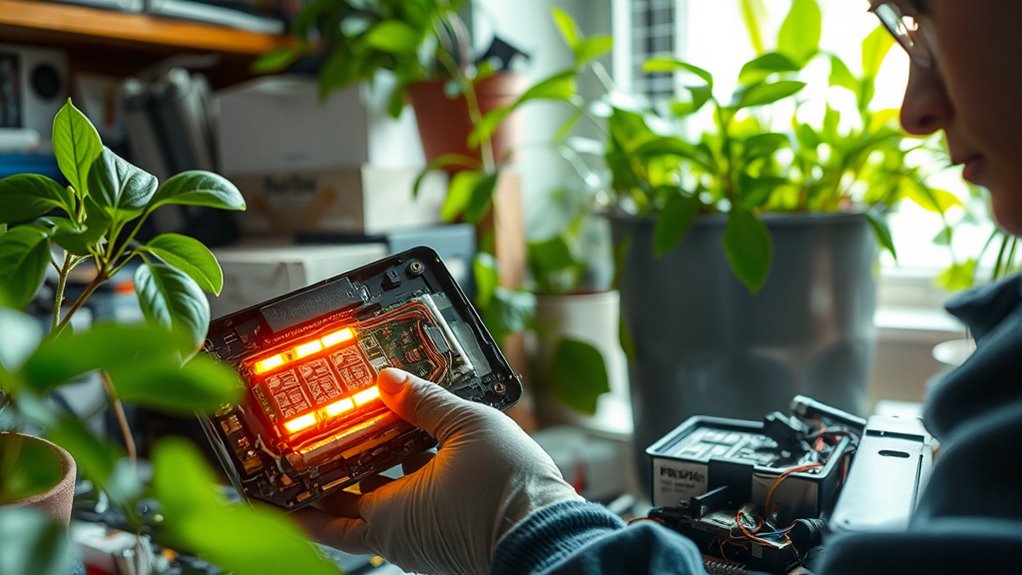

Battery reconditioning helps reduce environmental waste by extending battery life and preventing premature disposal in landfills. It decreases the number of batteries ending up as electronic waste and cuts down on toxic chemicals leaching into soil and water. Plus, it conserves natural resources by reducing the need for raw material extraction. This process also lowers energy consumption and carbon emissions linked to manufacturing new batteries. Keep exploring to learn how this eco-friendly practice benefits both your wallet and the planet.

Get backup power and energy gear delivered free with Prime
- Fast, free delivery on millions of items
- Prime Video, Amazon Music and more included
- Member-only deals all year
Key Takeaways
- Reconditioning extends battery lifespan, reducing premature landfill disposal and electronic waste.
- It decreases the need for manufacturing new batteries, conserving raw materials and reducing mining-related environmental impacts.
- Reuse prevents hazardous chemicals from leaking into ecosystems, minimizing soil and water contamination.
- It lowers energy consumption and carbon emissions associated with battery production and disposal processes.
- Promoting battery reconditioning supports a circular economy, reducing waste and fostering sustainable resource management.
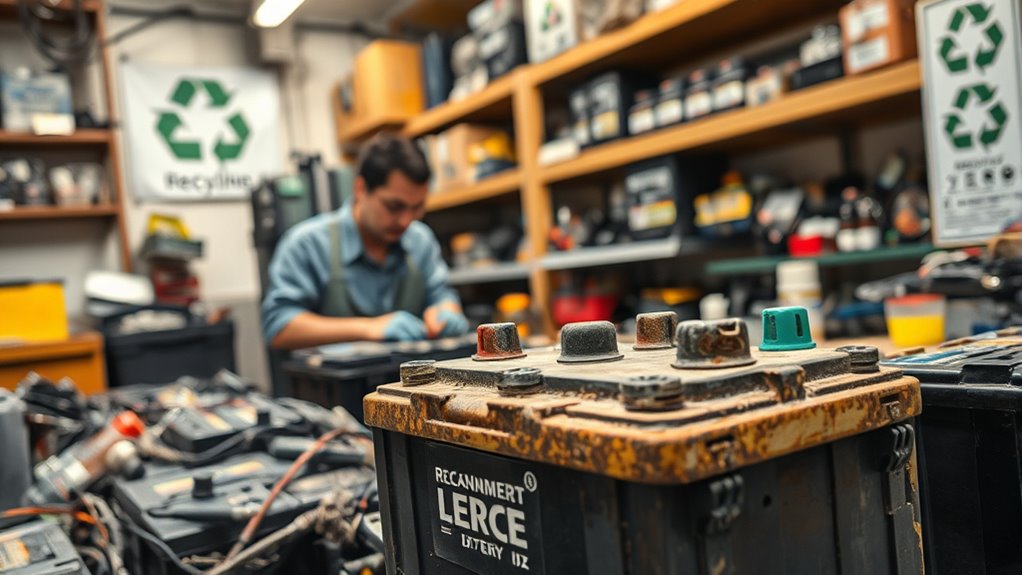
Battery reconditioning offers a sustainable way to extend the life of batteries, reducing the need for new ones and decreasing environmental waste. When you choose to recondition a battery, you’re effectively increasing its battery lifespan, which means fewer batteries end up in landfills prematurely. This not only preserves natural resources but also lessens the strain on manufacturing industries that produce new batteries. The longer a battery remains usable through proper reconditioning, the fewer raw materials are extracted and processed, helping to conserve essential resources like lithium, cobalt, and nickel. This process supports recycling benefits, as it reduces the volume of batteries that require recycling or disposal, making the entire lifecycle of batteries more environmentally friendly.
By reconditioning batteries, you actively contribute to reducing electronic waste, which is a growing concern globally. Discarded batteries contain hazardous chemicals that can leach into soil and water, posing health risks to ecosystems and communities. When you recondition and reuse batteries, you’re preventing these toxic substances from contaminating the environment. Additionally, reconditioning helps lessen the demand for newly mined materials, which often involves energy-intensive processes that emit greenhouse gases. This reduction in mining activity and manufacturing results in a smaller carbon footprint, aligning with broader efforts to combat climate change.
Another key environmental benefit of battery reconditioning is the decrease in the energy consumption associated with producing new batteries. Manufacturing fresh batteries requires significant energy inputs, from mining raw materials to assembly and transportation. By reconditioning existing batteries, you save this energy, contributing to a more sustainable energy cycle. Moreover, advances in fraud detection techniques make it possible to better identify counterfeit or substandard batteries that could pose additional environmental risks. Additionally, reconditioning can be a cost-effective alternative for consumers and businesses alike, encouraging more widespread adoption of eco-friendly practices.
In the broader scope, your efforts to recondition batteries promote a circular economy, where products are reused, repaired, and recycled rather than disposed of after a short lifespan. This mindset reduces waste generation and supports sustainable living. The recycling benefits of reconditioning extend beyond just prolonging a battery’s usability; they encompass reducing environmental pollution, conserving non-renewable resources, and lowering greenhouse gas emissions. Overall, by reconditioning batteries, you’re making a tangible difference in reducing waste and fostering a healthier planet for future generations.
As an affiliate, we earn on qualifying purchases.
Frequently Asked Questions
How Does Reconditioning Batteries Compare to Recycling in Environmental Benefits?
Reconditioning batteries offers greater environmental benefits than recycling because it promotes resource conservation and cost savings. When you recondition, you extend the battery’s lifespan, reducing the need for new ones and minimizing waste. Recycling helps recover materials, but reconditioning actively keeps batteries in use longer, cutting down on resource extraction and manufacturing impacts. By choosing reconditioning, you contribute to a more sustainable environment while saving money on replacement costs.
Are There Any Hazardous Materials Involved in the Reconditioning Process?
Battery reconditioning involves some hazardous materials, so you need to prioritize chemical safety and proper disposal procedures. You might encounter acids, heavy metals, or other toxic substances, which can be dangerous if mishandled. Always follow recommended safety guidelines, use protective gear, and guarantee you dispose of harmful materials responsibly. Proper precautions prevent pollution, protect your health, and promote sustainability by minimizing environmental hazards associated with reconditioning processes.
What Is the Energy Consumption Difference Between Reconditioning and Manufacturing New Batteries?
Reconditioning batteries generally consumes less energy than manufacturing new ones, leading to significant energy savings. By reusing existing components, you help conserve resources and reduce the environmental footprint. This process uses less raw materials and energy, promoting resource conservation. You can actively contribute to sustainability efforts by choosing reconditioning over new battery production, making a positive impact on the environment and reducing overall energy consumption.
Can Reconditioning Extend the Lifespan of All Types of Batteries Equally?
Reconditioning doesn’t extend the lifespan of all battery types equally because of battery chemistry variations. Some batteries, like lead-acid, respond well to reconditioning, but others, such as lithium-ion, have reconditioning limitations due to their complex chemistry. You should be aware that reconditioning can improve performance for certain batteries, but it’s not a universal solution, and some batteries may still need replacement after a point.
How Does Battery Reconditioning Impact Overall Electronic Waste Reduction Efforts?
You might think reconditioning batteries isn’t enough, but it markedly boosts waste minimization by extending their life. Your participation in reuse initiatives reduces electronic waste, conserving resources and lowering landfill overflow. Every reconditioned battery lessens the demand for new ones, making a real difference. By embracing battery reconditioning, you actively contribute to eco-friendly efforts, helping to create a sustainable future and fostering responsible electronic waste management.
Conclusion
By reconditioning batteries, you can substantially cut down on electronic waste—saving thousands of tons from landfills each year. Did you know that over 3 million tons of battery waste end up discarded annually worldwide? By choosing to recondition instead of replace, you’re not only extending battery life but also helping reduce harmful environmental contamination. Every small effort counts, so keep reconditioning and make a real difference for our planet’s future.
Halloween Picks
halloween
As an affiliate, we earn on qualifying purchases.