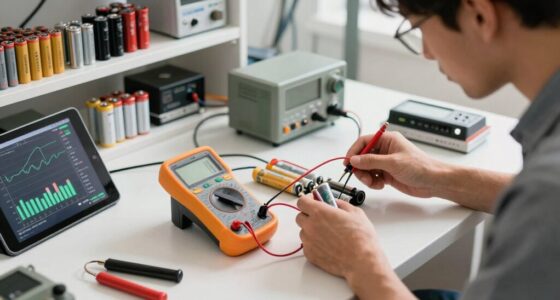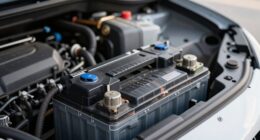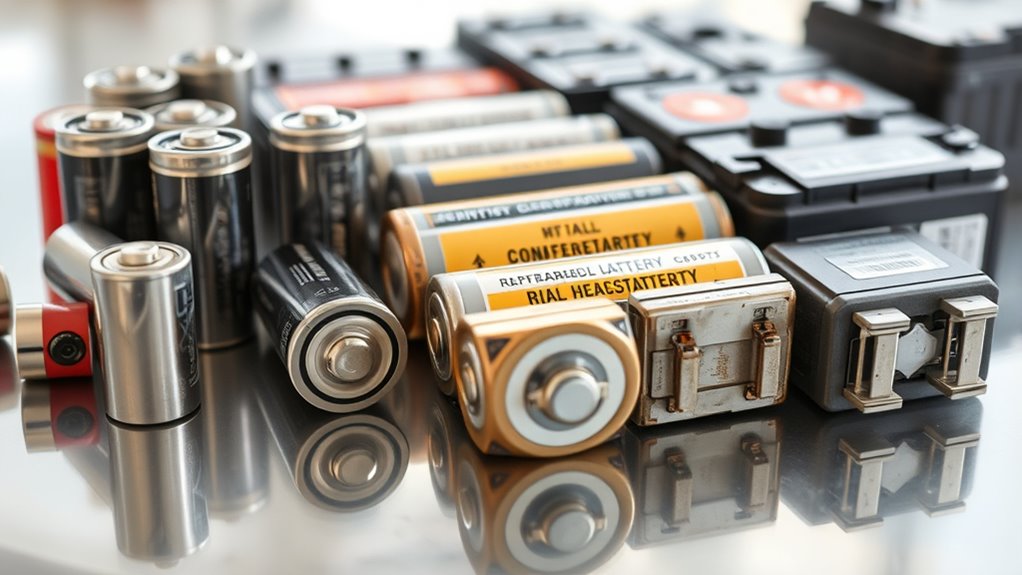

You can recondition several types of batteries to extend their lifespan and improve performance. Lead-acid batteries, like those in cars, can be desulfated. Nickel-based batteries, such as NiCad and NiMH, often benefit from deep cycling to break the memory effect. Lithium-ion batteries, found in smartphones and electric vehicles, can sometimes be balanced or have faulty cells replaced. Rechargeable alkaline batteries may also be reconditioned through cleaning and recharging. Keep exploring; you’ll discover more about each type and how to revitalize them.
Key Takeaways
- Lead-acid batteries can be reconditioned through desulfation techniques to restore capacity.
- Nickel-based batteries like NiCad and NiMH can be reconditioned via deep cycling to eliminate memory effects.
- Lithium-ion batteries may be reconditioned by cell balancing and replacing faulty cells with proper equipment.
- Rechargeable alkaline batteries can sometimes be reconditioned with cleaning and recharging cycles.
- Properly recycling all battery types is essential to prevent environmental harm, even if reconditioning isn’t possible.
Many batteries that seem to be at the end of their life can actually be reconditioned, saving you money and reducing waste. When you consider reconditioning, you’re effectively extending the battery’s lifespan instead of discarding it prematurely. This process not only benefits your wallet but also contributes to environmental sustainability by decreasing the demand for new batteries and the need for extensive recycling methods. Understanding which types of batteries can be reconditioned helps you make smarter choices and get the most out of your devices. Reconditioning processes vary depending on the battery type, and proper techniques are essential to ensure safety and effectiveness. Lead-acid batteries, commonly used in cars and backup power systems, are among the most reconditionable. Over time, they develop sulfation, where lead sulfate crystals form on the plates, reducing their capacity. Reconditioning involves desulfating these plates, often through specialized charging techniques or chemical treatments, restoring their ability to hold a charge. This process considerably extends their lifespan and delays the need for replacement. The key to successful reconditioning is knowing the proper recycling methods for these batteries, ensuring hazardous materials are handled safely during the process. Nickel-based batteries, such as nickel-cadmium (NiCad) and nickel-metal hydride (NiMH), can also often be reconditioned. These batteries are used in cordless phones, power tools, and some small appliances. Their main issue is memory effect, which reduces capacity over time. Reconditioning involves deep cycling or fully discharging and charging the batteries multiple times to break the memory effect, thereby restoring their full capacity. Proper recycling methods are essential here because cadmium is toxic, and safe disposal or recycling prevents environmental contamination. Lithium-ion batteries, found in smartphones, laptops, and electric vehicles, are more complex but can sometimes be reconditioned. Typically, reconditioning lithium-ion batteries involves balancing the cells, replacing faulty ones, or recalibrating the battery management system. While not all lithium-ion batteries are suitable for reconditioning, some can be rejuvenated with specialized equipment and knowledge. Always follow the correct recycling methods when handling these batteries, as they contain potentially dangerous materials. Finally, rechargeable alkaline batteries can sometimes be reconditioned through cleaning and recharging cycles, although they’re less commonly recycled or reconditioned compared to other types. Proper recycling methods are imperative to prevent leakage of harmful chemicals.

Battery Renew Solution for Golf Cart Batteries – 64 oz Desulfator Refill – Refurbish, Repair & Restore Any 6 Volt, 8 Volt or 12 Volt Lead Acid Batteries – Made in USA – Non-Toxic Safe Refill Solutions
- Extends Battery Life: Restores capacity, reduces need for replacement
- Deep Cleans Battery Cells: Breaks down sulfation for improved performance
- Universal Compatibility: Suitable for all lead acid batteries
As an affiliate, we earn on qualifying purchases.
As an affiliate, we earn on qualifying purchases.
Frequently Asked Questions
Can Car Batteries Be Safely Reconditioned at Home?
You can safely recondition car batteries at home if you follow proper safety measures. Reconditioning involves restoring the battery’s capacity, which supports battery recycling efforts and reduces environmental impact. Always wear protective gear and work in a well-ventilated area. Keep in mind, some batteries may pose risks, so assess their condition carefully. Proper reconditioning helps extend battery life, minimizes waste, and benefits the environment.
Are Lithium-Ion Batteries Suitable for Reconditioning?
You’re asking if lithium-ion batteries are suitable for reconditioning, and the answer is, it’s a tricky pond to swim in. Lithium-ion battery chemistry makes them less receptive to traditional reconditioning techniques. They can be reconditioned, but only with specialized methods and equipment, often best left to professionals. Attempting it yourself could be risky, so weigh your options carefully before diving in.
How Long Does the Reconditioning Process Typically Take?
Reconditioning a battery usually takes between 1 to 4 hours, depending on its condition and the reconditioning techniques you use. You can extend the battery lifespan by following proper reconditioning methods and ensuring each step is done correctly. Keep in mind, patience and careful attention to detail help achieve the best results, so don’t rush the process. With consistent effort, you’ll restore batteries effectively and save money.
Is Reconditioning Batteries Cost-Effective Compared to Replacement?
Reconditioning batteries tends to be a wise choice, offering notable cost savings compared to outright replacements. You’ll find it not only easier on your wallet but also gentler on the environment, reducing waste and pollution. While it requires some effort and knowledge, reconditioning often proves more economical over time, making it a sustainable option. Ultimately, you’ll enjoy the benefits of extending your battery’s life while contributing positively to ecological well-being.
What Are the Safety Precautions for Reconditioning Batteries?
When reconditioning batteries, you should always prioritize safety by understanding the battery chemistry involved, as different chemistries require specific precautions. Wear protective gear like gloves and goggles, and work in a well-ventilated area. Use proper reconditioning tools carefully, avoiding sparks or open flames, since batteries can emit harmful gases or leak acid. Always disconnect power before starting, and follow manufacturer instructions to minimize risks.
Conclusion
Now that you know which batteries can be reconditioned, you’ll save money and extend their lifespan. For example, imagine reconditioning your car’s lead-acid battery instead of replacing it—saving hundreds. By learning these simple techniques, you can revive old batteries and avoid waste. It’s a rewarding skill that not only benefits your wallet but also helps the environment. Give it a try—you might be surprised at how easily you can bring batteries back to life!