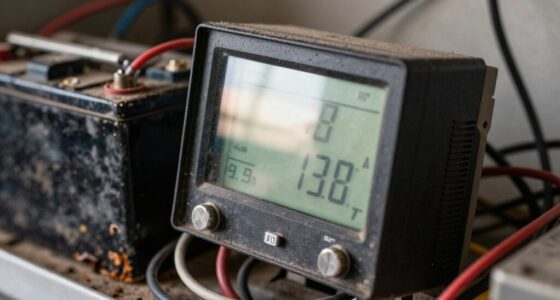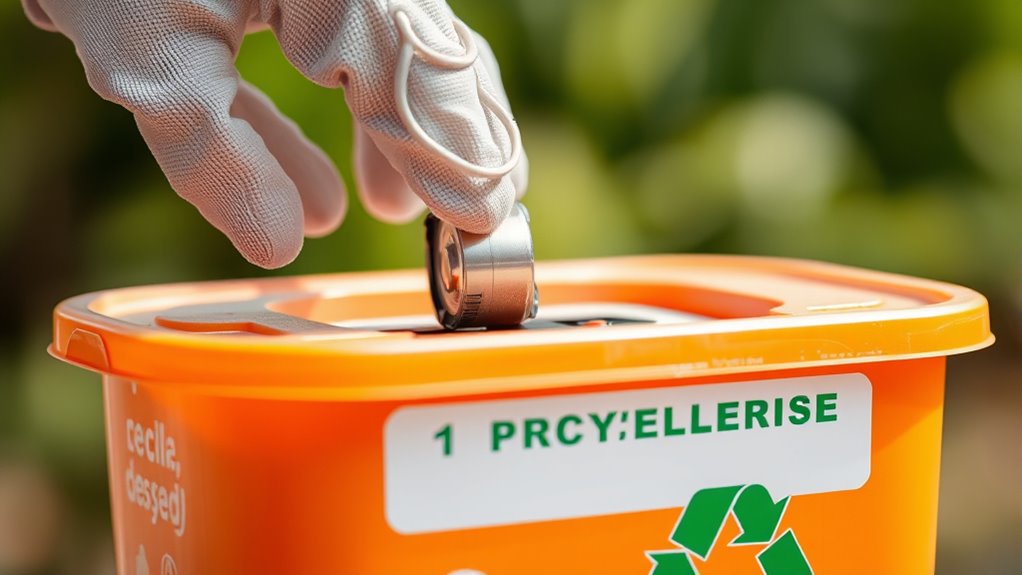

To safely dispose of your old batteries, never throw them in regular trash, especially if they’re damaged or leaking. Instead, take them to designated recycling centers, stores, or local collection events that accept batteries. Recycling helps recover valuable materials and prevents hazardous substances from contaminating the environment. Following proper disposal guidelines protects your health and reduces fire risks. To discover more about responsible battery recycling practices, keep exploring the options available in your community.
Key Takeaways
- Never dispose of batteries in regular trash; use designated collection points or recycling centers instead.
- Properly handle damaged or leaking batteries to prevent chemical exposure and environmental contamination.
- Check local regulations and participate in community collection events for safe battery disposal.
- Recycling recovers valuable metals and prevents toxic substances from polluting ecosystems.
- Store old batteries safely away from heat, puncture, or damage until they can be properly disposed of.
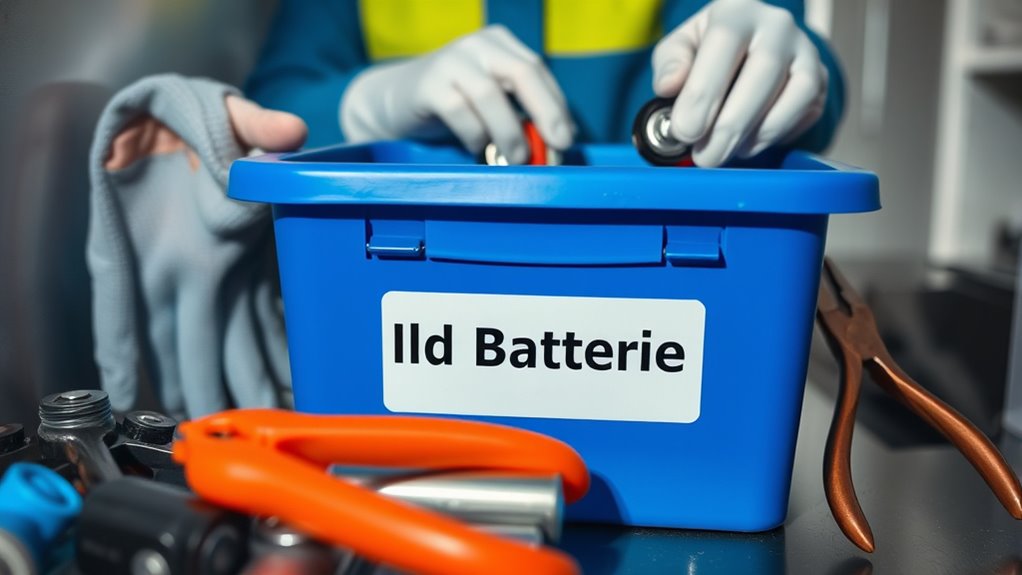
Old batteries can pose serious environmental and health risks when not disposed of properly. If you ignore proper disposal methods, you might inadvertently contribute to soil and water contamination, which can harm wildlife and human health. This highlights the significance of understanding battery safety and the environmental impact associated with improper disposal. Batteries contain hazardous materials like heavy metals and acids that, if leaked or broken down in landfills, can seep into the environment, contaminating ecosystems and drinking water sources. That’s why responsible disposal isn’t just about following rules; it’s about protecting your community and the planet.
Proper disposal of old batteries prevents environmental contamination and protects community health.
When you handle old batteries, always consider battery safety as your top priority. Never throw batteries into regular trash, as punctured or damaged batteries can leak or even catch fire. Instead, look for designated collection points or recycling centers that accept batteries. Many stores, electronics retailers, and municipal waste programs provide convenient drop-off locations. Proper disposal prevents accidents, reduces the risk of chemical exposure, and guarantees the materials can be recycled safely. It’s a simple step that makes a big difference in minimizing environmental impact.
Recycling old batteries is essential for reducing waste and conserving valuable resources. Batteries contain metals like lithium, nickel, and cadmium, which can be extracted and reused in manufacturing new batteries or other products. Recycling not only prevents these toxic substances from contaminating the environment but also reduces the demand for virgin raw materials. Additionally, understanding the contrast ratio of a battery’s design can influence how effectively the recycled materials are incorporated into new products. By choosing to recycle, you actively participate in a cycle that benefits the environment and supports sustainable resource management. Many recycling programs also ensure that hazardous components are handled with care, minimizing the risk of leaks or accidents during processing.
Educating yourself about proper disposal methods helps you become a responsible consumer. Always check local regulations and recycling guidelines because procedures can vary depending on your location. Some areas might have special collection events, while others offer curbside pick-up for batteries. Remember, handling batteries correctly is a simple yet impactful way to support environmental safety. The more you stay informed about battery safety and recycling practices, the better you can protect the environment from the harmful consequences of improper disposal. By making conscious choices, you help reduce pollution, conserve resources, and promote a healthier planet for everyone.

Baderke 1 Pack Battery Recycling Disposal Container with Label, Transparent
- Complete Disposal Package: Includes container and recycling label
- Optimal Size for Convenience: 1.32-gallon capacity, compact dimensions
- Transparent Modern Design: Clear container for easy monitoring
As an affiliate, we earn on qualifying purchases.
As an affiliate, we earn on qualifying purchases.
Frequently Asked Questions
Are There Specific Disposal Regulations for Different Types of Batteries?
Yes, there are specific disposal regulations for different types of batteries. You should check the battery labeling, which indicates whether a battery contains hazardous materials and how to dispose of it properly. For example, lithium and lead-acid batteries have strict disposal regulations due to their chemical contents. Always follow local guidelines to guarantee safe disposal, and consider recycling programs that accept specific battery types to prevent environmental harm.
How Can I Identify if a Battery Is Hazardous Waste?
You can identify if a battery is hazardous waste by checking its labeling and hazardous symbols. Look for clear labels indicating “danger,” “poison,” or “corrosive,” and watch for symbols like a skull and crossbones or a corrosive liquid. If the battery has these markings, it’s considered hazardous waste. Always handle these batteries carefully and follow proper disposal guidelines to prevent environmental harm.
What Are the Environmental Impacts of Improper Battery Disposal?
If you improperly dispose of batteries, you risk causing serious environmental harm. Battery leachate can seep into the soil, leading to soil contamination, which affects plants and wildlife. This toxic runoff can reach water sources, harming aquatic life and contaminating drinking water. By disposing of batteries responsibly, you prevent these hazards and help protect the environment from long-term damage. Always recycle batteries properly to avoid these negative impacts.
Can Damaged Batteries Be Safely Recycled?
Yes, damaged batteries can be safely recycled if you prioritize proper battery repair and safe handling. You should take them to certified recycling centers, where trained professionals handle the process. Avoid trying to repair or open damaged batteries yourself, as this can be dangerous. By following these steps, you guarantee that hazardous materials are contained, reducing environmental risks and promoting responsible recycling.
Where Can I Find Local Disposal or Recycling Centers for Batteries?
Finding local disposal or recycling centers for batteries is like uncovering hidden treasures in your neighborhood. You can visit nearby battery collection sites or participate in recycling programs at electronics stores, community centers, or municipal waste facilities. Check your city’s official website or call local waste management services for specific locations. Many places now offer convenient options to guarantee your batteries are safely recycled, helping protect the environment.
Conclusion
By properly disposing of and recycling your old batteries, you’re planting seeds for a cleaner, brighter future. Think of each battery you recycle as a tiny hero, fighting to keep our environment safe and vibrant. When you take action today, you’re not just ending a battery’s life—you’re opening the door to a world where nature and technology thrive in harmony. Together, we can turn waste into wonder and protect our planet for generations to come.