Recycling techniques like hydrometallurgy, pyrometallurgy, and direct upcycling help you recover valuable materials while reducing waste and environmental harm. Hydrometallurgy uses water-based solutions to extract metals from scrap, whereas pyrometallurgy involves high-temperature processing like smelting to refine metals. Direct upcycling transforms waste directly into new products, minimizing energy use. Understanding these methods empowers you to make more sustainable choices, and if you explore further, you’ll uncover how these techniques can transform waste into valuable resources.
Key Takeaways
- Hydrometallurgy uses aqueous solutions to extract metals from waste, focusing on metals like copper, gold, and rare earth elements.
- Pyrometallurgy involves high-temperature processes such as smelting to recover pure metals from scrap or ore.
- Direct upcycling transforms waste materials directly into new products, reducing energy use and promoting circular economy principles.
- These recycling techniques reduce environmental impact by decreasing raw material extraction and minimizing landfill waste.
- Understanding these methods supports sustainable resource management and conservation of ecosystems.
Have you ever wondered how different recycling techniques help reduce waste and conserve resources? When you choose to recycle, you’re participating in processes that reclaim valuable materials and decrease the need for raw resource extraction. Among these techniques, hydrometallurgy stands out for its ability to recover metals efficiently. This method uses aqueous solutions to extract metals from ores or scrap, making it especially useful for recycling electronic waste and metal-containing industrial byproducts. By focusing on metal recovery, hydrometallurgy minimizes the amount of waste sent to landfills and reduces the environmental impact of mining new materials. It’s a precise process that targets specific metals, such as copper, gold, and rare earth elements, enabling you to reuse these valuable resources multiple times. As a result, waste reduction becomes more achievable, and the demand for virgin metal extraction diminishes, preserving ecosystems and lowering greenhouse gas emissions associated with mining. Understanding metal recovery techniques can help you appreciate the importance of these processes in sustainable resource management.
Hydrometallurgy efficiently recovers metals, reducing waste and environmental impact of mining.
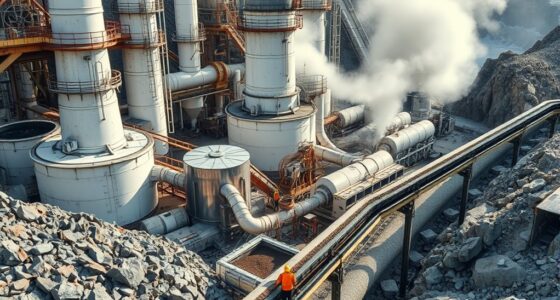
Pyrometallurgy, on the other hand, involves high-temperature processes like smelting and refining to recover metals from complex waste streams. When you opt for this technique, you’re tapping into a tried-and-true method that transforms scrap into usable metal products. This approach is particularly effective for processing large quantities of metal waste, such as old electronics, automotive parts, and industrial slag. Pyrometallurgy allows for the efficient separation of metals from impurities, enabling you to recover high-purity metals that can be reintroduced into manufacturing cycles. By recycling metals through pyrometallurgy, you markedly cut down on waste, preventing it from accumulating in landfills and reducing the environmental toll of mining operations. This technique also offers versatility, as it can handle diverse types of metal waste, making it a cornerstone of sustainable metal recovery strategies.
Then there’s direct upcycling, which takes a different route by transforming waste materials into new products without breaking them down into raw components. With this technique, you’re fundamentally giving waste a second life by creatively repurposing it. For example, turning scrap metal into artistic sculptures or furniture not only keeps waste out of landfills but also reduces the demand for new raw materials. Direct upcycling emphasizes waste reduction at its core, promoting a circular economy where the focus is on extending the life of existing materials. This process minimizes energy consumption compared to traditional recycling methods and encourages innovative reuse, reducing both waste and resource depletion. By engaging in direct upcycling, you’re actively contributing to sustainability efforts, ensuring valuable resources are preserved and waste is kept to a minimum.
Together, these techniques—hydrometallurgy, pyrometallurgy, and direct upcycling—show how diverse methods can work hand-in-hand to reduce waste and conserve resources. Whether you’re involved in industrial recycling or creative reuse, understanding and applying these processes can make a meaningful impact on the environment.
Top picks for "recycl techniqu hydrometallurgy"
As an affiliate, we earn on qualifying purchases.
Frequently Asked Questions
What Are the Environmental Impacts of Each Recycling Technique?
You should know that each recycling technique impacts the environment differently. Hydrometallurgy uses less energy but can produce hazardous liquid waste, contributing to water pollution. Pyrometallurgy consumes more resources and emits significant greenhouse gases, affecting air quality. Direct upcycling generally has lower environmental emissions and resource consumption, making it more eco-friendly. Your choice of technique influences pollution levels and resource use, so consider these impacts when selecting a recycling method.
How Cost-Effective Are Hydrometallurgy, Pyrometallurgy, and Upcycling?
Hydrometallurgy, pyrometallurgy, and upcycling each have varying cost-effectiveness depending on economic viability and scalability challenges. Hydrometallurgy often offers lower energy costs but can be expensive to scale up. Pyrometallurgy requires significant energy, making it costly for large operations. Upcycling, while potentially more sustainable, might not always be economically viable at a large scale. You should consider these factors when evaluating which technique suits your needs best.
Which Method Recovers the Highest Purity Metals?
They say “you get what you pay for,” and in metal recycling, pyrometallurgy often yields the highest purity metals. Its high recovery efficiency guarantees cleaner, more refined metal recovery. If you need maximum metal purity, pyrometallurgy is your best bet, despite potentially higher costs. It consistently produces the purest metals because of its controlled high-temperature processes, making it ideal for obtaining high-quality recycled metals.
Are There Specific Materials Better Suited for Each Technique?
You’ll find that material suitability greatly influences recycling process efficiency. For instance, hydrometallurgy works best with aqueous-soluble materials like copper and gold, while pyrometallurgy suits complex metals such as nickel and zinc. Direct upcycling excels with materials that can be reprocessed with minimal energy, like plastics. Understanding the specific material’s properties helps optimize each technique’s efficiency, ensuring higher purity and better resource recovery.
What Innovations Are Emerging in Recycling Technologies?
You’ll see exciting innovations in recycling technologies, such as the use of innovative catalysts that improve efficiency and selectivity in material recovery. Digital processing also plays a key role, enabling precise sorting and resource identification. These advancements help reduce energy consumption, lower costs, and increase recycling rates, making the process more sustainable. Embracing these innovations means you can contribute to a greener future by supporting smarter, more effective recycling methods.
Conclusion
Think of recycling as tending a garden—you nurture what’s already there, transforming old materials into new life. Hydrometallurgy, pyrometallurgy, and direct upcycling are your tools, each representing different seeds of innovation. By choosing these techniques, you become a gardener of the planet, symbolizing hope and renewal. Your efforts help turn waste into a thriving ecosystem, reminding us all that with care and creativity, we can cultivate a sustainable future.