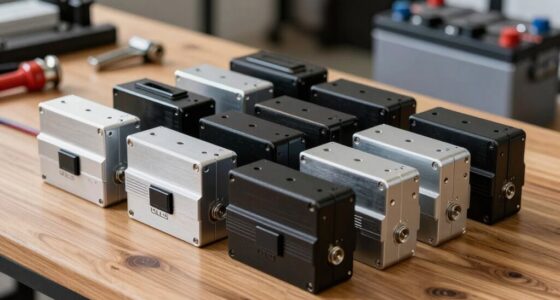
The best Rivian chargers and accessories depend on whether you need home charging, access to compatible Tesla Superchargers, or a simpler daily-cabin setup. I give the Rivian NACS Wall Charger the best overall spot for drivers who want a dedicated home-charging option, while the Amphenol NACS-to-CCS1 adapter stands out as a brand-name fast-charging choice and the EVDANCE portable J1772 charger adds flexibility when a suitable outlet is available. The main tradeoffs are charging speed and compatibility versus portability, cost, and how often an accessory will actually be used. Adapter fit and vehicle or charging-network compatibility matter more than headline power figures alone. Read on for the full breakdown, plus guidance on choosing the right setup for your Rivian.

Get backup power and energy gear delivered free with Prime
- Fast, free delivery on millions of items
- Prime Video, Amazon Music and more included
- Member-only deals all year
Key Takeaways
- The Rivian NACS Wall Charger is the home-charging lead: It is the roundup’s dedicated wall-mounted option, while the EVDANCE is a portable alternative for drivers who need more flexibility.
- Supercharger adapters are not interchangeable by name alone: The 14-product lineup includes several similar NACS-to-CCS1 adapters, so buyers should check vehicle eligibility, station compatibility, and adapter specifications before choosing.
- Headline electrical ratings do not settle the adapter decision: Several listings claim high current and voltage capacity; actual charging depends on the vehicle, station, adapter approval, and operating conditions.
- J1772 products solve different problems: EVDANCE is a portable charger, while the WenStorm is an extension cable; neither should be mistaken for a fast-charging adapter.
- Cabin accessories are about fit and convenience, not charging access: TWRAPS phone mounts and the dual MagSafe-compatible charger address daily-use needs, while the R2 rear-cubby holder is a vehicle-specific storage pick.
| LJH NACS to CCS1 DC Fast Charging Adapter for Tesla Superchargers |  | Best for Wide Temperature Operation | Connector type: NACS to CCS1 | Maximum power: 250 kW | Maximum amperage: 500 A | VIEW LATEST PRICE | See Our Full Breakdown |
| NACS to CCS1 Tesla Supercharger Adapter for Compatible EVs |  | Best for V3-Specific High-Rated Capacity | Connector type: NACS to CCS1 | Compatible Superchargers: Tesla V3 only | Maximum current: 500 A | VIEW LATEST PRICE | See Our Full Breakdown |
| Rivian NACS Wall Charger |  | Best Dedicated Home Charger | Output: 240 V AC, up to 48 A | Connector: NACS | Ports: 1 | VIEW LATEST PRICE | See Our Full Breakdown |
| EVDANCE Portable Level 1 and Level 2 J1772 EV Charger, 16A, 25 ft Cable |  | Best Portable Charging Backup | Connector: J1772 | Maximum amperage: 16 A | Voltage: 120 V or 240 V | VIEW LATEST PRICE | See Our Full Breakdown |
| AFI NACS to CCS1 Adapter for Tesla Superchargers, 500A 1000V DC Fast Charging |  | Best for V3 and V4 Supercharger Flexibility | Connector type: NACS to CCS1 | Compatible chargers: Tesla V3 and V4 Superchargers | Maximum amperage: 500 A | VIEW LATEST PRICE | See Our Full Breakdown |
| TWRAPS Dual MagSafe-Compatible Charger for Rivian R1T/R1S, Up to 25W per Side |  | Best for Charging Two Phones | Vehicle compatibility: Rivian R1T 2021–2026; Rivian R1S 2022–2026 | Charging spots: Two | Maximum output: Up to 25W per side | VIEW LATEST PRICE | See Our Full Breakdown |
| TWRAPS Magnetic Dashboard Phone Mount for Rivian R1S and R1T |  | Best for Adjustable Phone Viewing | Compatible vehicles: Rivian R1S and R1T, 2021–2027 | Phone compatibility: MagSafe-compatible iPhones | Mounting type: Dashboard insert | VIEW LATEST PRICE | See Our Full Breakdown |
| Amphenol NACS to CCS1 DC Fast Charging Adapter for Tesla Superchargers |  | Best Certified Fast-Charging Adapter | Connector compatibility: NACS to CCS1 | Charging type: DC fast charging only | Continuous current: 380A | VIEW LATEST PRICE | See Our Full Breakdown |
| NACS Adapter Holder for Rivian R2 Rear Driver Cubby |  | Best R2 Adapter Storage Accessory | Compatibility: Rivian R2 rear driver cubby | Product type: NACS adapter holder | Construction: 3D printed | VIEW LATEST PRICE | See Our Full Breakdown |
| WenStorm J1772 EV Extension Cable, 50A, 21 ft |  | Best for Extending J1772 Charger Reach | Connector: SAE J1772 male-to-female | Amperage: 50A | Voltage: 240V | VIEW LATEST PRICE | See Our Full Breakdown |
| Aipechy NACS to CCS1 Tesla Supercharger Adapter, 500A, 1000V |  | Best for Maximum Power | Connector Type: V3/V4 DC Tesla Supercharger | Input Voltage: 1000 V | Amperage: 500 A | VIEW LATEST PRICE | See Our Full Breakdown |
| TWRAPS Dashboard Phone Mount for Rivian R1S and R1T (2021–2027) |  | Best Phone Mount for Rivian | Brand: TWRAPS | Compatible Vehicles: Rivian R1S, Rivian R1T | Model Years: 2021–2027 | VIEW LATEST PRICE | See Our Full Breakdown |
| BMKCT NACS to CCS1 EV Adapter, 500A, 1000V DC, 250 kW |  | Best All-Weather Adapter | Brand: BMKCT | Model: TSL-CCS1-S | Connector Type: CCS1 | VIEW LATEST PRICE | See Our Full Breakdown |
| NACS to CCS1 DC Fast Charging Adapter for Compatible Electric Vehicles |  | Best Certified Adapter | Connector: Tesla Supercharger (NACS) to CCS1 | Charging Type: DC fast charging | Input Voltage: 1000 V | VIEW LATEST PRICE | See Our Full Breakdown |
More Details on Our Top Picks
LJH NACS to CCS1 DC Fast Charging Adapter for Tesla Superchargers
The LJH stands out for drivers who want a stated operating range that extends from -40°F to 122°F, wider at the cold end than the AFI adapter’s listed range. Its metal enclosure, IP54 weather protection, and 140°F auto-shutoff add practical safeguards for road-trip use, while its stated charging capacity reaches 250 kW. That capacity is more conservative than the second NACS-to-CCS1 adapter’s advertised 500 kW ceiling, though a vehicle’s limits and charging conditions determine actual speed. The main tradeoff is fit: compatibility is limited to select CCS1 vehicles and must be checked before relying on it. I’d choose this over the EVDANCE portable J1772 charger for access to compatible Superchargers, but not for home charging from an outlet.
Pros:- Rated for DC fast charging up to 250 kW, 500 A, and 1000 V.
- Metal enclosure with IP54 weather protection.
- 140°F auto-shutoff and a stated operating range of -40°F to 122°F.
- 18-month limited warranty.
Cons:- Vehicle compatibility and Supercharger access must be verified before use.
- Not compatible with listed exclusions including the Volvo EX30 and certain Ford vehicles.
- Its 250 kW rating is lower than the 500 kW claim for the second adapter in this group.
Best for: Rivian and other CCS1 EV owners who have confirmed vehicle and Supercharger eligibility and need an adapter rated for very cold conditions.
Not ideal for: Drivers who need a home AC charger, own an excluded vehicle such as the Volvo EX30, or have not verified Supercharger access for their vehicle.
- Connector type:NACS to CCS1
- Maximum power:250 kW
- Maximum amperage:500 A
- Input voltage:1000 V
- Enclosure:Metal; IP54 weatherproofing
- Auto-shutoff temperature:140°F
- Operating temperature:-40°F to 122°F
- Warranty:18-month limited warranty
Our verdict“Choose the LJH if your compatible CCS1 Rivian needs a weather-protected Supercharger adapter with a particularly broad stated temperature range.”
NACS to CCS1 Tesla Supercharger Adapter for Compatible EVs
This adapter is the specification-led choice for drivers whose approved CCS1 vehicle uses Tesla V3 Superchargers: it lists up to 500 A, 1000 V DC, and 500 kW, plus silver-plated copper conductors and an IP55 housing. That advertised power ceiling is higher than the LJH and AFI adapters’ 250 kW ratings, but it does not mean a vehicle will charge at 500 kW; vehicle capability and station conditions still set the pace. Its sharpest limitation is charger compatibility: it works with V3 only, not V1, V2, V4, home chargers, or other charger types. The connector’s tight fit can also make connection and removal harder than with the AFI’s engagement indicator. I’d pick it for V3 access, not as a flexible all-purpose adapter.
Pros:- Rated up to 500 A and 1000 V DC, with a stated maximum power of 500 kW.
- Silver-plated copper conductors.
- IP55-rated housing.
- Temperature cutoff at 194°F (90°C).
Cons:- Compatible with Tesla V3 Superchargers only; excludes V1, V2, V4, and home chargers.
- A tight connector fit can make plugging in and unplugging more difficult.
- Vehicle compatibility is limited to select models and must be verified.
Best for: Owners of a listed CCS1 EV, including a compatible Rivian, who specifically use Tesla V3 Superchargers and value the adapter’s high stated electrical ratings.
Not ideal for: Drivers who need V4 or home-charger compatibility, want easier plug removal, or have not confirmed their vehicle is supported.
- Connector type:NACS to CCS1
- Compatible Superchargers:Tesla V3 only
- Maximum current:500 A
- Maximum voltage:1000 V DC
- Maximum power:500 kW
- Conductors:Silver-plated copper
- Water resistance:IP55
- Temperature cutoff:194°F (90°C)
Our verdict“Choose this adapter only if your vehicle is approved and V3 Supercharger compatibility matters more than broader charger support or easy handling.”
Rivian NACS Wall Charger
For owners with a compatible newer Rivian and a suitable 240-volt circuit, this is the most direct home-charging match in the group: a Rivian-branded NACS wall charger rated at 48 A, with Wi-Fi for software updates and a four-year warranty. Unlike the LJH and AFI adapters, it is meant for regular home charging, not Supercharger access. Its advertised range-per-hour figures—up to 25 miles for R1S and R1T or 38 miles for R2 under optimal conditions—are vehicle-specific estimates, not a guarantee. The big catch is model-year eligibility: it is listed for 2026-and-newer R1S and R1T and 2027-and-newer R2, so older Rivian owners should not assume it fits their setup. Buyers also need a 240 V installation; this is not a plug-in portable alternative like the EVDANCE.
Pros:- 48 A charging from a 240 V AC connection.
- NACS connector designed for the specified compatible Rivian models.
- Wi-Fi connectivity supports software updates.
- Four-year warranty and Energy Star certification.
Cons:- Compatibility is limited to specified Rivian model years.
- Requires a suitable 240 V installation rather than offering portable outlet charging.
- Advertised range per hour varies with vehicle and charging conditions.
Best for: Owners of a 2026-or-newer R1S or R1T, or a 2027-or-newer R2, planning a dedicated 240 V home-charging installation.
Not ideal for: Owners of earlier Rivian model years, renters unable to install a 240 V wall charger, or drivers seeking a portable charger or Supercharger adapter.
- Output:240 V AC, up to 48 A
- Connector:NACS
- Ports:1
- Compatible vehicles:Rivian R1S and R1T (2026+); Rivian R2 (2027+)
- Connectivity:Wi-Fi for software updates
- Dimensions:7.8 × 5.5 × 16.3 in (D × W × H)
- Certification:Energy Star
- Warranty:4 years
Our verdict“Choose the Rivian wall charger for a fixed home setup if your vehicle is among the listed model years and you want a dedicated NACS unit.”
EVDANCE Portable Level 1 and Level 2 J1772 EV Charger, 16A, 25 ft Cable
The EVDANCE earns a different place in a Rivian-focused roundup: it is a portable J1772 charger for compatible vehicles, not a NACS Supercharger adapter or a high-output wall unit. Its 25-foot cable, carry bag, and included 6-20-to-5-15 adapter make it useful for drivers who may charge from a supported 120 V outlet or a 240 V NEMA 6-20 outlet. At up to 3.68 kW on 240 V, it is far slower than the Rivian NACS wall charger, but portability and outlet flexibility are the point. Rivian owners must confirm J1772 compatibility and any required vehicle adapter; Tesla vehicles need a separately sold J1772 adapter. Its 16 A ceiling and one-year warranty make it better suited to backup or modest charging needs than daily fast home charging.
Pros:- Supports 120 V and 240 V charging, with an included outlet adapter.
- 25-foot cable provides reach across a garage or driveway.
- LED display shows charging status and errors.
- Includes a carry bag and has IP66 housing protection.
Cons:- Maximum charging power is 3.68 kW at 240 V, well below the Rivian wall charger’s 48 A output.
- Rivian and other vehicle compatibility must be checked; Tesla vehicles need a separate J1772 adapter.
- Limited to listed outlet types without additional adapters.
Best for: Rivian owners with confirmed J1772 compatibility who want a portable backup charger for supported household or 240 V outlets.
Not ideal for: Drivers seeking fast daily home charging, owners without a supported outlet, or anyone expecting direct NACS or Supercharger compatibility.
- Connector:J1772
- Maximum amperage:16 A
- Voltage:120 V or 240 V
- Charging power:Up to 3.68 kW at 240 V; 1.44 kW at 120 V
- Cable length:25 ft
- Compatible outlets:NEMA 5-15/5-20 at 120 V; NEMA 6-20 at 240 V
- Housing protection:IP66
- Warranty:1 year
Our verdict“Choose the EVDANCE as a portable, lower-power backup when your Rivian supports J1772 charging and you have a compatible outlet.”
AFI NACS to CCS1 Adapter for Tesla Superchargers, 500A 1000V DC Fast Charging
The AFI is the most flexible Supercharger adapter here for drivers whose vehicle is authorized to use both Tesla V3 and V4 stations. It matches the LJH’s 250 kW stated maximum while adding dual safety locks, thermal monitoring, and a green engagement indicator that helps show when the connection is seated. Its IP55 housing and padded case suit travel, although the listed operating range of -22°F to 122°F is narrower at the cold end than the LJH’s -40°F lower limit. The second adapter claims a higher 500 kW maximum, but supports V3 only; AFI instead favors station-generation flexibility over that higher rating. This is still not a universal charging adapter: Supercharger access requires vehicle authorization, and it cannot be used with Tesla Destination Chargers or Level 2 AC stations.
Pros:- Supports compatible Tesla V3 and V4 Superchargers.
- Rated for up to 500 A, 1000 V, and 250 kW DC charging.
- Dual locks, thermal monitoring, and an engagement indicator provide clear connection safeguards.
- IP55 housing and included padded travel case.
Cons:- Supercharger access depends on vehicle authorization and compatibility.
- Does not work with Tesla Destination Chargers or Level 2 AC stations.
- Its stated operating range begins at -22°F, less cold-tolerant than the LJH’s listed range.
Best for: Rivian and other listed CCS1 EV owners who have Supercharger authorization and want one adapter for compatible Tesla V3 and V4 stations.
Not ideal for: Drivers without confirmed vehicle authorization, those seeking a home AC adapter, or people who prioritize a lower cold-weather operating limit than -22°F.
- Connector type:NACS to CCS1
- Compatible chargers:Tesla V3 and V4 Superchargers
- Maximum amperage:500 A
- Maximum voltage:1000 V
- Maximum output:250 kW
- Ingress protection:IP55
- Operating temperature:-22°F to 122°F
- Safety features:Dual safety locks, engagement indicator, and thermal monitoring
- Included accessory and warranty:Padded travel case; 1 year, with a 6-month extension available through registration within 30 days
Our verdict“Choose the AFI if your CCS1 Rivian is authorized and V3-and-V4 station support matters more than the LJH’s lower-temperature rating.”
TWRAPS Dual MagSafe-Compatible Charger for Rivian R1T/R1S, Up to 25W per Side
For R1T and R1S owners who want two phones charging in the center console, this dual-puck pad is more useful than a dashboard mount such as the TWRAPS Magnetic Dashboard Phone Mount, which positions a phone for viewing but does not charge it. The pad supports up to 25W per side, and its magnets and raised, two-level design help align compatible phones while making room for camera bumps. It installs without tools or adhesive, but the V4 uses both USB-C ports under the armrest, leaving neither free for another accessory. Charging also depends on the phone and power conditions, and AirPods are not a reliable fit. Check the vehicle-year compatibility before buying: this version is listed for R1T 2021–2026 and R1S 2022–2026, not 2027 models.
Pros:- Charges two compatible phones side by side
- Supports up to 25W per side, subject to device and charging conditions
- Magnetic alignment and a two-level body accommodate phone camera bumps
- Installs without tools or adhesives
Cons:- Uses both USB-C ports under the armrest
- Not listed as compatible with 2027 R1T or R1S models
- AirPods do not charge reliably
Best for: R1T or R1S owners with two compatible phones who want a tidy, shared center-console charging spot.
Not ideal for: 2027 R1T or R1S owners, drivers who need either under-armrest USB-C port free, or anyone seeking a reliable AirPods charging pad.
- Vehicle compatibility:Rivian R1T 2021–2026; Rivian R1S 2022–2026
- Charging spots:Two
- Maximum output:Up to 25W per side
- Wireless standard:MagSafe
- Compatible devices:MagSafe-compatible iPhones and wireless-charging Android phones with MagSafe-compatible cases
- USB-C ports required:Both ports under the armrest
- Installation:No tools or adhesives required
- Warranty:One-year replacement warranty
Our verdict“Choose this pad if two compatible phones need a dedicated charging spot in a supported R1T or R1S and both console USB-C ports can be spared.”
TWRAPS Magnetic Dashboard Phone Mount for Rivian R1S and R1T
This mount is for Rivian drivers who want a phone visible without sticking an adhesive bracket onto the dash. Its tool-free dashboard insert and rotatable ball mount give more control over viewing angle than the TWRAPS Dual MagSafe-Compatible Charger, which keeps phones down in the console for charging instead. The Rivian-specific base is designed to keep the road view unobstructed, while the magnetic connection suits MagSafe-compatible iPhones. That focus also limits its audience: drivers with phones that lack MagSafe compatibility may need a different mounting solution, and the base is made for R1T and R1S dashboards rather than a universal fit. It does not add charging, either, so buyers choosing between visibility and power should treat it as a viewing mount, not an alternative charging pad.
Pros:- Installs without tools, adhesive, or screws
- Rotatable 17 mm ball mount allows viewing-angle adjustment
- Designed to keep the road view unobstructed
- Made in the United States
Cons:- Designed specifically for R1T and R1S dashboards
- MagSafe compatibility may exclude phones without a compatible magnetic setup
- Mounts a phone but does not charge it
Best for: R1T and R1S drivers with MagSafe-compatible iPhones who want to position a phone for viewing without tools or dashboard adhesive.
Not ideal for: Drivers using non-MagSafe phones, those who need a charging accessory, or owners of vehicles other than the specified R1T and R1S models.
- Compatible vehicles:Rivian R1S and R1T, 2021–2027
- Phone compatibility:MagSafe-compatible iPhones
- Mounting type:Dashboard insert
- Adjustability:Rotatable 17 mm ball mount
- Materials:Carbon fiber-infused ABS plastic
- Dimensions:5 × 3 × 2 inches
- Weight:14.4 ounces
- Warranty:1 year
Our verdict“Pick this Rivian-specific mount if an adjustable, unobstructed phone position matters more than the console charging offered by the TWRAPS dual pad.”
Amphenol NACS to CCS1 DC Fast Charging Adapter for Tesla Superchargers
Among the roundup’s NACS-to-CCS1 adapters, the Amphenol stands out for buyers who put documented safety and outdoor protection ahead of minimizing bulk. It is CSA-certified to UL 2252, SAE J3400-1 compliant, and has an interlock and thermal protection; its IP67 housing is rated Type 3R when connected. That makes it a more specification-led pick than the AFI NACS to CCS1 Adapter, whose listed headline is 500A, while this Amphenol specifies 380A continuous current and up to 600A under stated conditions. It works with compatible CCS1 vehicles that have automaker-enabled access, but it is for DC fast charging only—not home AC charging. Vehicle and station capabilities still set actual charging speed, and its 2.64-pound body is less convenient to carry than a compact accessory.
Pros:- CSA-certified to UL 2252 and SAE J3400-1 compliant
- Interlock and thermal switches provide protection during charging
- IP67 housing, rated Type 3R when connected, supports outdoor use
- Includes a protective carrying case
Cons:- For DC fast charging only, not AC home charging
- Not compatible with Tesla or CHAdeMO vehicles
- Actual charging speed depends on vehicle and charging station
Best for: CCS1 EV owners with automaker-enabled Supercharger access who want a certified, weather-resistant adapter for DC fast-charging trips.
Not ideal for: Drivers seeking a home AC adapter, owners of Tesla or CHAdeMO vehicles, or anyone whose vehicle lacks access to compatible NACS fast chargers.
- Connector compatibility:NACS to CCS1
- Charging type:DC fast charging only
- Continuous current:380A
- Maximum current:Up to 600A under specified conditions
- Safety certifications:CSA-certified to UL 2252; SAE J3400-1 compliant
- Ingress protection:IP67; Type 3R when connected
- Operating temperature:-40°F to 104°F
- Weight:2.64 pounds
Our verdict“Choose the Amphenol if your CCS1 EV has Supercharger access and you value certification and weather protection more than a lighter adapter.”
NACS Adapter Holder for Rivian R2 Rear Driver Cubby
This is a small organizational add-on, not a charging adapter: it gives a NACS adapter a dedicated place in the R2 rear driver cubby so it is easier to find and less likely to shift around the cabin. Compared with the Amphenol NACS to CCS1 DC Fast Charging Adapter, which connects a compatible CCS1 vehicle to a fast charger, this holder only stores the adapter you already own. Its appeal is simplicity: it slides into the cubby without tools and can be removed when needed. The tradeoff is equally clear—its fit is specific to the Rivian R2 rear driver cubby, so it is not a general-purpose organizer for R1T or R1S owners. It is also a third-party product, not affiliated with or endorsed by Rivian, and the supplied product data gives no material or durability rating beyond 3D-printed construction.
Pros:- Keeps a NACS adapter in a dedicated storage spot
- Places the adapter in the R2 rear driver cubby for access
- Slides into place without tools
- Removable when the cubby needs to be used differently
Cons:- Designed for the Rivian R2 rear driver cubby only
- Does not include or replace a NACS charging adapter
- Third-party product not affiliated with or endorsed by Rivian
Best for: R2 owners who keep a NACS adapter in the rear driver cubby and want it stored in a fixed, accessible spot.
Not ideal for: R1T or R1S owners, drivers who do not carry a NACS adapter, or buyers wanting a charging adapter rather than a storage accessory.
- Compatibility:Rivian R2 rear driver cubby
- Product type:NACS adapter holder
- Construction:3D printed
- Installation:Tool-free; slides into cubby
- Removal:Removable when needed
- Brand:OQPWSZZ
Our verdict“Buy this only if you own an R2, use the specified cubby for your NACS adapter, and want a simple removable holder.”
WenStorm J1772 EV Extension Cable, 50A, 21 ft
If a compatible J1772 charger cannot comfortably reach your Rivian’s charging location, this cable adds 21 feet of reach without replacing the charger. It is a different kind of accessory from the Amphenol NACS to CCS1 DC Fast Charging Adapter: the Amphenol serves compatible DC fast-charging stations, while this extension is for compatible J1772 Level 1 or Level 2 setups. Its 50A, 240V rating and IP66 protection suit indoor or outdoor use, and the carrying case helps manage a cable that weighs six pounds. That weight is the main portability tradeoff, and the cable is not a universal extension for NACS equipment. Buyers should also confirm their vehicle, charger, and connection setup are compatible before relying on an extension; the product data describes J1772 compatibility.
Pros:- Adds 21 feet of reach to compatible J1772 charging setups
- Rated for up to 50A at 240V
- IP66 rating supports indoor and outdoor use
- Copper wiring and a flame-retardant jacket, with a carrying case included
Cons:- Compatible with J1772 vehicles and chargers only
- Weighs 6 pounds, which adds carrying and storage bulk
- Does not itself function as a charger
Best for: Rivian owners using compatible J1772 Level 1 or Level 2 charging equipment who need extra cable reach at home or another charging location.
Not ideal for: Drivers using NACS-only charging equipment, those who do not need additional reach, or buyers who prioritize carrying a lightweight cable.
- Connector:SAE J1772 male-to-female
- Amperage:50A
- Voltage:240V
- Power:12 kW
- Length:21 ft
- Weight:6 lb
- Water resistance:IP66
- Certification:ETL Listed, UL Certified, SAE J1772 compliant
- Included:J1772 extension cable and carrying case
Our verdict“Choose this extension when a compatible J1772 charger needs more reach; skip it if your setup is NACS-only or already reaches comfortably.”
Aipechy NACS to CCS1 Tesla Supercharger Adapter, 500A, 1000V
If your priority is raw headroom, the Aipechy NACS to CCS1 adapter makes a strong case. It’s rated for 500A and 1000V, which exceeds the spec sheets of both the BMKCT and the NACS to CCS1 DC Fast Charging Adapter in this lineup. That extra margin matters for future-proofing as charging networks push higher output. Compared with the BMKCT, which tops out at 250kW and adds an IP56 rating, the Aipechy skips weather sealing and thermal shutoff entirely. That tradeoff is fine for a portable adapter you’ll keep in a glovebox, but not ideal for frequent outdoor use. It also won’t work with Level 1 or Level 2 AC chargers, so it’s purely a DC fast-charging tool. For Rivian owners who want maximum compatibility with Supercharger V3 and V4 stations, this is the one to grab.
Pros:- Supports up to 500A and 1000V for high-power DC fast charging.
- Compatible with V3 and V4 Superchargers, covering more stations than some rivals.
- Portable size fits in a glove compartment.
- Works with Ford, GM, Rivian, and other CCS vehicles with network access.
Cons:- No IP rating or thermal shutoff, so it’s not built for harsh conditions.
- Requires vehicle manufacturer authorization for Tesla network access.
Best for: Rivian owners who want maximum power headroom for future Supercharger stations and don’t need weatherproofing.
Not ideal for: Drivers who frequently charge outdoors in rain or snow, since it lacks an ingress protection rating.
- Connector Type:V3/V4 DC Tesla Supercharger
- Input Voltage:1000 V
- Amperage:500 A
- Wattage:500000 W (listed)
- Connectivity:NACS to CCS1
- Charging Compatibility:Compatible CCS electric vehicles with authorized Tesla Supercharger network access
- Number of Items:1
Our verdict“Buy this if you want the highest power spec in this roundup and plan to keep the adapter stored in your vehicle.”
TWRAPS Dashboard Phone Mount for Rivian R1S and R1T (2021–2027)
For a phone mount that actually fits a Rivian’s interior, the TWRAPS Dashboard Mount is the obvious choice. It’s designed specifically for R1S and R1T models from 2021 to 2027, so it won’t wobble or block the driver’s view like a generic vent clip. The tool-free AC vent installation is a nice touch, and you can place it on either side. Compared with the TWRAPS Dual MagSafe charger, this single mount is simpler and cheaper, but it doesn’t offer charging. The magnetic attachment works with MagSafe cases, and the adjustable ball mount lets you angle the screen toward you. It’s not water resistant, so it’s best for interior use. If you just need a secure place to see navigation, this mount is hard to beat.
Pros:- Vehicle-specific design ensures a perfect fit for Rivian R1S/R1T.
- Installs in an existing AC vent without tools or adhesive.
- Adjustable ball mount and magnetic attachment keep the phone secure.
- Can be mounted on driver or passenger side.
Cons:- Not water resistant, so it’s not for outdoor use.
- No built-in charging capability.
Best for: Rivian R1S and R1T owners who want a dedicated, tool-free phone mount that doesn’t obstruct the road view.
Not ideal for: Anyone who wants wireless charging built into the mount, since this is a passive holder.
- Brand:TWRAPS
- Compatible Vehicles:Rivian R1S, Rivian R1T
- Model Years:2021–2027
- Mounting Type:Dashboard; attaches to AC vent
- Phone Compatibility:Android, iPhone
- MagSafe Compatibility:Compatible with MagSafe cases
- Material:Plastic
- Item Weight:8 ounces
Our verdict“Get this if you need a simple, secure phone mount that’s tailored to your Rivian’s dashboard.”
BMKCT NACS to CCS1 EV Adapter, 500A, 1000V DC, 250 kW
The BMKCT NACS to CCS1 adapter earns its place with an IP56 rating and a 140°F auto-shutoff, making it the most rugged option in this batch. That weather sealing is a real advantage over the Aipechy, which has no ingress protection at all. But the BMKCT is pickier about where it works: it only pairs with Tesla V3 Superchargers, not V1, V2, or V4. That’s a significant limitation for Rivian owners who might encounter V4 stations on road trips. It also lists several incompatible vehicles, including the Ford Mustang Mach-E, so you’ll need to check compatibility before buying. The 250kW maximum is plenty for most CCS cars, and the compact 1.3-pound design is easy to store. If you charge outdoors frequently, the durability is worth the compatibility tradeoff.
Pros:- IP56-rated for all-weather use.
- 140°F auto-shutoff adds safety against overheating.
- Supports up to 250kW for fast charging.
- Compact and lightweight at 1.3 pounds.
Cons:- Only works with Tesla V3 Superchargers, not V1, V2, or V4.
- Excludes several EV models, including the Mustang Mach-E.
Best for: Rivian owners who frequently charge at outdoor or exposed Supercharger stations and want extra protection against dust and moisture.
Not ideal for: Drivers who need access to V4 Superchargers or own a vehicle on the incompatible list, like the Mustang Mach-E.
- Brand:BMKCT
- Model:TSL-CCS1-S
- Connector Type:CCS1
- Maximum Current:500 A
- Maximum Voltage:1000 V DC
- Maximum Power:250 kW
- Compatible Chargers:Tesla V3 Superchargers
- Weight:1.3 pounds
Our verdict“Choose this if you prioritize durability and safety over maximum station compatibility.”
NACS to CCS1 DC Fast Charging Adapter for Compatible Electric Vehicles
The NACS to CCS1 DC Fast Charging Adapter stands out for its certifications and ingress protection. It carries CE and FCC marks and an IP65 rating, which is the highest weather resistance in this roundup. That makes it a more trustworthy pick than the Aipechy, which lacks any official certification. The plug-and-play design is straightforward, and it supports up to 1000V and 500A, with a stated maximum of 450kW. However, the spec sheet lists 500kW in the wattage field, which is inconsistent with the 450kW description. That discrepancy is worth noting, but it doesn’t affect real-world charging since most stations won’t hit those numbers. Compared with the BMKCT, this adapter offers broader compatibility with Supercharger stations, though you’ll still need to confirm vehicle support. For a certified, weather-sealed adapter, this is the safest bet.
Pros:- CE and FCC certified for safety and compliance.
- IP65 rating offers excellent protection against dust and water jets.
- Supports up to 1000V and 500A for high-power DC charging.
- Plug-and-play design requires no tools or setup.
Cons:- Power figures are inconsistent between the spec sheet (500kW) and description (450kW).
- Compatibility still depends on vehicle and station support.
Best for: Rivian owners who want an adapter with official safety certifications and the best weather protection available.
Not ideal for: Buyers who are put off by the conflicting power specs (500kW vs 450kW) and want a single clear rating.
- Connector:Tesla Supercharger (NACS) to CCS1
- Charging Type:DC fast charging
- Input Voltage:1000 V
- Output Voltage:1000 V
- Amperage:500 A
- Maximum Power Output:450 kW
- Ingress Protection:IP65
- Certifications:CE, FCC
Our verdict“Pick this if you want the peace of mind of certifications and the highest IP rating in this lineup.”
How We Picked
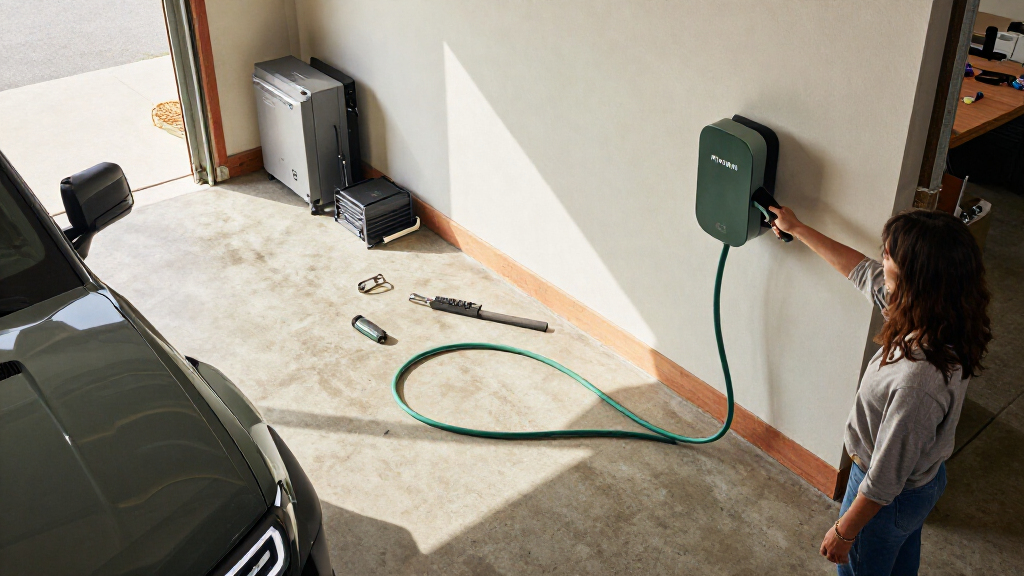
I organized these 14 picks around the jobs Rivian owners are trying to solve: charging at home, charging away from home, adding cable reach, and improving everyday cabin use. For charging equipment, I weighed the product type, stated electrical limits, connector fit, portability, and how clearly a buyer can identify the intended vehicle or charging scenario. For mounts, wireless charging, and storage, I focused on vehicle fit, ease of use, and whether the item serves a distinct purpose rather than duplicating another pick.
The ranking favors options with a clear use case and meaningful differentiation, not products with the biggest number in a listing. The Rivian wall charger leads for dedicated home use; the Amphenol adapter earns a prominent place among the Supercharger options, while the portable EVDANCE charger suits a different need. Similar adapters and phone mounts rank as alternatives where buyers should compare exact compatibility and design details. I treat stated specifications as listing claims, not a guarantee of performance or fit, so owners should verify current Rivian and charging-network guidance before purchase.
Factors to Consider When Choosing Best Rivian Chargers And Accessories
Before choosing from the best Rivian chargers and accessories, start with the task you need to solve—not the most impressive-sounding specification. These products cover different parts of ownership, and confusing an adapter, a charger, and an extension cable can lead to a poor fit for your setup.
Match the product to the charging job
A wall charger, portable charger, extension cable, and DC fast-charging adapter each play a different role. A wall unit is meant to be installed as a regular home charging point; a portable J1772 charger can provide another charging route where the available outlet and circuit support it. An extension cable adds reach to a compatible charging cable, but it does not provide power on its own or make an incompatible setup safe. A NACS-to-CCS1 adapter is for a compatible fast-charging connection, not a home charging replacement. Write down where and how you expect to charge before comparing product names, since similar-looking connectors can serve very different systems.
Verify Rivian and network compatibility before buying an adapter
Adapter compatibility depends on more than whether the ends appear to match. Check your Rivian model and model year, the adapter’s stated use, the charging network’s current access rules, and any vehicle software or account requirements. A high current or voltage claim does not by itself prove that a particular vehicle and station combination is approved. Also confirm whether your intended use requires a manufacturer-supplied or specifically authorized adapter. If access rules change, rely on current Rivian and network documentation rather than an old listing or a product title.
Choose home charging around your electrical setup
For a permanent home setup, the electrical circuit and installation location can matter as much as the charger itself. Have a qualified electrician check the available circuit, panel capacity, mounting location, and local requirements before selecting equipment. A charger’s stated maximum output cannot make a circuit deliver more than it supports. Buyers who rent or move often may prefer a portable option, but that choice still depends on having a suitable outlet and circuit wherever it will be used. Avoid choosing based on a claimed charging rate before confirming what your home can safely supply.
Treat reach and portability as separate decisions
Portable charging and cable extension solve different access problems. A portable charger is useful when you need a charging unit that can travel with you, while an extension cable helps when an existing compatible charging cable falls short of the vehicle’s charge port. Extra cable length can make parking easier, but it also adds bulk and another connection to manage. Confirm that an extension is explicitly suited to the charging equipment and use case you have in mind; connector fit alone is not enough. If you only charge at one convenient home location, paying for extra reach may bring little practical benefit.
Check vehicle-specific fit for cabin accessories
Phone mounts, wireless chargers, and storage holders can depend on the vehicle’s interior layout, trim, and model year. Confirm the listing names your exact R1T or R1S configuration—or R2, where relevant—rather than assuming accessories share a universal mounting point. A magnetic mount also depends on a compatible phone or case, and a MagSafe-compatible charger may need the right alignment and power connection to work as intended. Look at how the accessory attaches and whether it blocks controls, vents, sightlines, or storage access. A simpler mount may suit drivers who want navigation placement, while a dual charger is better suited to occupants who regularly charge two phones.
Pay for capability you will use
Higher stated electrical limits, extra cable length, and multi-device features are useful only when they match your routine and equipment. A frequent road-tripper may value a compatible fast-charging adapter, while a home-focused driver may get more benefit from a dependable fixed charging arrangement. Occasional charging away from home can make a portable unit attractive, but only if the outlets on hand are appropriate. Cabin accessories can improve daily convenience, though buying several overlapping mounts or charging products can add clutter without adding much function. Prioritize verified fit, a clear use case, and support information over a spec sheet that cannot be applied to your actual setup.
Frequently Asked Questions
Can I use any NACS-to-CCS1 adapter with my Rivian at a Tesla Supercharger?
No. Connector shape alone does not confirm that the adapter, vehicle, and charging station are compatible. Check current Rivian guidance for your model and the network’s access requirements, then verify that the specific adapter is approved for the intended use. Pay attention to stated current and voltage limits, but do not treat those figures as proof of authorization. If any compatibility detail is unclear, confirm it with Rivian or the adapter maker before relying on it for a trip.
Should I choose a wall charger or a portable J1772 charger for home use?
Choose based on how permanent your setup needs to be and what your electrical system can support. A wall charger suits a regular, dedicated parking spot, while a portable unit offers more flexibility if you can use suitable outlets at home or elsewhere. Portable does not mean it can plug safely into every outlet, and the circuit’s capacity still limits charging. Ask an electrician to review the circuit and installation plan before buying equipment. If you expect to move or charge in multiple places, portability may matter more than a fixed installation.
Is an EV extension cable the same as a portable charger?
No. The EVDANCE product in this roundup is a portable J1772 charger, while the WenStorm product is an extension cable intended to add reach to compatible charging equipment. An extension cable does not contain the charging function and will not help if you lack a compatible charger or power source. Confirm the cable’s connector type, electrical rating, and intended charging use before connecting it. Do not use an extension simply because the plugs fit; follow the equipment makers’ instructions for a safe compatible setup.
What should I check before buying a Rivian phone mount or MagSafe charger?
Start with exact vehicle fit, since R1T, R1S, and R2 accessories may not share the same mounting points. Then check whether your phone and case work with the magnetic attachment or MagSafe-compatible charging feature. Consider where the phone sits: a mount should not obstruct the driver’s view, controls, or access to cabin storage. A dual charger is useful when two occupants regularly need a charge, while a basic mount may be enough for navigation. Confirm how the accessory attaches and whether it needs a separate power connection.
Do the 500A or 250 kW claims mean an adapter will charge my Rivian at that rate?
No. Those figures describe claims in product listings and do not promise that your vehicle will receive that charging rate. Actual charging is limited by the vehicle, the station, battery conditions, adapter compatibility, and other operating factors. A product’s rating should be within the requirements of the equipment it connects, but a higher number cannot override those limits. Verify the precise adapter and vehicle compatibility, and use current manufacturer guidance rather than comparing headline figures alone.
Conclusion
For a dedicated home setup, I’d choose the Rivian NACS Wall Charger as the best overall pick in this lineup. The EVDANCE portable J1772 charger is my best-value-style choice for drivers who need portability and have access to suitable outlets; buyers seeking a brand-name Supercharger adapter can start with the Amphenol option, while still confirming vehicle and network approval. Beginners should first identify whether they need home charging, portable charging, or a fast-charging adapter, then verify their electrical setup and compatibility before ordering. For specific needs, choose the WenStorm extension cable when compatible cable reach is the issue, the TWRAPS dual charger for two-phone charging, or a vehicle-specific mount or cubby holder for cabin organization. The right pick is the one that solves your actual charging or daily-use problem without relying on a specification your setup cannot use.
Black Friday Picks

Amazon Kindle Paperwhite (12th Generation, 2024), 16 GB, 7-inch Display, Black
As an affiliate, we earn on qualifying purchases.