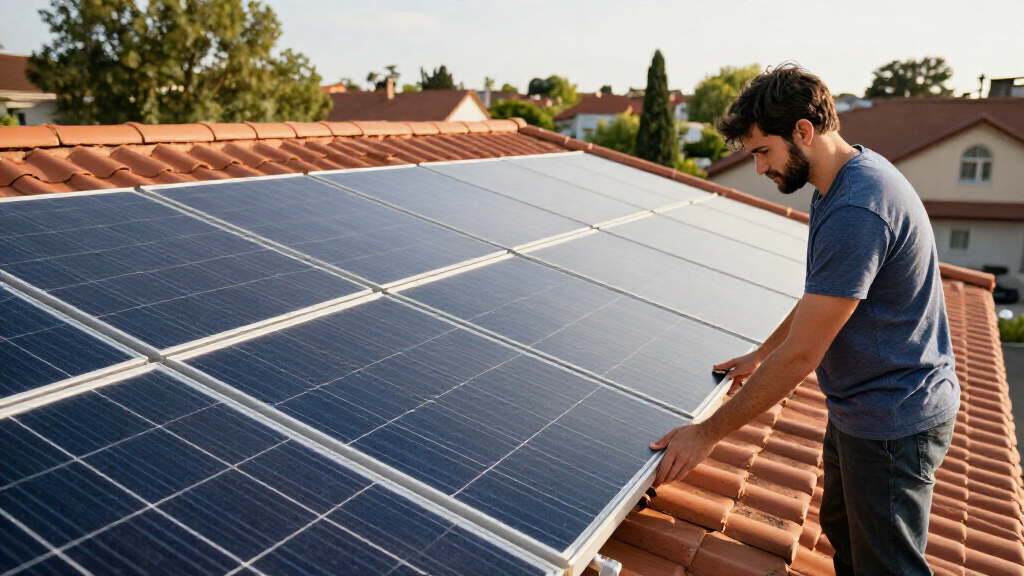
Among these best home solar panels, I rank the ECO-WORTHY 6-Panel 590W Bifacial Solar Kit as the best overall for buyers who want a coordinated, higher-output panel set rather than a few standalone modules. The Renogy 800W Bifacial N-Type stands out for shoppers prioritizing high stated efficiency, while the ECO-WORTHY 400W set offers a more approachable starting point with four smaller panels. The right choice depends on how much power you need, whether your system is grid-tied or off-grid, and how much planning you can handle for mounting, wiring, and compatible equipment. Larger kits can simplify matching components, but they need more space and careful system design; smaller sets are easier to scale but may require extra purchases. Read on for the full breakdown and help matching a panel setup to your home and energy goals.

Get backup power and energy gear delivered free with Prime
- Fast, free delivery on millions of items
- Prime Video, Amazon Music and more included
- Member-only deals all year
Key Takeaways
- The ECO-WORTHY 3,540W kit leads for a coordinated multi-panel setup: it combines six 590W bifacial modules, but buyers still need to confirm which balance-of-system components are included and compatible.
- Renogy’s 800W and 1,180W panels favor buyers prioritizing high stated efficiency: both list 25% efficiency and N-type 16BB technology, while the larger model calls for more mounting space and a clearer output plan.
- Small-panel sets serve different jobs from high-wattage modules: ECO-WORTHY’s four 100W panels and HQST’s two 200W panels can suit compact or staged projects, but need more modules to reach the output of 450W or 590W options.
- Bifacial designs need a suitable installation to deliver their potential: rear-side gains depend on light reaching the back of the panels, so mounting surface, spacing, and surroundings matter.
- The 10 kW off-grid kit is a system-level choice, not just a panel upgrade: its stated 9.36 kWh daily output and off-grid focus make load planning, storage, and installation compatibility central to the decision.
| HISHEN 450W Bifacial Solar Panels, 2-Pack, 900W Total |  | Best for High Output in a Two-Panel Set | Panel count: 2 | Panel wattage: 450 W each | Combined output: 900 W | VIEW LATEST PRICE | See Our Full Breakdown |
| Callsun 450W Bifacial N-Type Monocrystalline Solar Panels, 2-Pack |  | Best for Shade-Prone Installations | Panel count: 2 | Panel wattage: 450 W each | Cell type: N-Type 16BB monocrystalline | VIEW LATEST PRICE | See Our Full Breakdown |
| SUNGOLDPOWER 6-Pack 590W N-Type Bifacial Monocrystalline Solar Panels |  | Best for Large Fixed Arrays | Panel count: 6 | Power per panel: 590 W | Maximum combined power: 3,540 W | VIEW LATEST PRICE | See Our Full Breakdown |
| Renogy Bifacial Solar Panel 800W N-Type 16BB, 25% High Efficiency |  | Best Brand-Led Choice for Compact Arrays | Panel count: 2 | Panel wattage: 400 W each | Maximum combined power: 800 W | VIEW LATEST PRICE | See Our Full Breakdown |
| ECO-WORTHY 195W Bifacial N-Type Solar Panels, 2-Pack |  | Best for Small Off-Grid Systems | Panel count: 2 | Maximum power: 195 W | Cell type: N-Type monocrystalline | VIEW LATEST PRICE | See Our Full Breakdown |
| ECO-WORTHY 400W N-Type Monocrystalline Solar Panel Set, 4 × 100W |  | Best for Flexible Off-Grid Setups | Total power: 400W | Panel count: 4 | Power per panel: 100W | VIEW LATEST PRICE | See Our Full Breakdown |
| DOKIO 800W Solar Panel Set, 2-Pack 400W Panels for 12V and 24V Systems |  | Best for High Output From Two Panels | Panel count: 2 | Power per panel: 400W | Efficiency: 25% | VIEW LATEST PRICE | See Our Full Breakdown |
| Renogy Bifacial Solar Panel 1180W N-Type 16BB, 25% High Efficiency |  | Best Single-Panel Power | Maximum power: 1180W | Cell type: N-type monocrystalline | Busbar design: 16BB | VIEW LATEST PRICE | See Our Full Breakdown |
| ECO-WORTHY 6-Panel 590W Bifacial N-Type Monocrystalline Solar Kit (3,540W Total) |  | Best for Expandable Off-Grid Arrays | Panel count: 6 | Maximum power per panel: 590W | Efficiency: 25% | VIEW LATEST PRICE | See Our Full Breakdown |
| ECO-WORTHY 10 kW Off-Grid Solar System Kit with 9.36 kWh Daily Output |  | Best Complete Off-Grid System | Solar panel quantity: 12 | Total solar panel output: 2340W | Panel output: 195W each | VIEW LATEST PRICE | See Our Full Breakdown |
| HQST 400W Solar Panel Set, Two 200W N-Type Panels |  | Best for Compact Off-Grid Setups | Total maximum power: 400 watts (2 × 200 watts) | Cell type: Monocrystalline N-Type | Maximum efficiency: Up to 25.4% | VIEW LATEST PRICE | See Our Full Breakdown |
| home solar panel | Cell type | Panel count | Efficiency | Dimensions |
|---|---|---|---|---|
| HISHEN 450W Bifacial Solar Pan | N-type monocrystalline silicon | 2 | 25.2% | 44.65 × 1.8 × 69.37 in |
| Callsun 450W Bifacial N-Type M | N-Type 16BB monocrystalline | 2 | 25.6% | 69.37 × 44.65 × 1.18 in |
| SUNGOLDPOWER 6-Pack 590W N-Typ | N-Type monocrystalline | 6 | Up to 22.8% | 90 × 44.7 × 1.4 in |
| Renogy Bifacial Solar Panel 80 | N-Type 16BB monocrystalline | 2 | 25% | 44.7 × 1.4 × 67.8 in |
| ECO-WORTHY 195W Bifacial N-Typ | N-Type monocrystalline | 2 | — | 58.86 × 26.18 × 1.18 in |
| ECO-WORTHY 400W N-Type Monocry | N-type bifacial monocrystalline | 4 | — | — |
| DOKIO 800W Solar Panel Set | Grade A monocrystalline silicon | 2 | 25% | — |
| Renogy Bifacial Solar Panel 11 | N-type monocrystalline | — | — | 44.6 × 1.4 × 89.7 in |
| ECO-WORTHY 6-Panel 590W Bifaci | Bifacial N-type monocrystalline | 6 | 25% | — |
| ECO-WORTHY 10 kW Off-Grid Sola | — | — | — | — |
| HQST 400W Solar Panel Set | Monocrystalline N-Type | — | — | — |
More Details on Our Top Picks
HISHEN 450W Bifacial Solar Panels, 2-Pack, 900W Total
I’d shortlist the HISHEN set for buyers who want 900W from two panels without moving up to the much larger SUNGOLDPOWER six-panel array. Its 450W modules pair 25.2% efficiency with bifacial cells, so reflected light may add production when the panels are mounted above a bright surface. Dual-glass construction and anti-PID protection are useful durability features for a fixed residential or off-grid installation, while MC4 connectors and pre-drilled holes simplify mounting and wiring.
The tradeoff is handling: the listed 104 lb set weight makes installation a two-person job for many buyers, and the description does not spell out a long performance commitment like Callsun’s. I’d also verify inverter or MPPT compatibility before ordering. Compared with the smaller ECO-WORTHY 195W pair, HISHEN is aimed at substantially higher system output, not compact or portable setups.
Pros:- Two 450W modules provide 900W of listed combined output.
- 25.2% efficiency and bifacial construction can make good use of available area and reflected light.
- Dual-glass construction and anti-PID protection are intended to support long-term outdoor use.
- MC4 connectors and pre-drilled mounting holes simplify installation.
Cons:- The listed 104 lb set weight can make lifting and positioning difficult.
- Bifacial gains depend on mounting height and the reflectivity beneath the panels.
- Buyers must confirm compatibility with their inverter or MPPT controller.
Best for: Homeowners or off-grid system builders seeking two high-output panels for a fixed installation with compatible mounting and charge equipment.
Not ideal for: Solo installers, buyers with limited roof space, or anyone who needs a clearly stated long-term output commitment before purchase.
- Panel count:2
- Panel wattage:450 W each
- Combined output:900 W
- Efficiency:25.2%
- Cell type:N-type monocrystalline silicon
- Dimensions:44.65 × 1.8 × 69.37 in
- Weight:104 lb
- Construction and connectors:2.0 mm dual glass; MC4 connectors
- Warranty:10 years
Our verdict“Choose HISHEN for a high-output two-panel residential or off-grid array if you can handle its weight and confirm electrical compatibility.”
Callsun 450W Bifacial N-Type Monocrystalline Solar Panels, 2-Pack
Callsun earns a distinct place for buyers whose roof or yard gets intermittent shade. Its dual-module parallel anti-shade design is intended to limit the production hit when part of the array is shaded, a practical distinction from the HISHEN 450W pair, whose listed features emphasize cell efficiency and dual-glass durability instead. The two 450W bifacial panels also have 25.6% stated efficiency, double-glass construction, and an IP68 rating for outdoor exposure.
I’d choose it over the compact ECO-WORTHY 195W pair when a fixed system needs much greater listed output, but the larger format demands more installation area. Rear-side generation is not automatic: the mounting setup and reflected light affect any gain. Callsun states a 25-year output commitment of at least 84.5% and 10 years of technical support, though buyers should check the full terms and confirm electrical fit with their system before installation.
Pros:- Dual-module parallel design is intended to reduce losses from partial shading.
- Two 450W panels offer substantial output for a two-panel setup.
- Double-glass construction and IP68 ingress protection suit outdoor installations.
- Stated 25-year output commitment specifies at least 84.5% output.
Cons:- The large panel dimensions may rule it out for compact roofs or vehicle installations.
- Bifacial production gains depend on placement, clearance, and reflected light.
- System voltage and current compatibility still need checking before installation.
Best for: Homeowners with a partially shaded roof or off-grid site who want a high-output pair and can provide ample mounting area.
Not ideal for: Buyers with tight roof or RV space, or those expecting bifacial gains without suitable clearance and a reflective surface behind the panels.
- Panel count:2
- Panel wattage:450 W each
- Cell type:N-Type 16BB monocrystalline
- Efficiency:25.6%
- Maximum amperage:14.97 A
- Maximum voltage:30.08 V
- Dimensions:69.37 × 44.65 × 1.18 in
- Ingress protection:IP68
- Output commitment:25 years; at least 84.5% output
Our verdict“Pick Callsun if partial shade is a real site constraint and you have room for its full-size panels.”
SUNGOLDPOWER 6-Pack 590W N-Type Bifacial Monocrystalline Solar Panels
When the goal is a substantial fixed array, I’d put SUNGOLDPOWER ahead of the two-panel HISHEN and Callsun sets. Six 590W modules deliver 3,540W listed maximum power, making this a better match for buyers planning a broad roof or ground installation than for someone adding a couple of panels to an existing small system. N-type cells, bifacial construction, and dual glass target both front-side output and potential rear-side gains, while ETL UL61730 certification and CEC listing provide useful installation credentials.
Its scale is also the main compromise. Each panel measures 90 × 44.7 inches, so layout, access, and mounting hardware need careful planning; the listed 69.5 lb weight adds handling demands. The 22.8% efficiency figure is lower than the 25.6% stated for Callsun, but SUNGOLDPOWER supplies more total panel wattage and a longer stated performance warranty. This is a system-building choice, not a space-saving one.
Pros:- Six panels provide 3,540W of listed maximum power.
- Bifacial design can collect additional energy from reflected light.
- ETL UL61730 certification and CEC listing are stated.
- Includes a 12-year materials and workmanship warranty and 30-year linear performance warranty.
Cons:- Each panel’s 90-inch length makes layout and transport challenging.
- The listed 69.5 lb per-panel weight complicates handling and mounting.
- Up to 30% rear-side gain depends on the installation environment and is not guaranteed.
Best for: Property owners designing a large rooftop or ground-mounted array who have adequate space, structural support, and installation help.
Not ideal for: RV owners, small-roof households, or buyers adding only a few panels to a low-capacity system.
- Panel count:6
- Power per panel:590 W
- Maximum combined power:3,540 W
- Efficiency:Up to 22.8%
- Cell type:N-Type monocrystalline
- Dimensions:90 × 44.7 × 1.4 in
- Weight:69.5 lb per panel
- Certifications:ETL UL61730 certified; CEC listed
- Warranty:12 years materials and workmanship; 30 years linear performance
Our verdict“Choose SUNGOLDPOWER for a spacious, higher-capacity fixed array, not a compact or quick two-panel installation.”
Renogy Bifacial Solar Panel 800W N-Type 16BB, 25% High Efficiency
The Renogy pair is a sensible middle ground for buyers who want more output than the ECO-WORTHY 195W set but do not need SUNGOLDPOWER’s six-panel, 3,540W array. It combines two 400W N-type modules for 800W total, with a stated 25% efficiency and bifacial construction. Renogy describes each module as operating independently, which is intended to reduce the effect of partial shade across the pair. IP68 weatherproofing also suits rooftop, RV, and off-grid use when the mounting and electrical setup are appropriate.
The 800W rating is lower than the HISHEN and Callsun 900W pairs, so buyers prioritizing maximum output from two panels should compare those first. Renogy’s 45.4 lb listed weight is per panel, and the roughly 67.8-inch length still needs room for mounting and access. The claimed rear-side yield increase depends on reflective conditions, so I would not plan a system around that extra production alone.
Pros:- Two 400W modules provide 800W total output.
- 25% stated efficiency supports higher power per unit of panel area.
- Independent module operation is intended to limit partial-shade effects.
- IP68 weatherproofing is suited to outdoor use.
Cons:- Listed output is below the 900W HISHEN and Callsun two-panel sets.
- Each panel weighs 45.4 lb and is nearly 68 inches long.
- Bifacial yield depends on the surface and clearance behind the modules.
Best for: Buyers building a two-panel rooftop, RV, or off-grid array who value a recognized solar brand and shade-tolerant module layout.
Not ideal for: Shoppers seeking the highest listed wattage from two panels or installing on a very small roof or vehicle.
- Panel count:2
- Panel wattage:400 W each
- Maximum combined power:800 W
- Efficiency:25%
- Cell type:N-Type 16BB monocrystalline
- Dimensions:44.7 × 1.4 × 67.8 in
- Weight:45.4 lb each
- Ingress protection:IP68
- Bifacial yield claim:Up to 30% higher energy yield
Our verdict“Choose Renogy for a brand-led 800W two-panel setup when its dimensions and output suit your site better than larger alternatives.”
ECO-WORTHY 195W Bifacial N-Type Solar Panels, 2-Pack
For a smaller 12V-oriented setup, ECO-WORTHY’s 195W pair is easier to place than the full-size HISHEN or Callsun 450W panels. Each panel weighs 20.2 lb, and the listed output voltage is 12V DC, making this set more relevant to compact off-grid projects than a high-output rooftop array. Its bifacial design and six-zone anti-shade layout are aimed at making use of reflected light and limiting the effect of localized shade, while the tempered glass, aluminum frame, and IP68-rated junction box support outdoor installation.
The compact-system fit comes with a clear ceiling: the pair’s listed maximum power is only 195W, so buyers needing substantial household generation should look to Renogy’s 800W pair or a larger array. The panels are still nearly 59 inches long, which can be awkward on some vehicles or small roof sections. I’d also treat the stated up-to-25% efficiency and bifacial gains as manufacturer claims, not guaranteed site output.
Pros:- The 20.2 lb listed weight per panel is easier to handle than the larger high-output panels here.
- Bifacial construction can collect reflected light when mounted with suitable rear clearance.
- Six-zone anti-shade design is intended to limit localized shading losses.
- Tempered glass, aluminum framing, and an IP68-rated junction box support outdoor use.
Cons:- The 195W maximum power rating is modest for household-scale generation.
- Nearly 59-inch panel length may be awkward for compact vehicle installations.
- The stated efficiency and added bifacial production are manufacturer claims and depend on conditions.
Best for: Van, cabin, or small off-grid system owners seeking a lighter panel pair for modest energy needs and compatible 12V equipment.
Not ideal for: Households aiming for high daily solar production or buyers with very limited mounting length.
- Panel count:2
- Maximum power:195 W
- Cell type:N-Type monocrystalline
- Conversion efficiency:Up to 25%
- Output voltage:12 V DC
- Dimensions:58.86 × 26.18 × 1.18 in
- Weight:20.2 lb
- Performance commitment:30 years
Our verdict“Choose ECO-WORTHY for a modest, space-conscious off-grid build, but select a higher-wattage set for meaningful household-scale output.”
ECO-WORTHY 400W N-Type Monocrystalline Solar Panel Set, 4 × 100W
This four-panel set suits buyers who need to spread solar across a small roof, shed, or RV rather than mount one large panel. Its four 100W modules are easier to position individually than the DOKIO 800W set’s two large panels, though they add more mounting points and wiring connections. N-type bifacial cells and stated efficiency of up to 25% support strong output for the footprint, while bypass diodes can help limit losses when part of a panel is shaded. MC4 connectors and pre-drilled holes simplify integration with compatible 12V or 24V equipment, but this is a panel set, not a complete power system: buyers still need suitable charge control and storage. The panels weigh 23.8 pounds each, and the shipment may arrive in two separate boxes at different times.
Pros:- Four 100W panels offer more placement flexibility than a pair of large modules.
- N-type bifacial cells are rated for up to 25% conversion efficiency.
- Pre-installed bypass diodes can reduce shading-related output loss.
- MC4 connectors and pre-drilled mounting holes simplify installation.
Cons:- A charge controller, batteries, and other system components are not included.
- Four panels require more mounting points and wiring connections than larger-panel sets.
- The panels ship in two boxes, which may arrive separately.
Best for: RV owners, cabin builders, and off-grid DIY users who want to position four smaller panels around roof obstructions or across separate mounting surfaces.
Not ideal for: Buyers who want a complete solar-and-battery system or the fewest possible panels and connections; this set supplies panels only and requires separate compatible equipment.
- Total power:400W
- Panel count:4
- Power per panel:100W
- Cell type:N-type bifacial monocrystalline
- Conversion efficiency:Up to 25%
- Maximum voltage:21.6V
- Dimensions per panel:35.63 × 23.03 × 1.18 in
- Weight per panel:23.8 lb
- System compatibility:12V/24V
Our verdict“Choose this set if flexible panel placement matters more than minimizing wiring or getting a complete off-grid system in one purchase.”
DOKIO 800W Solar Panel Set, 2-Pack 400W Panels for 12V and 24V Systems
The DOKIO set is aimed at buyers who want 800W from just two panels, reducing the number of modules and panel-to-panel connections compared with the ECO-WORTHY 400W four-panel set. Each 400W panel has a tempered-glass surface, aluminum frame, and an IP65 junction box, making the pair suited to fixed outdoor installations on a backyard structure, RV, or off-grid site. MC4 connectors support common solar wiring, but the panels do not include a charge controller; a compatible MPPT controller is advised, and the controller must suit the chosen wiring arrangement. Each panel measures 67.8 × 44.6 inches, so the simpler two-panel layout comes at the cost of substantial roof area and heavier handling. This is a panel set, not an all-in-one battery or inverter kit.
Pros:- Delivers 800W total from two 400W panels.
- Fewer modules mean fewer panel connections than the ECO-WORTHY 400W four-panel set.
- Tempered glass and aluminum frames suit outdoor mounting.
- MC4 connectors work with many compatible controllers and power systems.
Cons:- A compatible charge controller is required, with MPPT advised.
- Each panel’s large dimensions can limit roof and mounting options.
- Series wiring requires a controller suited to the resulting electrical configuration.
Best for: Off-grid property owners and RV users with enough clear mounting area who want 800W from two large panels and already plan to source a suitable controller.
Not ideal for: Buyers with limited roof space, a need for lightweight panels, or a preference for a bundled battery-and-inverter system; these panels are large and require separately selected power electronics.
- Panel count:2
- Power per panel:400W
- Efficiency:25%
- Cell type:Grade A monocrystalline silicon
- Output voltage:31V DC
- Dimensions per panel:67.8 × 44.6 × 2.4 in
- Weight:44.45 kg
- Connector:MC4
Our verdict“Pick DOKIO when you have room for two large panels and want higher combined panel output without managing a larger panel count.”
Renogy Bifacial Solar Panel 1180W N-Type 16BB, 25% High Efficiency
With a listed 1180W maximum power, this Renogy panel targets installations where output per module matters more than easy handling. Its N-type cells and 16-busbar design are paired with a transparent backsheet intended to collect light from the rear, with a stated bifacial gain of 5%–30% depending on conditions. That gives it a different role from the DOKIO 800W set: DOKIO divides its rated output between two panels, while this product concentrates a higher listed rating in one large, heavy module. The Renogy’s IP68 junction box and stated resistance to wind and snow loads suit exposed outdoor installations, but its 58.4-pound weight and 89.7-inch length demand careful planning for transport, mounting, and structural support. The claimed rear-side boost depends on the installation surface and available reflected light.
Pros:- 1180W maximum power is the highest single-panel rating in this group.
- N-type 16BB cells and a transparent backsheet support bifacial generation.
- IP68-rated junction box is suited to outdoor exposure.
- Rated for 2400Pa wind and 5400Pa snow loads.
Cons:- At 58.4 pounds and nearly 90 inches long, it is challenging to handle and mount.
- Bifacial gain depends on reflected light and site conditions.
- Its high-output format may be difficult to fit into smaller or existing systems.
Best for: Experienced solar installers and property owners with a sturdy, unobstructed mounting area who want high listed output from a single bifacial module.
Not ideal for: Solo DIY installers, small RV roofs, or sites without room for a long panel; its size and 58.4-pound weight can make transport and mounting difficult.
- Maximum power:1180W
- Cell type:N-type monocrystalline
- Busbar design:16BB
- Stated bifacial gain:5%–30%
- Dimensions:44.6 × 1.4 × 89.7 in
- Weight:58.4 lb
- Wind load resistance:2400Pa
- Snow load resistance:5400Pa
Our verdict“Choose this Renogy panel for a large, structurally suitable installation where one high-output bifacial module is preferable to multiple panels.”
ECO-WORTHY 6-Panel 590W Bifacial N-Type Monocrystalline Solar Kit (3,540W Total)
This six-panel kit is built for substantial off-grid generation, with 3,540W total rated panel output spread across six 590W modules. Compared with the Renogy 1180W single panel, it offers more modules to arrange across a larger array, but the individual panels are still oversized and weigh 69.9 pounds each. The N-type bifacial design and listed 25% efficiency suit buyers seeking high output from a modular panel setup, while the product description presents expansion with an inverter, LiFePO4 batteries, and wiring accessories as part of a broader DIY system plan. Those components should not be mistaken for included equipment based on the supplied panel details. Moving and mounting six large panels, then designing the electrical system around them, calls for planning and may warrant professional help. This is a better fit for a cabin or workshop array than a compact RV roof.
Pros:- Six panels provide 3,540W of total rated output.
- 590W modules can reduce panel count compared with smaller-panel arrays of similar capacity.
- N-type bifacial design and listed 25% efficiency target strong energy generation.
- Modular system approach allows planning for added inverter, battery, and wiring components.
Cons:- Each panel weighs about 69.9 pounds and measures nearly 90 × 45 inches.
- Handling and mounting the six large panels may require extra labor or professional assistance.
- The listed panel kit does not specify included batteries, inverter, or wiring accessories.
Best for: Cabin, workshop, and rural-property owners planning a high-output off-grid array who have space, mounting support, and experience coordinating system components.
Not ideal for: RV owners, beginners seeking a plug-in system, or anyone who cannot safely handle panels around 70 pounds each; this is a large panel set requiring a system plan.
- Panel count:6
- Maximum power per panel:590W
- Efficiency:25%
- Cell type:Bifacial N-type monocrystalline
- Amperage capacity:13.66A
- Maximum voltage:44.16V
- Dimensions per panel:89.7 × 44.6 × 1.4 in
- Weight per panel:69.9 lb
Our verdict“Choose this kit for a spacious off-grid property and a planned, expandable array, not for a lightweight or ready-to-run solar setup.”
ECO-WORTHY 10 kW Off-Grid Solar System Kit with 9.36 kWh Daily Output
Unlike the panel-only ECO-WORTHY 3,540W kit, this package brings together 12 panels, two lithium batteries, and a 10,000W inverter, making it the clearest choice here for buyers building a whole off-grid system rather than sourcing components separately. Its inverter provides 120V/240V AC output, while the batteries offer 10.24kWh combined capacity and app-based monitoring. The listed daily generation of 9.36kWh assumes four hours of full sunlight, so real production will vary with weather, season, orientation, and shading; the 2,340W total panel rating also helps set expectations for charging. This broader package reduces component-matching work, but it is not a casual plug-in install: professional installation is recommended, and system output depends on site conditions and setup. Buyers who only need panels should choose a simpler set such as DOKIO’s 800W pair.
Pros:- Includes panels, batteries, inverter, mounting brackets, and accessories.
- 10,000W inverter supplies 120V and 240V AC output.
- Two batteries provide 10.24kWh combined capacity.
- Battery monitoring is available through Bluetooth and Wi-Fi app connectivity.
Cons:- Professional installation is recommended, adding planning and installation work.
- The 9.36kWh daily output figure assumes four hours of full sunlight.
- The 2,340W total panel rating may limit replenishment when loads are high or sunlight is poor.
Best for: Homeowners, cabin owners, and workshop operators planning an off-grid system with battery storage and both 120V and 240V appliance output.
Not ideal for: Buyers who only need additional panels, want a simple DIY starter setup, or expect the stated daily energy output regardless of sunlight and installation conditions.
- Solar panel quantity:12
- Total solar panel output:2340W
- Panel output:195W each
- Battery capacity:10.24kWh total (two 48V, 100Ah batteries)
- Inverter maximum continuous output:10000W
- AC output voltage:120V/240V
- Listed daily energy output:9.36kWh under four hours of full sunlight
- Panel weight:21.9 lb each
- Monitoring:Bluetooth and Wi-Fi mobile app
Our verdict“Choose this kit if you need panels, storage, and household-voltage inverter output together and can plan for professional installation and variable solar production.”
HQST 400W Solar Panel Set, Two 200W N-Type Panels
I’d choose this two-panel 400W set when a system needs useful output without jumping to the much larger arrays in this roundup. Its panels measure 30.1 × 46.3 inches each, so they offer more flexible placement than a single large-format panel, though they may still be too long for especially cramped roofs. The N-Type cells rated up to 25.4% efficiency and stated low-light performance are appealing where available sunlight varies, while the aluminum frame and IP65 protection suit outdoor installations. Compared with the ECO-WORTHY 400W set of four 100W panels, HQST uses fewer, larger modules; that means fewer panels to mount, but less freedom to arrange them around obstacles. Each panel weighs 20.17 pounds, so installation and roof capacity deserve attention.
Pros:- Two 200W panels provide 400W total with fewer modules to mount than a four-panel 100W arrangement.
- N-Type monocrystalline cells are rated for up to 25.4% efficiency.
- IP65 protection and a corrosion-resistant aluminum frame support outdoor use.
- Wind and snow load ratings suit installations exposed to demanding weather.
Cons:- At 20.17 pounds per panel, handling and mounting may take extra help.
- The 30.1 × 46.3-inch footprint can limit placement on tight or irregular surfaces.
- A 400W set provides less total capacity than the larger arrays in this roundup.
Best for: RV, van, boat, and small off-grid system owners who want 400W from two panels and have enough mounting area for their dimensions.
Not ideal for: Buyers fitting panels into narrow or irregular spaces, or those who need a high-output rooftop array; the panel dimensions and 400W total may not suit those setups.
- Total maximum power:400 watts (2 × 200 watts)
- Cell type:Monocrystalline N-Type
- Maximum efficiency:Up to 25.4%
- Busbars:16BB
- Dimensions per panel:30.1 × 46.3 × 1.2 inches
- Weight per panel:20.17 lb
- Service life:30 years (87.4% output)
- Materials:Monocrystalline silicon, aluminum, tempered glass, polymer
Our verdict“Choose HQST for a compact 400W off-grid setup with two efficient panels, but look to a larger array if your priority is maximum system output.”
How We Picked
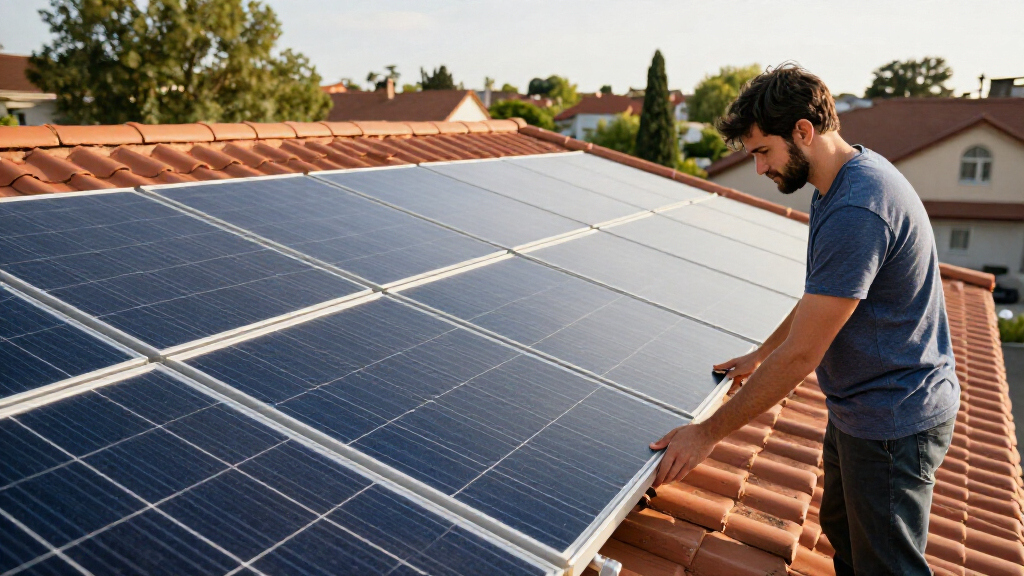
I compared these options by stated panel wattage, panel count, technology, and intended system role, then considered how those details affect a buyer’s actual project. The ranking favors products that offer a clear fit for a common home-solar need: a scalable panel set, a high-output module, a small system starter, or a complete off-grid package. I also weighed whether the product is sold as individual panels, a multi-panel set, or a system kit, since those formats call for different levels of component matching and planning.
Higher placement does not mean every buyer should choose the largest wattage. I gave more weight to a useful balance of output, flexibility, and clarity about the product’s role than to raw capacity alone. Since the supplied details do not establish verified real-world generation, included accessories, warranty terms, or compatibility with a specific home, I avoid treating stated efficiency or daily output as a guarantee. Buyers should check the manufacturer’s full specifications and local installation requirements before ordering.
Factors to Consider When Choosing Best Home Solar Panels
Choosing home solar panels starts with the job you need them to do, not the biggest wattage on the listing. I would map out the system, site, and equipment around the panels before comparing module count or technology claims. These factors can help prevent a mismatch between panel output and the rest of the installation.
Match Panel Output to Your Actual Energy Plan
Start with the energy you want to supply: a few appliances, a cabin, an RV-style setup, or a larger share of household use. Use your utility bills or a list of device wattages and operating hours to estimate daily energy needs, then account for your location and seasonal sunlight. A panel’s rated watts describe output under standardized test conditions, not a promise of the same production on your roof every day. Avoid sizing from peak summer demand alone if you need reliable winter power. If you plan to expand, check whether your inverter, charge controller, wiring, and battery can support the added panels. A smaller system that fits those components may be a better starting point than buying high-wattage modules that the rest of the system cannot use.
Check Whether the Panels Fit Your Site
Measure usable roof or ground-mount area, and note shade, roof direction, pitch, and obstructions before settling on a panel format. Higher-wattage panels can reduce the number of modules required, but their dimensions and weight may make handling or placement harder. Smaller modules offer more layout flexibility, though they can require additional mounting hardware and connections to reach a target capacity. Ground mounting may give more control over orientation and airflow, but it needs suitable land, secure foundations, and local approvals. Do not assume a product marketed for home use will fit every roof or mounting rail. Confirm dimensions, mounting points, load limits, and installer requirements against your site.
Treat Bifacial Output as Site-Dependent
Bifacial panels can collect light from both sides, but their rear-side contribution depends on how the panels are installed. A close-fitting rooftop mount over a dark surface may provide little reflected light, while an elevated setup over a bright, reflective area can offer better conditions. Product claims about potential gains should not be treated as guaranteed energy production. Before paying extra or choosing bifacial panels for a tight roof layout, ask how the mounting height, ground or roof surface, and panel spacing affect rear illumination. Compare the full system’s expected output using realistic local conditions, not just a best-case gain. A conventional panel may make more sense if your installation blocks most light from reaching its back.
Plan Around Electrical Compatibility and Expansion
Panel wattage alone cannot tell you whether a module will work with your inverter or charge controller. Check voltage, current, series and parallel limits, connector type, and the equipment’s permitted input range before wiring panels together. Mixing modules with different electrical characteristics can constrain a string’s output, so future additions are easiest when you plan the system architecture in advance. For off-grid systems, match panel capacity to the charge controller, battery voltage, storage capacity, and expected loads. A panel set is not automatically a complete power system, even when it is sold as a kit. If you are unsure how to interpret the electrical specifications, have a qualified installer verify the design.
Compare What the Kit Includes, Not Just Its Headline
Product names may describe a panel set or an entire off-grid system, and those are not interchangeable purchases. Check the package list for mounting hardware, cables, connectors, inverter, charge controller, battery, and monitoring equipment, then identify anything that must be bought separately. A kit can reduce the work of matching components, but only if its included parts suit your intended loads and local electrical requirements. Standalone panels may offer more freedom to select equipment, while adding more research and compatibility checks. Ask whether the listed daily output depends on assumptions about sunlight, batteries, or operating conditions. Build a complete bill of materials before choosing between a panel-only option and a larger system package.
Factor in Permits, Installation, and Long-Term Support
For a grid-connected home system, local rules, utility interconnection, permits, and inspection can shape the project as much as panel choice. Roof condition, structural capacity, fire access, and electrical work may also affect installation plans and total scope. Off-grid projects avoid utility interconnection but still need safe wiring, suitable protection, and enough storage for periods of low solar production. Check the warranty, service process, installation documentation, and availability of replacement modules before committing to a large array. A low-complexity panel set may still require professional electrical work, while a system kit may leave site design and permitting to the buyer. Get local guidance early, especially if the panels will connect to household wiring or the utility grid.
Frequently Asked Questions
Can I connect these panels directly to my home electrical panel?
Usually, no: solar panels produce direct current, while household circuits use alternating current, so a suitable inverter and protective equipment are needed. Grid-connected installations also have to meet local electrical codes and utility interconnection requirements. Off-grid setups use a different design and may require a charge controller and battery storage, depending on the equipment and loads. Check the panel’s voltage and current against every component before connecting anything. Have a qualified electrician or solar installer review a home-wiring plan.
Is a 590W panel automatically a better choice than a 200W panel?
Not automatically. A higher-wattage panel can reduce the number of modules needed, but it may be larger, heavier, or less convenient for a compact roof or small portable setup. A lower-wattage panel can suit limited space or make a staged project easier, though reaching the same total capacity may take more modules and connections. Compare dimensions, electrical specifications, mounting needs, and system compatibility alongside rated watts. Choose the format that fits the site and system, rather than comparing wattage alone.
Will bifacial panels produce more electricity on my roof?
They may, but the amount depends on whether sunlight or reflected light reaches the rear side. A panel mounted close to a dark roof can have limited rear exposure, while a raised installation over a bright surface may offer better conditions. The product’s stated potential is not a guaranteed increase for every installation. Ask an installer to estimate production using your mounting layout and site conditions. If the rear side will be mostly shaded or blocked, a bifacial design may not add enough value to justify choosing it over another panel.
Should I choose a panel set or the 10 kW off-grid system kit?
Choose based on how much of the system you already have and what loads you need to power. A panel set can work when you already own compatible equipment or want to build a system in stages, but you will need to match its electrical output to the inverter, controller, and batteries. A system kit may simplify component selection, yet its listed output does not by itself confirm that it will meet your daily needs or include every part of the installation. Estimate your daily energy use and storage needs before deciding. Check the kit’s full inventory and operating assumptions with the seller or installer.
What should I verify before buying panels for a grid-tied home?
Confirm that the panels can be paired with a suitable grid-tie inverter and that the planned system meets local utility and electrical requirements. Check roof condition, structural capacity, dimensions, mounting compatibility, and how shading may affect the array. Find out which permits, inspections, and utility approvals apply where you live before ordering equipment. Ask for a system design that estimates production with your location and roof orientation, rather than relying on panel wattage alone. If you are buying panels separately, have an installer approve the components and layout before purchase.
Conclusion
For most buyers seeking a substantial panel set, I recommend the ECO-WORTHY 6-Panel 590W kit as the best overall, provided its specifications and included components match the planned system. The ECO-WORTHY four-panel 100W set is my best value-style pick for a smaller or staged project, while the Renogy 800W bifacial N-type panel is the best premium-style choice for shoppers drawn to its stated 25% efficiency and high-output format. For beginners, the HQST two-panel 200W set offers a more manageable starting scale than the 590W modules or 10 kW system kit, though electrical compatibility still needs checking. Buyers with compact or 12V/24V system needs should compare the DOKIO 800W set and the smaller ECO-WORTHY 195W pair against their controller and mounting limits. Choose the ECO-WORTHY 10 kW off-grid kit only if you have a defined off-grid load plan and have verified its package contents, storage requirements, and installation fit.