
TL;DR

Get backup power and energy gear delivered free with Prime
- Fast, free delivery on millions of items
- Prime Video, Amazon Music and more included
- Member-only deals all year
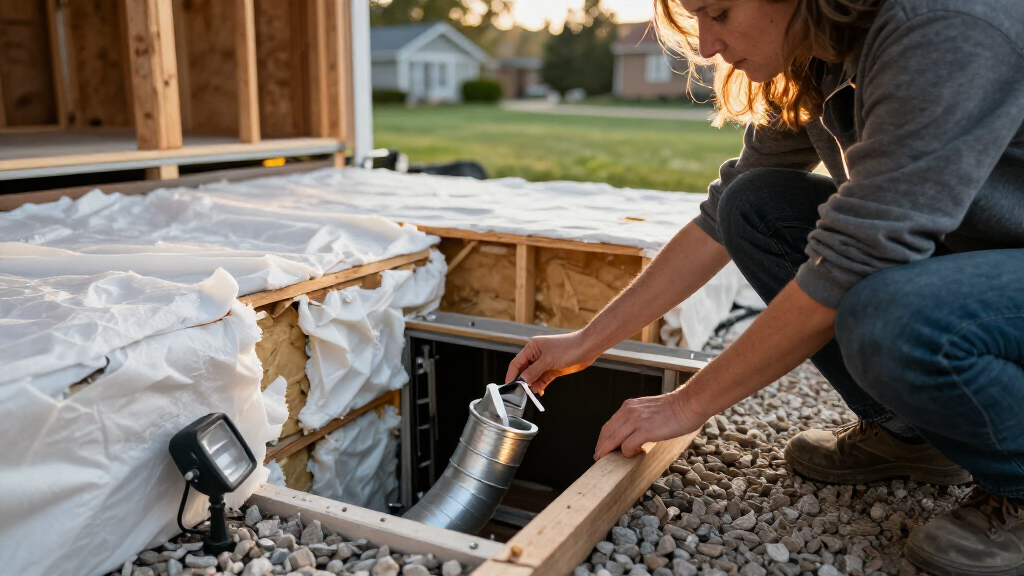
A GreenBuildingAdvisor report recommends adding lighting, GFCI-protected outlets and a soil-gas vent pipe when a crawlspace is encapsulated. The report says the upgrades can make later maintenance easier and provide a route for radon mitigation, but lights and outlets may not be worthwhile in every crawlspace.
GreenBuildingAdvisor has published advice on three additions to consider when encapsulating a crawlspace: permanent lights, GFCI-protected electrical outlets and a pipe beneath the liner to vent soil gases. The recommendations focus on making repair work easier and allowing for future radon mitigation, though the report says lights and outlets are not needed in every crawlspace.
The report’s author says lighting and outlets can reduce the need for contractors to carry portable lights and travel back and forth for tools or charged batteries. The author recently installed both in an L-shaped crawlspace, where plumbing and other equipment may require work. Fixed lights can also make it easier to see when inspecting or servicing the area.
The second recommendation is to add a perforated soil-gas vent pipe beneath the plastic liner during encapsulation. The report says the pipe can later connect to a vent extending outdoors and upward if radon testing shows a need for mitigation. A fan can be added if passive venting does not reduce radon enough, according to the report.
The author says installing the pipe during encapsulation may avoid cutting and resealing the liner later. The report estimates the pipe could add a few hundred dollars when included in the work, while wiring for lights and outlets could cost a few hundred dollars to about $1,000, depending on local costs. Those figures are estimates in the report, not a project quote.
Access and Radon Planning
These additions address two different concerns: access for maintenance and preparation for possible radon control. Crawlspaces can house plumbing, heating and cooling equipment, and electrical services; poor visibility or a lack of nearby power can make work less convenient. Permanent lighting and outlets may help contractors complete tasks without bringing as much equipment into the space.
The vent pipe is a separate measure. Encapsulation changes how air and soil gases move through a crawlspace, the report explains, and radon levels that were acceptable before work may be higher afterward. A pipe installed beneath the liner can make a later mitigation system easier to add, but it does not establish that a home has a radon problem or guarantee that venting alone will resolve one. Testing is needed to assess levels.
For homeowners planning encapsulation, raising these options before work starts can avoid later modifications to the liner. The report’s cost estimates suggest the additions may be modest next to encapsulation itself, but actual costs and usefulness depend on the home and local labor rates.
Products Worth Considering

Bose QuietComfort Headphones (2nd Gen), Wireless Over-Ear Noise-Cancelling Headphones, Black

Bose QuietComfort Ultra Earbuds (2nd Gen), Wireless Noise-Cancelling Earbuds, Black

Bose TV Speaker (2nd Gen) Compact Soundbar
As an affiliate, we earn on qualifying purchases.
The recommendations come from a GreenBuildingAdvisor report grounded in its author’s experience with a conditioned crawlspace. The author says the crawlspace was encapsulated in 2015 by a previous owner, while a soil-gas vent was added this year. The author also describes spending several hours in the space during a 2022 hot-water retrofit, crawling to kitchen plumbing and working on pipes without permanent lighting or a nearby outlet.
That experience informs the practical case for adding lights and outlets and the warning that retrofitting a vent pipe can mean cutting and resealing the liner. It is an individual account and recommendation, not a claim that every crawlspace requires all three measures. The report says some small spaces with little equipment or plumbing may rarely need access.
It also notes that electrical requirements vary with the project: switched lighting and an outlet near equipment are required by the National Electrical Code in new homes and some renovations, according to the report. Homeowners should check which rules apply to their work and location.
“Lights in a conditioned crawlspace are a great upgrade.”
— GreenBuildingAdvisor report
Costs and Radon Results Vary
The report does not provide contractor bids, a specific location for its cost estimates, or a detailed scope of work. Actual prices for wiring, outlets and vent installation can vary by home, access, labor and local requirements. It also does not claim that every encapsulated crawlspace will have elevated radon.
Whether a vent pipe and fan are needed depends on radon test results and the effectiveness of the chosen mitigation approach. The source does not give measurements from the author’s home or report the outcome of its vent installation. Homeowners should use testing rather than assume levels are high or low based on encapsulation alone.
Test Before Choosing Mitigation
For a planned encapsulation, homeowners can ask the contractor whether a soil-gas pipe can be installed beneath the liner and discuss lighting and GFCI-protected outlets with qualified professionals. Electrical work should comply with applicable codes and be handled by a licensed electrician where required. The report does not provide a universal design or installation specification for these systems.
After encapsulation, the next step for radon concerns is to test the home. If results indicate elevated levels, a qualified radon professional can assess whether the prepared pipe can be connected to an outdoor vent and whether a fan is needed. The report offers recommendations, not a schedule for further work or evidence that a particular home’s radon levels have changed.
Key Questions
What three crawlspace upgrades does the report recommend?
It recommends permanent lighting, GFCI-protected outlets and a perforated pipe beneath the liner that can be used to vent soil gases.
Does a soil-gas pipe mean radon is present?
No. The pipe is preparation for possible mitigation. Radon testing is needed to determine the level in a home and whether further work is warranted.
Do all conditioned crawlspaces need lights and outlets?
No. The report says they may be less useful in small crawlspaces with little equipment or plumbing that rarely need access. Electrical code requirements can apply in new homes and some renovations.
How much might the upgrades cost?
The report estimates a few hundred dollars for a soil-gas pipe added during encapsulation and a few hundred dollars to about $1,000 for wiring lights and outlets. These are rough estimates; local costs and project conditions vary.
Source: greenbuildingadvisor.com