
TL;DR

Get backup power and energy gear delivered free with Prime
- Fast, free delivery on millions of items
- Prime Video, Amazon Music and more included
- Member-only deals all year
House Beautiful’s report says homeowners considering winter swimming should weigh heating costs, pool size, ongoing maintenance and safe access. Experts caution that not every pool suits year-round use, and cold-water immersion carries risks that require gradual acclimation and precautions.
Homeowners considering winter swimming need to account for heating costs, pool size, maintenance and cold-water safety, according to experts quoted in a House Beautiful report. The guidance matters because keeping a pool open can cost substantially more than seasonal use, and not every pool or swimmer is suited to winter conditions.
Heating is the biggest winter expense, Jim Eisch Jr., vice president of operations at Pinch A Penny Pool Patio Spa, told House Beautiful. Costs vary with location, pool size, the desired water temperature and the heating system. Eisch gave an estimate for a 10,000-gallon pool in Florida: annual heating costs of $2,467 with natural gas, $741 with a traditional heat pump and $434 with a heat/cool pump using inverter technology. Those figures are specific to his example, not a general estimate for other regions or pools.
Pool dimensions affect heat retention, said Karen Larson, cofounder of Soake Pools. She told the outlet that large pools can be difficult to cover adequately, which can drive up heating bills. Smaller plunge or cocktail pools may be easier to keep warm, while a well-fitted, easy-to-use or motorized cover can help reduce heat loss. The report says winter swimming does not require bathlike water temperatures; heating is also relevant to keeping water above its 19-degree Fahrenheit freezing point.
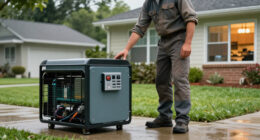
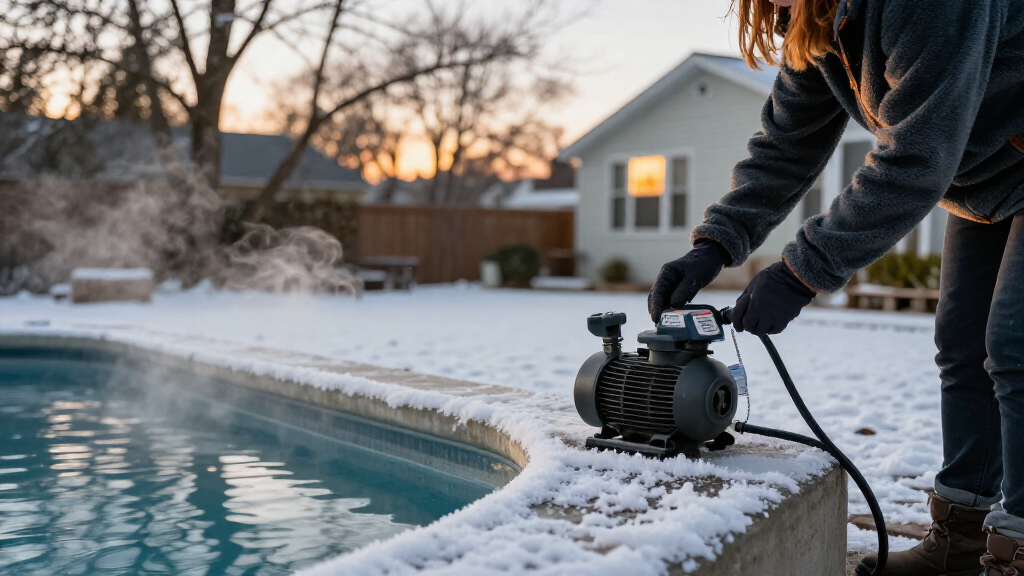
Winter upkeep still requires attention. Larson advised checking that the filtration system circulates properly, monitoring water chemistry and planning for power outages that could stop the pump. A generator may help keep the pump running during an outage, though homeowners need to consider their pool system and local conditions. The report also points to safe access: nonslip surfaces, drainage and adequate lighting can reduce hazards around a pool in cold weather.
The Cost and Safety Trade-Off
Keeping a pool open through winter is not simply a matter of leaving the water in place. Heating bills can vary sharply by equipment and local conditions, while covers, circulation and routine water checks remain part of the workload. A homeowner weighing year-round use needs to compare those operating demands with how often the pool will actually be used.
Cold-water swimming also poses health risks. A 2020 review in the International Journal of Environmental Research and Public Health found that sudden cold-water immersion can cause gasping, hyperventilation and a rapid rise in heart rate and blood pressure. Those responses can make breathing harder to control and increase drowning risk; cold can also affect muscle strength and nerve function. The report advises gradual acclimation, avoiding prolonged exposure and having another person at home. People with underlying conditions such as heart disease should consult a doctor before swimming in cold water.
Research cited in the report describes possible benefits, but those findings do not remove the risks. A 2025 systematic review and meta-analysis in PLOS ONE reported reduced stress for 12 hours after cold-water immersion, along with improvements in sleep quality and quality of life. The findings relate to cold-water immersion broadly and do not establish that keeping a backyard pool open is appropriate or beneficial for every person.
Products Worth Considering

Jackery HomePower 3600 Plus Portable Power Station, 3584Wh, 3600W

DJI Mic 3 Wireless Microphone Kit (2 Transmitters, 1 Receiver, Charging Case)

Bose SoundLink Plus Portable Bluetooth Speaker, Black
As an affiliate, we earn on qualifying purchases.
Interest in Cold-Water Swimming
Larson said interest in winter swimming has grown as people see neighbors and friends trying it and sharing evidence on social media. She told House Beautiful that a decade ago many people did not consider winter swims possible, particularly in colder climates. This is her account of changing interest, not a measure of how many people now swim outdoors in winter.
The American College of Sports Medicine’s 2026 Worldwide Fitness Trends report placed cold therapies—including cold plunges, cryotherapy and cold showers—at number 17 among fitness trends, up from number 20 in its 2025 report. The ranking indicates greater prominence in that survey’s list; it does not show how many households are keeping pools open.
For homeowners, the practical question remains whether their pool, climate, budget and personal health make winter use manageable. Experts quoted in the report say smaller pools and effective covers can be more practical, while larger pools may require more energy to heat. Pool maintenance continues through the colder months even if chemical use changes with how frequently the pool is used.
“Ten years ago, most people didn’t think winter swims were possible, especially in colder climates.”
— Karen Larson, cofounder of Soake Pools
Costs Depend on Local Conditions
The Florida cost figures are not universal: the report gives no equivalent estimates for other climates, pool sizes, energy prices or operating schedules. It also does not specify a single recommended water temperature for winter swimming. Heating needs and costs will depend on the individual pool and local weather.
The report does not quantify how common year-round residential pool use is, or how much a cover or generator would add to a homeowner’s total costs. The cited fitness ranking and cold-water research provide context, but do not establish that winter swimming is safe for every individual or that the reported benefits apply equally to all users.
Assess the Pool Before Winter
Homeowners should first check whether their pool can be covered effectively and review likely heating costs for their region, pool size and equipment. They should also plan for filtration, water chemistry and possible outages before deciding to keep the pool running. Safe access and a second person at home are part of the report’s precautions, not optional details to address after opening.
People considering cold-water swimming should acclimate gradually, limit exposure and consult a doctor first if they have an underlying health condition, especially heart disease. The report does not announce a new regulation or industry standard; its next steps for readers are practical decisions based on their own pool, budget, climate and health.
Key Questions
What is the main cost of keeping a pool open in winter?
Heating is the biggest expense identified by Jim Eisch Jr. Costs depend on location, pool size, desired water temperature and heater type. His Florida example for a 10,000-gallon pool ranged from $434 to $2,467 in annual heating costs across three systems.
Are smaller pools easier to keep open in winter?
According to Karen Larson, smaller plunge or cocktail pools may be easier to cover and keep warm. Large pools can lose more heat if their full surface area is difficult to cover. Suitability still depends on climate and the pool’s equipment.
What maintenance does a winter pool need?
Experts cited in the report recommend checking filtration and circulation, monitoring water chemistry and preparing for power outages that could stop the pump. A generator may help keep the pump running, depending on the system and circumstances.
Is cold-water swimming safe for everyone?
No. Cold-water immersion can trigger gasping, hyperventilation and changes in heart rate and blood pressure, and cold may impair muscle and nerve function. The report advises gradual acclimation, avoiding prolonged exposure and having another person at home; people with heart disease or other underlying conditions should consult a doctor.
Source: housebeautiful.com