
TL;DR

Get backup power and energy gear delivered free with Prime
- Fast, free delivery on millions of items
- Prime Video, Amazon Music and more included
- Member-only deals all year
ON.Energy says its AI UPS, a centralized battery system designed to protect data center equipment and limit grid disruptions, completed multi-megawatt trials at the National Laboratory of the Rockies. The company is preparing to test the system at commercial scale under a 5-gigawatt order from data center developer Crusoe; deployment details and results at that scale are not yet available.
ON.Energy says its battery-based uninterruptible power supply (UPS) completed multi-megawatt testing at the National Laboratory of the Rockies, a step toward a planned commercial-scale installation for data center developer Crusoe. The system is designed both to keep data center equipment supplied with stable power and to reduce the impact that sudden changes in data center demand can have on the electric grid.
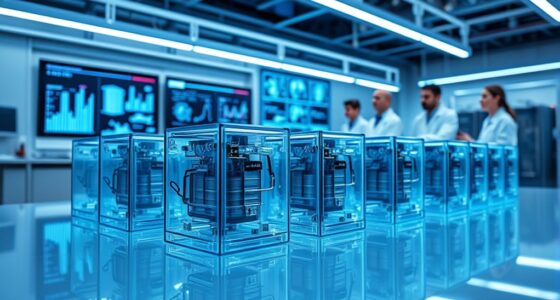
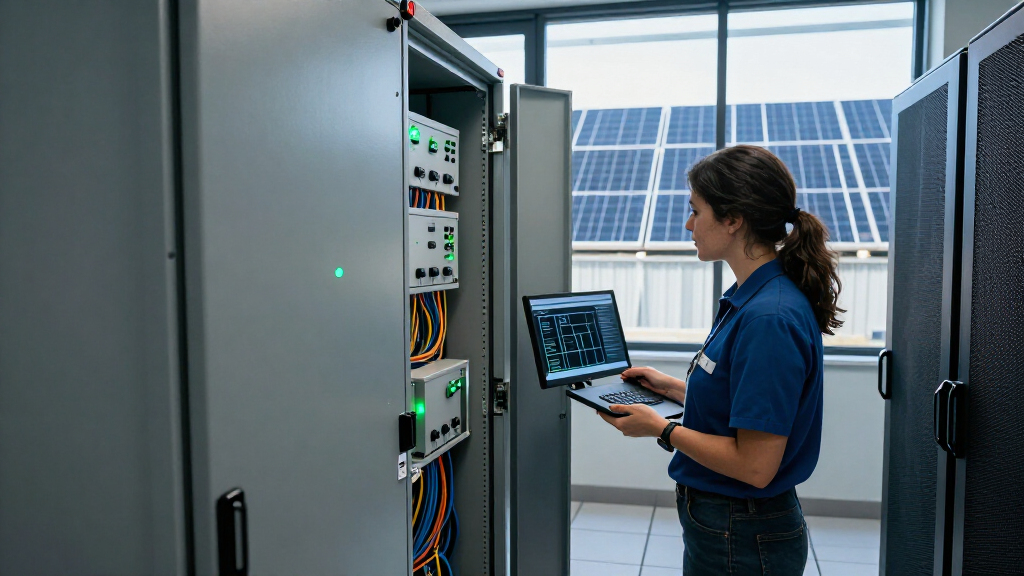
The startup describes its product as an AI UPS: a centralized lithium-ion battery system placed between the grid and a data center. Conventional UPS systems typically rely on lead-acid batteries and protect servers when utility power flickers or fails. ON.Energy’s system is intended to combine that backup role with functions associated with grid-scale battery storage.
ON.Energy CEO and co-founder Alan Cooper said the technology completed trials earlier this year at the laboratory’s grid simulator, which tested it at multi-megawatt configurations. The company is now preparing for a commercial-scale test connected to a 5-gigawatt order from Crusoe. The source report does not give a deployment schedule or clarify how much of the order will be installed at the first site.
Cooper said the battery is designed to present a steady, controlled load to the grid while delivering consistent power to data center equipment. The system uses what he described as patented double-conversion technology to electrically separate the data center load from the power source. The design requires advance planning: new facilities must reserve space and configure their electrical systems for the centralized batteries.
Buffering Data Centers From Grid Swings
Data centers can place unusual demands on power networks because their electricity use may change rapidly as computing workloads shift. A large facility that suddenly reduces its demand, or disconnects from the grid, can complicate the work of operators balancing electricity supply and demand. The source report notes that grid operator PJM Interconnection has recorded several multi-gigawatt data center disconnections in recent years, including an event in July when nearly 4 gigawatts of load in Virginia disconnected.
A battery system that can smooth those changes could help reduce abrupt swings while also protecting sensitive computing equipment. That potential matters as data center construction expands and operators seek large, continuous power supplies. However, the reported tests establish performance only in a laboratory setting; whether the system can provide the same services reliably and economically at a commercial site remains to be seen.
For data center developers, the appeal may depend on whether one installation can serve several purposes rather than sit idle as emergency backup. Cooper said a centralized system could potentially be used for other battery applications, including reducing a facility’s peak demand. The report does not provide cost estimates, projected savings, or details of any revenue arrangements with utilities.
industrial lithium-ion battery UPS system
As an affiliate, we earn on qualifying purchases.
As an affiliate, we earn on qualifying purchases.
From Backup Batteries to Grid Assets
Data centers have long used UPS batteries to keep servers running through short interruptions in utility power, often alongside backup generators. Those systems generally function as emergency protection rather than as assets that regularly help the grid. Developers have often favored fossil-fuel power and been cautious about adding batteries unless the financial case is clear, according to the source report.
The proposed shift is to use lithium-ion batteries as a managed interface between the grid and a data center. National Laboratory of the Rockies chief engineer Shahil Shah said grid operators are developing requirements to limit the effects of large loads on system reliability. The laboratory has also been testing a similar battery system from Prevalon Energy, along with other technologies whose developers have not been publicly identified.
Cooper said the Crusoe campus is being designed to accommodate the system. Earlier buildings at the site include space for traditional UPS equipment, while a newer building under construction has reserved land for the centralized battery installation. That illustrates a practical constraint: adopting this kind of system can require electrical and site-planning decisions before a data center is built.
“The grid sees a battery that’s always charging, and the load sees a battery that’s always outputting perfect quality power.”
— Alan Cooper, ON.Energy CEO and co-founder
Commercial Performance Still Unproven
The reported laboratory trials do not establish how the system will perform during routine operation at a full data center campus. The source material does not specify the trial duration, detailed test results, battery capacity, efficiency, expected service life, or how the system will respond to particular grid disturbances. Commercial-scale results are not yet reported.
It is also unclear when the Crusoe installation will be completed, how the 5-gigawatt order is structured, or whether that figure represents planned battery capacity, a broader project pipeline, or another measure. The report provides no pricing or evidence that the system is less costly than conventional UPS and backup arrangements. The technology’s potential grid benefits and financial returns remain claims to be tested at deployment.
Crusoe Site Will Test Scale
The next milestone is the planned installation and commercial-scale testing at a Crusoe data center campus. That deployment should provide evidence about whether the system can keep power stable for computing equipment while managing changes in the facility’s demand as intended. No installation date or public performance timetable is provided in the source report.
Further information to watch includes measured operating results, the portion of Crusoe’s order represented by the first installation, and whether utilities or grid operators recognize or compensate the system for grid-support services. Testing of Prevalon Energy’s similar system and other battery designs at the laboratory may also offer comparisons, but no results for those systems are included here.
Key Questions
What is ON.Energy’s AI UPS?
It is a centralized lithium-ion battery system designed to sit between the electricity grid and a data center. ON.Energy says it combines backup power protection with functions associated with grid-scale batteries.
What problem is the system intended to address?
It is intended to protect data center equipment from power-quality problems and to buffer sudden changes in a facility’s electricity demand that can affect grid stability.
Has the system been tested at a data center?
The source report says ON.Energy completed multi-megawatt laboratory trials at the National Laboratory of the Rockies. It says the company is preparing for a commercial-scale test with Crusoe, but does not report results from a live data center deployment.
What does Crusoe’s 5-gigawatt order mean?
The report describes a 5-gigawatt order from Crusoe, but does not explain its structure or say how much will be installed at the first site. It also provides no deployment schedule.
When will the system be installed?
No installation date is given. ON.Energy is preparing to test the system at commercial scale, and the source report describes a Crusoe campus under construction with land set aside for the batteries.
Source: rss
Fall Picks
fall essentials
As an affiliate, we earn on qualifying purchases.