TL;DR

Get backup power and energy gear delivered free — and shop member deals
- Fast, free delivery on millions of items
- Access to Prime Big Deal Days deals on October 6–7
- Prime Video, Amazon Music and more included
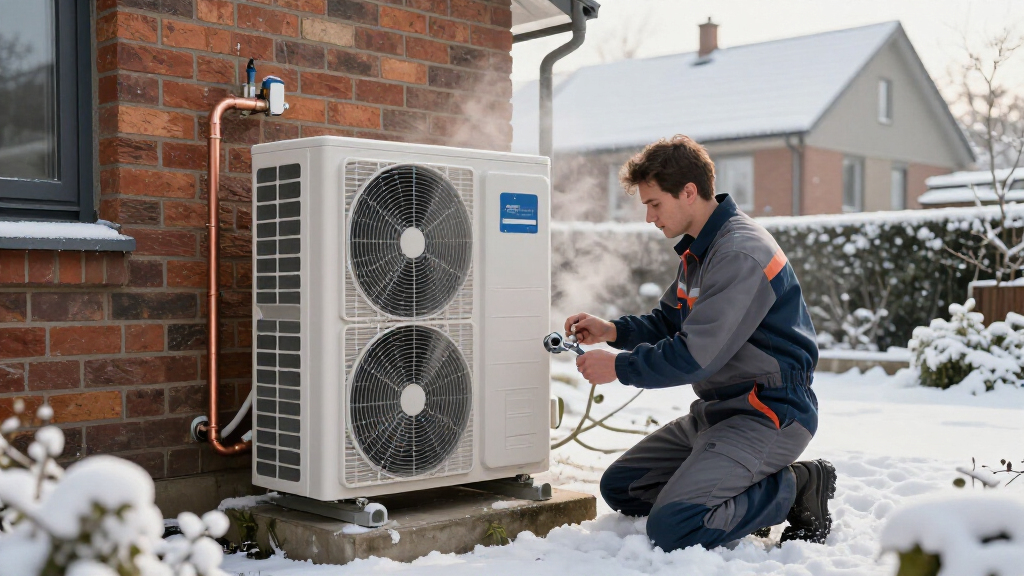
Heat pump sales across 12 European countries rose 11% year-on-year to around 1,163,000 units in the first six months of the year, according to the European Heat Pump Association. The EHPA links the increase to higher oil and gas prices and European Commission plans to cut electricity taxes.
Residential heat pump sales in Europe rose by 11% in the first six months of the year, according to the European Heat Pump Association (EHPA), a rebound the industry group attributes to higher oil and gas prices and European Commission plans to make electricity cheaper. Around 1,163,000 units were sold across 12 European countries, up from 1,048,000 in the first half of 2025.
The figures, released by the EHPA, cover 12 European countries: Austria, Belgium, Switzerland, Denmark, Finland, France, Germany, Italy, the Netherlands, Norway, Portugal and Sweden. Sales rose from 1,048,000 units in the first half of 2025 to roughly 1,163,000 in the same period this year — an increase of about 115,000 units.
The EHPA attributes the growth to two main drivers: increased oil and gas prices following the closure of the Strait of Hormuz, and the European Commission’s publication of plans encouraging EU governments to lower taxes on electricity. Both factors improve the operating-cost advantage of heat pumps over gas boilers, which is the primary purchasing consideration for many European households.
The European Commission’s Electrification Action Plan states that tax on electricity should be no higher than tax on gas. It also proposes revising the network charges consumers pay on their power bills so that flexible technologies such as heat pumps are rewarded rather than penalised. These are proposals: national governments retain responsibility for setting energy taxation, and implementation across the EU’s member states remains uneven.
Why the Sales Rebound Matters
The 11% increase marks a shift in momentum for a sector that had been under commercial pressure after several years of declining or flat sales in key markets. Heating buildings accounts for a large share of European energy demand, and a sustained move from gas boilers to electric heat pumps would reduce the EU’s dependence on imported fossil fuels — a policy priority since the 2022 energy crisis.
The figures also illustrate how sensitive consumer behaviour is to relative energy prices. The EHPA’s argument is that the technology itself is mature, but adoption tracks the gap between electricity and gas costs. That is why the association is pressing national governments to shift taxation from electricity to fossil fuels, as the Netherlands and Belgium have already done, according to the EHPA.
For households, the trend signals that heat pumps are increasingly framed as the default replacement option for aging boilers in much of western and northern Europe, with manufacturers, installers and grid operators all scaling around that expectation.
Energy Prices and EU Policy Behind the Trend
The EHPA links the first-half sales increase partly to the closure of the Strait of Hormuz, which pushed up oil and gas prices and made fossil-fuel heating more expensive to run. Higher gas prices narrow the payback period for a heat pump installation, even where upfront purchase costs remain high.
At EU level, the European Commission’s Electrification Action Plan sets out two measures relevant to heating: a principle that electricity taxes should not exceed those on gas, and a proposed revision of network charges on power bills to reward flexible consumption. Heat pumps, which can adjust their operation to periods of cheaper electricity, would benefit directly from such a redesign.
Taxation of energy remains a national competence in most cases, meaning the Commission can set direction but cannot compel uniform rates. The EHPA pointed to the Netherlands and Belgium as examples of countries that have already acted, and called on all EU governments to follow.
“The sooner electricity becomes the most affordable solution, the quicker we’ll get clean. The fix? Dropping taxes on electricity and shifting them over to fossil fuels. The European Commission has made this clear – but now all EU governments must enact it, following in the footsteps of the Netherlands and Belgium.”
— Paul Kenny, Director General, European Heat Pump Association
What the Sales Figures Do Not Show
The EHPA data covers only 12 countries, so the picture for Europe as a whole — including larger markets such as Poland, Spain and the UK — is not captured in these figures. The survey is also residential in scope, excluding commercial and industrial installations.
The claim that Europe is ending its addiction to gas is the EHPA’s interpretation, not a verified outcome. Heat pumps still represent a minority of heating systems in most European countries, and it is not yet clear whether the first-half growth rate will be sustained if oil and gas prices fall from their recent highs.
The Commission’s electricity tax and network charge proposals must still be enacted by member states and, in some cases, approved through EU legislative procedures. Their timing and final design remain open questions.
Watching Tax Reform and Second-Half Sales
Market watchers will be looking at full-year sales data, expected from the EHPA in early 2027, to see whether the first-half growth held or softened. The trajectory of oil and gas prices — which the EHPA identified as a key driver — will heavily influence that outcome.
On policy, the next milestone is how EU member states respond to the Commission’s Electrification Action Plan, particularly whether more governments follow the Netherlands and Belgium in shifting taxation from electricity to fossil fuels. The proposed revision of network charges will also need to move through EU and national processes before it affects consumer bills.
Key Questions
How much did European heat pump sales rise?
Sales rose by 11% in the first six months of the year across the 12 countries surveyed by the EHPA, from 1,048,000 units in the first half of 2025 to about 1,163,000 units.
Which countries are included in the figures?
Austria, Belgium, Switzerland, Denmark, Finland, France, Germany, Italy, the Netherlands, Norway, Portugal and Sweden. Other European markets are not covered by this dataset.
Why did sales increase?
According to the EHPA, the rise was driven by higher oil and gas prices following the closure of the Strait of Hormuz, and by European Commission plans encouraging governments to lower electricity taxes, which improves the running-cost case for heat pumps.
What is the EU proposing on electricity taxes?
In its Electrification Action Plan, the European Commission said tax on electricity should be no higher than tax on gas, and proposed revising network charges on power bills to reward flexible options such as heat pumps.
Do these figures cover all of Europe?
No. The data covers residential sales in 12 countries only and excludes commercial installations, so it should not be read as a Europe-wide total.
Source: rss
Fall Picks
fall essentials
As an affiliate, we earn on qualifying purchases.