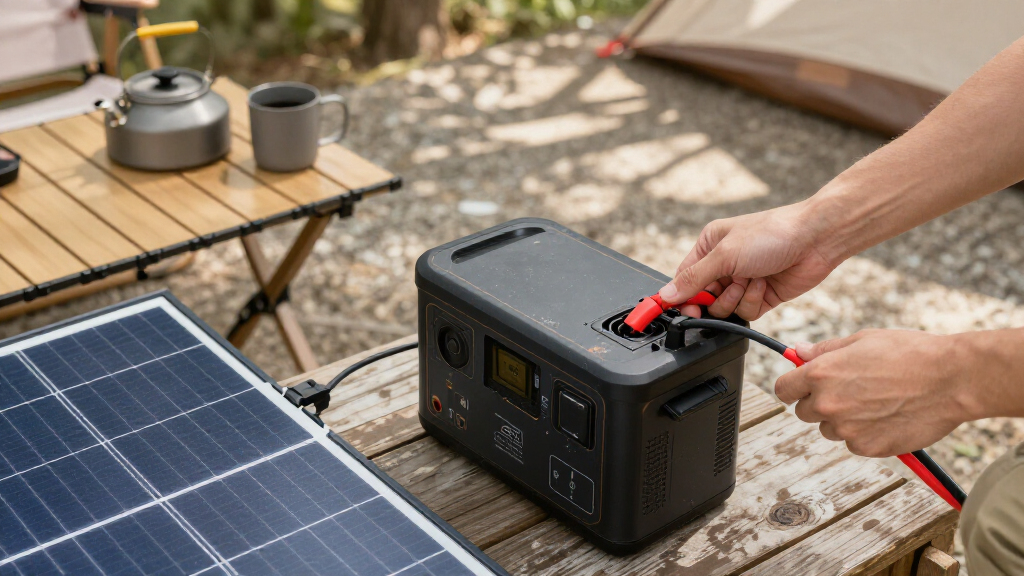

Solar battery chargers solve a specific problem: keeping a 12V battery from dying while it sits unused, whether that’s a stored car, a boat at the dock, or an RV between trips. After comparing eleven leading models, the SUNER POWER 20W 12V PRO stands out as the best overall pick for most buyers, thanks to its built-in UltraSmart MPPT controller and true waterproof construction. If you just need to keep a daily-driver car battery topped up, the budget-friendly POWOXI 7.5W handles that job without overspending, while the SUNER POWER 50W is the pick for larger batteries and RV house banks. The main tradeoff in this category is wattage versus price and panel size — more watts means faster recovery of a drained battery, but a bulkier panel that’s harder to mount. There’s also a real difference between chargers with integrated MPPT controllers and cheap panels that rely on blocking diodes alone. Keep reading for the full breakdown of what each model does well and who should skip it.

Get backup power and energy gear delivered free with Prime
- Fast, free delivery on millions of items
- Prime Video, Amazon Music and more included
- Member-only deals all year
Key Takeaways
- Four of the eleven models are SUNER POWER panels at different wattages (12W, 20W, 30W, 50W), which made wattage — not brand — the single biggest differentiator in this lineup.
- Every top-ranked pick includes a built-in MPPT or smart charge controller; bare panels without one risk overcharging and lost efficiency in low light.
- 7.5W–10W units work only as maintainers for healthy batteries and cannot meaningfully recharge a drained one; 20W is the practical floor for recovery charging.
- Waterproofing ratings vary meaningfully — IP68 kits and fully sealed laminated panels survive permanent outdoor mounting, while budget kits are better brought inside or sheltered.
- The 50W SUNER POWER PRO makes sense only for RV house batteries or frequent deep-cycle use; for seasonal storage of a car or boat, a 12W–20W model is the smarter spend.


| solar battery charger | Voltage | Mounting | Power Output |
|---|---|---|---|
| SUNER POWER Waterproof 12W 12V | 12V | Pre-drilled holes with suction cups | 12W |
| SOLPERK Solar Panel Kit 20W 12 | 12V | 360-degree adjustable bracket | 20W |
| 10W 12V Solar Car Battery Char | 12V | Carabiner and suction cups | 10W |
| SUNER POWER 20W 12V Solar Batt | 12V | — | 20W |
| Voltset 20W 12V Solar Panel Ba | 12V | Pre-drilled holes, no tools required | 20W |
| POWOXI 7.5W 12V Solar Battery | 12V | — | 7.5W |
| SUNER POWER Waterproof 50W 12V | — | — | — |
| SUNAPEX 12V Solar Battery Char | 12V | Suction cups | — |
| 20W 12V Solar Battery Trickle | — | 360-degree adjustable bracket | — |
| SUNER POWER Waterproof 30W 12V | 12V | Pre-drilled holes with included suction cups | — |
| Callsun 7.5W Solar Battery Mai | 12V | 360° adjustable bracket with corner protectors | 7.5W |
More Details on Our Top Picks
SUNER POWER Waterproof 12W 12V Solar Battery Charger & Maintainer Pro
This 12W panel earns its spot as the smart pick for zero-effort battery maintenance on a stored vehicle. What separates it from the cheaper POWOXI 7.5W trickle kit is the built-in UltraSmart MPPT controller — there’s no separate box to mount or wire, and the three-stage charging algorithm (bulk, absorption, float) means the battery is topped up gently rather than force-fed. It stops charging when full and resumes on its own, which is the whole point of a maintainer. Compared with the SUNER POWER 20W PRO, output is modest, so this is about holding a charge, not recovering a drained battery quickly. The tradeoff for that integrated controller is a fixed design: no adjustable bracket like the SOLPERK 20W kit, so you’re stuck with whatever angle you mount it at.
Pros:- MPPT controller integrated into the panel — fewer parts, cleaner install
- Full safety suite including reverse polarity and spark-proof connections
- Works with nearly every 12V battery chemistry including LiFePO4
- Tempered glass and corrosion-resistant frame survive permanent outdoor mounting
Cons:- No adjustable mounting bracket, so panel angle is fixed at installation
- 12W output is too low for anything beyond maintaining a healthy battery
Best for: Owners of stored cars, boats, or trailers who want a fully automatic, weatherproof maintainer they can bolt on once and ignore
Not ideal for: Anyone hoping to actually recharge a depleted battery — 12W is maintenance-level power only
- Power Output:12W
- Voltage:12V
- Charge Controller:Built-in UltraSmart MPPT
- Charging Algorithm:3-stage (Bulk, Absorption, Float)
- Compatible Batteries:Flooded, Gel, AGM, SLA, maintenance-free, LiFePO4
- Weatherproofing:Waterproof, UV and corrosion resistant
- Mounting:Pre-drilled holes with suction cups
Our verdict“Buy this if you want a single-piece, fully automatic maintainer for a vehicle that sits unused for weeks at a time.”
SOLPERK Solar Panel Kit 20W 12V Solar Battery Charger Maintainer + Controller
Of the 20W options here, the SOLPERK kit gives you the most hardware per dollar of capability: panel, smart controller, alligator clips, O-rings, mounting pieces, and — the standout — a 360-degree adjustable bracket. That bracket matters more than it sounds. A fixed panel like the SUNER POWER 12W loses serious output when it can’t face the sun, while the SOLPERK can be tilted seasonally to squeeze real energy out of short winter days. The aluminum frame and low-iron tempered glass are rated for 2400Pa wind and 5400Pa snow loads, so it’s a genuine permanent outdoor install, not a dash-board trickle panel. The compromise is the separate 8A controller — it’s one more component to mount and protect, and its two indicator lights are cruder feedback than the Voltset’s percentage LEDs.
Pros:- 360-degree adjustable bracket maximizes real-world harvest in any season
- Rugged aluminum frame rated for heavy wind and snow loads
- Complete kit includes clips, O-rings, and mounting hardware
- Controller draws no power from the battery and prevents overnight drain
Cons:- Separate controller must be mounted and weather-sheltered separately
- Basic two-light status indication is less informative than rival displays
Best for: Budget-conscious RV, fence, or gate-opener owners who want a permanently mounted 20W system with proper tilt adjustment
Not ideal for: Anyone wanting the simplest possible setup — the external controller adds wiring and mounting steps that occasional users may not want
- Power Output:20W
- Voltage:12V
- Charge Controller:External 8A smart controller
- Solar Cell:A+ monocrystalline, 21%-30% efficiency
- Compatible Batteries:LiFePO4, Lithium Ion, AGM, SLA, GEL, EFB, MF
- Frame:Corrosion-resistant aluminum, 2400Pa wind / 5400Pa snow rated
- Dimensions:15 x 13.2 x 0.7 inches
- Mounting:360-degree adjustable bracket
Our verdict“The most complete 20W package for the money — pick it when tilt flexibility and a permanent install matter more than plug-and-play simplicity.”
10W 12V Solar Car Battery Charger & Maintainer
This is the easiest entry point in the lineup: suction-cup it to a windshield, plug into the cigarette lighter socket, and walk away. No controller to mount, no clips to clamp on a battery terminal, no tools. Compared with the SOLPERK 20W kit, it trades half the power for a radically simpler install — a fair deal if your goal is keeping a daily-driven car’s battery healthy rather than maintaining something stored off-grid. The built-in microprocessor does cover the basics, with protection against overcharging, reverse charging, and reverse connection. Be realistic about the limits: 10W is maintenance power, and going through the lighter socket means it only works if that circuit stays live with the ignition off — something worth checking on your vehicle before buying. It’s also glass-on-dash dependent, so parked-in-garage cars get nothing.
Pros:- Genuinely tool-free setup via suction cups and 12V socket plug
- Microprocessor guards against overcharge and reverse connection
- Works across cars, motorcycles, boats, snowmobiles, and tractors
- 12-month warranty on an entry-level product
Cons:- Depends on the vehicle’s lighter socket staying powered with ignition off
- 10W output can’t recover a partially drained battery in reasonable time
Best for: Drivers who park outdoors and want the cheapest, simplest way to offset parasitic drain on a commuter car
Not ideal for: Boat, RV, or trailer owners — the lighter-plug connection and low output don’t suit off-grid or stored-vehicle use
- Power Output:10W
- Voltage:12V
- Charger Type:Solar trickle charger/maintainer
- Safety Features:Overcharge, reverse charging, reverse connection protection
- Power Connection:12V cigarette lighter plug
- Mounting:Carabiner and suction cups
- Warranty:12 months
Our verdict“The pick for outdoor-parked commuter cars where convenience matters more than raw charging power.”
SUNER POWER 20W 12V Solar Battery Trickle Charger & Maintainer PRO
This is the model I’d point most buyers toward, because it hits the best balance of power, integration, and durability. You get the same UltraSmart MPPT controller and three-stage charging as the SUNER POWER 12W version, but at 20W there’s enough headroom to genuinely recover a partially drained battery, not just hold it. Against the SOLPERK 20W kit, the advantage is integration: the controller lives inside the panel, so there’s no second box to mount, and the UL-listed spec adds a layer of assurance the budget kit doesn’t carry. It’s built like the rest of the SUNER PRO line — tempered glass, corrosion-resistant frame, full protection stack — so a permanent RV or marine install is realistic. The honest tradeoffs: like its 12W sibling it lacks an adjustable bracket, and at roughly 20 by 14 inches it’s the largest footprint among the integrated panels here, which complicates windshield or dash use.
Pros:- Integrated MPPT controller eliminates external wiring and mounting
- 20W output is enough to recharge, not just maintain, a 12V battery
- UL-certified with a full over/under/current/temperature protection stack
- Broad chemistry support from flooded lead-acid through LiFePO4
Cons:- Fixed mounting angle with no adjustable bracket option
- Large panel size makes temporary or in-vehicle placement awkward
Best for: RV, boat, and trailer owners who want a 20W panel with a built-in smart controller for a permanent, weatherproof install
Not ideal for: Anyone wanting adjustable tilt for maximum winter harvest — this panel mounts flat at a fixed angle
- Power Output:20W
- Voltage:12V
- Current:1.67A max output
- Charge Controller:Built-in UltraSmart MPPT
- Charging Algorithm:3-stage (Bulk, Absorption, Float)
- Compatible Batteries:Flooded, Gel, AGM, SLA, maintenance-free, LiFePO4
- Dimensions:20.15 x 13.78 x 0.7 inches
- Certification:UL listed
- Connectors:Alligator clips, plug-and-play cables
Our verdict“The strongest all-around choice for anyone installing a solar maintainer on an RV, boat, or trailer and wanting a clean single-panel setup.”
Voltset 20W 12V Solar Panel Battery Charger Trickle Maintainer Kit
The Voltset differentiates itself on feedback and environmental toughness. Its LED indicators show charge status in 25% increments, so unlike the SOLPERK kit’s two vague lights, you can actually see whether your battery is at half charge or nearly full — genuinely useful when you’re troubleshooting a stubborn trailer battery. The IP67 rating with a -40°F to 185°F operating range is the boldest weather claim in this batch, making it a natural fit for northern climates or blistering boat decks where lesser housings crack. MPPT tracking and multi-layer protection match the SUNER POWER 20W PRO on paper, with the same broad chemistry support. What you give up is flexibility: like the SUNER panels, there’s no angle-adjustable bracket, so its 20W harvest depends entirely on where you can bolt it. The auto-stop/auto-resume behavior does mean it’s safe to leave connected indefinitely.
Pros:- Real-time LED charge display in 25%-100% steps removes guesswork
- IP67 sealing rated from -40°F to 185°F for marine and winter use
- Smart controller prevents overnight battery drain
- Pre-drilled holes enable fast, tool-light installation
Cons:- No adjustable bracket, capping real-world output below bracketed rivals
- 25+ year lifespan claim applies to the panel, not the electronics
Best for: Boaters and cold-climate vehicle owners who want clear charge readouts and a panel rated for extreme temperatures
Not ideal for: Users who want to optimize output with seasonal tilt — the fixed mounting limits harvest compared to bracketed rivals
- Power Output:20W
- Voltage:12V
- Charge Controller:Built-in MPPT with auto-stop/auto-resume
- Compatible Batteries:LiFePO4, AGM, Gel, Flooded, Lithium Ion
- Weatherproofing:IP67, rated -40°F to 185°F
- Status Display:LED indicators, 25%-100% charge stages
- Mounting:Pre-drilled holes, no tools required
Our verdict“Choose the Voltset when temperature extremes or visibility into charging status matter more than tilt flexibility.”
POWOXI 7.5W 12V Solar Battery Charger Trickle Maintainer Kit for Car
POWOXI’s 7.5W maintainer is the entry point of this lineup, and that’s exactly its appeal. Where the SUNER POWER 30W PRO offers sophisticated MPPT charging and battery-type selection, POWOXI keeps things deliberately simple: plug it into the cigarette lighter socket or clip it to the terminals, and the built-in blocking diode handles basic overcharge and short-circuit protection. The low-iron tempered glass face is a genuine upgrade over flexible film panels at this wattage — it resists impact, wind, and snow without the bending or scratching that plagues cheaper flexible units. The tradeoff is raw capability. At 7.5 watts, this is a battery keeper, not a recovery tool — it offsets small parasitic drains from alarms or infrequent driving but won’t revive a flattened battery the way a 20W or 50W kit can. Compared with the similarly modest SUNAPEX 12V kit, POWOXI’s rigid glass-and-ABS construction gives it a durability edge for outdoor mounting.
Pros:- Rugged tempered glass and ABS+PC frame resists impact, snow, and bending better than flexible panels
- Two connection options (cigarette lighter and alligator clips) make setup nearly effortless
- Blocking diode and internal protection prevent overcharge and battery drain-back
- Zero-maintenance design suits set-and-forget seasonal storage
- Two-color LED indicator confirms sunlight capture and charging status at a glance
Cons:- 7.5W output limits it to maintaining charged batteries, not recovering discharged ones
- No MPPT controller or battery-type modes, so charging efficiency lags far behind the SUNER POWER PRO models
Best for: Owners of vehicles that sit unused for weeks — project cars, seasonal motorcycles, or spare cars — who need to offset parasitic drain cheaply
Not ideal for: Anyone with a deeply discharged battery, a large RV house bank, or heavy accessory drain — 7.5W simply cannot keep up
- Power Output:7.5W
- Voltage:12V
- Connections:Cigarette lighter plug or alligator clips
- Panel Surface:Low-iron tempered glass
- Frame:ABS+PC
- Protection:Blocking diode, overvoltage and short-circuit protection
- Indicator:Red/green two-color LED
- Warranty:12 months with lifetime technical support
Our verdict“This pick makes the most sense for keeping an occasionally driven 12V battery alive on a minimal budget, not for serious recharging.”
SUNER POWER Waterproof 50W 12V Solar Battery Charger & Maintainer PRO
This 50W PRO model sits at the top of SUNER’s range and earns its place as the workhorse pick for marine and RV use. The UltraSmart MPPT controller — with up to 99% tracking efficiency and 98% conversion — means roughly a fifth to a third more usable harvest than basic PWM trickle panels like the Voltset 20W kit, a difference that compounds on short winter days. The 3-stage charging algorithm and selectable 12V/AGM/Lithium modes let one panel correctly serve a flooded starting battery on a boat and a LiFePO4 house bank in a trailer. Real tradeoffs exist: 50 watts of glass and ETFE panel is physically large at over 23 inches long, and it costs and weighs more than every 7.5W–30W option here. It’s also more charger than a passenger car in weekly use needs — the 30W PRO covers that job with less bulk.
Pros:- UltraSmart MPPT technology extracts 20–30% more power than non-MPPT competitor panels
- Three selectable modes (12V, AGM, Lithium) with a proper 3-stage Bulk/Absorption/Float algorithm
- Visual 25/50/75/100% charge-level indicators remove guesswork on stored batteries
- Full waterproof, spark-proof build with eight layers of protection including reverse polarity and over-temperature
Cons:- Large footprint (23.2 x 17.3 inches) and 2.47 kg weight make it awkward for small vehicles
- Overkill in both price and power for simple car-battery maintenance duty
- Suction-cup mounting may not be reliable for permanent exterior installation on moving vehicles
Best for: Boat owners and RV travelers with deep-cycle or lithium house batteries who need real charging current, not just trickle maintenance
Not ideal for: Passenger-car owners fighting a small parasitic drain — the size, weight, and capability are wasted on that job
- Maximum Power:50W
- Output Voltage:12V DC
- Controller:Built-in UltraSmart MPPT
- Tracking / Conversion Efficiency:Up to 99% / 98%
- Charging Modes:12V, 12V AGM, 12V Lithium
- Dimensions:23.23 x 17.32 x 0.16 inches
- Weight:2.47 kg
- Materials:A+ grade solar cell, premium ETFE surface
- Connector:Plug-and-play SAE harness
Our verdict“Buy this if you maintain sizeable 12V battery banks on a boat or RV and want set-and-forget MPPT charging; skip it for a daily driver.”
SUNAPEX 12V Solar Battery Charger & Trickle Maintainer Kit
SUNAPEX wins on effortless setup. The kit ships with everything a first-time buyer needs — cigarette lighter plug, alligator clips, and suction cups for dash or window mounting — so it works out of the box with no controller wiring or mode selection. Compared with the 20W MPPT kit (B0G29N5J7Q), which requires pairing an external-style controller and reading spec sheets, SUNAPEX’s all-in-one design trades capability for convenience. Battery compatibility is unusually broad for a simple unit, covering flooded, AGM, GEL, and LiFePO4 chemistries, and the fully sealed waterproof body with high-strength PV glass carries a claimed lifespan approaching a decade. The honest catch: no wattage is specified, which tells you this is a pure maintenance device. If your battery regularly drops below full — say, on a boat with a fridge running — step up to the SUNER POWER 30W PRO instead.
Pros:- Complete kit includes lighter plug, alligator clips, and suction cups — genuinely plug-and-play
- Broad chemistry support including AGM, GEL, lithium, and LiFePO4
- Fully sealed waterproof housing with PV glass rated for up to 10 years of service
- Built-in controller prevents both overcharging and battery drain-back
Cons:- No published wattage or current output, making performance impossible to compare on paper
- Output is modest enough that cloudy weather noticeably slows maintenance charging
Best for: First-time buyers and non-technical owners who want a complete, no-config kit for a stored car, lawnmower, or small boat battery
Not ideal for: Buyers who care about charging speed or measurable output — the unspecified wattage means zero transparency about real performance
- Voltage:12V
- Battery Types:Sealed lead-acid, lithium, LiFePO4, GEL, AGM, flooded
- Connectors:12V cigarette lighter plug, alligator clips
- Frame / Surface:ABS frame, high-strength PV glass
- Waterproofing:Fully sealed design
- Mounting:Suction cups
- Indicators:Red (sunlight), green (charging)
- Warranty:1 year, lifetime technical support
Our verdict“Choose this if simplicity and a complete accessory bundle matter more than raw wattage; look elsewhere if you need defined charging power.”
20W 12V Solar Battery Trickle Charger & Maintainer Kit with MPPT Controller
This unbranded-but-capable 20W kit earns its slot with the most exhaustive protection list in the middle of the range: eight safeguards spanning overcharge, discharge, reverse polarity, overcurrent, overvoltage, backflow, short circuit, and high temperature. Pair that with a true MPPT controller and IP68 waterproofing on both panel and controller — a rating higher than most competitors claim — and you get reassuring durability for marine and outdoor mounting. Against the SOLPERK 20W kit, the differentiators are the 360-degree adjustable bracket for aiming the panel at the sun and lithium/EFB chemistry support. The tradeoff is position in the lineup: at 20 watts, it comfortably maintains car, motorcycle, and small boat batteries, but owners of large deep-cycle banks will find it underpowered — the SUNER POWER 50W PRO is the right tool for that job. LED indicators and plug-and-play cabling keep daily use simple despite the sophisticated controller.
Pros:- Eight distinct safety protections including backflow and reverse polarity — the most thorough at this wattage
- IP68 waterproof rating on both panel and controller, surviving rain, snow, and submersion
- 360-degree adjustable bracket lets you actually aim the panel, unlike fixed suction-cup rivals
- Broad battery compatibility from LiFePO4 and lithium ion to AGM, GEL, EFB, and MF
Cons:- 20W output is maintenance-level only, too small for fast recovery or large banks
- Lacks a brand-name track record, so long-term support is less certain than SUNER or SUNAPEX
Best for: Motorcycle, ATV, and small-boat owners who want a genuinely safe, aimable panel for exposed outdoor mounting
Not ideal for: RV owners or anyone maintaining large battery banks — 20W cannot offset meaningful daily drain
- Maximum Power:20W
- Output Voltage:12V DC
- Panel Type:Monocrystalline silicon
- Controller:MPPT with 8 safety protections
- Battery Compatibility:LiFePO4, Lithium Ion, AGM, SLA, GEL, EFB, MF
- Mounting:360-degree adjustable bracket
- Indicators:LED charging status
Our verdict“This model is better suited to safety-conscious owners of small vehicles who mount panels outdoors, not to anyone needing serious charging current.”
SUNER POWER Waterproof 30W 12V Solar Battery Charger & Maintainer PRO with UltraSmart MPPT Charge Controller
The 30W PRO hits the best balance in this entire roundup between power, intelligence, and practicality. It inherits the full UltraSmart MPPT platform from the 50W PRO — 99% tracking efficiency, 3-stage Bulk/Absorption/Float charging, selectable 12V/AGM/Lithium modes, and the 25–100% charge-level display — while shedding the larger model’s bulk. Compared with the 20W options like the Voltset kit or the 20W MPPT kit, the extra 10 watts matter more than they sound: 30W is enough to genuinely recharge a moderately discharged car or marine battery over a few sunny days, not merely hold a full one. It also outclasses the POWOXI 7.5W on every technical axis while staying far more manageable than the 50W. Weaknesses are real but situational: deeply flattened large batteries will still need shore power, and the suction-cup mounting is fine for glass but unreliable as a permanent fix on a moving trailer.
Pros:- 30W output crosses the threshold from maintenance-only to genuine recharging capability
- Full MPPT platform with 3-stage charging and selectable 12V/AGM/Lithium modes
- Visual 25/50/75/100% charge indicators and fully automatic stop/resume operation
- Waterproof, spark-proof build with eight protection layers including reverse polarity and over-temperature
Cons:- Still too slow for rapid recovery of large or deeply discharged batteries
- Suction-cup mounting may loosen in heat, vibration, or weather over long installations
Best for: Owners of cars, boats, or small RVs who want one panel that can both maintain and genuinely recharge a 12V battery without oversized hardware
Not ideal for: Owners of deeply discharged or very large battery banks who need fast recovery — pair up to the 50W PRO or use shore charging
- Power:30W
- Voltage:12V
- Controller:Built-in UltraSmart MPPT
- Efficiency:99% tracking / 98% conversion
- Charging Algorithm:3-stage (Bulk, Absorption, Float)
- Charging Modes:12V, 12V AGM, 12V Lithium
- Compatibility:Flooded, gel, AGM, SLA, VRLA, maintenance-free, LiFePO4
- Protection:Over-charge/discharge/voltage/current/load, short circuit, reverse polarity, over-temperature
- Mounting:Pre-drilled holes with included suction cups
Our verdict“For most buyers this is the sweet spot — smart enough to charge lithium and AGM correctly, powerful enough to actually recharge, and sized for real-world mounting.”
Callsun 7.5W Solar Battery Maintainer & Trickle Charger, 12V Waterproof Panel with IP68 Smart Controller
Where most budget maintainers ask you to guess whether they’re working, this Callsun unit builds in a 3-color LED feedback system — blue for sunlight detection, red for active charging, green for maintenance mode — so you can confirm battery health from across the garage or marina without touching a multimeter. That puts it a step ahead of the similarly sized POWOXI 7.5W kit, which relies on a simpler indicator and a lighter-duty build. The IP68 rating with 3.2mm low-iron tempered glass and an aluminum frame means it can live permanently on a boat or trailer through winter without corroding, and the 6-point safety system permits safe 24/7 connection on LiFePO4, AGM, and GEL batteries.
The tradeoff is raw output. At 7.5 watts, this is a maintenance device, not a recovery charger — unlike the SOLPERK 20W kit, it won’t revive a battery that’s already dropped below 12V or offset heavy parasitic draws. The 30% efficiency claim from the SmartTrack technology is respectable, but physics still limits a panel this small. For keeping a stored vehicle topped off over months, that’s a fair exchange for durability; for anything more ambitious, size up.
Pros:- IP68 waterproofing with tempered glass and corrosion-resistant aluminum frame survives permanent outdoor mounting
- 3-color LED status system removes guesswork about charging state
- Safe for 24/7 unattended connection with reverse-charge and overvoltage protection
- Works across LiFePO4, AGM, and GEL 12V battery chemistries
- 360° adjustable bracket plus impact-resistant corner protectors make awkward mounting locations viable
Cons:- 7.5W output is maintenance-only — cannot recover a depleted battery or offset significant loads
- Separate external controller adds a component to mount and protect compared to integrated-controller rivals
- Glass and aluminum construction is heavier and less forgiving to handle than flexible laminate panels
Best for: Boat, RV, motorcycle, and classic-car owners who store vehicles for months at a time and want a permanently mounted, weatherproof maintainer they never have to unplug
Not ideal for: Anyone with a deeply discharged battery or constant parasitic drains like dash cams — 7.5W maintains but cannot meaningfully recharge
- Power Output:7.5W
- Voltage:12V
- Cell Type:Monocrystalline silicon (Grade A+)
- Battery Compatibility:LiFePO4, AGM, GEL
- Charge Controller:External smart controller with 6-point safety system
- Indicators:3-color LED (sunlight / charging / maintenance)
- Mounting:360° adjustable bracket with corner protectors
- Included Accessories:Alligator clips, O-ring terminal cable, installation kit
Our verdict“If your goal is keeping a seasonally parked vehicle battery alive through a snowy winter with zero attention, this is one of the most durable low-wattage ways to do it — but buy a 20W kit if you need actual recharging power.”

How We Picked
My ranking logic for these solar battery chargers came down to five factors that actually change how the product performs in the field. First, charging intelligence: panels with an integrated MPPT or smart controller rank above bare panels, because a controller regulates voltage, prevents overcharge and reverse discharge, and harvests noticeably more power in cloudy or low-angle conditions. Second, wattage matched to realistic use: a 7.5W maintainer and a 50W charger are tools for completely different jobs, so I judged each model against its intended battery size rather than rewarding raw wattage alone.
Third, I looked at weatherproofing and build quality — sealed junction boxes, IP ratings, and mounting hardware that survives UV exposure and vibration on boats and trailers. Fourth, installation flexibility: suction mounts, extension cables, and plug-and-play connectors matter for buyers who move the panel between vehicles. Finally, value per watt separated models that justify their price from those charging a premium for a brand name. Products that combine a genuine MPPT controller, solid waterproofing, and appropriate wattage for their target battery ranked highest; budget units earned their spots by doing the maintenance job honestly without pretending to be recovery chargers.
Factors to Consider When Choosing Solar Battery Chargers
Choosing a solar battery charger comes down to matching wattage, charging control, and mounting style to the battery you’re protecting. Before buying, it helps to understand how these factors interact — and where buyers most often go wrong.
Wattage: Maintainer or Charger?
The most common mistake in this category is buying a low-wattage panel expecting it to recharge a dead battery. A 7.5W or 10W unit produces well under one amp in peak sun, which is only enough to offset the natural self-discharge and small parasitic draws of a parked vehicle — that’s a maintainer, not a charger. If your goal is recovering a battery that’s been drained, or supporting a deep-cycle battery that powers devices, you’ll want 20W at minimum, and 30W–50W for larger banks. Also note that real-world output is typically only 50–70% of the rated wattage due to clouds, angle, heat, and shading. My advice: buy the wattage for the job you actually have today, not the one you imagine for someday.
Integrated Controller vs. Bare Panel
Every quality option in this roundup includes a built-in controller, and that’s no coincidence. A solar panel connected directly to a battery will keep pushing voltage as long as the sun shines, which can overcharge and permanently damage a small battery over weeks of storage. A controller also prevents reverse current at night, where the battery slowly drains back through the panel. MPPT (maximum power point tracking) controllers outperform basic PWM units by 10–30% in real conditions because they continuously adjust the electrical load to match the panel’s output. If you find a cheaper bare panel, factor in the cost and wiring complexity of adding a separate controller before assuming you saved money.
Weatherproofing and Permanent Mounting
How and where you mount the panel determines how much waterproofing you actually need. A panel suction-cupped to a windshield can be a lighter-duty unit, because it lives inside the vehicle. A panel bolted to a boat deck, trailer roof, or RV exterior faces rain, salt spray, UV, and vibration, and it needs fully sealed construction — ideally IP67 or IP68 with a poted junction box. Check the cable entry points specifically, since water intrusion at the connectors, not the panel face, is what kills most outdoor solar kits. For marine use, look for corrosion-resistant connectors and consider a quick-disconnect so you can remove the panel during harsh seasons.
Battery Chemistry Compatibility
Not every 12V battery charges the same way, and a mismatch can shorten battery life. Flooded lead-acid, AGM, gel, and lithium batteries each need different charge profiles, and some budget controllers only handle one or two chemistries. If you’re maintaining a standard car battery, almost any controller works; if you have an AGM or lithium battery in a boat or RV, verify the charger’s compatibility list before buying. Lithium in particular requires a controller that reaches higher voltages and doesn’t apply a float charge indefinitely. This is a detail that rarely appears prominently in listings, so it’s worth checking the manual rather than assuming.
Placement, Angle, and Real-World Sun
A panel’s rated wattage assumes direct perpendicular sunlight, which a fixed panel on a trailer roof almost never gets. Even a quarter of the panel shaded by an antenna, AC unit, or tree branch can cut output dramatically, since most small panels are wired in series internally. Buyers who mount panels flat on a dashboard or windshield lose additional output through glass, which blocks a portion of the UV and infrared spectrum panels use. If your mounting spot is compromised, it’s often worth buying one size up in wattage to compensate. And in northern winters with short days and low sun angles, expect a fraction of rated output and plan accordingly.
Connectors, Cables, and Installation Convenience
The difference between a charger you use and one that lives in a drawer often comes down to the little things. Check whether the kit includes SAE connectors, battery clamps, and ring terminals — the ideal setup lets you permanently wire ring terminals to the battery and quick-connect the panel seasonally. Cable length matters too: a short lead cable forces you to mount the panel right at the battery, which is rarely where the sun is. Some premium kits include suction mounts for windshield use, while others are designed strictly for permanent installation. Think through your actual installation before buying, because accessory cables add cost fast when purchased separately.
Frequently Asked Questions
Can a 7.5W or 10W solar charger actually recharge a dead car battery?
No — and this is the most common misunderstanding in the category. A 10W panel produces roughly 0.5–0.6 amps in full sun, which means restoring a deeply discharged car battery could take a week or more of ideal conditions, and real-world sun is rarely ideal. These low-wattage units are designed to offset self-discharge and small parasitic drains on an already-healthy battery, keeping it topped off during storage. If your battery is already drained or weak, use a plug-in charger to restore it first, then use the solar maintainer to hold it there. For genuine solar recovery charging, look at the 20W models and above in this lineup.
Do I need a charge controller, or can I connect a solar panel straight to the battery?
Any panel above roughly 5W should go through a charge controller. Without one, the panel keeps pushing current into the battery whenever light hits it, and over weeks of storage this overcharging can cook a battery dry and permanently reduce its capacity. A controller also blocks reverse current at night, when the battery would otherwise slowly discharge back through the panel. The good news is that most kits in this roundup have the controller built into the panel or included in the box, so there’s no extra wiring to figure out. If you’re considering a bare panel to save money, add the cost of a standalone controller and its cabling before comparing prices.
Is a higher wattage panel always the better buy?
Not necessarily, because wattage should match the battery and the job. A 50W panel keeping a small motorcycle or car battery topped off is overkill, and the extra size makes it harder to mount or store — plus you’ve paid for capacity you’ll never use. Wattage becomes valuable when you’re maintaining larger deep-cycle batteries, running small loads, or dealing with a mounting location that gets partial shade. A useful rule of thumb: 7.5W–12W for a single car or motorcycle battery in storage, 20W–30W for boats, trucks, or shaded spots, and 50W for RV house banks or batteries that power devices between charges.
Can I leave a solar battery charger connected and outside year-round?
You can, provided the panel and its connections are genuinely weatherproof. Look for an IP67 or IP68 rating and a sealed junction box, since the cable entry points — not the panel face — are where water typically gets in and corrodes wiring. Panels designed for permanent mounting, like the fully laminated models in this lineup, handle snow, rain, and UV for years; lighter-duty kits with exposed wiring should be brought indoors during harsh weather. Also inspect the connectors each season, especially in marine environments where salt spray accelerates corrosion. The controller is usually maintenance-free, but a quick visual check of cabling each spring prevents most failures.
Will a solar maintainer work through a car windshield or dashboard?
It will work, but with reduced output you should plan around. Automotive glass blocks a meaningful portion of the light spectrum panels use, and tinted or UV-coated windshields cut output further — expect somewhere around 70–80% of rated power at best, less with tint. Dashboard mounting also means a suboptimal angle to the sun, which reduces harvest even on clear days. For a storage maintainer this is usually acceptable, since you only need to offset slow self-discharge, not actively charge. If you’re trying to recover a drained battery or support loads, mount the panel outside the glass in direct sun instead.
Conclusion
The right pick here depends entirely on what battery you’re protecting and where. For most buyers, the SUNER POWER 20W 12V PRO is the best overall choice — its integrated MPPT controller, genuine waterproofing, and enough wattage to both maintain and slowly recover a battery make it the most versatile option in the lineup. Budget-conscious buyers who just need to keep a parked car or motorcycle topped up should grab the POWOXI 7.5W or the 10W 12V maintainer — both do the maintenance job honestly at a fraction of the cost. On the premium end, the SUNER POWER 50W PRO is the clear choice for RV house banks and large deep-cycle batteries, with the 30W model as a middle path for boats and trucks.
For beginners who want a zero-fuss setup, the SUNAPEX 12V kit and the SOLPERK 20W offer plug-and-play simplicity with clear instructions and included mounting hardware. The Voltset 20W and the MPPT-equipped 20W IP68 kit are the value picks in the mid-wattage range, hitting the sweet spot between price and real charging capability. Whatever you choose, match the wattage to the battery, insist on a built-in controller, and be honest about your mounting conditions — that single decision framework will get you the right charger more reliably than any brand name.
Fall Picks
fall essentials
As an affiliate, we earn on qualifying purchases.