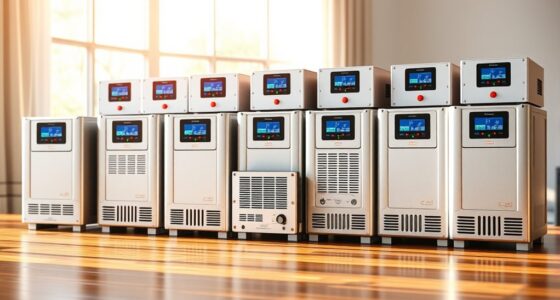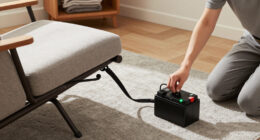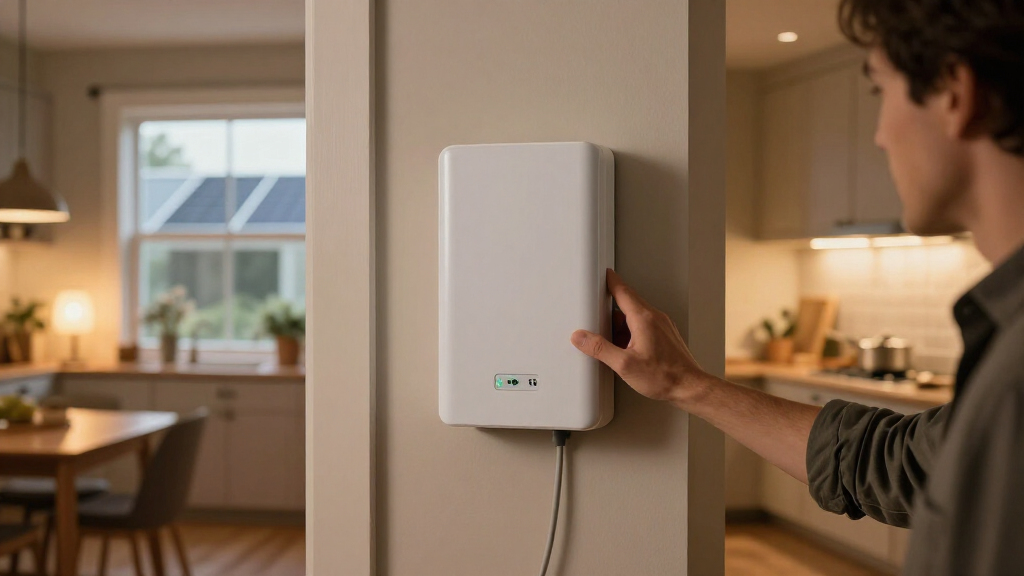
Choosing between home battery backup systems comes down to one big question: do you want a permanent whole-home setup or a portable power station you can move where needed? The ECO-WORTHY 48V 10240Wh kit with the 10000W Liber inverter earns the top spot as best overall, because it is one of the few options here that can genuinely run an entire house through an outage. If you want something simpler and semi-portable, the Jackery HomePower 3600 Plus balances capacity with plug-and-play ease, while the Anker SOLIX S2000 is the budget-friendly entry point for keeping essentials alive. The main tradeoff in this category is capacity versus cost and complexity — big 48V kits require installation and wiring knowledge, while portable stations trade runtime for convenience. Read on for the full breakdown of all nine systems.

Get backup power and energy gear delivered free — and shop member deals
- Fast, free delivery on millions of items
- Access to Prime Big Deal Days deals on October 6–7
- Prime Video, Amazon Music and more included
Key Takeaways
- The ECO-WORTHY 48V kits (5120Wh and 10240Wh) were the only options with enough inverter capacity (5000W–10000W) to back up an entire home, including heavy loads like well pumps and HVAC — everything else in the lineup is limited to circuits or essentials.
- The 48V 314Ah LiFePO4 battery (16.07kWh) offers the most raw storage per dollar, but it ships without an inverter, so it only makes sense for buyers already building or expanding a 48V system.
- Bundled solar panels made a real difference: the Jackery 1000 v2 and HomePower 3600 Plus solar bundles were meaningfully more useful for extended outages than their panel-free counterparts at similar effort levels.
- The EcoFlow DELTA 3 Classic (1024Wh) and Anker SOLIX S2000 (2010Wh) cannot run a refrigerator-plus-more for more than a day, but their fast recharge times make them strong blackout insurance for apartments and small homes.
- LiFePO4 chemistry appeared across the entire Jackery line and both ECO-WORTHY kits — a clear sign that longer cycle life has become the standard, so buyers should hesitate before paying premium money for older NMC-based units.
| ECO-WORTHY 48V Home Backup Power Kit – 5120Wh LiFePO4 Battery with 5000W Off-Grid Inverter |  | Best Overall Starter Kit | Battery Capacity: 5120Wh (51.2V 100Ah) | Chemistry: LiFePO4, Grade A cells | Inverter Output: 5000W continuous, 10000W peak | VIEW LATEST PRICE | See Our Full Breakdown |
| Jackery HomePower 3600 Plus Portable Power Station, 3584Wh, 3600W |  | Best Portable Whole-Home Backup | Capacity: 3584Wh | AC Output: 3600W; 7200W in parallel | Voltage: 120V; 240V in parallel | VIEW LATEST PRICE | See Our Full Breakdown |
| Jackery HomePower 3600 Plus Portable Power Station with Two 200W Solar Panels |  | Best Solar-Ready Bundle | Battery Capacity: 3,584Wh | AC Output: 3,600W (7,200W parallel) | Expandable Capacity: Up to 21kWh per unit or 43kWh total | VIEW LATEST PRICE | See Our Full Breakdown |
| Jackery Solar Generator 1000 v2 with 200W Solar Panel |  | Best Compact Emergency Essentials Pick | Capacity: 1,070Wh | AC Output: 1,500W (3,000W surge) | Battery Type: LFP (LiFePO4), 4,000+ cycles | VIEW LATEST PRICE | See Our Full Breakdown |
| ECO-WORTHY 48V Home Backup Power Kit – 10240Wh LiFePO4 Battery Storage with Liber 10KP 10000W Inverter |  | Best Premium Whole-Home System | Total Capacity: 10,240Wh (2× 51.2V 100Ah) | Inverter Output: 10,000W continuous, 20,000W peak | Output Voltage: 120/240V split-phase or 120V single-phase | VIEW LATEST PRICE | See Our Full Breakdown |
| Anker SOLIX S2000 Portable Power Station, 2,010 Wh, 1,500 W |  | Best for Flexible Charging | Battery capacity: 2,010 Wh | Battery type: LFP | Continuous output: 1,500 W | VIEW LATEST PRICE | See Our Full Breakdown |
| 48V 314Ah LiFePO4 Lithium Battery, 16.07kWh |  | Best for Whole-Home Storage Expansion | Voltage: 48V | Capacity: 314 Ah (16.07 kWh) | Battery chemistry: LiFePO4 | VIEW LATEST PRICE | See Our Full Breakdown |
| Jackery Solar Generator 5000 Plus Portable Power Station, 5040Wh LiFePO4 |  | Best for Whole-Home Backup Power | Battery capacity: 5,040 Wh | Battery type: LiFePO4 | Surge output: 14,400 W | VIEW LATEST PRICE | See Our Full Breakdown |
| EcoFlow DELTA 3 Classic Portable Power Station, 1024Wh, 1800W |  | Best Compact Starter Pick | Battery capacity: 1,024 Wh | Battery chemistry: LiFePO4 | Output wattage: 1,800 W (X-Boost up to 2,600 W) | VIEW LATEST PRICE | See Our Full Breakdown |
| home battery backup system | Battery Capacity |
|---|---|
| ECO-WORTHY 48V Home Backup Pow | 5120Wh (51.2V 100Ah) |
| Jackery HomePower 3600 Plus Po | — |
| Jackery HomePower 3600 Plus Po | 3,584Wh |
| Jackery Solar Generator 1000 v | — |
| ECO-WORTHY 48V Home Backup Pow | — |
| Anker SOLIX S2000 Portable Pow | 2,010 Wh |
| 48V 314Ah LiFePO4 Lithium Batt | — |
| Jackery Solar Generator 5000 P | 5,040 Wh |
| EcoFlow DELTA 3 Classic Portab | 1,024 Wh |
More Details on Our Top Picks
ECO-WORTHY 48V Home Backup Power Kit – 5120Wh LiFePO4 Battery with 5000W Off-Grid Inverter
This kit earns the top spot because it strikes the best balance between whole-home capability and manageable entry cost. The pairing of a 5120Wh LiFePO4 battery with a 5000W pure sine wave inverter covers refrigeration, well pumps, and most household circuits without the complexity of a larger install. Compared with the Jackery HomePower 3600 Plus, it trades portability for permanence: rack mounting, UL1973/UL1741 certification, and closed-loop CAN communication make it a genuine electrical-system component rather than an appliance you wheel around. The standout advantage is expandability up to 32 batteries and 30kW of output, meaning you are not locked into today’s capacity. The tradeoff is real, though — at 130 lbs and requiring professional installation, this is not a plug-and-play option, and components arriving in separate shipments can complicate a planned install date.
Pros:- 5120Wh capacity with 5000W continuous output (10000W peak) covers most household essentials
- UL1973 and UL1741 certified with thermal runaway management
- Scales up to 30kW output and 163.84kWh storage without replacing components
- Bluetooth and WiFi app monitoring keeps system status visible
Cons:- 130 lbs and rack-mounted, so installation realistically requires a professional
- Components ship separately, which can stagger delivery and delay setup
Best for: Homeowners planning a permanent, professionally installed backup system that can grow over time
Not ideal for: Renters or anyone wanting grab-and-go emergency power — it’s rack-mounted, heavy, and needs an electrician
- Battery Capacity:5120Wh (51.2V 100Ah)
- Chemistry:LiFePO4, Grade A cells
- Inverter Output:5000W continuous, 10000W peak
- MPPT Controller:100A built-in
- Expansion:Up to 6 inverters (30kW) / 32 batteries (163.84kWh)
- Monitoring:CAN/RS485, Bluetooth, WiFi app
- Certifications:UL1973, UL1741, CEC compliant
- Form Factor:Rack mount, 130 lbs
Our verdict“The smartest starting point for homeowners building a permanent, expandable whole-home backup system.”
Jackery HomePower 3600 Plus Portable Power Station, 3584Wh, 3600W
For buyers who want serious backup power without an electrician or a permit, this option stands out. The 3584Wh capacity and 3600W output are enough to run a fridge, freezer, and lights for a day or more, and the wheels plus telescopic handle mean you can store it in a garage and roll it into position during an outage. Compared with the ECO-WORTHY 5120Wh kit, it gives up roughly 1.5kWh of storage and hardwired integration, but it works out of the box with four charging paths, including solar and even a gas generator. The 6,000-cycle battery rating is a genuine differentiator versus smaller portable units like the Anker SOLIX S2000, promising a decade of service. Note that 240V output requires linking two units in parallel — a meaningful added cost if your home needs 240V appliances.
Pros:- 3600W output runs major appliances, not just phones and lights
- Four charging methods including solar and gas generator input
- 6000-cycle battery rating for long service life
- Wheels and telescopic handle make repositioning practical despite the size
Cons:- Still heavy and bulky to move despite the wheeled design
- 240V output only works when two units are connected in parallel
Best for: Homeowners and renters who want high-capacity backup they can deploy themselves and move as needed
Not ideal for: Houses needing 240V power for well pumps or dryers without buying a second unit for parallel connection
- Capacity:3584Wh
- AC Output:3600W; 7200W in parallel
- Voltage:120V; 240V in parallel
- Expandable:Up to 21kWh per unit, 43kWh with multiple units
- Recharge Time:2 hours hybrid; 2.5 hours AC; 4 hours solar
- Battery Cycle Life:6,000 cycles
- Operating Temperature:Down to -4°F
- Design:Wheels and telescopic handle
Our verdict“The best self-installable option for keeping a household running through multi-hour outages.”
Jackery HomePower 3600 Plus Portable Power Station with Two 200W Solar Panels
This is the same 3600W powerhouse as the standalone HomePower 3600 Plus, but bundled with two 200W panels — and that addition changes who it’s for. If you live somewhere with extended or recurring outages, panels convert this from a single-use battery into a system that can partially refill itself during a multi-day grid failure. Compared with buying the base unit separately, this pick makes the most sense for buyers in storm-prone or rural areas where fuel for a generator may be scarce. Against the Jackery Solar Generator 1000 v2, it offers more than three times the capacity for whole-home coverage rather than just essentials. The honest tradeoff: 400W of panel is a trickle relative to the 3584Wh tank, so a full solar recharge still takes a long time, and the staggered shipment of station and panels means you should verify all boxes arrive before an emergency.
Pros:- Includes 400W of solar panels for grid-independent recharging
- 3600W output with expansion up to 43kWh across multiple units
- Four charging methods provide redundancy during emergencies
- 10-year claimed lifespan with 6,000-cycle battery rating
Cons:- 400W of panel charges the large battery slowly — it’s a supplement, not a fast refuel
- Power station and panels ship in separate packages, risking incomplete deliveries
Best for: Buyers in outage-prone regions who want recharge capability independent of the grid from day one
Not ideal for: Apartment dwellers with no space for solar panels — the base HomePower 3600 Plus without the bundle is the smarter buy
- Battery Capacity:3,584Wh
- AC Output:3,600W (7,200W parallel)
- Expandable Capacity:Up to 21kWh per unit or 43kWh total
- Solar Panels Included:2 × 200W
- Charging Options:Hybrid AC+DC, AC, solar, gas generator
- Recharge Time:2 hours hybrid; 2.5 hours AC
- Battery Cycle Life:6,000 cycles
- Operating Temperature:Down to -4°F
Our verdict“The right pick for storm-prone areas where the ability to recharge without the grid matters as much as raw capacity.”
Jackery Solar Generator 1000 v2 with 200W Solar Panel
Not every backup plan needs to run a whole house — sometimes the job is keeping a fridge, phones, and a CPAP alive overnight, and that’s where this option wins. At 23.8 lbs with a foldable handle, it is the only pick in this lineup a person can carry up stairs or stash in a closet, let alone take camping between emergencies. The 1-hour emergency fast charge is genuinely useful: top it off the moment a storm warning lands and you’re covered before the lights flicker. Compared with the EcoFlow DELTA 3 Classic at similar capacity, the bundled 200W panel and 1500W output give it an edge in both recharging and appliance headroom. The drawback is inherent to the size — 1,070Wh will not sustain a household, and the one-hour charge mode must be re-enabled in the app before every session, an easy step to forget under stress.
Pros:- Genuinely portable at 23.8 lbs with a foldable handle
- 0-100% recharge in about 1 hour in emergency mode
- 4,000+ cycle LFP battery with 10+ year service life
- Pure sine wave AC plus 100W USB-C PD covers sensitive electronics
Cons:- Fast charging must be manually re-enabled in the app before each use
- Capacity is limited to essentials, not whole-home backup
- Station and solar panel ship separately
Best for: Apartment dwellers, campers, and anyone whose emergency plan centers on essentials like a fridge, medical device, or phones
Not ideal for: Families expecting to run multiple major appliances — the 1,070Wh capacity empties fast under heavy loads
- Capacity:1,070Wh
- AC Output:1,500W (3,000W surge)
- Battery Type:LFP (LiFePO4), 4,000+ cycles
- Fast Charging:0-100% in 1 hour (emergency mode)
- Solar Charging:80% in 6 hours with 200W panel
- Ports:2× USB-C PD 100W, 1× USB-A, 1× DC, 3× AC
- Weight:23.8 lbs
- Warranty:5 years
Our verdict“The best grab-and-go option for keeping essentials alive — sized for emergencies and weekends, not whole households.”
ECO-WORTHY 48V Home Backup Power Kit – 10240Wh LiFePO4 Battery Storage with Liber 10KP 10000W Inverter
This is the pick for buyers past the experimenting stage — the ones who want a system that runs a house, not a subset of it. Doubling the battery capacity of the 5120Wh ECO-WORTHY kit to 10,240Wh and jumping to a 10,000W inverter with 120/240V split-phase output means well pumps, dryers, and HVAC are all in play. Dual MPPT controllers built into the inverter simplify solar integration compared with stacking separate charge controllers. The ceiling here is the highest in the roundup: 60kW of parallel output and 163.84kWh of storage, which comfortably exceeds what portable options like the Jackery Solar Generator 5000 Plus can reach. The tradeoff is proportional — this is a professional installation project with a matching price tag, and split shipments of batteries, inverter, and hardware require coordination before your electrician arrives. Buyers who only need fridge-and-lights coverage should step down to a smaller kit.
Pros:- 10,240Wh storage and 10,000W output with 120/240V split-phase support
- Dual MPPT solar controllers integrated into the inverter
- Expandable to 60kW output and 163.84kWh storage
- UL1973, UL1741, and CEC certified with app-based monitoring
Cons:- Complex installation that realistically requires a professional electrician
- High upfront cost typical of whole-home battery systems
- Components ship separately, complicating delivery and install scheduling
Best for: Homeowners committing to a full off-grid or whole-home backup system with 240V appliance support
Not ideal for: Budget-focused buyers or those with modest backup needs — the capacity and cost far exceed essential-load scenarios
- Total Capacity:10,240Wh (2× 51.2V 100Ah)
- Inverter Output:10,000W continuous, 20,000W peak
- Output Voltage:120/240V split-phase or 120V single-phase
- Battery Charger:Max 200A (hybrid)
- Expansion:Up to 6 inverters (60kW) / 32 batteries (163.84kWh)
- Monitoring:CAN/RS485, Bluetooth, WiFi
- Certifications:UL1973, UL1741, CEC compliant
- Chemistry:LiFePO4, Grade A cells
Our verdict“The strongest choice here for a permanent whole-home system, provided you’re ready for professional installation and the cost that comes with it.”
Anker SOLIX S2000 Portable Power Station, 2,010 Wh, 1,500 W
The Anker SOLIX S2000 earns its place here by solving a problem most power stations ignore: how you refill the battery when the grid is down. With six charging methods — wall outlet, solar, generator, alternator charger, and car outlet — this option stands out for households that want charging redundancy rather than raw capacity. Compared with the EcoFlow DELTA 3 Classic, it stores roughly double the energy (2,010 Wh vs. 1,024 Wh), though the EcoFlow charges faster and costs less as an entry point. The sub-10 ms UPS switchover makes it viable for keeping a router or desktop PC alive through flickers without a reboot, and the claimed 10,000-cycle LFP cells should outlast the life of the home. The tradeoff is output: 1,500 W continuous means no air conditioners or large heaters, and the missing 12 V DC port will annoy anyone running DC accessories directly.
Pros:- Six distinct charging methods give real redundancy during extended outages
- Sub-10 ms UPS switchover protects sensitive electronics from reboots
- 2,010 Wh LFP capacity is double the EcoFlow DELTA 3 Classic for longer fridge runtime
- Claimed 10,000-cycle battery life for years of daily use
Cons:- No 12 V DC port limits compatibility with car-style accessories
- 1,500 W continuous output cannot run most heating or cooling appliances
Best for: Homeowners who want a midsize backup with multiple recharge paths, including from a car or generator during extended outages
Not ideal for: Buyers who need to run high-draw appliances like window AC units or space heaters — 1,500 W continuous output is too limited
- Battery capacity:2,010 Wh
- Battery type:LFP
- Continuous output:1,500 W
- Peak output:3,000 W
- Maximum solar input:400 W
- UPS switchover:<10 ms
- Number of outlets:8
- Weight:35.7 lbs
Our verdict“This pick makes the most sense for buyers who prioritize charging flexibility and battery longevity over maximum wattage.”
48V 314Ah LiFePO4 Lithium Battery, 16.07kWh
This 16.07 kWh 48V rack battery plays a completely different role from every portable unit in this roundup. It is a component, not an appliance: there’s no inverter, no outlets, no handle-and-go design. What it offers is serious storage density — more than three times the capacity of the Jackery Solar Generator 5000 Plus base unit — and the ability to parallel up to 15 units for 241 kWh. Compared with the ECO-WORTHY 48V kits, which bundle battery and inverter together, this option gives integrators freedom to size and pair their own inverter via RS485 or CAN, provided they know what they’re doing. The 200A BMS, dual breakers, and six-layer protection matter at this scale, where a fault is a genuine hazard. Wheels and handles help, but at this capacity the unit is not something you relocate casually. The real tradeoff: it demands a proper installation and an inverter purchase, so it’s overkill and over-budget for anyone who just wants plug-in emergency power.
Pros:- Massive 16.07 kWh capacity, expandable to 241 kWh across 15 parallel units
- RS485, CAN, and Bluetooth connectivity for inverter pairing and monitoring
- 200A BMS with dual breakers and six-layer protection for high-current safety
- Compatible with many major inverter brands
Cons:- Requires a separate inverter and installation — no usable AC output on its own
- Far more capacity (and cost) than a small backup setup needs
- App monitoring depends on Bluetooth or Wi-Fi connectivity
Best for: DIY solar installers and off-grid homeowners building a scalable whole-home system with their own inverter choice
Not ideal for: Renters or anyone wanting plug-and-play backup — it requires a separate inverter, wiring, and installation knowledge
- Voltage:48V
- Capacity:314 Ah (16.07 kWh)
- Battery chemistry:LiFePO4
- BMS:200A
- Cycle life:Up to 6,000 cycles at 80% state of health
- Communication interfaces:RS485, CAN, RS232, Bluetooth, Wi-Fi
- Parallel connection:Up to 15 units (241 kWh)
Our verdict“This model is better suited to builders constructing a permanent, expandable home energy system than to anyone shopping for emergency convenience.”
Jackery Solar Generator 5000 Plus Portable Power Station, 5040Wh LiFePO4
When the question shifts from which devices stay on to what runs the whole house, the Jackery Solar Generator 5000 Plus is the answer in this lineup. With 7,200 W of rated output, 14,400 W surge, and both 120V and 240V circuits, it can run well pumps, dryers, and even central HVAC equipment that would trip the Anker SOLIX S2000 instantly. The base 5,040 Wh capacity sits between the Jackery HomePower 3600 Plus and the 16 kWh rack battery, but the expansion path to 60 kWh is what separates it: a buyer can start with essential circuits and grow later. Pair it with up to 4,000 W of solar and a full recharge takes about two hours — fast enough to cycle daily through a multi-day outage. The catches are real, though. Solar panels are sold separately, and without the optional 60A Smart Transfer Switch, this is essentially a very large power strip, not a home backup system.
Pros:- 7,200 W rated output with 120V/240V support runs major appliances and HVAC
- Expandable from 5,040 Wh up to 60 kWh as needs grow
- Up to 4,000 W solar input enables roughly two-hour full recharges
- Compatible with both high- and low-voltage solar panels
Cons:- Solar panels are optional and not included
- Requires the separately sold Smart Transfer Switch to power home circuits
- Only two outlets without the transfer switch accessory
Best for: Homeowners who want to back up major appliances — well pumps, HVAC, 240V equipment — with room to expand later
Not ideal for: Apartment dwellers or budget-conscious buyers needing only fridge-and-phone backup — the capacity and output go largely unused
- Battery capacity:5,040 Wh
- Battery type:LiFePO4
- Surge output:14,400 W
- AC output voltage:120V/240V
- Expandable capacity:Up to 60 kWh
- Maximum solar input:4,000 W
- Battery longevity:Rated for up to 11 years of daily use
Our verdict“Compared with every plug-and-play rival here, this is the closest a portable-format unit gets to true whole-house backup — provided you budget for the switch and panels.”
EcoFlow DELTA 3 Classic Portable Power Station, 1024Wh, 1800W
The EcoFlow DELTA 3 Classic is the easiest on-ramp in this roundup. At 26.7 lbs and roughly the footprint of a small cooler, it’s the unit you can carry to a bedroom during an outage or stash in a closet the other 364 days of the year — something no 5 kWh-class unit like the Jackery Solar Generator 5000 Plus can claim. Its cleverness is in output management: 1,800 W continuous with X-Boost up to 2,600 W means some 2,000 W-class appliances actually run, something the 1,500 W Anker SOLIX S2000 refuses outright. Charging is the other headline — 0 to 80% in 45 minutes on AC — so a short grid window is enough to refill it, and the sub-10 ms UPS function keeps computers and networking gear alive seamlessly. The tradeoff is capacity: 1,024 Wh covers a fridge overnight plus basics, not days. And unlike expandable rivals, it accepts no extra batteries, so what you buy is what you keep.
Pros:- X-Boost pushes output to 2,600 W for appliances that exceed the 1,800 W rating
- 0–80% AC recharge in 45 minutes refills the battery during brief grid windows
- Lightest and most portable unit in this roundup at 26.7 lbs
- Under-10 ms UPS switchover plus app monitoring and controls
Cons:- Not compatible with DELTA 2 or DELTA 3 Smart Extra Batteries, so capacity is fixed
- Solar panel is optional and sold separately
Best for: First-time buyers and apartment dwellers who need fridge, router, and phone backup with fast recharges and easy portability
Not ideal for: Households preparing for multi-day outages — 1,024 Wh runs out quickly and there’s no expansion option
- Battery capacity:1,024 Wh
- Battery chemistry:LiFePO4
- Output wattage:1,800 W (X-Boost up to 2,600 W)
- Surge capacity:3,600 W
- AC charging:0–80% in 45 minutes
- Solar charging:About 2.5 hours with optional 500W panel
- UPS switchover:Under 10 ms
- Weight:26.7 lbs
Our verdict“This pick makes the most sense for buyers who value speed, portability, and simplicity over raw storage — and who accept a fixed 1 kWh ceiling.”
How We Picked
I evaluated each system against the question a real buyer asks during an outage: what stays on, and for how long? That meant prioritizing usable capacity, inverter wattage (which determines whether you can run a fridge, a well pump, or a whole panel), battery chemistry and cycle life, recharge speed, and expandability. Whole-home kits were judged on installation complexity and whether the inverter was included; portable stations were judged on portability, solar input, and how many circuits they could realistically carry.
The ranking follows capability tiering rather than pure capacity numbers. The ECO-WORTHY 48V kits lead because they solve the actual home-backup problem at scale, the Jackery 5000 Plus and HomePower 3600 Plus fill the middle ground between whole-home and portable, and the smaller stations (DELTA 3 Classic, SOLIX S2000, Explorer 1000 v2) rank lower for home backup specifically — not because they are bad products, but because they are partial solutions for this particular job. The bare 48V 314Ah battery sits mid-pack: outstanding value, but only for buyers who can supply the surrounding system themselves.
Factors to Consider When Choosing Home Battery Backup Systems
Before you pick a specific system, it helps to understand the decisions that shape every purchase in this category. The nine products above represent very different philosophies of backup power, and the right one depends on your home, your budget, and how much effort you are willing to invest.
Whole-Home Kit vs. Portable Power Station
The single biggest decision is structural. Hardwired 48V kits like the ECO-WORTHY systems connect to your electrical panel, switch automatically or semi-automatically, and can run everything at once — but they demand installation work, possibly an electrician, and a permanent home in your garage or utility room. Portable stations sit in a closet until needed, then power whatever you plug into them directly. A common mistake is buying a portable unit expecting whole-house behavior; you will end up running extension cords to a fridge and lamps rather than living normally. The reverse mistake is paying for a 10kW inverter kit when your real need is a fridge, a router, and a CPAP machine. Audit what you actually want to keep running during an outage before you spend anything.
Capacity: Calculate Watt-Hours Against Real Loads
Capacity numbers are misleading without load math. A refrigerator draws roughly 150–200W while running, a space heater or microwave can spike past 1000W, and a central AC unit alone can eat a 3.5kWh battery in under two hours. Divide the battery’s watt-hours by your combined load to get realistic runtime, then cut that by 15–20% for inverter losses. This is why a 1024Wh unit is emergency insurance, not home backup — it covers essentials for hours, not days. Also remember that listed capacity and usable capacity differ; some systems reserve a buffer for battery health. When in doubt, buy one tier more capacity than your math suggests, because outages rarely end on schedule.
Inverter Wattage Determines What You Can Run
Watt-hours tell you how long; inverter wattage tells you what. A 1500W inverter cannot start most sump pumps or power tools even if the battery behind it is huge, because those devices have startup surges two to three times their running draw. The 5000W and 10000W inverters in the ECO-WORTHY kits exist precisely for this reason. For portable stations, check the surge rating as carefully as the continuous rating. Another overlooked factor is simultaneity: a 3600W inverter lets you run a fridge, a freezer, lights, and a TV together without tripping, while an 1800W unit forces you to manage loads like a juggling act at midnight. Match the inverter to your most demanding single appliance first, then worry about total capacity.
Chemistry and Cycle Life: The Longevity Question
Nearly every serious option in this category now uses LiFePO4 chemistry, rated for 3000–4000+ cycles before degrading to roughly 80% capacity. That translates to a decade of daily cycling or a lifetime of occasional outages. Older NMC batteries are lighter for the same energy, which matters for camping but not for a battery that sits under your stairs. What buyers often miss is that cycle life is only useful if the battery management system protects it — cheap cells with a good BMS outperform premium cells with a poor one. Also check whether capacity can be expanded later; modular systems like the Jackery expandable line let you start small and add batteries instead of replacing everything.
Solar Input and Recharge Strategy
Battery capacity is a snapshot; recharge capability is the movie. During a multi-day outage, a system you cannot recharge becomes a very expensive one-time use device. Look at maximum solar input wattage — the Jackery units accept panel arrays large enough to fully recharge in a day of good sun, while small stations may take two days from their modest bundled panels. Grid recharge speed matters too if outages in your area are short but frequent. Wall charging of 500W or less means an overnight refill for big units and a day-plus for the 5kWh class. If you live somewhere with storm-driven multi-day outages, prioritize solar input above almost everything else.
Hidden Costs: Installation, Wiring, and Permits
The sticker price of a whole-home kit is rarely the full cost. You may need transfer switch hardware, proper cabling, breakers, and in some jurisdictions a permit or inspection to legally connect a battery to your panel. These can add meaningful expense and scheduling delays — plan for them before the storm season, not during it. Portable stations avoid all of this, which is part of why they dominate the sub-$2000 tier. Another hidden cost is maintenance access: a hardwired system buried behind stored boxes is one you cannot diagnose when it matters. Whichever route you take, budget for the ecosystem around the battery, not just the battery itself.
Frequently Asked Questions
Can a portable power station really back up my whole house?
Not in the way most people imagine. A portable station powers whatever you physically plug into it, so during an outage you are running extension cords to select appliances rather than using your home’s outlets and light switches normally. Units like the Jackery 5000 Plus blur the line — with 5000W of output it can run most major appliances — but you are still choosing which ones. True whole-house backup with automatic transfer requires a wired system like the ECO-WORTHY 48V kits with a transfer switch, installed at your panel. If your goal is simply keeping the fridge, internet, and some lights alive, a large portable station is a legitimate and far simpler solution.
How many watt-hours do I need to run a refrigerator during an outage?
A typical modern refrigerator cycles on and off, averaging around 1.5–2kWh per day. That means a 2010Wh unit like the Anker SOLIX S2000 can keep one fridge running for close to 24 hours with nothing else attached, while a 5040Wh system stretches to two or three days. Remember to subtract inverter losses and avoid opening the door often, which dramatically increases runtime. If a freezer is also in play, roughly double the math. This is why capacity alone should never drive the purchase — pair it with a recharge plan, because even a big battery eventually runs flat in a multi-day event.
Is a bare 48V server-rack battery like the 314Ah model a good deal if I want to save money?
It can be the cheapest path to large capacity, but only if you know what you are building. A bare LiFePO4 battery provides storage, not usable household power — you still need an inverter, busbars or cabling, breakers, a charging source, and ideally a monitoring setup. For someone already running a 48V solar system or expanding an existing ECO-WORTHY kit, adding one of these is excellent value per kilowatt-hour. For a beginner starting from zero, the total system cost and complexity will approach a complete kit anyway, and a pre-matched kit with a warranty covering the whole system is safer. The honest framing: this is a component purchase, not a product purchase.
Do I need solar panels, or is grid charging enough?
It depends entirely on how long your outages last. If your power interruptions are typically measured in hours, grid charging overnight is completely sufficient and solar panels are an unnecessary expense. But if you face multi-day outages from storms, wildfires, or an unreliable rural grid, solar becomes the difference between a one-time battery dump and a system that sustains itself indefinitely. As a rule of thumb, size your solar array so it can replace your daily consumption in about four to five peak sun hours — for a 5kWh daily need, that means roughly 1200W of panels given real-world losses. Bundles like the Jackery HomePower 3600 Plus with two 200W panels are a starting point, but serious off-grid endurance usually requires adding more panels than any bundle includes.
Can these batteries power a well pump, sump pump, or furnace?
Motors are the hardest loads for battery systems because their startup surge can be two to three times their running wattage. A ½ horsepower sump pump might draw 400W running but demand 1200W for a second at startup — an 1800W inverter like the EcoFlow DELTA 3 Classic’s may handle it, but a smaller unit will trip. Well pumps and furnace blowers are often the deciding factor for jumping to the 3600W+ class. Gas furnaces need surprisingly little power (mainly the blower and igniter), so a mid-size station can keep heat running through a winter outage. Check your appliance’s nameplate or locked-rotor amps before buying, and match the inverter’s surge rating with comfortable headroom.
Conclusion
After comparing all nine systems, the right pick maps cleanly to buyer type. For best overall, the ECO-WORTHY 48V 10240Wh kit with the 10000W Liber inverter is the only system here that treats a power outage as a non-event for the entire house. For best value, the smaller ECO-WORTHY 5120Wh kit delivers genuine whole-home capability at a lower capacity, while the Anker SOLIX S2000 is the value pick on the portable side. For best premium, the Jackery Solar Generator 5000 Plus pairs huge LiFePO4 capacity with expandability and brand-polished software. For beginners, the EcoFlow DELTA 3 Classic or the Jackery Explorer 1000 v2 bundle offer a zero-installation introduction to backup power without overwhelming anyone. And for specific needs: the HomePower 3600 Plus (with or without panels) suits semi-permanent garage setups with occasional portability, and the bare 48V 314Ah battery is the DIY builder’s component of choice. Size your load, pick your tier, and buy once — the cheapest mistake in this category is buying too small twice.
Fall Picks
fall essentials
As an affiliate, we earn on qualifying purchases.