
TL;DR
Get ready for Prime Big Deal Days — try Prime free
Exclusive member deals on October 6–7, plus fast free delivery. Cancel anytime.
As an affiliate, we earn on qualifying purchases.
Brigham Young University-Hawaii is nearing full reliance on solar energy through its expanded solar project, including ground-mount and canopy systems, with battery backup. This development marks a significant step toward renewable energy independence for the campus and nearby facilities.
Brigham Young University-Hawaii is advancing toward its goal of becoming nearly 100% powered by solar energy, with the completion of its second project portfolio, including ground-mounted and parking lot solar canopies, confirmed by the university’s recent announcements.
The university’s solar initiative, called the University Solar Project, began in 2022 with the installation of rooftop solar systems, solar carports, and battery storage, covering 39% of its electricity needs. Currently, phase two involves building a ground-mount solar array southwest of the campus and installing solar canopies in the parking lot near the Polynesian Cultural Center and the Laie Hawaii Temple.
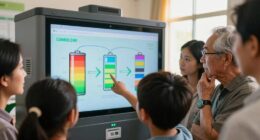
This new infrastructure aims to provide the university with 100% of its electricity from renewable sources, with excess clean energy also powering nearby facilities such as the PCC and the temple. The project includes a battery backup system designed to supply power for up to five days during outages, enhancing campus resilience.
Support from BYD-Hawaii has been instrumental, with the initial phase including 7 MWh of battery capacity. The ongoing expansion reflects Hawaii’s leadership in renewable energy adoption, aligning with state goals to increase clean energy use and reduce reliance on fossil fuels.
Implications of Near-Complete Solar Transition for Hawaii Campus
This development demonstrates a significant shift toward renewable energy independence for educational institutions, reducing carbon emissions and operational costs. It also enhances resilience against power outages and sets a precedent for other campuses and facilities in Hawaii and beyond to pursue similar clean energy transitions, contributing to broader climate change mitigation efforts.
As an affiliate, we earn on qualifying purchases.
Hawaii’s Leadership in Renewable Energy Adoption
Hawaii has long been a leader in renewable energy initiatives, driven by its high energy costs and commitment to reducing fossil fuel dependence. The state’s push for increased solar adoption is reflected in ongoing projects across public and private sectors. BYU-Hawaii’s solar expansion aligns with regional efforts to achieve 100% renewable energy targets, building on previous installations that already covered a substantial portion of campus needs since 2022.
“The university’s move toward full solar reliance is a noteworthy example of institutional commitment to sustainability.”
— an anonymous researcher
Remaining Technical and Logistical Challenges
It is not yet clear whether the entire campus will be powered solely by the new solar infrastructure once phase two is completed, or if additional projects will be needed to reach full coverage. Details about the timeline for full implementation and integration with existing systems are still emerging.
Next Steps for Solar Expansion and Certification
The university plans to complete the ground-mounted and canopy systems in the coming months, with ongoing monitoring of system performance. Once operational, efforts will focus on integrating the new infrastructure into campus energy management and pursuing certification for sustainability achievements. Further updates are expected as the project progresses toward its near-100% renewable energy goal.
Key Questions
When will the university be fully powered by solar energy?
The university aims to achieve near-complete solar power through the ongoing phase two expansion, with full implementation expected within the next year or so, though exact completion dates are still being finalized.
How much will the new solar systems contribute to the campus energy needs?
The new ground-mounted and canopy solar systems are designed to significantly increase the university’s renewable energy capacity, aiming to cover nearly 100% of its electricity consumption once fully operational.
Will the project reduce energy costs for the university?
While specific cost savings have not been disclosed, switching to renewable energy typically reduces operational expenses over time, especially as solar and storage systems mature and costs decrease.
What role does the battery backup system play?
The battery system can supply power for up to five days during outages, increasing campus resilience and ensuring continuous operations during grid disruptions.
Are there plans to expand renewable energy beyond solar?
Current plans focus on solar expansion, but the university may consider additional renewable sources in the future as part of its sustainability strategy.
Source: CleanTechnica
NFL season / tailgating Picks
team gear
As an affiliate, we earn on qualifying purchases.