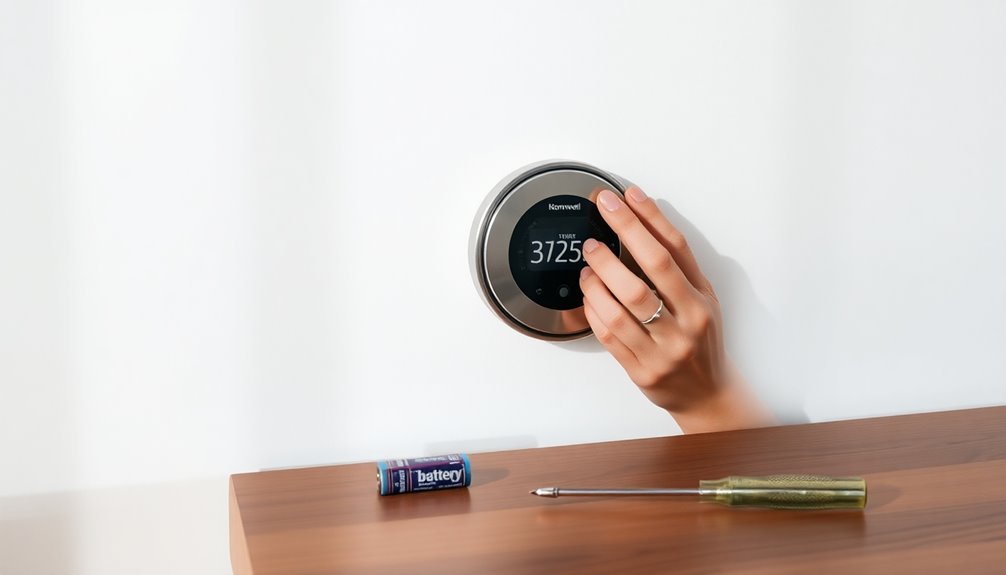

To build a smarter battery maintenance calendar, start by identifying your battery type and following the manufacturer’s guidelines for maintenance intervals. Use digital tools or planners to schedule regular inspections, voltage tests, and cleanings, and set reminders to stay on track. Track battery health over time to detect trends and adapt your schedule accordingly. Staying proactive ensures longevity and reliability; continue exploring these strategies to optimize your battery care routine.

Get backup power and energy gear delivered free with Prime
- Fast, free delivery on millions of items
- Prime Video, Amazon Music and more included
- Member-only deals all year
Key Takeaways
- Identify battery types and follow manufacturer-recommended maintenance schedules for tailored upkeep.
- Use digital tools or planners to set recurring reminders for inspections and testing.
- Schedule regular voltage and visual inspections during low operational periods to prevent disruptions.
- Track maintenance activities and battery performance trends to optimize timing and predict replacements.
- Periodically review and adjust the calendar based on aging, usage changes, and observed battery health.

Have you ever wondered if your battery maintenance routine could be more efficient? It’s a common question, especially if you rely heavily on batteries for work or daily activities. The key to maximizing your battery’s performance and extending its lifespan lies in smart maintenance scheduling. When you plan your maintenance activities thoughtfully, you prevent unnecessary replacements, reduce downtime, and guarantee your batteries stay in peak condition longer. Building a smarter battery maintenance calendar requires understanding your batteries’ needs, setting appropriate intervals, and sticking to a consistent routine.
Start by knowing the specific type of batteries you’re working with. Different batteries have different maintenance requirements and recommended intervals. For example, lead-acid batteries need regular checks of electrolyte levels, while lithium-ion batteries require less frequent but more precise monitoring. Once you know the type, research the manufacturer’s guidelines to determine ideal maintenance frequency. This information helps you establish a realistic schedule that balances thorough upkeep without unnecessary disruptions. Proper maintenance scheduling directly impacts your battery lifespan, so it’s worth investing time upfront to get it right. Understanding the importance of battery maintenance frequency can help optimize your schedule effectively, ensuring you’re not over- or under-maintaining your batteries.
Understanding your battery type and manufacturer guidelines is essential for effective maintenance scheduling and prolonging lifespan.
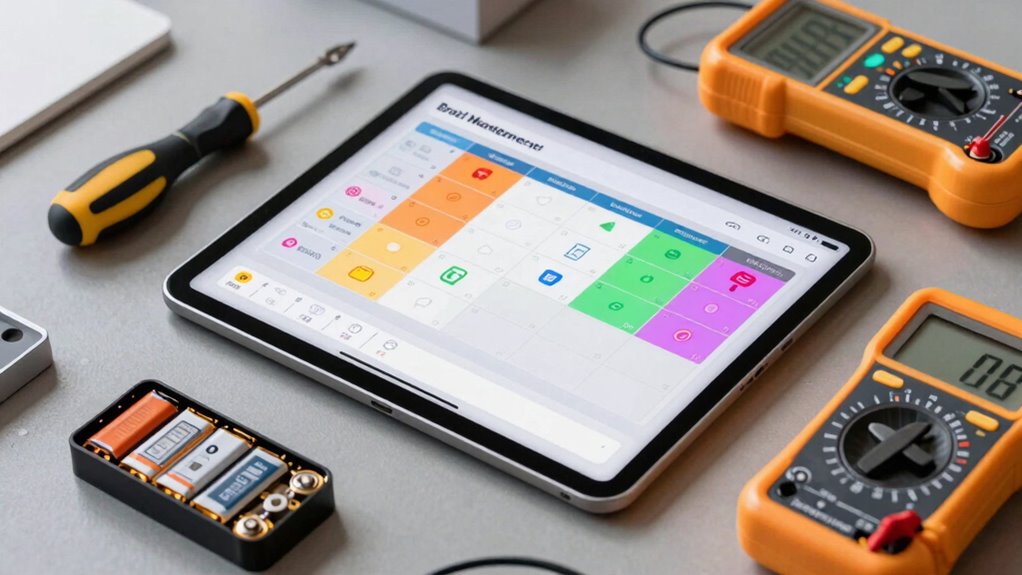
Next, create a detailed calendar that clearly marks scheduled maintenance activities. Use digital tools or physical planners—whichever suits your workflow best—to set reminders. This proactive approach guarantees you won’t forget essential tasks like cleaning terminals, inspecting for corrosion, or testing voltage levels. Consistency is key; sticking to your schedule helps catch issues early before they escalate into costly repairs or replacements. Over time, tracking these activities allows you to identify patterns and refine your maintenance routine further, making it smarter with each iteration. Understanding the importance of battery degradation trends can help you anticipate when replacements may be necessary, saving you money and time.
Incorporate regular testing into your calendar as well. Periodic voltage and capacity tests give you real-time insights into your batteries’ health. When combined with routine visual inspections, these tests enable you to predict failures and plan replacements more effectively. Regular testing is an essential part of preventative maintenance, which can significantly extend battery life. Additionally, consider scheduling preventative maintenance during periods of low usage or downtime to minimize disruptions. This way, your maintenance activities won’t interfere with your critical operations, and you’ll maintain a continuous, reliable power source. Being aware of battery lifespan and tracking its progression can help you make informed decisions about replacements and upgrades.
Finally, review and adjust your maintenance calendar periodically. As your batteries age or usage patterns change, so should your schedule. Keeping your maintenance routine flexible and responsive ensures you’re not wasting time or resources on unnecessary upkeep, nor neglecting essential care. A well-structured, adaptable calendar not only prolongs your batteries’ lifespan but also boosts overall efficiency. When you approach battery maintenance with a strategic mindset, you turn a routine task into a powerful tool for saving money, reducing downtime, and enhancing performance.
digital battery maintenance planner
As an affiliate, we earn on qualifying purchases.
As an affiliate, we earn on qualifying purchases.
Frequently Asked Questions
How Often Should I Check My Battery’s Health?
You should check your battery’s health at least once every three to six months, depending on usage. Regular checks help monitor battery lifespan and track charging cycles, which impact overall performance. If you notice reduced capacity or longer charging times, it’s time for a maintenance check. Staying proactive guarantees your battery stays in good condition, extends its lifespan, and prevents unexpected failures. Consistent monitoring keeps your device running smoothly.
What Tools Are Best for Monitoring Battery Performance?
You might worry about investing in the right tools, but don’t fret—battery testing devices like multimeters or dedicated testers are your best bet. They provide accurate performance tracking, revealing subtle issues early. Using these tools, you can monitor your battery’s health consistently, preventing unexpected failures. Regular testing not only saves you money but also gives peace of mind, ensuring your battery performs reliably when you need it most.
Can a Maintenance Calendar Prevent Battery Failure?
Yes, a maintenance calendar can prevent battery failure by optimizing maintenance scheduling. By tracking your battery’s lifespan and scheduling regular checks, you catch issues early and prevent unexpected breakdowns. This proactive approach guarantees your batteries stay in good condition longer, reducing downtime and repair costs. Consistent maintenance scheduling through a smart calendar helps maintain battery health, ultimately extending its lifespan and ensuring reliable performance when you need it most.
How Do I Customize the Calendar for Different Battery Types?
You customize your calendar by researching each battery type’s specific requirements, focusing on battery lifespan and charging cycles. Adjust maintenance reminders based on these factors, noting that some batteries need more frequent checks, while others last longer. Incorporate manufacturer recommendations, and track usage patterns to optimize performance. Regular updates guarantee your calendar stays tailored, extending battery life and preventing potential failures.
What Signs Indicate My Battery Needs Immediate Attention?
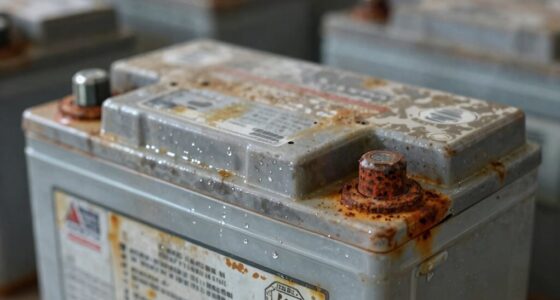
You should get your battery checked immediately if you notice signs like slow engine cranking, dim lights, or a swollen battery case. These signs indicate your battery’s lifespan is declining and may need urgent attention. Regularly inspecting for corrosion and keeping terminals clean helps prevent issues, extending your battery’s life. Addressing these signs promptly ensures maximum performance and prevents unexpected breakdowns.
Conclusion
By implementing a smarter battery maintenance calendar, you can prevent unexpected failures and extend your battery’s lifespan. For example, imagine a fleet manager who schedules regular checks based on usage patterns, catching issues early and saving thousands in repairs. This proactive approach guarantees your batteries stay in top shape, reducing downtime and costs. Start customizing your calendar today, and you’ll enjoy smoother operations and greater peace of mind knowing your batteries are always well-maintained.
Halloween Picks
halloween
As an affiliate, we earn on qualifying purchases.