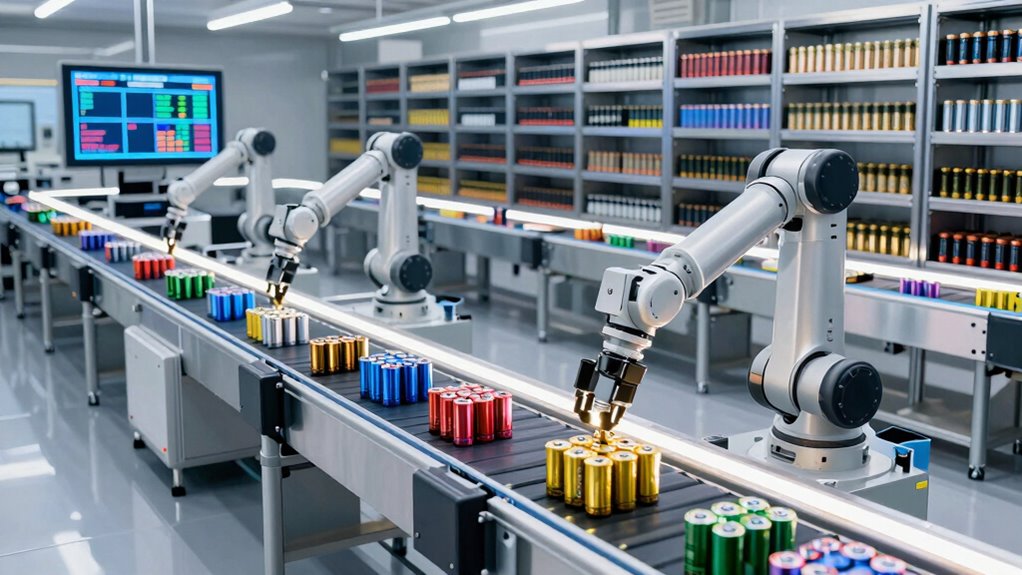

Automated battery sorting is growing fast because it helps you process increasing battery waste more quickly, safely, and accurately. It reduces manual errors, accelerates recycling, and lowers costs for large-scale operations. Thanks to advancements in sensors and imaging, these systems identify battery chemistries precisely, ensuring proper recycling and environmental protection. As regulations tighten, automation becomes essential for compliance. Keep exploring to see how these innovations are transforming waste management and sustainability efforts.
Key Takeaways
- Increasing electronic waste and battery volume demand faster, more efficient recycling methods.
- Automation reduces labor costs, speeds up processing, and improves sorting accuracy.
- Technological advances in sensors and imaging enable precise identification of battery chemistries.
- Stricter environmental regulations drive adoption of automated systems for safer, compliant recycling.
- Automation supports sustainability goals by promoting circular economy practices and waste reduction.
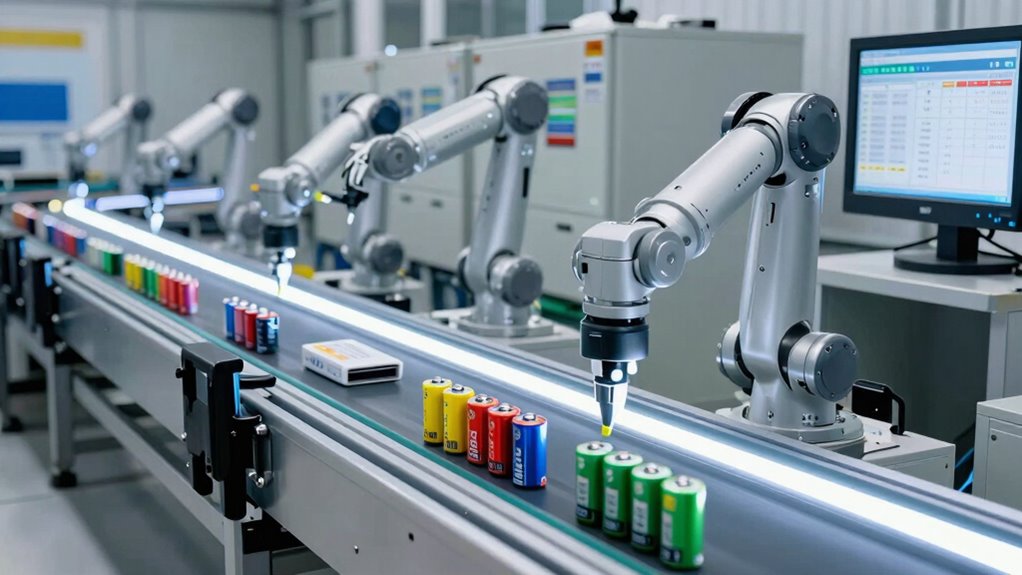
The growth of automated battery sorting is transforming how manufacturers and recyclers manage electronic waste. This shift is driven by a combination of rising environmental concerns, increased demand for sustainable practices, and rapid technological advancements. As electronic devices become more prevalent, so does the need for efficient battery recycling processes. Automated systems make it possible to handle vast quantities of batteries quickly, accurately, and safely, reducing the risk of hazardous leaks or fires during manual sorting. These advancements in technology allow for precise identification and separation of different battery chemistries, which is essential for effective recycling and resource recovery.
One of the key reasons automated battery sorting is growing so rapidly is the need to improve efficiency. Manual sorting can be slow, labor-intensive, and prone to human error, especially when dealing with the large volumes generated by electronics manufacturers and consumer electronics recycling programs. With automation, you can process hundreds or even thousands of batteries in a fraction of the time it would take manually. This not only accelerates the recycling cycle but also lowers operational costs, making battery recycling more economically viable. Technological advancements, such as machine learning algorithms and advanced sensors, enable these systems to accurately identify battery types, states of charge, and potential hazards with minimal oversight. Advanced detection technologies are continuously enhancing system capabilities, further increasing sorting accuracy and safety.
Automated sorting boosts efficiency, reduces costs, and accelerates battery recycling with advanced sensors and machine learning.
Another factor fueling this growth is the increasing focus on environmental sustainability. Governments and organizations worldwide are tightening regulations around electronic waste disposal, pushing companies to adopt more responsible practices. Automated battery sorting aligns with these regulations by ensuring batteries are separated correctly for proper recycling, reducing the risk of toxic chemicals leaking into the environment. Additionally, advancements in automation technology are making these systems more accessible and affordable, encouraging widespread adoption across different scales of operation. As a result, companies can meet regulatory requirements and demonstrate their commitment to sustainability. Moreover, automation integration enables seamless workflows that maximize throughput and minimize human intervention, which is crucial for large-scale recycling facilities.
Furthermore, technological advancements are continuously improving the capabilities of automated systems. Enhanced imaging devices and data processing enable more detailed analysis of each battery, leading to better sorting accuracy. This progress helps maximize material recovery, reduce waste, and promote circular economy practices. The integration of advanced sensors allows for even more precise detection and classification of batteries, further enhancing efficiency. Overall, the seamless integration of automation into battery recycling workflows is transforming how we approach electronic waste management. It offers a faster, safer, and more sustainable solution, ensuring that valuable materials are efficiently reclaimed and environmental impacts minimized. As technology continues to evolve, the growth of automated battery sorting is poised to accelerate even further, shaping the future of electronic waste management.
automated battery sorting machine
As an affiliate, we earn on qualifying purchases.
As an affiliate, we earn on qualifying purchases.
Frequently Asked Questions
How Does Automated Sorting Improve Battery Recycling Efficiency?
Automated sorting improves battery recycling efficiency by quickly identifying and separating batteries based on their type and condition, which helps preserve battery lifespan by preventing damage during processing. It guarantees compliance with recycling regulations by accurately categorizing batteries, reducing contamination and waste. You can process more batteries faster, cut costs, and boost safety, making recycling more effective and environmentally friendly. This automation streamlines the entire process, benefiting both industry and the planet.
What Types of Batteries Can Automated Sorting Systems Handle?
You might wonder which batteries these advanced sorting systems can handle. The answer: they’re versatile, managing various battery chemistries—from lithium-ion and nickel-metal hydride to lead-acid. Cutting-edge sorting technologies quickly identify and separate these types, ensuring efficient recycling. This capability not only speeds up the process but also minimizes contamination, making your recycling efforts more effective and reliable. The future of battery recycling is truly in your hands.
Are Automated Sorting Systems Cost-Effective for Small-Scale Operations?
Automated sorting systems can be cost-effective for small-scale operations, especially when you want to reduce manual labor costs and improve efficiency. While initial equipment maintenance might seem high, the long-term savings outweigh those expenses. You’ll also benefit from faster processing and fewer errors, making automation a worthwhile investment. Overall, for small operations aiming to increase productivity without substantially increasing manual labor, automation proves to be a smart, cost-efficient choice.
How Accurate Is Automated Battery Identification Compared to Manual Methods?
Think of automated battery identification as a vigilant lighthouse guiding ships safely through fog. It’s remarkably accurate, often surpassing manual sorting, ensuring you maximize battery lifespan by correctly categorizing each cell. This precision reduces errors, prevents premature failures, and extends overall battery life. With high sorting accuracy, you can trust automated systems to deliver consistent, reliable results, making your process more efficient and safeguarding your investments in the long run.
What Are the Environmental Benefits of Automated Battery Sorting?
Automated battery sorting greatly benefits the environment by extending battery lifespan through precise categorization, ensuring ideal use and reducing waste. It also tackles recycling challenges by accurately separating different battery types, making recycling processes more efficient and less harmful. This process minimizes hazardous waste and conserves resources, helping prevent environmental contamination and promoting sustainable practices. With automation, you contribute to a cleaner, safer planet while supporting effective battery reuse and recycling efforts.
Conclusion
As you can see, automated battery sorting is transforming recycling processes, making them faster and more accurate. Imagine a recycling plant that sorts thousands of batteries daily, reducing human error and boosting efficiency. For instance, a real-world facility recently increased its throughput by 40% after implementing automation. This rapid growth isn’t just a trend—it’s shaping the future of sustainable waste management. Embrace these innovations, and you’ll see how they revolutionize how we handle battery recycling.