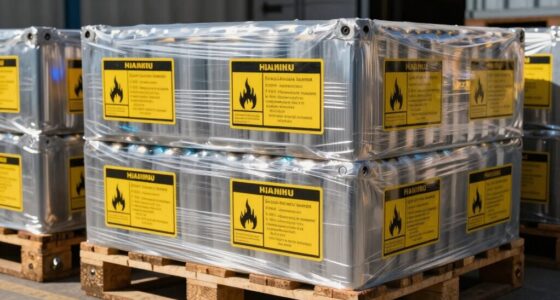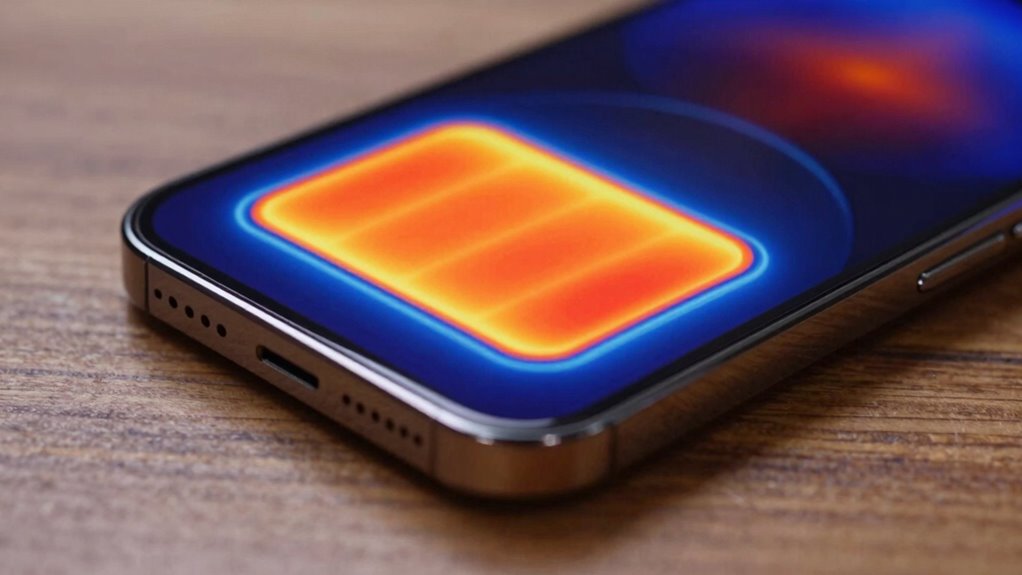

During use and charging, heat builds up unevenly inside your battery due to internal resistance and chemical reactions, often creating hot zones near electrodes or current collectors. These areas experience higher temperatures, which can affect performance and safety. Cooling systems and sensors help monitor and manage these temperature fluctuations, preventing damage and extending battery life. If you want to understand how these heat zones form and how to control them, there’s more to discover below.

Get backup power and energy gear delivered free — and shop member deals
- Fast, free delivery on millions of items
- Access to Prime Big Deal Days deals on October 6–7
- Prime Video, Amazon Music and more included
Key Takeaways
- Heat generation varies within the battery due to internal resistance and localized chemical reactions.
- Hot zones typically form near electrodes or current collectors during charging and discharging.
- Effective thermal management prevents hot spots, ensuring safety and optimal performance.
- Temperature sensors detect heat zones, triggering cooling systems to maintain uniform temperature.
- Analyzing heat flow patterns helps in designing better cooling strategies and prolonging battery lifespan.
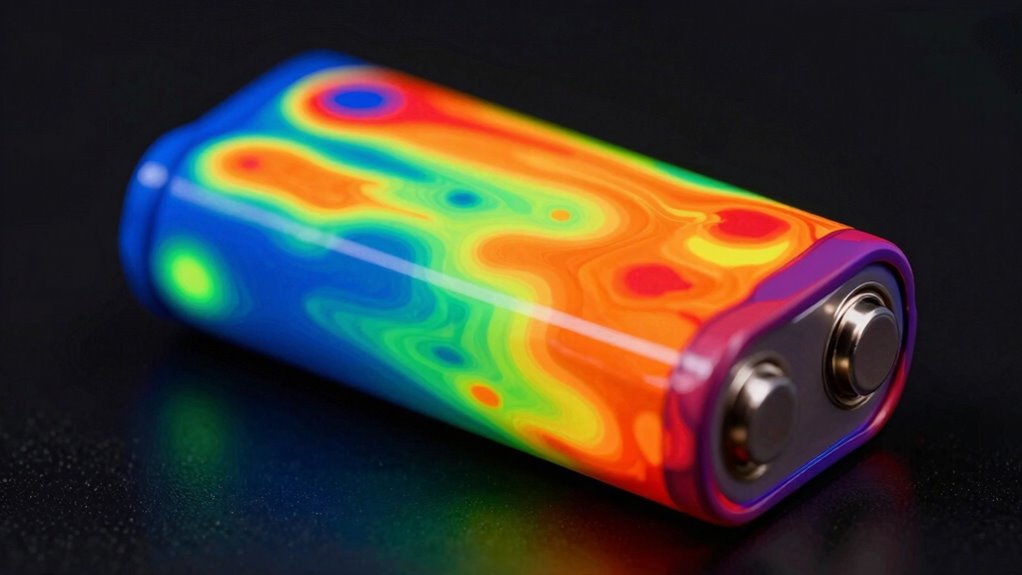
Have you ever wondered why some parts of a battery get hotter than others during use? It’s a common question, especially when you notice uneven heating during charging or discharging. The answer lies in how batteries generate and distribute heat, which is influenced by various factors like internal resistance, current flow, and design. To keep your battery safe and efficient, understanding these heat zones is vital, and proper battery thermal management plays an essential role. This involves implementing heat dissipation techniques that help manage temperature variations and prevent hot spots that could lead to damage or reduced lifespan.
Understanding heat zones in batteries is key to ensuring safety, efficiency, and longevity through proper thermal management.
When a battery charges or discharges, chemical reactions produce heat. This heat isn’t spread evenly; instead, certain areas, often near the electrodes or current collectors, become hotter due to higher resistance or localized energy flow. These hot zones can accelerate aging or cause safety concerns if not properly controlled. That’s where effective heat dissipation techniques come into play. Techniques such as cooling systems—liquid cooling, air cooling, or phase change materials—are designed to transfer heat away from critical zones, maintaining a uniform temperature throughout the battery pack. By doing so, you help prevent thermal runaway and improve overall performance.
Battery thermal management systems are engineered to detect and respond to temperature fluctuations. Sensors monitor hot spots, and cooling mechanisms activate when temperatures rise above safe thresholds. This proactive approach ensures that heat is dissipated efficiently, avoiding the formation of damaging hot zones. For example, liquid cooling systems are highly effective at removing large amounts of heat quickly, making them ideal for high-capacity or high-power applications. On the other hand, passive cooling methods, like heat sinks or ventilation, can be sufficient for smaller batteries or less demanding environments. Understanding heat distribution within batteries is crucial for designing effective cooling strategies. Additionally, knowledge of thermal resistance helps in selecting appropriate materials and designs for optimal heat transfer.
Understanding the distribution of heat within your battery during use and charge allows you to optimize performance and lifespan. Proper thermal management not only prevents overheating but also enhances charge cycles, reduces degradation, and promotes safety. Recognizing where these heat zones occur and implementing suitable heat dissipation techniques ensures your battery operates reliably under various conditions. It is also important to consider how different materials used in battery construction impact heat transfer efficiency. Moreover, advances in thermal interface materials can significantly improve heat conduction between components, further enhancing thermal management. Analyzing heat flow patterns helps in identifying potential hot spots before they cause damage. Whether you’re designing a new device or maintaining an existing system, paying attention to these thermal details is key to maximizing efficiency and longevity. In conclusion, controlling heat zones through effective battery thermal management and heat dissipation techniques helps protect your investment and keeps your battery functioning safely and efficiently over time.
battery thermal management system
As an affiliate, we earn on qualifying purchases.
As an affiliate, we earn on qualifying purchases.
Frequently Asked Questions
How Can I Prevent My Battery From Overheating During Use?
To prevent your battery from overheating during use, focus on effective thermal management and battery cooling. Avoid exposing your device to high temperatures and don’t block ventilation areas. Use built-in cooling features if available, and keep your device in a cool, shaded place. Regularly monitor battery temperature and reduce usage intensity if it gets too hot. Proper thermal management preserves battery health and prolongs its lifespan.
Do Different Battery Types Have Distinct Heat Zone Behaviors?
Yes, different battery types have distinct heat zone behaviors, mainly due to variations in battery chemistry and thermal management. For instance, lithium-ion batteries generate more heat during charging and discharging compared to nickel-metal hydride ones. Proper thermal management becomes essential for each type to prevent overheating, optimize performance, and extend lifespan. So, understanding these differences helps you better manage your battery and avoid overheating issues.
What Are the Signs of a Battery Overheating Dangerously?
If your battery is dangerously overheating, you’ll notice it feels unusually hot to the touch and may emit a burning smell. The device might also shut down unexpectedly. Keep an eye on battery cooling and overheating sensors that alert you to excessive heat. Ignoring these signs risks damage or even fire. To prevent hazards, stop using the device immediately, let the battery cool down, and seek professional repair if needed.
How Does Ambient Temperature Affect Battery Heat Zones?
You know what they say—keep your friends close and your environment cooler. Ambient temperature influences battery heat zones considerably by affecting thermal conductivity, which determines how heat dissipates. When the surroundings are warm, your battery’s temperature regulation becomes less effective, risking overheating. Conversely, cooler ambient temps help maintain ideal operating temperatures, preventing dangerous heat buildup. So, controlling ambient conditions is key to preserving your battery’s health and ensuring safe, efficient performance.
Can Heat Zones Impact Battery Lifespan and Performance?
Heat zones can substantially impact your battery’s lifespan and performance. Excessive heat accelerates battery degradation, shortening its overall life, while inadequate cooling can cause performance drops. Effective thermal management is essential in maintaining ideal heat zones, preventing overheating, and ensuring longevity. By actively managing heat zones, you protect your battery from damage, enhance its efficiency, and extend its usable life, keeping your device running smoothly longer.
Conclusion
As you navigate your device’s journey, think of the battery as a quiet river, with heat zones like gentle islands guiding your way. When you respect these islands—avoiding extremes—you guarantee a smooth voyage, preserving the river’s vitality. Embrace this symbolism, and your battery’s energy will flow steadily, keeping your adventures lively and long-lasting. Remember, caring for each zone is like tending to these islands, ensuring your device remains a trusted companion on every path.
Fall Picks
fall essentials
As an affiliate, we earn on qualifying purchases.