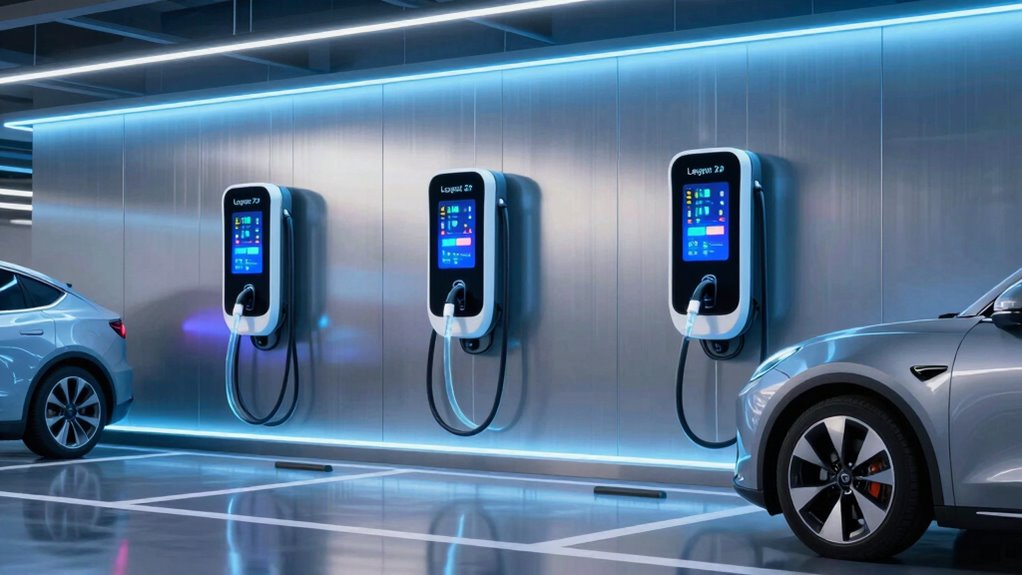
If you’re looking for the top Level 2 EV chargers with energy monitoring in 2026, I recommend the Autel Smart Electric Vehicle Charger, Enphase IQ EV Charger 2, and EVIQO Level 2 EV Charger 48A. They offer high-speed charging, smart app control, and detailed energy insights. These models also include safety features and weatherproof designs for reliability. Keep exploring to discover more about their features and how they can suit your needs.
Key Takeaways
- Prioritize chargers with advanced energy monitoring features for real-time usage insights and cost tracking.
- Select models with reliable Wi-Fi and Bluetooth connectivity for seamless remote management in 2026.
- Ensure compatibility with North American EVs and support for vehicle-to-grid technology for future-proofing.
- Look for certifications like UL, ETL, or CSA to guarantee safety and long-term durability.
- Consider warranty length and customer support quality to ensure reliable, long-term operation.
| Autel Smart Electric Vehicle Charger 50Amp Wi-Fi/Bluetooth |  | Smart Home Integration | Connectivity: Wi-Fi, Bluetooth, Ethernet | Max Charging Power: 12kW (50A) | Cable Length: 25 feet | VIEW LATEST PRICE | See Our Full Breakdown |
| Enphase IQ EV Charger 2 40A Wi-Fi Bluetooth | 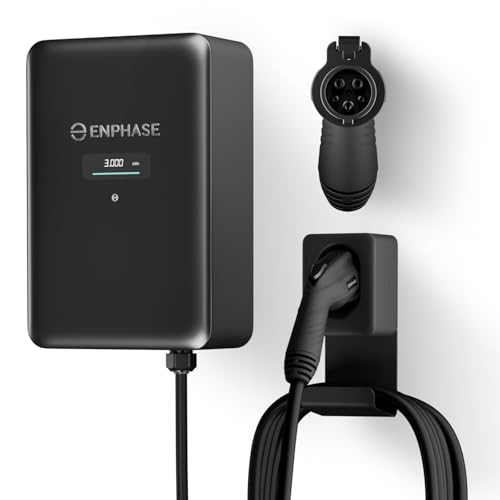 | Future-Ready Power | Connectivity: Wi-Fi, Bluetooth | Max Charging Power: 9.6kW (40A) | Cable Length: 25 feet | VIEW LATEST PRICE | See Our Full Breakdown |
| EVIQO Level 2 EV Charger 48A with Wi-Fi |  | User-Friendly Control | Connectivity: Wi-Fi | Max Charging Power: 11.5kW (48A) | Cable Length: 25 feet | VIEW LATEST PRICE | See Our Full Breakdown |
More Details on Our Top Picks
Autel Smart Electric Vehicle Charger 50Amp Wi-Fi/Bluetooth
If you’re looking for a reliable and smart Level 2 EV charger, the Autel Smart Electric Vehicle Charger stands out with its Wi-Fi and Bluetooth connectivity, making it easy to control and monitor your charging sessions remotely. It supports high-speed charging up to 12kW at 50A, adding approximately 37 miles of range per hour. Its durable, flexible 25-foot cable works reliably even in cold temperatures as low as -40℃ and is suitable for outdoor or indoor use, thanks to its NEMA Type 4 rating. With CSA certification and safety features like over-current and over-temperature protection, it’s built for long-lasting, safe operation.
- Connectivity:Wi-Fi, Bluetooth, Ethernet
- Max Charging Power:12kW (50A)
- Cable Length:25 feet
- Certification:CSA, UL, NEMA Type 4
- App Control:Yes (Autel Charge app)
- Warranty Period:3 years
- Additional Feature:Weather-resistant NEMA Type 4
- Additional Feature:Supports federal rebate eligibility
- Additional Feature:Durable 25-foot flexible cable
Enphase IQ EV Charger 2 40A Wi-Fi Bluetooth
The Enphase IQ EV Charger 2 stands out for its smart connectivity features, making it an excellent choice for homeowners who want seamless control and monitoring of their EV charging. With 40A support delivering up to 9.6 kW, it ensures fast, reliable charging, even integrating with home solar systems. Its Wi-Fi and Bluetooth capabilities allow app-based control, while RFID cards add security. Designed for indoor and outdoor use, it includes safety features like overload protection and surge resistance. Future-ready, it supports vehicle-to-grid and vehicle-to-home standards, plus an accurate energy meter that qualifies for rebates. Overall, it combines smart tech, safety, and flexibility for a long-lasting charging solution.
- Connectivity:Wi-Fi, Bluetooth
- Max Charging Power:9.6kW (40A)
- Cable Length:25 feet
- Certification:UL, Energy Star
- App Control:Yes (app-based control)
- Warranty Period:5 years
- Additional Feature:Supports vehicle-to-grid function
- Additional Feature:Revenue-grade energy meter
- Additional Feature:5-year industry warranty
EVIQO Level 2 EV Charger 48A with Wi-Fi
For homeowners seeking a reliable, fast-charging station with smart features, the EVIQO Level 2 EV Charger 48A with Wi-Fi stands out. It delivers up to 38 miles per hour at 40 amps and up to 46 miles per hour when hardwired at 48 amps, making charging quick and efficient. Its 25-foot J1772 cable and NEMA 14-50 plug provide flexible installation options. The built-in Wi-Fi allows me to monitor real-time energy use, set schedules, and receive smart tips via the app. Certified by UL, Energy Star, ETL, and FCC, it’s a durable, safe choice for all North American EVs and PHEVs, including Tesla with an adapter.
- Connectivity:Wi-Fi
- Max Charging Power:11.5kW (48A)
- Cable Length:25 feet
- Certification:UL, ETL, Energy Star
- App Control:Yes (dedicated mobile app)
- Warranty Period:3 years
- Additional Feature:Compatible with all North American EVs
- Additional Feature:Long input/output cables
- Additional Feature:3-year extended warranty
Factors to Consider When Choosing a Level 2 EV Charger With Energy Monitoring
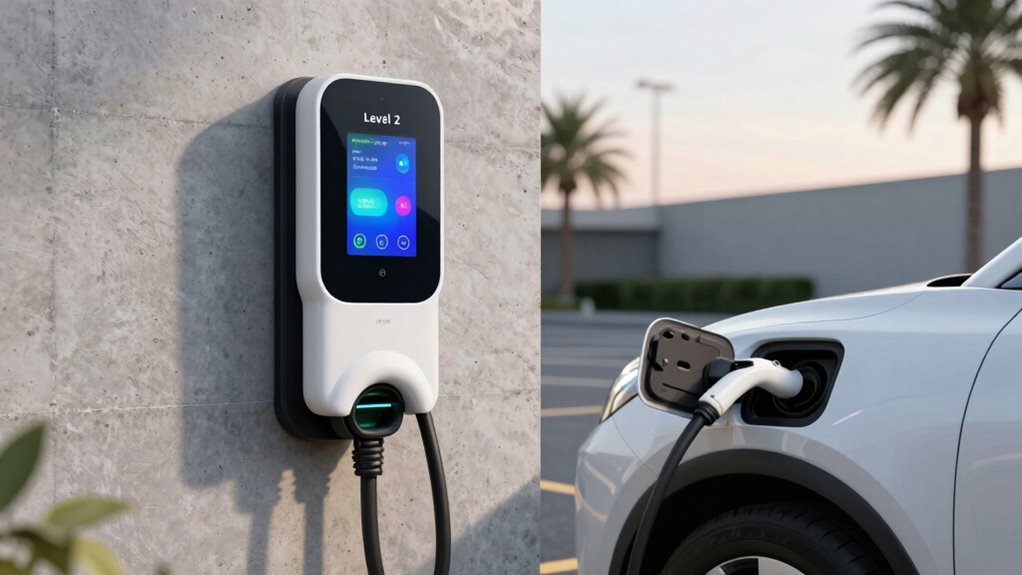
When choosing a Level 2 EV charger with energy monitoring, I consider several key factors to guarantee it meets my needs. From power output options to connectivity and safety certifications, each aspect plays a role in making the right decision. Let’s explore what to look for to find the best fit for your charging setup.
Power Output Options
Power output options are a key factor to contemplate because they directly affect how quickly your EV can charge. Level 2 chargers typically range from 7.2 kW to 19.2 kW, providing faster charging compared to Level 1 units. Higher power outputs, such as 48A or 50A, can deliver up to about 12 kW, giving many vehicles around 37 miles of range per hour of charging. Choosing a charger with adjustable power settings allows you to optimize energy use based on your household’s electrical capacity and utility rates. Keep in mind, the actual charging speed depends on your vehicle’s onboard charger. Compatibility between the charger’s output and your vehicle’s limits is essential to guarantee safe, efficient, and effective charging without overloading your electrical system.
Energy Monitoring Features
Energy monitoring features are essential because they give you real-time insights into your electricity use during EV charging. With accurate data, you can track your charging efficiency and overall energy consumption, helping you identify ways to save money and reduce your environmental impact. Advanced monitoring options can even integrate with home solar systems and vehicle-to-grid technology, optimizing renewable energy use. Many chargers offer detailed reports, historical data, and alerts that help you manage charging schedules more effectively. When choosing a Level 2 charger with energy monitoring, consider whether it includes revenue-grade meters for precise billing or basic measurement. These features empower you to make smarter energy decisions, maximize rebates, and better understand your charging habits—all while supporting sustainable practices.
Connectivity Compatibility
Choosing a Level 2 EV charger with energy monitoring isn’t just about the features it offers; connectivity compatibility plays a key role in ensuring smooth and reliable operation. I look for chargers that match my home’s existing Wi-Fi and Bluetooth setups to avoid connectivity issues. Supporting standard protocols like 802.11 Wi-Fi and recent Bluetooth versions is essential for stable connections. I also check if the charger’s app works with my smartphone’s OS—whether iOS or Android—for easy energy tracking. Integration with my home automation and energy management systems is a bonus, allowing me to optimize energy use seamlessly. Remote monitoring and control features through these connectivity options help me track consumption and manage my charging sessions conveniently from anywhere.
Installation Requirements
Before installing a Level 2 EV charger with energy monitoring, I make sure my home’s electrical system can handle it. This means checking if I have a dedicated 240V circuit, which is essential for proper operation. I also verify that the installation area has enough space and suitable wiring to support the charger’s power needs. It’s important to confirm that the charger’s amperage matches my electrical panel’s capacity to avoid overloading or costly upgrades. Additionally, I consider the plug type and cable length to ensure compatibility with my setup and preferred location. If I plan to install outdoors, I look for weatherproof, outdoor-rated units. Proper assessment of these factors helps me avoid surprises and ensures a smooth installation process.
Safety Certifications
Ensuring your Level 2 EV charger has the right safety certifications is essential for safe and reliable operation. Look for recognized certifications like UL, ETL, or CSA, which confirm the charger has passed rigorous safety tests. These certifications verify compliance with industry standards for electrical safety, fire resistance, and durability, helping to prevent hazards such as short circuits, overheating, or electrical shocks. Additionally, safety certifications like Energy Star can also assess energy efficiency alongside safety performance. Choosing a certified charger provides peace of mind, knowing it’s been tested for safe operation. furthermore, certified chargers may be required for insurance coverage, rebates, or utility incentives, making certification an important factor in your decision-making process.
Durability and Weatherproofing
Durability and weatherproofing are essential factors when selecting a Level 2 EV charger with energy monitoring, especially if you plan to install it outdoors. Look for models with a NEMA Type 4 or higher rating, ensuring they can withstand snow, rain, hail, and sleet. The charging cable and connectors should be made from reinforced, flexible materials that operate reliably even in temperatures as low as -40℃. Weatherproof chargers typically feature sealed enclosures and corrosion-resistant components, protecting against moisture and environmental damage. Proper weatherproofing helps maintain the charger’s safety, performance, and lifespan in harsh conditions. Additionally, certifications like UL or ETL validate that the charger meets strict standards for outdoor durability, giving you confidence in its resilience over time.
Smart App Functionality
A user-friendly mobile app is essential when choosing a Level 2 EV charger with energy monitoring because it simplifies setup, control, and tracking of your charging sessions. The app should let you easily schedule charging times and set goals to help optimize energy use and save on costs, especially during off-peak hours. Real-time data on energy consumption and charging status should be readily accessible, giving you clear insights into your usage patterns. Compatibility with Wi-Fi and Bluetooth is vital for seamless connectivity, automatic firmware updates, and remote management. Additionally, features like alerts, tips, and historical tracking enhance the user experience and allow you to monitor and improve your energy efficiency over time. An intuitive app makes managing your charger straightforward and stress-free.
Warranty and Support
When choosing a Level 2 EV charger with energy monitoring, paying attention to warranty and support can save you headaches later on. A longer warranty, like 3 to 5 years, signals better durability and confidence from the manufacturer. Reliable support services, especially 24/7 assistance, help you resolve installation or operational issues quickly. Certified safety standards such as UL or Energy Star often accompany extensive warranties, ensuring the product’s reliability. Manufacturers offering extended warranties and dedicated support are more likely to provide firmware updates and troubleshooting help when needed. Clear warranty terms and accessible customer service channels are essential for addressing potential defects or technical problems over time. Prioritizing these aspects ensures you’re protected and confident in your investment.
Frequently Asked Questions
How Does Energy Monitoring Improve EV Charging Efficiency?
Energy monitoring helps me track how much electricity my EV charger uses, so I can optimize charging times and reduce energy waste. By seeing real-time data, I avoid charging during peak hours, saving money and lowering my carbon footprint. It also alerts me to any issues early, ensuring my vehicle charges efficiently and reliably. Overall, energy monitoring makes my charging smarter, more cost-effective, and environmentally friendly.
Are Level 2 Chargers Compatible With All EV Models?
Level 2 chargers are generally compatible with most EV models, but I always double-check the connector type and charging specifications to be sure. Most newer EVs use standard connectors like J1772, making compatibility straightforward, while Tesla requires an adapter. It’s smart to verify your vehicle’s charging port and the charger’s compatibility before purchasing, ensuring smooth and efficient charging without any surprises.
What Security Features Protect Wi-Fi-Enabled EV Chargers?
Wi-Fi-enabled EV chargers come with several security features to keep your data safe. I always look for chargers with encrypted connections, like WPA3, to protect against hacking. Many also have secure authentication methods, such as passwords or two-factor authentication, ensuring only authorized users can access the system. Regular firmware updates are essential too, as they patch vulnerabilities and enhance security. Overall, choosing a charger with these features helps keep my charging setup secure.
Can Energy Data Be Integrated With Home Energy Management Systems?
Yes, energy data can be integrated with home energy management systems. I’ve found that many EV chargers now offer compatibility with popular smart home platforms, allowing seamless data sharing. This integration helps me monitor energy consumption, optimize usage, and even automate charging schedules. By syncing my charger with my system, I gain better control over my energy use, saving money and reducing my carbon footprint.
What Are the Long-Term Cost Savings of Using Energy-Monitoring Chargers?
Using energy-monitoring chargers can lead to significant long-term savings. I’ve noticed I pay less on my electricity bill because I can track my energy use and adjust charging habits accordingly. Over time, this efficiency reduces waste and lowers costs. Plus, optimizing charging times during off-peak hours further boosts savings. It’s a smart investment that pays off by helping me manage energy smarter and cut expenses consistently.
Conclusion
Choosing the right Level 2 EV charger with energy monitoring isn’t just about power or connectivity—it’s about peace of mind. While the Autel offers robust features, the Enphase emphasizes seamless integration, and EVIQO stands out with high amperage. It’s like selecting between speed, simplicity, or strength. Ultimately, the best charger balances what matters most to you, proving that even among the best, your choice should reflect your unique needs, not just specs.