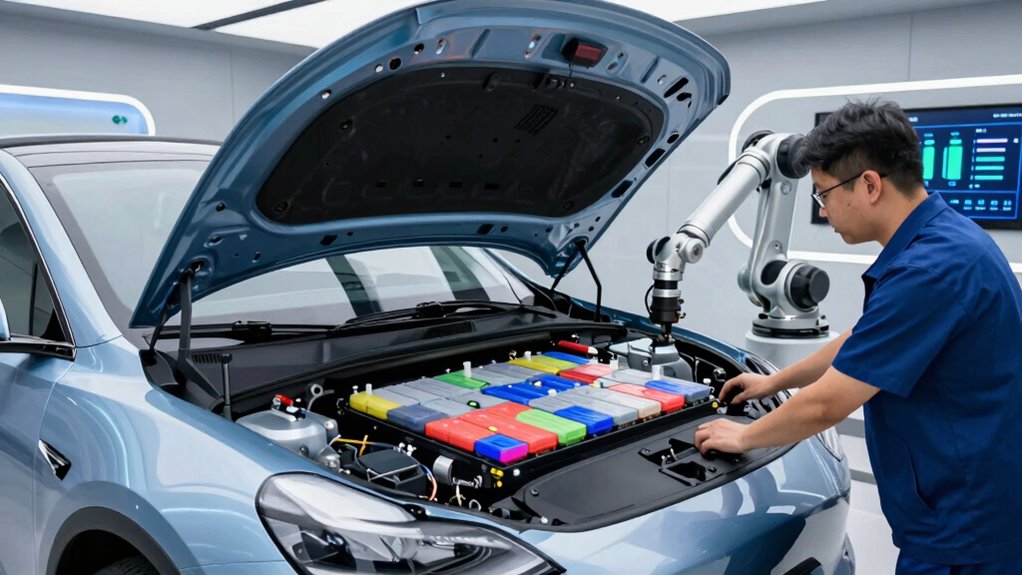

Battery swapping is gaining momentum because it offers a quick, convenient alternative to long charging times, taking just a few minutes instead of half an hour or more. It makes electric vehicle use more practical for long trips, commercial fleets, and everyday drivers. By standardizing batteries and building swapping stations, it helps grow the EV infrastructure and supports renewable energy integration. To understand how this innovative approach is transforming mobility, keep exploring further.
Key Takeaways
- Battery swapping offers rapid recharging, reducing downtime from 30 minutes to just a few minutes.
- It supports scalability by standardizing battery designs and establishing extensive swapping station networks.
- Growing interest is driven by the need for quick, convenient options for commercial fleets and ride-sharing services.
- It enables integration with renewable energy, reducing EV carbon footprints and promoting sustainable energy use.
- Increased investments and technological innovations are fueling the resurgence and future growth of battery swapping.
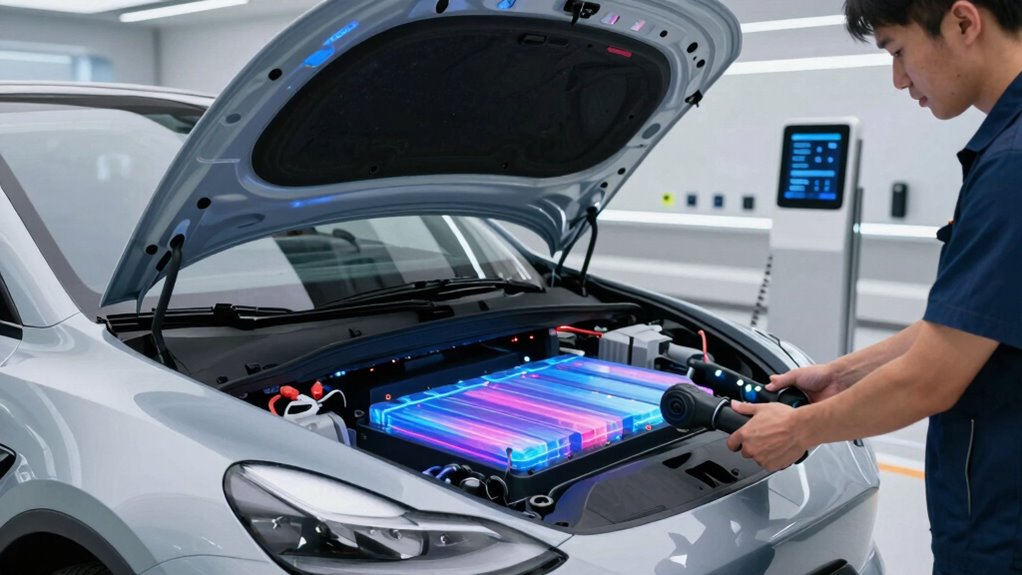
Have you ever wondered if there’s a faster way to recharge electric vehicles? Traditional charging methods can take anywhere from 30 minutes to several hours, making long trips or quick stops less convenient. That’s where battery swapping comes into play. Instead of waiting to recharge, you simply exchange your depleted battery for a fully charged one at a dedicated station. This process offers a rapid turnaround, often completed in just a few minutes, making electric vehicle use more practical and appealing.
Battery swapping is gaining traction because it addresses one of the key hurdles in electric vehicle adoption: charging time. It’s especially promising in regions where electric vehicle infrastructure is still developing but where rapid, scalable solutions are needed. By establishing swapping stations, cities and companies can create a more flexible and efficient network that complements traditional charging stations. This approach also opens doors for integrating renewable energy sources. For instance, swapping stations can be powered by solar or wind energy, further reducing the carbon footprint of electric vehicles and aligning with broader sustainability goals.
The growth of battery swapping isn’t just about convenience; it’s about creating a smarter, more resilient energy ecosystem. When you visit a swapping station, you’re not just recharging; you’re participating in a system that can be optimized for renewable energy integration. During peak sunlight or wind periods, stations can harness renewable energy to charge batteries, storing excess power for later use. This helps balance the grid, prevent energy waste, and make the entire electric vehicle infrastructure more sustainable. Additionally, standardizing battery designs and swapping procedures can streamline logistics and reduce costs, making the system more accessible and scalable.
As more automakers and energy providers recognize these benefits, battery swapping is poised to grow again. It offers a practical solution for commercial fleets, ride-sharing services, and everyday drivers alike. By focusing on expanding infrastructure and leveraging renewable energy integration, this method can markedly accelerate electric vehicle adoption. It’s a future where charging is no longer a bottleneck, but a seamless part of the driving experience. With ongoing innovations and increased investment, battery swapping has the potential to transform how we think about electric mobility—making it faster, greener, and more efficient for everyone. Additionally, understanding the importance of standardized designs and their role in streamlining logistics is crucial for widespread adoption.
As an affiliate, we earn on qualifying purchases.
Frequently Asked Questions
How Does Battery Swapping Compare Economically to Charging?
Battery swapping can be more economical than charging because it reduces downtime and avoids the need for extensive charging infrastructure. With swapping, you pay a fee for quick battery replacement, saving on high battery costs and long charging waits. This system is especially beneficial in areas lacking widespread charging stations, making it a cost-effective alternative that minimizes costs related to battery and charging infrastructure investments.
What Are the Safety Standards for Battery Swapping Stations?
Oh, surely, because risking a fire at a battery swapping station is just part of the adventure, right? In reality, strict safety standards are in place to guarantee battery safety and station standards, including fire suppression systems, proper ventilation, and regular inspections. These measures are designed to prevent accidents and protect users. So, when you swap batteries, rest assured that safety protocols are taken seriously to keep everyone safe.
How Does Battery Swapping Impact Electric Vehicle Range?
Battery swapping can substantially boost your electric vehicle’s range by allowing quick exchanges of depleted batteries for fully charged ones. Since swapping stations focus on high battery density, you get more energy in less space, extending your driving distance. Plus, swapping reduces charging time, making it faster than traditional charging, so you spend less time plugged in and more time on the road.
Are There Compatibility Issues Across Different EV Brands?
You’re right to worry—cross-brand compatibility is a huge challenge, and it’s not an easy fix. Standardization challenges mean different EV brands often use varying battery designs, connectors, and protocols, making seamless swapping nearly impossible. This fragmentation hampers industry growth and frustrates users. Until automakers collaborate on universal standards, compatibility issues will continue to be a significant obstacle to widespread battery swapping adoption.
What Government Policies Support Battery Swapping Adoption?
You’ll find that government policies actively support battery swapping adoption through incentives and infrastructure investments. Many governments offer incentives like tax credits and grants to encourage EV and swapping station use. They also invest in building a widespread, accessible infrastructure, making it easier for you to swap batteries quickly. These policies aim to reduce charging time, lower costs, and boost the overall adoption of battery swapping technology across different regions.
Conclusion
Imagine you’re on a long road trip, and instead of waiting hours to recharge, you pull into a station and swap out your battery in minutes. That’s exactly what battery swapping offers—a quick, seamless solution to keep you moving. With over 500 swapping stations now operating worldwide, it’s like having a pit stop that keeps your vehicle running smoothly. As more companies embrace this tech, you’ll find your journeys becoming faster, easier, and more convenient than ever before.