When sizing an inverter for your RV, don’t just focus on surge watt ratings—this can lead you into the ‘surge watt’ trap, risking overloads and safety hazards. You need to match your inverter’s continuous capacity with your actual power needs and guarantee your batteries and wiring can handle the load. Oversizing might seem safe but can cause damage or dangerous overheating. To stay safe and efficient, understanding the proper balance is essential—more details await if you continue.

Get backup power and energy gear delivered free with Prime
- Fast, free delivery on millions of items
- Prime Video, Amazon Music and more included
- Member-only deals all year
Key Takeaways
- Oversizing an inverter without considering surge watt requirements can lead to wiring overloads and safety hazards.
- The ‘surge watt’ is the initial power needed to start appliances, which often exceeds continuous running wattage.
- Proper inverter sizing must include surge watt capacity to prevent overloads during appliance startup.
- Mismatched inverter and wiring gauge can cause overheating, melting, or fires when handling surge loads.
- Accurate understanding of surge watt demands helps avoid dangerous electrical failures and ensures safe RV operation.
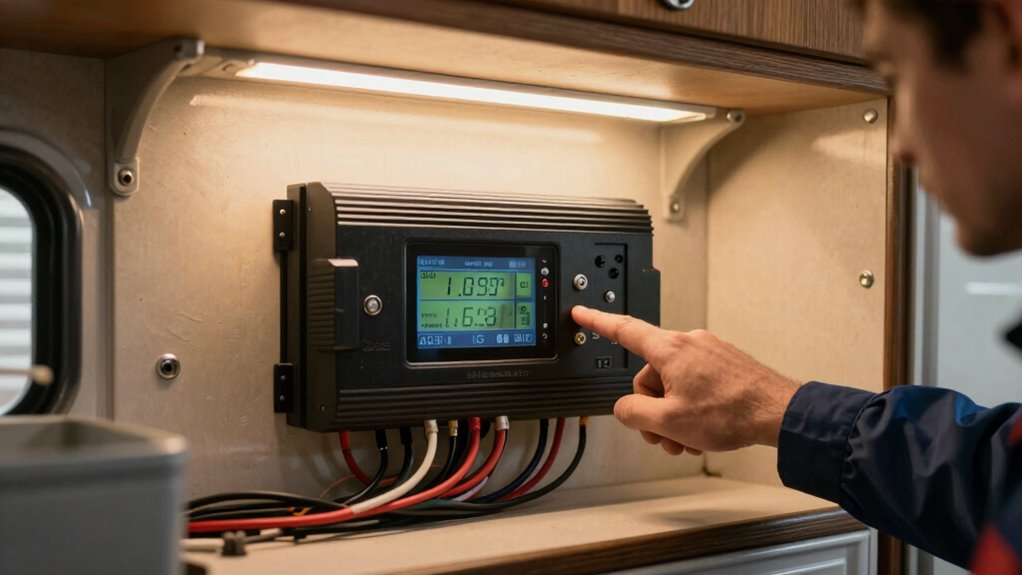
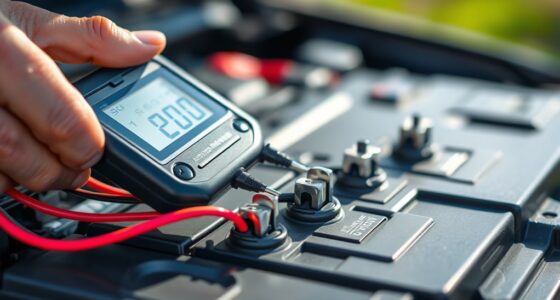
Choosing the right inverter size is vital for guaranteeing your RV’s electrical system can handle your power needs without overloading. When you’re selecting an inverter, one of the most important factors to contemplate is your battery capacity. Your batteries supply the DC power that the inverter converts into AC, so understanding their capacity—measured in amp-hours—is imperative. If your batteries aren’t large enough, your inverter might run out of power quickly, leading to frequent recharging or even damage to the batteries themselves. Conversely, oversizing your inverter without adequate batteries can result in wasted energy and unnecessary expense. It’s a balancing act: match your inverter’s capacity to your battery bank to guarantee smooth, reliable operation.
Another critical aspect to think about is wiring requirements. The size of your inverter determines the gauge of wiring needed to safely carry the current. If you choose an inverter that’s too powerful for your existing wiring, you risk overheating, melting wires, or creating fire hazards. Proper wiring isn’t just about safety—it also affects your inverter’s performance. Using the correct gauge ensures minimal voltage drop and maximum efficiency. If you’re upgrading to a larger inverter, you may need to replace or reinforce your wiring to meet the new demands. Ignoring wiring requirements can lead to system failures or severe safety issues, so it’s worth investing in proper installation from the start. Additionally, understanding energy efficiency in your system can help reduce overall power consumption and prolong your battery life.
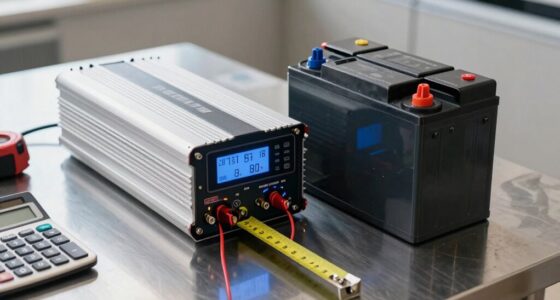
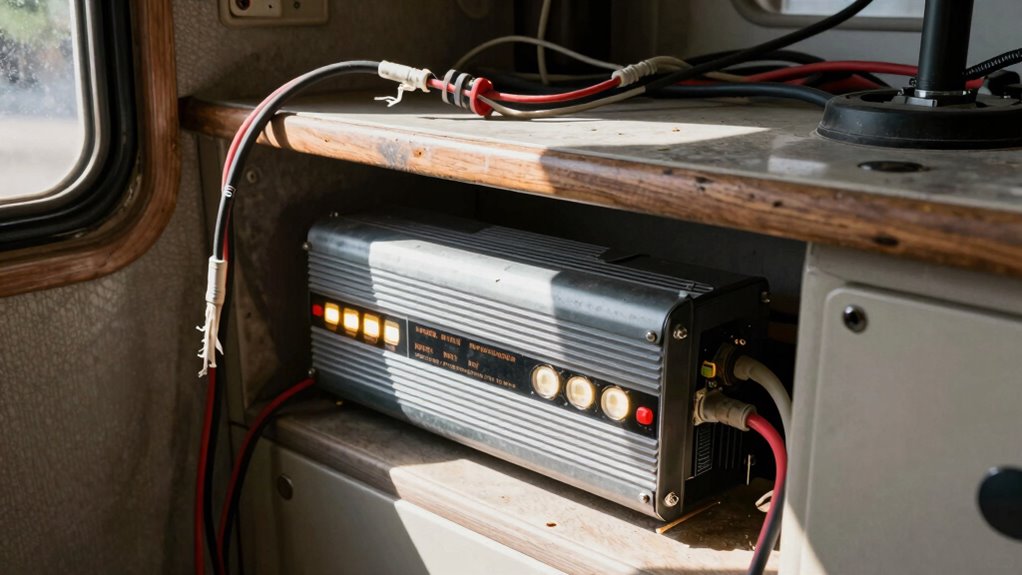
RV inverter with surge watt capacity
As an affiliate, we earn on qualifying purchases.
As an affiliate, we earn on qualifying purchases.
Frequently Asked Questions
How Do I Determine My Rv’s Total Power Needs?
To determine your RV’s total power needs, start by listing all appliances and devices you’ll use, noting their power consumption in watts. Check your battery capacity to understand how long your system can run. Add up each device’s wattage to find the total continuous power requirement. This helps you select an inverter that matches your needs without overloading, ensuring your system runs smoothly and safely.
What Is the Difference Between Surge Wattage and Continuous Wattage?
Imagine your inverter’s surge capacity as a superhero’s burst of strength, far surpassing its usual power. Surge wattage is the maximum power it can handle briefly, like during startup, while continuous wattage is the steady, everyday power rating. Knowing this difference helps you avoid overloads. Always match your inverter’s surge capacity with your appliances’ startup needs, and confirm the continuous wattage can handle your regular power demands safely.
Can I Upgrade My Inverter Later if My Needs Change?
Yes, you can upgrade your inverter later if your needs change, but make certain your battery capacity can support the new inverter’s power demands. Check inverter compatibility with your current setup before upgrading—some inverters need specific wiring or connections. Upgrading might also require additional batteries or a higher capacity system to handle increased surge wattage and continuous wattage, so plan accordingly to avoid overloads or performance issues.
Are There Safety Concerns With Oversizing or Undersizing Inverters?
Think of your inverter as a essential guardian for your RV’s power needs. Oversizing can lead to unnecessary strain, risking battery safety and inverter compatibility issues, while undersizing might cause your system to struggle or shut down unexpectedly. Both extremes pose safety concerns; it’s important to select an inverter that matches your load demands. Proper sizing ensures safe, reliable operation, giving you peace of mind on your adventures.
How Does Inverter Size Affect Battery Life and Efficiency?
Choosing the right inverter size impacts your battery life and efficiency. If your inverter is too large, it may cause unnecessary battery drain because it consumes power even when idle, reducing overall efficiency. Conversely, a properly sized inverter minimizes battery drain, extending your battery life. Oversized inverters can also overheat and waste energy, while undersized ones struggle to handle your power needs, leading to inefficiency and potential equipment issues.
Conclusion
Don’t get caught in the surge watt trap and end up overpaying or damaging your RV’s inverter. Proper sizing might seem tricky, but it’s worth doing right the first time. Remember, haste makes waste—taking the time to understand your power needs saves you headaches down the road. By choosing the right inverter size now, you’ll keep everything running smoothly and avoid burning yourself out later. Stay sharp, and your RV adventures will stay worry-free.
Columbus Day / Indigenous Peoples' Day Picks
long weekend sales
As an affiliate, we earn on qualifying purchases.