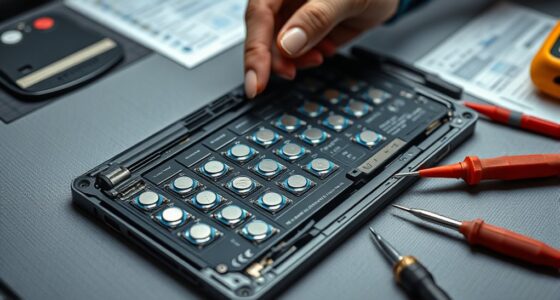

Electronic load testing is the cleanest way to verify your device’s true capacity because it simulates real-world load conditions, revealing performance issues that might stay hidden during normal use. By applying precise stresses, you can accurately measure how your power supplies, batteries, or components will perform under actual demands. This method guarantees reliable results and helps prevent costly failures. Keep exploring to discover how this approach can improve your testing processes.
Key Takeaways
- Electronic load testing accurately simulates real-world operating conditions to verify true device capacity.
- It provides precise, real-time data on power supply and battery performance under various loads.
- Load testing uncovers hidden issues that simple bench tests may miss, ensuring reliable system operation.
- By mimicking actual usage, it validates equipment efficiency and capacity before deployment.
- Overall, electronic load testing offers the most dependable method for confirming true capacity and performance.
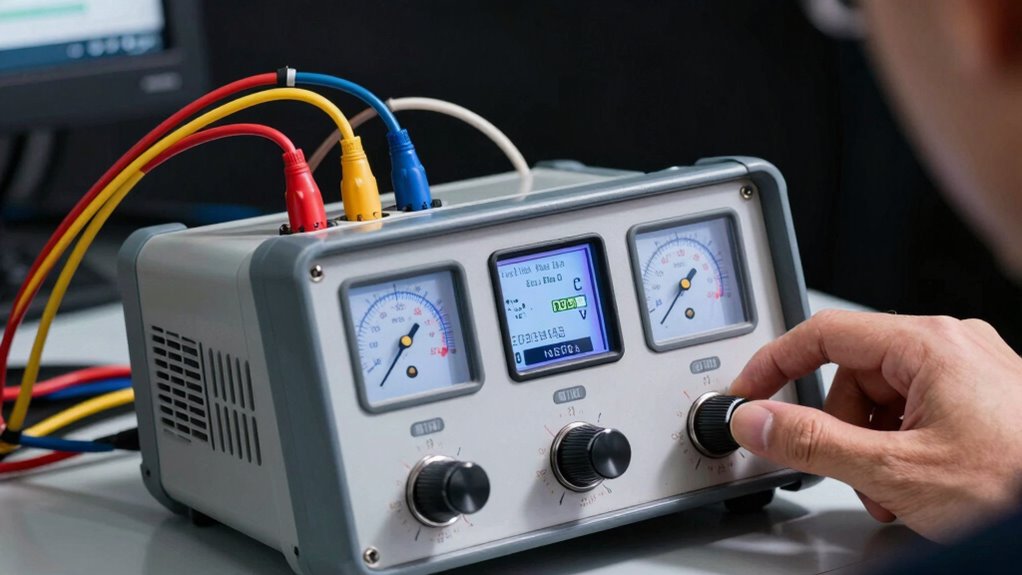
Electronic load testing is a critical process for evaluating the performance and reliability of power supplies, batteries, and other electronic components. When you perform load testing, you’re fundamentally putting devices under controlled conditions to see how they behave under real-world stress. This approach helps you uncover issues that might not be obvious during normal operation, ensuring that your equipment can handle the demands placed on it. One of the key techniques used in this process is battery simulation, which allows you to mimic the actual load a battery would experience in a working system. By doing so, you can accurately measure how much capacity the battery truly has, how efficiently it supplies power, and whether it can sustain prolonged use without degradation. Battery simulation is essential because it provides a realistic scenario for testing, giving you confidence in the battery’s performance before deploying it in critical applications.
Power supply analysis is another fundamental aspect of electronic load testing. It involves scrutinizing how power supplies respond to different load conditions, helping you determine their stability, regulation, and efficiency. When you analyze a power supply, you need to observe how it maintains voltage and current levels when subjected to sudden changes or sustained loads. This process reveals if the power supply can operate reliably over its expected lifespan, preventing failures that could lead to costly downtime or damage. During power supply analysis, you utilize specialized equipment to simulate various load patterns, providing real-time data that highlights any weaknesses or inefficiencies. This not only verifies the power supply’s capacity but also helps you optimize its design for better performance. Additionally, understanding the importance of accurate capacity measurement ensures that you can make informed decisions about system upgrades and maintenance.
The advantage of using electronic load testing with techniques like battery simulation and power supply analysis is that you get a clear picture of a device’s actual capacity. Unlike simple bench tests, load testing applies real-world stresses, ensuring your components can handle the conditions they’ll face once in operation. It’s a precise, thorough way to verify performance, reduce risk, and extend the lifespan of your electronics. By methodically simulating loads and analyzing responses, you make informed decisions about maintenance, upgrades, or replacements. Overall, electronic load testing stands out as the most reliable and dependable method to confirm your equipment’s true capacity, giving you peace of mind that your systems will perform when it matters most.

KKnoon 150W 20A Adjustable Constant Current Electronic Load 2.4inch TFT Color Display 4 Working Modes USB Lithium Battery Capacity Monitor Tester Discharge Meter
- Power Capacity: 150W maximum power
- Load Current: Supports up to 20A
- Display Screen: 2.4-inch TFT color display
As an affiliate, we earn on qualifying purchases.
As an affiliate, we earn on qualifying purchases.
Frequently Asked Questions
How Does Electronic Load Testing Compare to Traditional Testing Methods?
Electronic load testing offers superior test accuracy compared to traditional methods, allowing you to precisely evaluate battery performance under real-world conditions. Unlike older techniques, it provides controlled, consistent loads, giving you clear insights into capacity and health. This method minimizes errors and guarantees you get reliable data quickly, helping you make informed decisions about maintenance or replacements, ultimately extending your battery’s lifespan and ensuring maximum performance.
What Safety Precautions Are Necessary During Load Testing?
Think of safety as your shield in testing. You should wear safety gear like gloves, goggles, and insulated clothing, especially in a busy testing environment. Always guarantee proper ventilation and keep fire extinguishers nearby. Double-check equipment connections, and never bypass safety protocols. Stay alert and follow manufacturer instructions. These precautions protect you from sparks, shocks, or overheating, keeping your testing process safe and smooth.
Can Electronic Load Testers Simulate All Battery Chemistries?
Electronic load testers can simulate many battery chemistries through customizable load profiles and settings, but they may not perfectly replicate every chemistry’s unique characteristics. You can perform accurate load simulation for common types like lithium-ion, lead-acid, and nickel-based batteries, guaranteeing your testing matches their specific behaviors. However, for more specialized or emerging chemistries, verify the tester’s capabilities or consider additional calibration to ensure precise results.
How Often Should Electronic Load Testing Be Performed?
You should perform electronic load testing regularly, ideally every 6 to 12 months, to accurately monitor your battery’s lifespan and guarantee testing accuracy. Frequent testing helps identify capacity loss early, preventing unexpected failures. If your batteries undergo extreme conditions or high usage, consider testing more often. Consistent testing allows you to maintain peak performance, extend battery life, and avoid costly replacements by catching issues before they worsen.
What Are the Cost Considerations for Implementing Electronic Load Testing?
You should consider cost efficiency when implementing electronic load testing, as it can reduce maintenance costs over time by catching issues early. While initial setup may require investment in equipment and training, the long-term savings from fewer repairs and minimized downtime make it worthwhile. Additionally, electronic load testing helps optimize battery performance, ensuring you get the most accurate capacity verification without costly overhauls or replacements.
Conclusion
By using electronic load testing, you guarantee your batteries or power systems are accurately assessed without risking damage or contamination. Imagine testing a solar power bank before deploying it in a remote location—you’re confident it will perform reliably when needed most. This clean, precise method not only verifies real capacity but also extends your equipment’s lifespan. So, next time you need to guarantee performance, trust electronic load testing for a safe, efficient, and thorough evaluation.