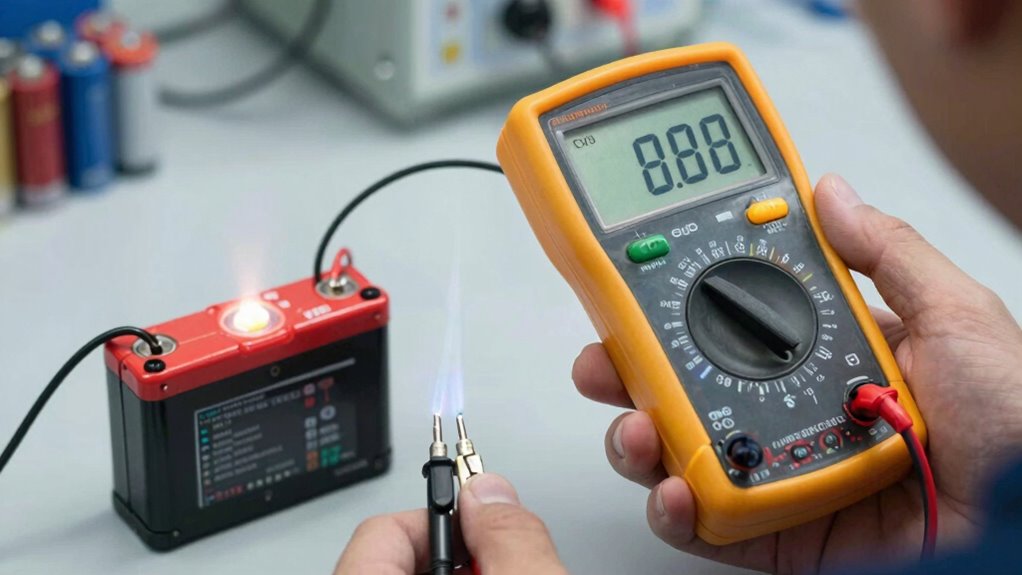

If you’re trying to spot weak batteries, load testing usually does a better job than conductance testing. Load tests simulate real-world conditions, revealing how your battery handles stress and if it can maintain voltage. Conductance tests are quick and non-invasive but might miss internal issues that cause failure under actual use. To truly understand your battery’s health and avoid surprises, it’s critical to know how each method works—keep exploring to find out more.

Get backup power and energy gear delivered free with Prime
- Fast, free delivery on millions of items
- Prime Video, Amazon Music and more included
- Member-only deals all year
Key Takeaways
- Load testing simulates real-world conditions, making it more effective at revealing weak or failing batteries under stress.
- Conductance testing is quick and non-invasive but may miss subtle internal degradation that affects performance.
- Load testing provides a comprehensive assessment of voltage stability during stress, offering higher reliability for detecting weaknesses.
- Conductance tests are suitable for routine checks but might give false positives if surface conductance appears normal.
- Combining both tests offers a thorough evaluation, with load testing being more definitive for identifying problematic batteries.
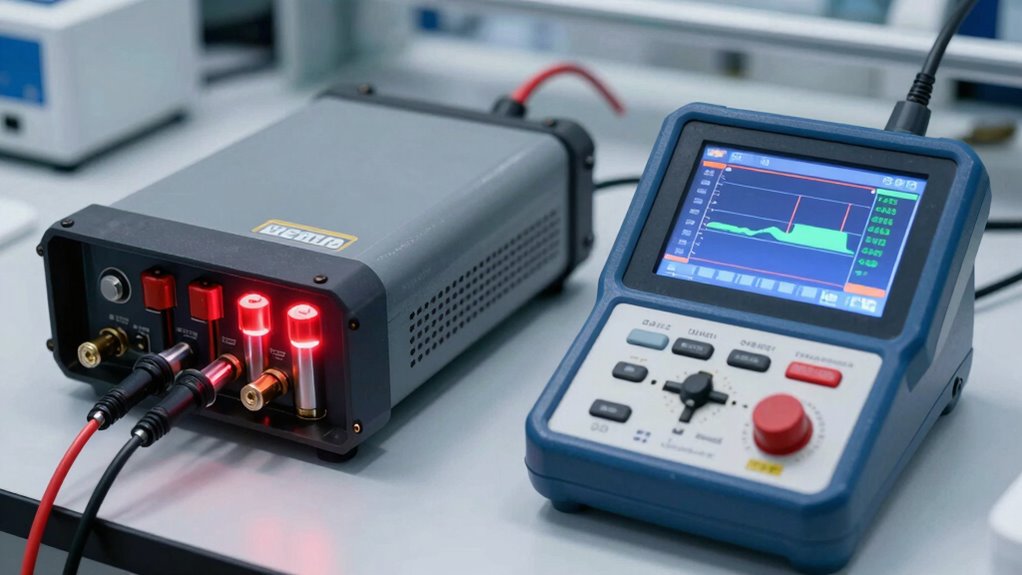
When it comes to evaluating the health of electrical systems, understanding the differences between load tests and conductance tests is essential. Both methods aim to determine the condition of batteries, but they do so in markedly different ways, which impacts how accurately you can identify weak or aging batteries. If you’re trying to prevent unexpected failures, knowing which test provides more reliable insights can save you time and money.
Load testing involves applying a controlled load to the battery and measuring its response. As you perform this test, you observe how well the battery maintains voltage under stress. This process mimics real-world conditions, revealing how the battery will perform during actual use. It’s especially useful for detecting battery aging because aging batteries often struggle to supply consistent power under load. However, load tests can be somewhat intrusive and require proper setup to ensure test accuracy. If not performed correctly, the results might be misleading, either overestimating the battery’s health or missing subtle signs of deterioration. Despite these challenges, load testing is a trusted method for catching weak batteries that might otherwise slip through less thorough assessments.
Load testing applies a controlled load, revealing how well a battery maintains voltage under stress to detect aging issues.
In contrast, conductance testing measures the battery’s ability to conduct electrical current without putting it under a load. It involves passing a small, harmless current through the battery and analyzing its conductance value, which correlates with internal health. Conductance tests are quick, non-invasive, and can be performed with portable equipment, making them ideal for routine inspections. Because they don’t require discharging the battery or applying stress, these tests tend to be safer and less disruptive. But their reliance on internal resistance measurements can sometimes lead to less precise assessments of battery aging, especially in cases where surface-level conductance remains high despite internal degradation. This means that conductance tests, while fast and convenient, might not always catch subtle signs of weakening, potentially affecting test accuracy. Additionally, understanding the contrast between load and conductance tests can help in selecting the appropriate method for specific situations.
Ultimately, both testing methods have their strengths and limitations. Load testing provides a more comprehensive view of how a battery performs under actual conditions, making it more effective at revealing weak or aging batteries that could fail prematurely. Conductance testing offers a quick snapshot of internal health, which is useful for regular monitoring but might miss early signs of deterioration. Your choice depends on your specific needs—if you want guaranteed test accuracy and a deep understanding of battery aging, load testing is often the better option. However, for routine checks and quick assessments, conductance testing can be a practical tool. Recognizing these differences helps you make smarter decisions about battery maintenance, ensuring safety and reliability in your electrical systems.
As an affiliate, we earn on qualifying purchases.
Frequently Asked Questions
Can a Battery Pass One Test but Fail the Other?
Yes, a battery can pass one test but fail the other because testing reliability varies. A load test evaluates its actual performance under stress, revealing weaknesses, while a conductance test measures its overall health more quickly. You might find a battery passes conductance testing but struggles during a load test, indicating hidden issues. Consequently, relying on just one method may not give a complete picture of your battery’s true performance.
Which Test Is More Accurate for Detecting Hidden Battery Issues?
You’ll find the conductance test more accurate for detecting hidden battery issues, as it offers better testing reliability. It evaluates battery health without markedly affecting the battery’s lifespan, making it a quick and reliable choice. Load tests can sometimes miss subtle problems, but conductance testing provides a clearer picture of the battery’s true condition, ensuring you catch weak batteries before they cause more serious issues.
How Long Does Each Testing Method Typically Take?
Think of testing as a race against time. Load tests typically take around 10-15 minutes, acting like a sprint that reveals battery strength quickly. Conductance tests, on the other hand, are like a leisurely walk, often completed in under 5 minutes. Time comparison shows conductance tests are faster, but load tests offer a more thorough insight. Your choice depends on whether speed or depth matters most for your battery evaluation.
Are These Tests Suitable for All Types of Batteries?
You’ll find that both load and conductance tests aren’t suitable for all battery chemistries or testing environments. For example, sensitive chemistries like lithium-ion might require specialized testing methods, while extreme temperatures or hazardous settings can affect test accuracy. Always consider your battery’s chemistry and the testing environment to choose the right method, ensuring reliable results without risking damage or misdiagnosis.
What Are the Costs Associated With Each Testing Method?
When comparing costs, conductance tests generally have lower testing expenses and upfront costs because they’re quicker and require less specialized equipment. Load tests tend to be more expensive due to their detailed nature, longer duration, and the need for heavier-duty equipment. A cost comparison shows that conductance testing saves you money on routine checks, but load testing may be worth it for more thorough analysis, especially when diagnosing weak batteries in critical systems.
Conclusion
So, whether you choose a load test or conductance test, remember, you’re wielding the power to uncover the battery’s secret weaknesses. One might just reveal a dying battery hiding in plain sight, ready to fail at the worst moment, while the other could be your superhero, saving your day before disaster strikes. Don’t settle for guessing—use the right test and save yourself from a potential catastrophe. Your battery’s fate is in your hands—trust the test that truly reveals its true strength!
Halloween Picks
halloween
As an affiliate, we earn on qualifying purchases.