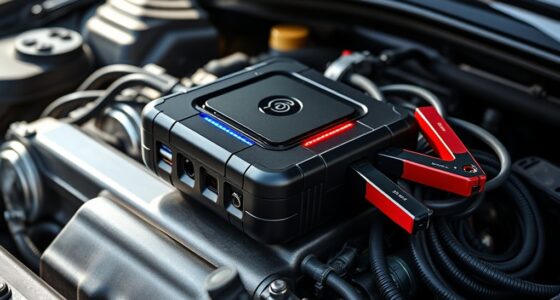
For shoppers comparing the best sodium-ion batteries, the Sodium-Ion Car Starting Battery, Group 95R / H9-LN6, is my best overall pick for its stated 950 CCA and direct focus on engine starting. The Down4Sound DNA-27 stands out for higher-capacity car audio setups, while the Acoucou YTX7A-Na is the lineup’s powersports-specific choice. The main tradeoffs are fit, starting output, and whether a battery is designed for cranking, audio loads, or general 12V use. Capacity figures alone do not tell you whether a battery can start your vehicle or meet its charging requirements. Read on for how the seven options compare and which one fits your application.
Key Takeaways
- The Group 95R / H9-LN6 starter battery leads for conventional starting use because its listed 950 CCA directly addresses cranking demand; buyers still need to confirm its case size and terminal layout.
- The DNA-27 is the car-audio capacity pick over the DNA-13, with 27Ah versus 13.5Ah; the larger unit makes more sense when the system needs more reserve and space allows.
- The Acoucou YTX7A-Na has the clearest motorcycle fit because it is designed around a powersports battery format, unlike the general-purpose 12V options.
- The CSI Group 31 adds a jump-start button, a feature aimed at backup starting convenience, but its large Group 31 form factor may rule it out for many passenger cars.
- Several listings leave key compatibility details unresolved: the YGSAM’s 10,000 mAh figure and universal-fit claim do not replace checking dimensions, terminals, charging limits, and vehicle requirements.


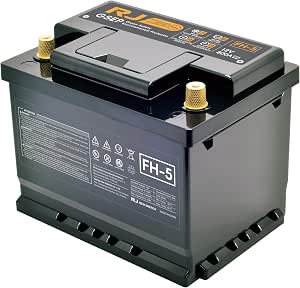
| sodium-ion batterie | Voltage | Capacity | Weight | Chemistry |
|---|---|---|---|---|
| Sodium-Ion Car Starting Batter | 12 V | 60 Ah | 19.8 lb | Sodium-ion |
| Down4Sound DNA-13 13.5Ah 12V S | 12 V | 13.5 Ah | 6.1 lb | Sodium-ion |
| Acoucou YTX7A-Na Sodium-Ion Mo | 12 V | 3.4 Ah | 2.4 lb | Sodium-ion |
| OKMO 12V 10Ah Rechargeable Sod | 12 V | 10 Ah | 3 lb | Sodium-ion |
| Down4Sound DNA-27 27Ah 12V Sod | 12 V | 27 Ah | 10 lb | Sodium-ion |
| CSI 12V Group 31 Sodium-Ion St | 12 V | 68 Ah | 24 lb | — |
| YGSAM H6 Sodium-Ion Car Batter | 12 V | 10,000 mAh | 14.3 lb | — |
More Details on Our Top Picks
Sodium-Ion Car Starting Battery, BCI Group 95R / H9-LN6, 950 CCA
I’d choose the Aeson Power NA-H9/LN6 for a passenger car that needs a Group 95R / H9-LN6 starting battery and frequent start-stop operation. Its 950 CCA rating and stated 180,000 start-stop cycles target a different job from the Down4Sound DNA-27, which is built for brief, high-current car-audio bursts rather than vehicle starting. At 19.8 pounds, it is also lighter than many traditional lead-acid or AGM batteries, though the product data does not provide a direct weight comparison. The claimed 4,000 deep-cycle cycles and 5+ year service life add versatility, but those are manufacturer figures, not independently verified results. Check the vehicle’s battery group and fit before buying; the specific fit can make this a poor choice for cars requiring another size.
Pros:- 950 CCA rating for passenger-car starting
- Designed for start-stop use, with a stated 180,000 start-stop cycles
- Manufacturer claims 4,000 deep cycles at 50% depth of discharge
- 19.8-pound weight and standard auto-post terminals
Cons:- Vehicle-specific Group 95R / H9-LN6 fit must be confirmed
- Cycle-life and service-life figures are manufacturer claims
- The product data does not include independent test results
Best for: Drivers with a compatible Group 95R / H9-LN6 passenger car, especially one with start-stop operation, who want a dual-purpose battery.
Not ideal for: Drivers whose vehicles require a different battery group or who need independently verified cycle-life data.
- Chemistry:Sodium-ion
- Voltage:12 V
- Capacity:60 Ah
- BCI group:95R / H9-LN6
- Cold cranking amps:950 CCA
- Weight:19.8 lb
- Dimensions:6.93 × 15.51 × 7.4 in
- Operating temperature:-40°C to 80°C
Our verdict“Choose this for a compatible start-stop car that needs strong starting output and dual-purpose capability, after confirming the fit.”
Down4Sound DNA-13 13.5Ah 12V Sodium-Ion Car Audio Battery
The Down4Sound DNA-13 is for an audio build that needs short bursts of current without adding much battery weight. Its stated 400A pulse output for three seconds and 3,500–5,500W system guidance suit compact setups; the larger DNA-27 supports 6,000–9,000W and doubles the capacity, so it makes more sense when the system’s demand is higher. At 6.1 pounds, the DNA-13 is easier to package, and side mounting gives installers more placement options. Its 13.5Ah capacity is modest for general backup or extended loads, and the pulse rating does not mean it can supply that output continuously. I’d also factor in the recommended charging-system and Big 3 wiring upgrades, which add work and may be necessary to support the setup.
Pros:- Rated for 400A pulses lasting up to three seconds
- Intended for 3,500–5,500W car-audio systems
- Compact 6.1-pound design with side-mounting capability
- Manufacturer states more than 10,000 full-power pulse cycles
Cons:- Requires an appropriately upgraded charging system for best support
- Big 3 wiring upgrade is recommended
- 13.5Ah capacity and short pulse rating limit its use for sustained loads
Best for: Car-audio builders with a 3,500–5,500W system who need a lightweight battery for brief high-current bursts and have suitable charging and wiring upgrades.
Not ideal for: Drivers seeking a general-purpose or long-duration battery, or audio installers unwilling to upgrade the charging system and wiring.
- Chemistry:Sodium-ion
- Voltage:12 V
- Capacity:13.5 Ah
- Maximum pulse discharge:400 A for 3 seconds
- Pulse power:4,200 W
- Recommended system power:3,500–5,500 W
- Weight:6.1 lb
- Maximum charging voltage:15.8 V
Our verdict“Pick the DNA-13 for a compact, mid-power audio build with upgraded charging and wiring; choose the DNA-27 when the system needs more capacity and pulse output.”
Acoucou YTX7A-Na Sodium-Ion Motorcycle Battery
For a motorcycle needing a compatible YTX7A- or YTZ10S-size replacement, the Acoucou YTX7A-Na offers a low-weight alternative at 2.4 pounds. Its 200A starting current and 3.4Ah capacity are aimed at starting a bike, not supporting the extended electrical loads of a solar or backup setup like the OKMO 12V 10Ah battery. The stated operating range, from -40°F to 176°F, is broad, while the claimed 3,000-plus cycles suggest a long service life if borne out in use. There are two fit details to check: compartment dimensions and terminal polarity. Charging is another constraint, since the manufacturer calls for a dedicated sodium-ion charger at 14.8V ± 0.2V. That extra requirement can complicate replacement for riders who already own a different charger.
Pros:- Lightweight 2.4-pound motorcycle-focused design
- 200A starting current
- Rated for more than 3,000 cycles
- Specified operating range of -40°F to 176°F
Cons:- Requires a dedicated sodium-ion charger
- Compartment dimensions and terminal polarity must be checked
- 3.4Ah capacity is suited to starting rather than extended-power applications
Best for: Motorcycle owners replacing a compatible YTX7A or YTZ10S-size battery who can confirm polarity and use a dedicated sodium-ion charger.
Not ideal for: Riders who need a drop-in replacement without checking terminal layout or who lack access to a dedicated sodium-ion charger.
- Chemistry:Sodium-ion
- Voltage:12 V
- Capacity:3.4 Ah
- Energy:40.8 Wh
- Starting current:200 A
- Cycle life:3,000+ cycles
- Weight:2.4 lb
- Charging voltage:14.8 V ± 0.2 V
Our verdict“Choose the Acoucou for a compatible motorcycle where low weight matters and the correct charger is available.”
OKMO 12V 10Ah Rechargeable Sodium-Ion Battery
The OKMO 1210Na is the most straightforward fit here for small solar, marine, fish-finder, and backup-power projects. Its 10Ah capacity is more useful for general equipment loads than the Acoucou YTX7A-Na’s 3.4Ah motorcycle-starting format, though neither product’s data gives a runtime for a particular device. The built-in BMS protects against overcharge, over-discharge, overcurrent, and short circuits, giving small-project builders several layers of electrical protection in one battery. OKMO states a cycle life above 4,000 charges, but that figure is not independently verified in the supplied data. At 3 pounds, it may not suit a weight-sensitive installation, and its specified -4°F to 140°F range is narrower than the Aeson Power NA-H9/LN6’s automotive temperature range. Check that range against the actual installation conditions.
Pros:- 10Ah capacity for small equipment and backup loads
- Built-in BMS protection against overcharge, over-discharge, overcurrent, and short circuits
- Suitable for solar, marine, fish-finder, and backup applications
- Manufacturer rates it for more than 4,000 charge cycles
Cons:- At 3 pounds, it may be heavy for weight-sensitive projects
- Operating range is -4°F to 140°F
- Cycle-life claim is not independently verified in the supplied product data
Best for: DIY solar, marine, fish-finder, and backup-power users who need a protected 12V battery for small loads.
Not ideal for: Buyers building a very light portable setup or installing a battery where temperatures may fall below -4°F or exceed 140°F.
- Chemistry:Sodium-ion
- Model:1210Na
- Voltage:12 V
- Capacity:10 Ah
- Weight:3 lb
- Operating temperature:-4°F to 140°F
- BMS protection:Overcharge, over-discharge, overcurrent, and short circuit
- Warranty:2 years
Our verdict“Choose the OKMO for small 12V projects that benefit from built-in protection and 10Ah capacity, provided its temperature range fits the site.”
Down4Sound DNA-27 27Ah 12V Sodium-Ion Car Audio Battery
When an audio system’s demand moves beyond the DNA-13’s 3,500–5,500W guidance, the Down4Sound DNA-27 offers twice the capacity and a higher burst rating: 800A for up to three seconds, for systems rated at 6,000–9,000W. That makes it the stronger match for large, power-hungry builds, while its 10-pound weight remains manageable for an audio-focused installation. The stated 10,000-plus pulse discharges and 90% capacity retention are manufacturer claims, not independent test results. This is still a specialized battery: its 27Ah capacity and short pulse window do not make it a substitute for an all-purpose household storage battery. Buyers also need to account for the recommended high-output alternator and Big 3 wiring upgrade, which can add installation complexity.
Pros:- Rated for 800A pulses lasting up to three seconds
- Designed for 6,000–9,000W audio systems
- 27Ah capacity and side-mounting capability
- Manufacturer states more than 10,000 full-power pulse discharges with 90% capacity retention
Cons:- Recommended high-output alternator and Big 3 wiring upgrades add installation demands
- 800A output is limited to bursts of up to three seconds
- Pulse-cycle and capacity-retention figures are manufacturer claims
Best for: Car-audio builders running a 6,000–9,000W system who need high short-burst output and can upgrade the alternator and wiring.
Not ideal for: Owners of modest audio systems, general-purpose battery shoppers, or installers who cannot support the recommended charging and wiring upgrades.
- Chemistry:Sodium-ion
- Voltage:12 V
- Capacity:27 Ah
- Maximum pulse discharge:800 A for up to 3 seconds
- Sustained pulse power:8,400 W
- Supported system power:6,000–9,000 W
- Weight:10 lb
- Capacity retention:90%
Our verdict“Choose the DNA-27 for a high-power audio build that exceeds the DNA-13’s system range and has the charging and wiring to support it.”
CSI 12V Group 31 Sodium-Ion Starter Battery with Jump Start Button
The CSI Group 31 is the strongest fit here for buyers who need sodium-ion power to start a demanding engine: its 1,500 CCA rating and 68 Ah capacity are aimed at trucks, RVs, marine use, and equipment. Its built-in jump start button can provide voltage below the programmed state-of-charge limit, adding a fallback the smaller YGSAM H6 does not list. At 24 pounds, it is described as much lighter than lead-acid or AGM alternatives, which may ease handling during installation. The tradeoff is fit: Group 31 dimensions and terminals need checking against the intended vehicle or equipment, and the supplied information includes no independent performance or longevity results. Choose it for starting output; the Down4Sound DNA-27 is instead positioned for car-audio use.
Pros:- 1,500 CCA rating targets heavy-duty engine starting
- Jump start button can provide voltage below the programmed state-of-charge limit
- Battery management system includes electrical and thermal protections
- 24-pound weight is described as 60% lighter than lead-acid or AGM batteries
Cons:- Group 31 fit and terminal compatibility need checking for the application
- No independent performance or longevity test results are supplied
Best for: Truck, RV, marine, and equipment owners who need high cold-cranking output and a built-in jump-start function.
Not ideal for: Drivers with limited battery-tray space or a vehicle requiring a different group size, since compatibility should be confirmed before purchase.
- Battery type:Sodium-ion
- Voltage:12 V
- Group size:31
- Cold cranking amps:1,500 CCA
- Capacity:68 Ah
- Weight:24 lb
- Dimensions:6.8 × 13 × 9.4 in (D × W × H)
- Warranty:3 years
Our verdict“Choose the CSI Group 31 if high starting output and a jump-start button matter more than a compact fit.”
YGSAM H6 Sodium-Ion Car Battery, 12V, 10,000 mAh, Universal Fit
The YGSAM H6 is a compact-capacity sodium-ion option whose listing claims at least 70% capacity after 1,500 cycles, a useful distinction for buyers weighing repeated use over strong engine-starting figures. Gold-plated copper terminals are described as corrosion-resistant, and the design is maintenance-free. Compared with the CSI Group 31, though, the YGSAM provides only 10,000 mAh and does not list a cold-cranking rating or a jump-start button, so the available data gives less reason to choose it for heavy-duty starting. Fit information is also uncertain: the listing conflicts on dimensions and its title identifies both H6 and H5. That makes vehicle-by-vehicle verification especially important. I would shortlist it only when the claimed cycle life suits the use and the exact fit can be confirmed.
Pros:- Claims at least 70% capacity after 1,500 cycles
- Maintenance-free design
- Gold-plated copper terminals are described as corrosion-resistant
Cons:- Listing gives conflicting dimensions
- Title refers to both H6 and H5, leaving exact fit unclear
- No cold-cranking amps rating is provided
Best for: ATV owners seeking a maintenance-free sodium-ion battery with a stated cycle-life figure who can verify the required dimensions and fit.
Not ideal for: Drivers needing clearly documented heavy-duty starting output or a certain H6 fit, because the listing provides no CCA figure and has conflicting fit details.
- Battery type:Sodium-ion
- Voltage:12 V
- Capacity:10,000 mAh
- Number of cells:6
- Terminal material and finish:Pure copper, gold-plated
- Dimensions:6.89 × 9.53 × 7.48 in (D × W × H; listing also reports conflicting dimensions)
- Weight:14.3 lb
- Cycle life:1,500 cycles to 70% capacity
- Shelf life:3 years
Our verdict“Consider the YGSAM for its stated cycle-life claim only if you can confirm the exact battery size and application first.”
How We Picked
I ranked these seven products by how clearly their stated design and specifications match a real battery job: starting a vehicle, powering a car-audio system, fitting a motorcycle, or supplying general 12V power. For starter batteries, I gave more weight to cranking output and an identifiable group size; for audio batteries, I compared stated amp-hour capacity and the intended application. I also considered whether the product’s format gives buyers a practical path to checking fit and installation. Those factors put the Group 95R / H9-LN6 first for broad starting use, the DNA-27 ahead of the DNA-13 for audio reserve, and the Acoucou ahead of general-purpose options for motorcycles.
These listings do not provide a consistent set of data for cycle life, charging profiles, cold-weather behavior, warranties, or verified dimensions, so I did not treat those qualities as established advantages. A product with a specialized role ranks well for that use, even if it is a poor substitute for a different battery type. Before buying, compare the manufacturer’s full specifications with the equipment you plan to power; sodium-ion chemistry alone does not establish compatibility.
Factors to Consider When Choosing Best Sodium-ion Batteries
Choosing among these batteries starts with the job the battery must do and the equipment it must fit. I would confirm those two points before comparing capacity figures or convenience features.
Match the battery to its job
A starter battery must supply a high burst of current to crank an engine, while an audio battery is selected around the demands of an amplifier and the reserve needed during playback. A general 12V battery may be suited to a different load profile altogether. Do not assume that one type can replace another just because both are labeled 12V. Identify whether your priority is engine starting, sustained accessory use, or backup power. Then compare the product’s stated use and electrical specifications with the equipment maker’s requirements. This step can rule out a tempting high-capacity option that is not designed for your application.
Verify physical fit and connections
Battery group labels and model codes can help identify a form factor, but they do not guarantee that every case detail matches your vehicle. Check length, width, height, terminal position, terminal type, hold-down method, and cable reach against the battery currently installed. A product described as universal fit still needs those checks. A mismatch can make installation impractical or leave cables under strain. For motorcycles, also check the tray dimensions and terminal orientation, where compact packaging matters. Use the equipment manual or manufacturer fitment list when available.
Read output and capacity as different measures
Cranking amps and amp-hours answer different questions. A CCA figure describes cold-start current under a defined test, while amp-hours indicate a capacity measure under specified conditions. A larger amp-hour number does not by itself mean stronger engine starting, and a high CCA figure does not tell you how long accessories can run. The DNA-27’s 27Ah rating is relevant when comparing its reserve with the DNA-13’s 13.5Ah, but it does not settle whether either suits a particular amplifier. Look for the test conditions and any continuous or peak current limits. If a listing omits those details, check the manufacturer documentation before purchase.
Confirm charging compatibility
Different battery chemistries can call for different charging voltage limits, charging stages, or temperature controls. A vehicle alternator, motorcycle regulator, solar controller, or standalone charger may not be suitable simply because it supports a 12V battery. Check the battery maker’s charging instructions and confirm that your charging system stays within them. Also look for restrictions on charging in cold conditions and any required charger settings. Skipping this check can shorten service life or create a safety issue. When the listing lacks a charging profile, treat that as an unanswered compatibility question.
Choose reserve capacity around real use
For audio or accessory loads, estimate the current draw and the time you need to run equipment before the engine or another power source is available. A higher-capacity battery can provide more reserve, but it may also take up more space and add installation constraints. Avoid sizing from peak amplifier wattage alone; actual draw depends on listening level, system efficiency, and use duration. For a starter battery, reserve needs can also change with cold weather, short trips, and accessory use while parked. Decide which condition matters most for your routine, then seek specifications that cover it. A battery sized for occasional use may not suit long sessions with the engine off.
Weigh convenience against installation constraints
Features such as a jump-start button can be useful when access to a separate jump pack is limited, but they do not make every battery an easy drop-in replacement. A Group 31 case, for example, may be too large for a standard passenger-car tray even if its starting function sounds appealing. Larger audio batteries can also demand room, secure mounting, and appropriately sized wiring. Compare the benefit of a special feature with the hardware and space it requires. Buyers who want a straightforward replacement should prioritize confirmed fitment and terminal compatibility. Those building a custom system can give more weight to capacity and added functions.
Frequently Asked Questions
Can I replace my lead-acid car battery with one of these sodium-ion batteries?
Only if the sodium-ion model matches your vehicle’s required group size, terminal layout, starting output, and charging limits. The Group 95R / H9-LN6 listing gives a group format and 950 CCA, but you still need to confirm the exact case and electrical fit for your car. Check the vehicle manual and the battery manufacturer’s fitment and charging guidance. A shared 12V label does not establish that the alternator or battery monitoring system is compatible. If the maker does not list your vehicle or provide charging instructions, get confirmation before installing it.
Which of these batteries makes the most sense for a car-audio system?
The Down4Sound DNA-27 is the stronger capacity candidate within this lineup, while the DNA-13 offers a smaller 13.5Ah option. The right choice depends on amplifier draw, listening duration, available mounting space, and wiring requirements. Do not treat amp-hours as a guarantee that voltage will remain stable under a high-current audio load. Check continuous and peak discharge ratings, along with charging guidance, in the product documentation. If those figures are unavailable, the capacity number alone is not enough to size the system.
Is the CSI Group 31 battery suitable for an ordinary passenger car?
Its Group 31 designation signals a large format that may not fit a typical passenger-car battery tray. The jump-start button is a useful distinguishing feature, but it cannot compensate for incompatible dimensions, terminals, or hold-down points. Compare the case measurements and connection layout with your vehicle before considering installation. Also verify that its starting output and charging requirements suit the car. It is a better candidate for vehicles or equipment designed around Group 31 batteries than a general-purpose replacement by default.
What should I check before using a sodium-ion battery with a motorcycle?
Start with the motorcycle maker’s specified battery dimensions, terminal orientation, minimum starting output, and charging-system limits. The Acoucou YTX7A-Na is the lineup’s motorcycle-focused option, but its model designation alone does not prove compatibility with your bike. Confirm the manufacturer’s fitment list and charging instructions, including any temperature restrictions. Check that the battery is secure in the tray and that the cables reach without tension. If your motorcycle has a sensitive charging system, verify sodium-ion compatibility before replacing its current battery.
Can a 10,000 mAh battery serve as a car starter battery?
The YGSAM listing’s 10,000 mAh capacity figure does not answer whether it can deliver the current a particular engine needs to start. For starting, look for a clearly stated cranking rating and confirm that it meets the vehicle requirement. You also need to verify case dimensions, terminals, and charging compatibility. The term universal fit is not a substitute for a vehicle-specific fit check. If starting current or charging limits are missing from the manufacturer documentation, choose a better-specified option for engine starting.
Conclusion
For most shoppers seeking a sodium-ion engine-starting battery from this group, I would begin with the Group 95R / H9-LN6, provided its fit and charging requirements match the vehicle. For car-audio buyers who need more stated reserve, the DNA-27 is my premium capacity pick; the DNA-13 is the more modest audio option when space and demand are lower. The Acoucou YTX7A-Na is the clearest choice for motorcycle shoppers, while the CSI Group 31 suits buyers who need its jump-start feature and have room for its larger format. I would treat the OKMO 12V 10Ah as the general-purpose value candidate only after confirming its discharge and charging specifications, and choose the YGSAM H6 only when its fit and starting output are documented for the intended vehicle. For beginners, the simplest path is the battery with confirmed vehicle fitment and complete charging guidance, even if another listing advertises a more appealing headline feature.