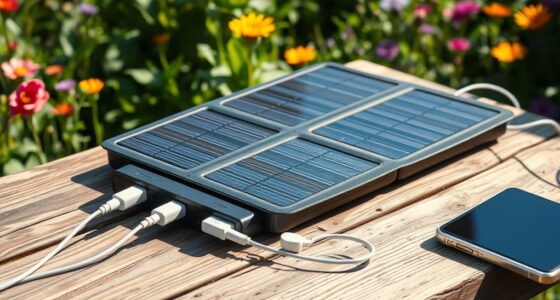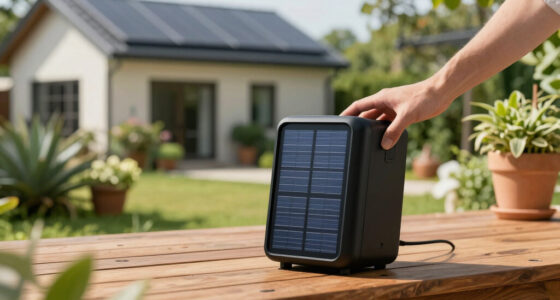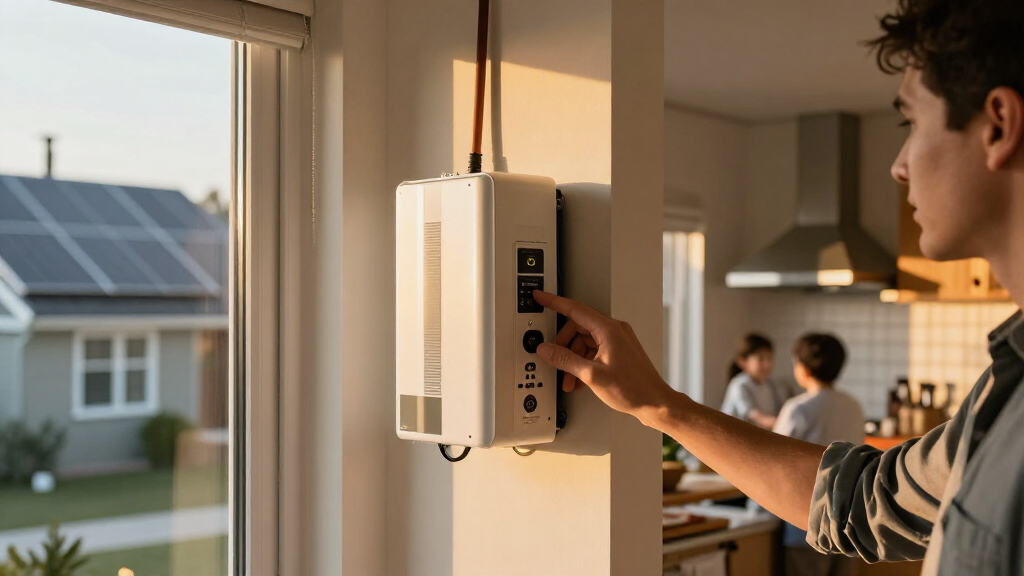
I compared these five systems by how well they match different home backup plans, from automated whole-panel coverage to larger off-grid installations and expandable battery banks. The Anker SOLIX E10 with Power Dock is my leading pick for buyers who want automatic, whole-home backup and a fast switchover. For a manual backup arrangement with a lower expansion ceiling, the E10 with Smart Inlet Box keeps the same core power rating in a simpler configuration. Buyers who need a substantial battery reserve and a full solar package should look at the ECO-WORTHY system with more than 30 kWh of usable energy.

Get backup power and energy gear delivered free with Prime
- Fast, free delivery on millions of items
- Prime Video, Amazon Music and more included
- Member-only deals all year
Those differences matter more than a single capacity figure. A whole-home system depends on transfer equipment and installation as well as stored energy; a large battery-and-panel package asks for more space and system planning. The Cubix100 rack battery is a component, not a complete home backup system, while ECO-WORTHY’s 16.1 kWh off-grid kit sits between modular storage and a high-capacity complete package. I rank the options by how complete and practical each is for its stated job, not by assuming every household needs the same setup.
Key Takeaways
- The Anker SOLIX E10 with Power Dock ranks first for automated, whole-panel coverage, up to 7.6 kW continuous output, and a stated switchover time of 20 milliseconds or less.
- The E10 Smart Inlet Box version shares the 6 kWh starting capacity and 7.6 kW output, but its manual backup controls make it a different fit from the Power Dock.
- ECO-WORTHY’s panel-and-battery package offers more than 30 kWh usable energy and a 10 kW hybrid inverter, but pallet delivery and site planning make it a larger installation project.
- The Cubix100 is a 5.12 kWh rack battery that can scale to 32 units; buyers must pair it with a compatible inverter and design the rest of the system.
- ECO-WORTHY’s 16.1 kWh off-grid kit includes panels and inverter equipment, but its 2,950 W of solar capacity and delivery requirements should shape expectations.
| Anker SOLIX E10, Power Dock, 6kWh, 7.6kW Output, 9kW Solar |  | Best Overall for Automated Whole-Home Backup | Continuous output: 7.6 kW | Starting battery capacity: 6 kWh | Stated expansion: Up to 90 kWh | VIEW LATEST PRICE | See Our Full Breakdown |
| Anker SOLIX E10 Whole-Home Backup Power System with 6 kWh Battery and Smart Inlet Box |  | Best for Manual Whole-Home Backup | Continuous output: 7.6 kW | Battery capacity: 6 kWh, expandable to 30 kWh | Solar input: Up to 9 kW per unit | VIEW LATEST PRICE | See Our Full Breakdown |
| ECO-WORTHY Solar Panel and LiFePO4 Home Backup System |  | Best Complete Package for High-Capacity Storage | Solar panels: 6 × 590 W N-type panels | Battery bank: 2 × 48 V, 314 Ah LiFePO4 batteries | Usable energy: More than 30 kWh | VIEW LATEST PRICE | See Our Full Breakdown |
| ECO-WORTHY Cubix100 48V 100Ah LiFePO4 Server Rack Battery |  | Best Modular Battery for a Custom System | Battery chemistry: LiFePO4 | Nominal voltage: 51.2 V DC | Capacity: 100 Ah | VIEW LATEST PRICE | See Our Full Breakdown |
| ECO-WORTHY 10 kW Off-Grid Solar Panel Kit with 16.1 kWh Battery |  | Best Mid-Size Off-Grid Solar Kit | Solar panels: 5 × 590 W | Total solar capacity: 2,950 W | Battery: 48 V, 314 Ah LiFePO4 | VIEW LATEST PRICE | See Our Full Breakdown |
| home energy storage system | Warranty |
|---|---|
| Anker SOLIX E10 | 5 years E10; 10 years Power Dock |
| Anker SOLIX E10 Whole-Home Bac | 5 years E10; 10 years Smart Inlet Box |
| ECO-WORTHY Solar Panel and LiF | — |
| ECO-WORTHY Cubix100 48V 100Ah | 10-year limited warranty |
| ECO-WORTHY 10 kW Off-Grid Sola | — |
More Details on Our Top Picks
Anker SOLIX E10, Power Dock, 6kWh, 7.6kW Output, 9kW Solar
I put this E10 first because the Power Dock is the clearest whole-home backup proposition in the lineup. Its stated 200A coverage is designed to serve the home’s panel rather than limit backup to a small set of selected circuits, and the system advertises automatic switchover in 20 milliseconds or less. That distinction is central: it suits buyers who want a connected, automatic backup arrangement, not just a battery that can power appliances when manually connected.
The core figures are substantial for a starting configuration: 7.6 kW continuous output, 6 kWh of battery capacity, and up to 9 kW of solar input per unit. The battery can expand to 90 kWh according to the listing, and up to three units are stated to scale output to 22.8 kW. Compared with the Smart Inlet Box version, this package is more focused on seamless automatic operation and larger stated expansion. It also claims compatibility with existing solar, which may make it a more attractive retrofit candidate, subject to installer confirmation.
That flexibility comes with caveats. Six kilowatt-hours is only the starting reserve, so long outages or high energy use may call for added battery modules. Whole-panel coverage does not mean every high-draw appliance can run simultaneously; the home’s loads still need to fit the system’s output and electrical design. The Power Dock listing also separates warranty terms between the E10 and dock, with five years for the E10 and ten for the dock. Compared with the more self-contained ECO-WORTHY bundles, this Anker pick is less of a panels-plus-inverter package and more of an integrated backup system built around home-panel connection.
I would choose it for buyers who value automatic transfer and the possibility of scaling storage over time. I would skip it if manual operation is acceptable and the buyer would rather plan around a bundled panel-and-battery package, or if 6 kWh is expected to cover a long outage without expansion.
Pros:- Power Dock is designed for 200A whole-panel coverage and automatic backup.
- Advertised switchover of 20 milliseconds or less.
- 6 kWh starting battery can expand to a stated 90 kWh.
- Supports up to 9 kW solar input per unit and claims compatibility with existing solar.
Cons:- The included 6 kWh reserve may be limited for extended outages without expansion.
- Professional electrical work and load planning may be required for whole-panel integration.
- The E10 and Power Dock have different stated warranty periods.
Best for: Homeowners seeking automatic whole-panel backup, fast stated switchover, and a system with a large stated battery expansion path.
Not ideal for: Buyers who need a large battery reserve in the initial configuration, want a full solar-panel bundle, or prefer a simpler manual backup setup.
- Continuous output:7.6 kW
- Starting battery capacity:6 kWh
- Stated expansion:Up to 90 kWh
- Solar input:Up to 9 kW per unit
- Panel coverage:200A whole-home coverage via Power Dock
- Switchover:20 ms or less, as stated
- Weather protection:NEMA 4 E10; NEMA 3R Power Dock
- Warranty:5 years E10; 10 years Power Dock
Our verdict“I rank the Power Dock E10 first for buyers who want automatic whole-panel backup and a substantial expansion path, provided they plan around the initial 6 kWh reserve.”
Anker SOLIX E10 Whole-Home Backup Power System with 6 kWh Battery and Smart Inlet Box
This E10 version keeps the headline 7.6 kW continuous output and 6 kWh starting battery, but replaces the Power Dock approach with a Smart Inlet Box for manual whole-home backup. I rank it second because the core power platform remains capable, yet the operating experience is less automatic than the first-place package. If a household is comfortable following a manual backup procedure, that may be an acceptable trade; if the goal is a near-instant automatic response, the Power Dock model is the closer match.
The Smart Inlet Box configuration supports charging from grid power or solar, and the listing describes battery expansion to 30 kWh. That can serve a household that wants to start with a modest reserve and add capacity later, though it falls short of the Power Dock model’s stated 90 kWh ceiling. Its 9 kW solar input per unit is also useful for buyers combining storage with a compatible solar setup. The weather protection and LFP chemistry make it suitable for outdoor installation under the listed conditions, but weather ratings do not remove the need to follow placement and electrical requirements.
Compared with the ECO-WORTHY kits, this is less of an all-in-one solar build: the listing does not include panels, and the buyer must account for the home connection and installation. Its advantage is a defined home-backup system with a compact starting battery rather than a pallet-scale package of panels, inverter, and larger storage. Its key drawback is manual backup control. I would not equate the phrase whole-home backup with uninterrupted automatic service; the stated setup requires a person to operate the relevant backup process.
This is a sensible choice when the owner values the E10 power level and solar/grid charging options but does not need Power Dock-style automatic transfer. I would skip it if a manual response during an outage is not acceptable, or if the buyer needs more than 30 kWh of stated expansion within this configuration.
Pros:- 7.6 kW continuous output with a 6 kWh starting battery.
- Battery expansion is listed up to 30 kWh.
- Supports solar input and charging from the grid.
- Outdoor-rated E10 and Smart Inlet Box components with LFP battery chemistry.
Cons:- Backup control through the Smart Inlet Box is manual.
- The stated expansion ceiling is lower than the Power Dock E10 listing.
- Solar panels are not included in the described package.
Best for: Homeowners who want an E10-based backup system with grid and solar charging, and who are comfortable with manual backup control.
Not ideal for: Buyers who require automatic switchover, need the larger expansion ceiling claimed for the Power Dock version, or expect panels to be included.
- Continuous output:7.6 kW
- Battery capacity:6 kWh, expandable to 30 kWh
- Solar input:Up to 9 kW per unit
- Battery chemistry:LFP
- Operating temperature:-4°F to 131°F
- Weather protection:NEMA 4 E10; NEMA 3R Smart Inlet Box
- Weight:60.6 lb
- Warranty:5 years E10; 10 years Smart Inlet Box
Our verdict“I recommend this E10 configuration when manual operation is acceptable and the buyer wants a defined whole-home backup setup without the Power Dock’s automatic-transfer emphasis.”
ECO-WORTHY Solar Panel and LiFePO4 Home Backup System
This ECO-WORTHY package earns its place for buyers who want a large battery reserve and major system components bundled together. It combines six 590 W panels, a 10 kW hybrid inverter, and two 48 V, 314 Ah LiFePO4 batteries, with more than 30 kWh of usable energy stated. That puts it well ahead of either E10’s 6 kWh starting configuration for stored energy, though it does not offer the same defined whole-panel automatic transfer story as the Power Dock E10.
The package’s 120 V and 240 V output supports a broader range of household and off-grid equipment than a system limited to one voltage, subject to inverter configuration and installation. The batteries list app monitoring and multiple communication options, while the inverter’s stated 99.9% MPPT tracking efficiency describes its solar tracking function, not a promise that a particular home will achieve a specific daily yield. Compared with ECO-WORTHY’s 16.1 kWh kit, this model offers nearly twice the stated storage and includes six panels rather than five.
It is also the most demanding option to receive and plan around. The system ships on a pallet by truck, and the large panels and battery bank call for space, mounting, wiring, and site decisions that a compact battery component does not. The listing says the inverter exterior version is shipped randomly, a detail buyers should clarify before ordering if enclosure type affects the installation. A large battery reserve does not automatically mean seamless whole-home outage backup: transfer equipment, circuits, and local electrical design still need to be checked.
I see this as a better fit for a household planning a substantial solar-plus-storage or off-grid installation than for someone seeking a simple backup appliance. Buyers who want automatic whole-panel coverage should favor the Anker Power Dock instead; those who already have compatible inverter equipment could find the Cubix100 battery more modular. I would pass if there is no clear delivery access or a qualified plan for integrating the included equipment.
Pros:- Includes panels, hybrid inverter, batteries, and cables.
- More than 30 kWh of stated usable battery energy.
- 10 kW hybrid inverter supports 120 V and 240 V output.
- Battery monitoring and multiple communications options are listed.
Cons:- Pallet delivery requires suitable truck access and space for a large shipment.
- Installation and system integration require substantial planning.
- The inverter exterior version is described as shipped randomly.
Best for: Households planning a substantial solar-plus-storage or off-grid installation that need more than 30 kWh of stated usable energy and 120/240 V output.
Not ideal for: Buyers seeking a compact, straightforward retrofit, automatic whole-panel transfer, or a package that can be received without accommodating truck delivery.
- Solar panels:6 × 590 W N-type panels
- Battery bank:2 × 48 V, 314 Ah LiFePO4 batteries
- Usable energy:More than 30 kWh
- Inverter:10 kW hybrid
- Output voltage:120 V and 240 V
- MPPT tracking efficiency:99.9%, as listed
- Battery cycle life:9,000+ cycles at 80% DoD, as listed
- Battery communications:RS485, CAN, RS232, Bluetooth, and Wi-Fi
Our verdict“I favor this ECO-WORTHY bundle for buyers who prioritize a large, integrated solar-and-storage package over compactness or automatic whole-panel backup.”
ECO-WORTHY Cubix100 48V 100Ah LiFePO4 Server Rack Battery
The Cubix100 takes a different place in this roundup: it is a rack-mount battery component, not a complete home energy system. One unit stores 5.12 kWh, and the listed design supports paralleling up to 32 batteries. That gives a technically prepared buyer a modular way to grow a storage bank, rather than committing at once to the ECO-WORTHY full kits or relying on the E10’s integrated backup architecture.
Its communication options—CAN, RS485, Bluetooth, and Wi-Fi—can help with monitoring and integration, but compatibility is the deciding factor. The buyer needs an inverter that supports the battery’s communication protocol and electrical specifications, plus suitable transfer and protection equipment for home backup. Unlike the two Anker systems, the Cubix100 does not specify an inverter or panel bundle, automatic transfer, or whole-home circuit coverage. Compared with the larger ECO-WORTHY package, it offers more flexibility for an existing custom setup, but much more responsibility falls on the buyer and installer.
The 10-year limited warranty and listed certifications may be useful points when checking whether the battery fits a planned installation, but neither replaces verification of the complete system’s approval and compatibility. At 103 pounds per battery, adding units also raises handling and rack-loading questions. A single 5.12 kWh battery is a relatively modest reserve beside the 16.1 kWh off-grid kit and the package claiming more than 30 kWh usable energy.
I would choose this model when the inverter, rack, wiring, and system controls have already been selected or are being designed by a qualified professional. I would skip it as a first purchase for a homeowner expecting a ready-to-run backup system; the Anker packages or the ECO-WORTHY bundled kits make the full-system scope clearer.
Pros:- 5.12 kWh LiFePO4 battery designed for solar storage and backup systems.
- Can be expanded by paralleling up to 32 units, subject to system design.
- Supports CAN, RS485, Bluetooth, and Wi-Fi monitoring or communication.
- Includes a stated 10-year limited warranty and listed battery certifications.
Cons:- Requires a compatible inverter and system-level integration.
- Weighs 103 lb, making handling and rack installation more demanding.
- Does not include panels, inverter, or home transfer equipment.
Best for: Solar and backup system builders who already have, or are selecting, a compatible 48 V inverter and want expandable rack-mounted storage.
Not ideal for: Buyers looking for an out-of-the-box home backup system, included panels or inverter, or a light battery that is easy to move alone.
- Battery chemistry:LiFePO4
- Nominal voltage:51.2 V DC
- Capacity:100 Ah
- Energy:5,120 Wh
- Weight:103 lb
- Dimensions:22.09 × 19.02 × 5.63 in
- Maximum parallel units:32
- Communication:CAN, RS485, Bluetooth, and Wi-Fi
- Warranty:10-year limited warranty
Our verdict“I recommend the Cubix100 as a scalable battery building block for a compatible custom system, not as a stand-alone home energy storage solution.”
ECO-WORTHY 10 kW Off-Grid Solar Panel Kit with 16.1 kWh Battery
This ECO-WORTHY kit fills the gap between the E10 systems’ smaller starting battery and the more than 30 kWh package above. It includes five 590 W panels, a 10 kW split-phase inverter, and a 16.1 kWh LiFePO4 battery. That is a meaningful bundle for a buyer planning an off-grid or solar-backed setup, but it should not be confused with an automatic whole-home backup package: the product description emphasizes off-grid equipment and recommends professional installation.
The inverter’s stated 10 kW continuous output and 20 kW peak output give it a higher headline inverter capacity than the Anker E10’s 7.6 kW continuous output. But the numbers serve different system designs and do not establish that either system can run every home load at once. The kit’s 2,950 W of total panel capacity is also a different proposition from the ECO-WORTHY 30 kWh-plus package, which includes six panels and more than 30 kWh usable energy. The 16.1 kWh battery is a middle ground: more reserve than either E10’s starting configuration or one Cubix100 unit, but less than the larger bundled system.
Split-phase 120 V/240 V operation and a 200 A battery management system are listed, alongside parallel expansion support for batteries and inverters. Those options may suit a build that could grow, but actual expansion depends on system compatibility and configuration. The stated maximum daily solar generation of up to 11.8 kWh is under optimal conditions, so I would not treat it as a dependable daily output forecast for a particular roof, location, or season. Truck delivery, panel dimensions, and installation work are practical parts of the purchase, not afterthoughts.
I would pick this over the larger ECO-WORTHY bundle when 16.1 kWh better matches the planned loads and the owner wants panels and inverter in the same kit. I would choose the 30 kWh-plus package for a larger storage target, or the Anker Power Dock for automatic whole-panel backup. Skip this one if delivery access or professional installation cannot be arranged.
Pros:- Includes five panels, a split-phase inverter, a 16.1 kWh battery, and cables.
- 10 kW stated continuous inverter output with 120 V or 120/240 V options.
- Battery monitoring is available through an app and display.
- Battery and inverter parallel expansion limits are listed.
Cons:- Professional installation is recommended.
- Pallet delivery needs suitable truck access and receiving space.
- The 2,950 W panel array is smaller than the six-panel, 30 kWh-plus package.
Best for: Buyers planning a mid-size off-grid or solar-backed system who want included panels, split-phase inverter output, and a 16.1 kWh battery.
Not ideal for: Homeowners who need automatic whole-panel transfer, a very large initial battery bank, or a compact setup without pallet delivery.
- Solar panels:5 × 590 W
- Total solar capacity:2,950 W
- Battery:48 V, 314 Ah LiFePO4
- Battery energy:16.1 kWh
- Inverter continuous output:10,000 W
- Inverter peak output:20,000 W
- Output:120 V or 120/240 V split phase
- Battery expansion:Up to 15 parallel battery units, as listed
- Maximum daily solar generation:Up to 11.8 kWh under optimal conditions, as listed
Our verdict“I see this as a practical bundled choice for a planned mid-size off-grid system, but not a substitute for the automatic transfer features of the Anker Power Dock.”
How We Picked
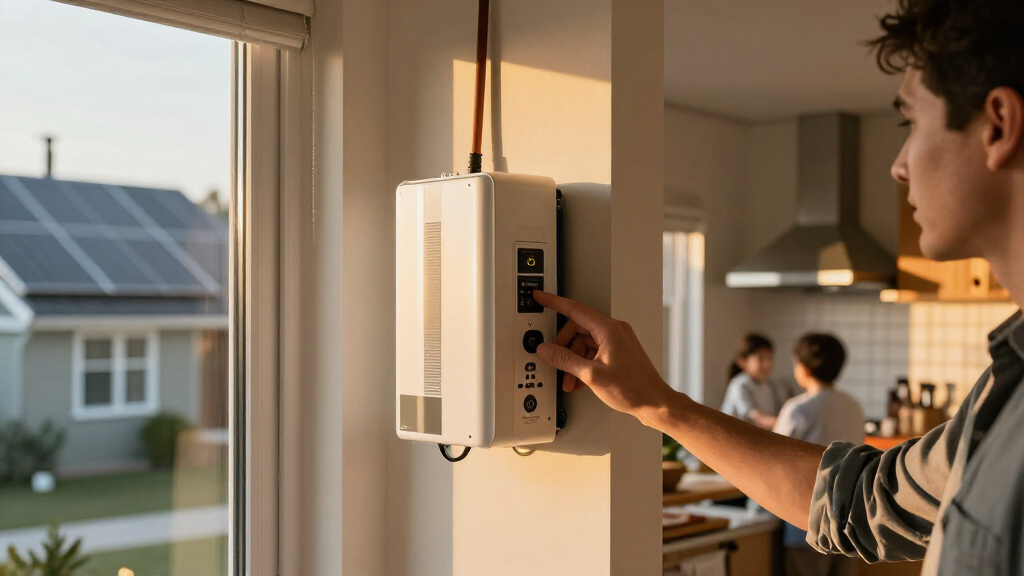
I ranked these options around the job a home energy storage system is expected to do: keep selected or whole-home loads running, store electricity for later use, and work sensibly with solar or another charging source. I gave higher placement to products with clearly specified backup integration, useful output capacity, and a defined path from the equipment included to a working residential system. That puts the Power Dock E10 first for buyers prioritizing automatic coverage, while complete solar packages rank well for households prepared to plan a larger installation.
I also separated complete systems from batteries. A rack battery can be a strong storage component, but it is not a stand-alone home backup solution: inverter compatibility, transfer equipment, wiring, and configuration still matter. I looked at stated capacity, continuous output, solar input or included panel capacity, expansion options, operating environment, and installation demands. Where product descriptions give different expansion limits—such as the Power Dock E10’s stated 90 kWh ceiling versus the Smart Inlet Box configuration’s 30 kWh—I kept those claims tied to the specific listing rather than treating them as interchangeable.
Finally, I weighed the practical compromises. Automatic whole-panel transfer differs meaningfully from manual backup; a 30 kWh battery reserve brings different space and delivery needs from a single rack module; and bundled panels do not remove the need to check roof or ground mounting, local electrical rules, and site suitability. I did not treat listed output, capacity, cycle life, weather protection, or warranties as proof that a system will meet every home’s needs. Buyers should confirm equipment compatibility and installation requirements with the manufacturer and a qualified installer.
Factors to Consider When Choosing Best Home Energy Storage Systems
I would start by defining the job the system must do, then match capacity and equipment to that job. Home backup, solar self-consumption, and full off-grid operation overlap, but they are not interchangeable designs. A battery’s kWh figure describes stored energy; an inverter’s kW rating describes how much power it can supply at a given time. Both affect whether a system suits the loads you want to keep running.
Separate stored energy from power output
Capacity in kWh answers how long a battery may run loads; output in kW helps indicate which loads can run together. A 6 kWh E10 configuration can provide a useful reserve, but a home using substantial power can draw it down quickly. Conversely, a high inverter rating does not create more stored energy. Before choosing, list the circuits or appliances you want to back up, estimate their wattage and likely runtime, and ask an installer to account for startup surges and simultaneous use. The 16.1 kWh ECO-WORTHY kit offers more starting storage than either Anker E10, while the 30 kWh-plus ECO-WORTHY bundle targets a larger reserve.
Decide whether backup should be automatic
The Anker options show why transfer equipment deserves close attention. The Power Dock package advertises automatic switchover of 20 milliseconds or less, while the Smart Inlet Box configuration describes manual whole-home backup. That difference affects what happens during an outage and what a person needs to do. Ask whether backup serves the whole panel or selected circuits, how the system isolates from the grid, and whether the installation requires changes to the panel. Never assume that a whole-panel connection lets every large appliance run at once; output limits and load management still apply.
Check what is actually included
A system name can make two products sound similar even when one is a battery-and-inverter component and another includes solar panels and transfer equipment. The Cubix100 is a battery only and needs a compatible inverter and the rest of a correctly designed system. The ECO-WORTHY bundles include panels, batteries, and inverter equipment, but buyers still need to plan mounting, wiring, permitting, and backup connection. The E10 packages focus on battery backup hardware and solar integration rather than supplying an array of panels. Confirm every required component and its compatibility before choosing.
Match solar input to the way you will recharge
Solar capacity is not a guaranteed daily energy yield. The E10 listings describe up to 9 kW solar input per unit; the ECO-WORTHY kits list 2,950 W or six 590 W panels. Actual production depends on location, orientation, shading, season, equipment configuration, and site conditions. Ask whether an existing solar inverter can work with the storage system and how charging behaves during a grid outage. For a home without panels, compare the included array with your expected use rather than treating a maximum daily generation claim as a fixed result.
Plan expansion around compatibility and space
Expansion figures are useful only when they apply to the exact system configuration. The Power Dock E10 listing states expansion up to 90 kWh, while the Smart Inlet Box E10 listing says up to 30 kWh. The Cubix100 supports up to 32 parallel batteries, but the inverter, communications, cabling, rack, and protection equipment must support the resulting bank. Larger storage also needs physical room and appropriate installation. I would choose a system with a clear expansion path if future growth is likely, but avoid paying attention to a maximum that the site or compatible equipment cannot support.
Account for installation, delivery, and weather exposure
Whole-panel backup and large off-grid kits call for a site plan, not just a product selection. The E10 listings give outdoor weather-protection ratings, while the ECO-WORTHY bundles involve large panels and pallet delivery. Confirm local code requirements, permits, installer availability, mounting, ventilation or clearance rules, and whether a delivery truck can reach the property. The Cubix100’s 103 lb weight matters during rack placement, especially if several units are planned. Weather ratings describe specified protection; they do not replace the manufacturer’s installation instructions.
Read warranty and system claims as separate details
Warranty terms can vary across equipment in one package, as shown by the E10 and its dock, which have different stated warranty periods. Check which component each term covers, what conditions apply, and whether the installer or manufacturer handles service. Likewise, cycle-life claims and certifications apply to specified components and test conditions; they do not guarantee a particular service life for a complete home system. I would ask for the full warranty documents and written confirmation that the proposed inverter, battery, transfer equipment, and panels form a supported system.
Frequently Asked Questions
What is the difference between battery capacity and inverter output?
Battery capacity, measured in kWh, indicates how much energy is stored; inverter output, measured in kW, indicates how much power the system can supply at a moment. A system with more stored energy may run suitable loads for longer, while a higher output rating may support more simultaneous demand, subject to the equipment and wiring. I would compare both figures against the appliances you plan to back up rather than choosing by battery size alone.
Which system in this roundup offers automatic backup?
The Anker SOLIX E10 with Power Dock is the option that explicitly advertises automatic switchover of 20 milliseconds or less. The E10 with Smart Inlet Box describes manual whole-home backup, so it is not the same operating arrangement. The ECO-WORTHY packages and Cubix100 listing do not provide the same automatic whole-panel transfer claim; buyers should confirm the transfer equipment and controls in any proposed installation.
Is the ECO-WORTHY Cubix100 a complete home backup system?
No. The Cubix100 is a 5.12 kWh rack battery, so it needs a compatible inverter and the rest of a properly designed backup system. A buyer also needs to account for transfer equipment, wiring, protection, and installation. It is most suitable when those parts are already selected or will be specified by a qualified installer; the E10 and ECO-WORTHY bundled kits make more of the system equipment explicit.
Do the included solar panels guarantee the stated daily energy production?
No. A listed panel capacity or maximum daily generation figure is not a promise of production at a particular property. Sun exposure, shade, panel direction, weather, season, inverter settings, and site layout all affect output. I would use those figures as equipment specifications, then ask an installer to estimate production for the actual location and check whether the array can recharge the battery as intended.
Can any of these systems power an entire home during an outage?
Whole-home coverage depends on the system’s transfer arrangement, output limits, battery reserve, home wiring, and the loads running at once. The Power Dock E10 is the clearest listed option for whole-panel coverage, but its starting battery is 6 kWh and household demand still needs to fit the system. The manual E10 arrangement has different outage operation, while the ECO-WORTHY packages need their installation and backup setup verified. Have a qualified installer assess the panel and essential loads before selecting a system.
Conclusion
My recommendations depend on what the household values most. For automatic whole-panel backup and a clear expansion path, I would start with the Anker SOLIX E10 with Power Dock, while planning for more than its included 6 kWh if outages are long or demand is high. If manual backup is acceptable, the Anker E10 with Smart Inlet Box offers the same stated continuous output and a defined, smaller expansion ceiling.
For buyers planning a large solar-plus-storage installation, I would compare the ECO-WORTHY 30 kWh-plus system with the 16.1 kWh off-grid kit according to the needed reserve, delivery access, and installation scope. The Cubix100 is my pick only for a buyer building around a compatible inverter who wants modular rack storage. Before ordering any of them, I would have a qualified installer confirm the load plan, equipment compatibility, transfer method, permits, and delivery or mounting requirements.
Fall Picks
fall essentials
As an affiliate, we earn on qualifying purchases.