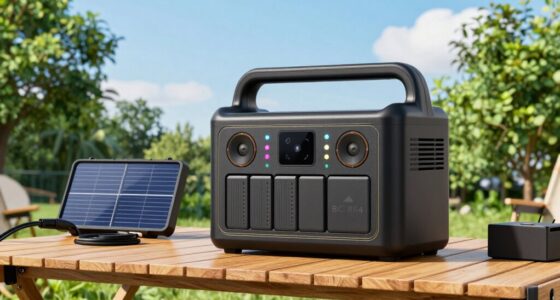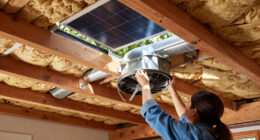
For most campers, I’d start with the Jackery Explorer 1000 v2 for its higher-capacity approach to powering several devices, while the BLUETTI Elite 30 V2 stands out for campers who want a compact unit with a stronger AC output, and the ALLWEI 300W LiFePO4 suits smaller trips where battery chemistry and manageable capacity matter. The right portable power station depends on what you plan to run: phones and lights need far less stored energy than a cooler, laptop, or cooking appliance. Bigger capacity can mean more weight to carry, while smaller models are easier to pack but need more frequent charging. Solar compatibility and output limits also shape how useful a station will be away from a vehicle or outlet. Read on for the full breakdown and a guide to matching capacity, ports, and portability to your camping style.

Get backup power and energy gear delivered free with Prime
- Fast, free delivery on millions of items
- Prime Video, Amazon Music and more included
- Member-only deals all year
Complete the kit


Key Takeaways
- The lineup spans very different camping loads: 88–97.6Wh models are aimed at light electronics, while the 1,000Wh-class options make more sense for longer trips or several higher-draw devices.
- Capacity alone does not tell the whole story: the BLUETTI Elite 30 V2 pairs 288Wh with a stated 600W output, while other compact options focus on lower output and lighter-duty use.
- Battery chemistry creates a meaningful split: the ALLWEI 300W, DaranEner 192Wh, and STARYLINE 1024Wh list LiFePO4 batteries, a factor buyers may weigh against size, output, and intended trip length.
- Solar bundles vary: the ZeroKor 300W package includes a 60W panel, which may simplify a first solar setup, but the panel’s size and recharge pace still need to match the trip.
- There is no single best size for every campsite: compact units reduce packing burden for phone-and-light duty; higher-capacity picks bring more runtime potential at the cost of greater bulk.
| Westinghouse iGen400s 400W Portable Power Station, 183Wh |  | Best Lightweight All-Rounder | Battery capacity: 183Wh | Running output: 200W | Peak output: 400W | VIEW LATEST PRICE | See Our Full Breakdown |
| ZeroKor 120W Portable Power Station, 97.6Wh |  | Best for Ultralight Day Trips | Battery capacity: 97.6Wh / 26,400mAh | Maximum output: 120W | AC outlets: 2 | VIEW LATEST PRICE | See Our Full Breakdown |
| Jackery Explorer 1000 v2 Portable Power Station |  | Best for High-Power Campsites | Battery capacity: 1,070Wh | Battery type: LFP | AC output: 1,500W | VIEW LATEST PRICE | See Our Full Breakdown |
| ALLWEI 300W Portable Power Station with 256Wh LiFePO4 Battery |  | Best for Solar-Ready Weekend Camping | Battery capacity: 256Wh | Battery chemistry: LiFePO4 | Continuous / peak output: 300W / 600W | VIEW LATEST PRICE | See Our Full Breakdown |
| Anker SOLIX C300 DC Portable Power Station, 288Wh, 300W |  | Best for USB-C-Heavy Camping Kits | Battery capacity: 288Wh | Battery type: LiFePO4 | Output wattage: 300W | VIEW LATEST PRICE | See Our Full Breakdown |
| HOWEASY 88Wh Portable Power Station, 120W (240W Peak) |  | Best Ultralight Pick | Battery capacity: 88Wh | Continuous / peak output: 120W / 240W | Output ports: 8 | VIEW LATEST PRICE | See Our Full Breakdown |
| 500W Portable Power Station, 519.48Wh |  | Best for Longer Camps | Battery capacity: 519.48Wh | AC output: 500W, pure sine wave; 2 outlets | USB-C output: PD, up to 60W | VIEW LATEST PRICE | See Our Full Breakdown |
| MARBERO M82 Portable Power Station, 88Wh |  | Best Compact Charging Hub | Battery capacity: 88Wh | Output wattage / surge: 80W / 120W | Output ports: 8 | VIEW LATEST PRICE | See Our Full Breakdown |
| BLUETTI Elite 30 V2 Portable Power Station, 288Wh, 600W |  | Best Fast-Recharging Compact Station | Battery capacity: 288Wh | Continuous / peak output: 600W / 1,500W | Total power outlets: 9 | VIEW LATEST PRICE | See Our Full Breakdown |
| DaranEner 192Wh Portable Power Station with LiFePO4 Battery |  | Best Long-Cycle Compact Pick | Battery capacity: 192Wh | Battery type: LiFePO4 | Battery cycle life: 3,500+ cycles | VIEW LATEST PRICE | See Our Full Breakdown |
| Anker SOLIX C1000 Gen 2 Portable Power Station |  | Best for Power-Hungry Camps | Battery capacity: 1,024Wh | Battery type: LiFePO4 | Output power: 2,000W | VIEW LATEST PRICE | See Our Full Breakdown |
| STARYLINE 1000W Portable Power Station, 1024Wh LiFePO4 Battery |  | Best Value for Extended Car Camping | Battery capacity: 1,024Wh | Battery chemistry: LiFePO4 | Continuous output: 1,000W | VIEW LATEST PRICE | See Our Full Breakdown |
| GRECELL EB300 Portable Power Station, 330W, 230.88Wh |  | Best Lightweight Multi-Device Pick | Capacity: 230.88Wh | Output power: 330W (600W surge) | AC output: Pure sine wave, 120V | VIEW LATEST PRICE | See Our Full Breakdown |
| ZeroKor 300W Portable Power Station with 60W Solar Panel | 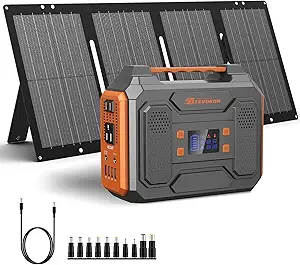 | Best Starter Solar Kit | Maximum output: 300W | Included solar panel: 60W monocrystalline | Solar panel conversion efficiency: 20.5% | VIEW LATEST PRICE | See Our Full Breakdown |
| Jackery Explorer 300 Portable Power Station, 292Wh |  | Best Compact AC-and-USB Balance | Capacity: 292Wh | Peak surge: 600W | Battery chemistry: LiFePO4 | VIEW LATEST PRICE | See Our Full Breakdown |
| portable power stations for camping | Weight | Battery capacity |
|---|---|---|
| Westinghouse iGen400s 400W Por | 5 lbs | 183Wh |
| ZeroKor 120W Portable Power St | 2.2 lbs | 97.6Wh / 26,400mAh |
| Jackery Explorer 1000 v2 Porta | 23.8 lbs | 1,070Wh |
| ALLWEI 300W Portable Power Sta | 6.4 lbs | 256Wh |
| Anker SOLIX C300 DC Portable P | — | 288Wh |
| HOWEASY 88Wh Portable Power St | 2.3 lb | 88Wh |
| 500W Portable Power Station | 18 lb | 519.48Wh |
| MARBERO M82 Portable Power Sta | 3.2 lb (listed; source also gives 1.04 kg) | 88Wh |
| BLUETTI Elite 30 V2 Portable P | 9.5 lb | 288Wh |
| DaranEner 192Wh Portable Power | 5.73 lb | 192Wh |
| Anker SOLIX C1000 Gen 2 Portab | 11.3 kg | 1,024Wh |
| STARYLINE 1000W Portable Power | 27.7 lb | 1,024Wh |
| GRECELL EB300 Portable Power S | 7.3 lb | — |
| ZeroKor 300W Portable Power St | — | — |
| Jackery Explorer 300 Portable | 7.1 lb (specifications); 7.5 lb (description) | — |
More Details on Our Top Picks
Westinghouse iGen400s 400W Portable Power Station, 183Wh
At 5 pounds, the Westinghouse iGen400s is easier to carry from car to campsite than the much more capable Jackery Explorer 1000 v2, while its 183Wh battery and 200W running output suit phones, lights, and other modest loads. Its mix of AC, USB-C, USB-A, and 12V ports makes it a flexible shared charging point for a small group. The built-in display and tri-mode flashlight add useful campsite functions without extra gear. The tradeoff is limited appliance support: 200W rules out many higher-draw devices, and the smaller battery needs more frequent recharging than the ALLWEI 300W’s 256Wh pack. I’d also factor in that the 100W AC adapter and solar panel are sold separately, so getting it ready for off-grid charging takes extra purchases.
Pros:- 5-pound body with a carrying handle is convenient for campsite trips
- Combination of AC, USB-C, USB-A, and 12V DC connections supports varied small devices
- Display and tri-mode flashlight add useful campsite and emergency functions
- Quiet, fume-free operation suits tents and indoor backup use
Cons:- 200W running output cannot handle many larger appliances
- 100W AC adapter is not included
- Solar panel is sold separately
Best for: Campers who want a light, easy-to-carry station for phones, cameras, lights, and other small electronics.
Not ideal for: Campers planning to run high-draw appliances or spend several days away from charging, since its 200W output and 183Wh capacity are limited.
- Battery capacity:183Wh
- Running output:200W
- Peak output:400W
- Ports:2 AC, 4 USB-C, 2 USB-A, 1 12V DC
- Weight:5 lbs
- Dimensions:9.4 × 4.5 × 5.9 in
- AC charging:About 2 hours to 80% with a 100W adapter
- Warranty:2-year limited warranty
Our verdict“Choose the iGen400s for lightweight charging of small camping electronics, but pick a higher-capacity station such as the ALLWEI if you need longer runtimes.”
ZeroKor 120W Portable Power Station, 97.6Wh
For a short outing where every pound matters, the 2.2-pound ZeroKor is the easiest carry in this group. Its 97.6Wh capacity is a step below the Westinghouse iGen400s, so it makes more sense for topping up a phone, headlamp, or camera than supporting several days of campsite use. Two AC outlets plus USB-C, USB-A, and DC connections give it more device flexibility than a basic battery pack, while the display and reading/SOS flashlight help when you need to check remaining charge or find your way after dark. Its defining limit is the 120W maximum device draw; even some compact appliances exceed that. Unlike the Westinghouse, a USB-C adapter and car lighter adapter are included, but the solar panel is still a separate purchase.
Pros:- 2.2-pound weight is well suited to lightweight camping kits
- AC, DC, USB-A, and USB-C connections cover several small-device types
- Built-in display and flashlight with reading and SOS modes are practical outdoors
- USB-C power adapter and car lighter adapter are included
Cons:- 97.6Wh capacity offers limited runtime for multiple devices or longer trips
- 120W device limit rules out many appliances
- Solar panel is not included
Best for: Day hikers and minimalist campers who need a very light backup for phones, lights, and other low-draw electronics.
Not ideal for: Campers seeking multi-day power or planning to run appliances above 120W; its small battery and output are aimed at basic device charging.
- Battery capacity:97.6Wh / 26,400mAh
- Maximum output:120W
- AC outlets:2
- Ports:DC, USB-A, and USB-C
- Weight:2.2 lbs
- Dimensions:5.7 × 4.4 × 4.1 in
- Charging methods:USB-C adapter, car USB port, or compatible solar panel
- Warranty support:12 months
Our verdict“Pick the ZeroKor for lightweight, short-trip charging of small electronics, not for powering campsite appliances or extending a long off-grid stay.”
Jackery Explorer 1000 v2 Portable Power Station
The Jackery Explorer 1000 v2 is the clear capacity and output leader among these five: its 1,070Wh LFP battery and 1,500W AC output can support far more than the small electronics suited to the ZeroKor or Westinghouse. That headroom gives campers room to run higher-draw gear and keep several devices supplied, while the 3,000W surge peak accommodates brief startup demands. The LFP battery is rated to retain over 70% capacity after 4,000 charge cycles, making it a stronger fit for frequent trips than a small, occasional-use station. The cost of that capability is physical: at 23.8 pounds, it is less appealing for a walk-in site than the compact ALLWEI. Solar panels are separate, and solar charging works only with Jackery panels. Its fastest AC recharge also requires enabling emergency mode in the app.
Pros:- 1,070Wh battery and 1,500W AC output support larger loads than the other reviewed options
- 3,000W surge peak provides headroom for brief startup demands
- LFP battery is rated for over 70% capacity after 4,000 charge cycles
- App offers charging controls, including quiet overnight and emergency charging modes
Cons:- 23.8-pound weight is cumbersome for walk-in campsites
- Solar panel is not included and solar charging is limited to Jackery panels
- One-hour AC charging requires enabling emergency charging in the app
Best for: Car campers who need substantial capacity and enough AC output for higher-draw equipment, and who can transport a 23.8-pound unit.
Not ideal for: Backpackers or campers prioritizing a small, light station, and buyers who want flexible solar-panel compatibility.
- Battery capacity:1,070Wh
- Battery type:LFP
- AC output:1,500W
- Surge peak:3,000W
- AC outlets:3 pure sine wave outlets
- USB ports:2 USB-C up to 100W each, 1 USB-A
- Weight:23.8 lbs
- AC charging time:1 hour with app-enabled emergency charging; 1.7 hours by default
- Solar compatibility:Jackery panels only; panel not included
Our verdict“Choose the Explorer 1000 v2 when campsite power and capacity matter more than portability, and skip it if your trip only calls for charging small devices.”
ALLWEI 300W Portable Power Station with 256Wh LiFePO4 Battery
The ALLWEI is a practical middle ground between the Westinghouse iGen400s and the much larger Jackery Explorer 1000 v2. Its 256Wh LiFePO4 battery and 300W continuous output offer more capacity and load headroom than the Westinghouse, without the Jackery’s 23.8-pound carry burden; the ALLWEI weighs 6.4 pounds. Six output connections let campers charge or power several small items, though just one is an AC outlet. Its strongest distinction is AC-plus-solar recharging, which can shorten charging to a stated 2–2.5 hours when both sources are available. The solar panel is not included, and a 300W ceiling still excludes many appliances. I’d favor this over the Anker SOLIX C300 DC when an AC outlet and multiple recharge routes matter more than a larger port selection.
Pros:- 256Wh LiFePO4 battery is rated for 3,000 charge-discharge cycles
- 300W continuous and 600W peak output provide more headroom than the Westinghouse
- Supports AC, car, solar, and combined AC-plus-solar recharging
- Six output ports and an SOS LED light support varied campsite needs
Cons:- One AC outlet limits the number of AC-powered devices at once
- 300W continuous output excludes many higher-power appliances
- Solar panel is sold separately
Best for: Weekend car campers who want an LFP battery, a modest AC outlet, and the option to combine AC and solar charging.
Not ideal for: Campers needing more than 300W of continuous output, several AC outlets, or a ready-to-use solar setup without buying a panel separately.
- Battery capacity:256Wh
- Battery chemistry:LiFePO4
- Continuous / peak output:300W / 600W
- Output ports:1 AC, 2 DC5521, 1 car outlet, 1 USB-A, 1 USB-C
- USB-C output:60W PD
- Weight:6.4 lbs
- Recharge time:3.5–4 hours via AC or car; 4–5 hours via 100W solar; 2–2.5 hours via AC plus solar
- Battery cycle life:3,000 charge-discharge cycles
- Warranty:5 years
Our verdict“Choose the ALLWEI for a moderately portable weekend station with flexible recharging, but move up to the Jackery for substantially higher-power needs.”
Anker SOLIX C300 DC Portable Power Station, 288Wh, 300W
The Anker SOLIX C300 DC stands apart from the ALLWEI by putting its emphasis on direct device charging, not an AC outlet: it offers seven ports, including four USB-C connections and two rated up to 140W. That layout suits campers carrying laptops, cameras, tablets, and phones that recharge over USB-C, and its 288Wh LiFePO4 battery provides more capacity than the Westinghouse iGen400s. The 300W output is still modest, and this DC model has no AC outlet listed, so it is not a substitute for a station meant to run AC appliances. Recharging via USB-C, solar, or car adds flexibility, with a stated 1.5-hour recharge time. The included 140W cable is useful, but the wall charger and shoulder strap are not; solar-panel compatibility also has exceptions.
Pros:- 288Wh LiFePO4 battery provides more capacity than the Westinghouse iGen400s
- Seven ports include four USB-C connections, two supporting up to 140W
- Can recharge via USB-C, solar, or a car
- Smart temperature control and impact-resistant design suit travel use
Cons:- No AC outlet is listed, limiting use with AC-powered camping gear
- Wall charger and shoulder strap are not included
- Not compatible with some Anker solar panels, including PS30, PS200, and PS400
Best for: Campers with several USB-C-powered devices who want a compact station for direct charging rather than AC appliances.
Not ideal for: Buyers who need an AC outlet for appliances or prefer a complete carry-and-wall-charging setup straight from the box.
- Battery capacity:288Wh
- Battery type:LiFePO4
- Output wattage:300W
- Ports:7 total: 4 USB-C, 2 USB-A, 1 car socket
- USB-C output:Two ports up to 140W, one up to 100W, one 15W
- USB-A output:2 ports, 12W
- Recharge methods:USB-C, solar, or car
- Recharge time:1.5 hours
- Warranty:3-year guarantee
Our verdict“Choose the C300 DC if your campsite kit runs mainly on USB-C, but select the ALLWEI or Jackery if you need AC appliance support.”
HOWEASY 88Wh Portable Power Station, 120W (240W Peak)
The HOWEASY 88Wh is the lightest choice in this group at 2.3 pounds, making it easier to pack for a short hike-in camp than the 3.2-pound MARBERO M82 or the much larger 519.48Wh station. Its eight ports, including 18W USB-C and AC, suit phones, lights, and other modest electronics, while the built-in SOS light can do double duty at a campsite. The tradeoff is limited energy and just 120W continuous output: it is for topping up small devices, not running a camp appliance or supplying power for a long weekend. You can recharge it from a car or compatible solar panel, but the panel is not included. I’d choose it when pack weight matters more than runtime.
Pros:- At 2.3 lb, it is the easiest option here to carry on foot.
- Eight output ports cover a useful mix of AC, USB, USB-C, and DC connections.
- Can recharge from an AC outlet, car outlet, or compatible solar panel.
- Built-in light includes steady, flashing, and SOS modes.
Cons:- The 88Wh capacity provides limited runtime for more than small-device charging.
- 120W continuous output rules out many appliances.
- A compatible solar panel must be purchased separately.
Best for: Solo campers and backpackers who want a light backup for phones, headlamps, and small electronics.
Not ideal for: Campers planning to run appliances or keep several devices powered over multiple days; its 88Wh capacity and 120W continuous limit are restrictive.
- Battery capacity:88Wh
- Continuous / peak output:120W / 240W
- Output ports:8
- USB-C output:18W
- Recharging methods:AC outlet, compatible 15V–24V solar panel, or 12V/24V car outlet
- Weight:2.3 lb
- Dimensions:6.6 × 4 × 3 in
- Cycle life:More than 1,500 cycles
Our verdict“Pick the HOWEASY if you want the lightest small-device charging option and can accept very limited capacity and output.”
500W Portable Power Station, 519.48Wh
For campers who value stored energy over an easy carry, this station’s 519.48Wh capacity gives it a clear advantage over the 288Wh BLUETTI Elite 30 V2 and the sub-200Wh compact picks here. Its 500W pure sine wave AC output, two AC outlets, and broad USB/DC selection can support a wider mix of small camp electronics, with up to 10 devices connected at once. That capacity comes with a real campsite tradeoff: at 18 pounds, it is better suited to a car trunk than a backpack. The 500W ceiling also excludes higher-draw appliances, and solar charging requires a separately sourced compatible panel. I’d rank it for car campers who want more reserve power than the smaller stations provide without moving to a much larger unit.
Pros:- 519.48Wh capacity offers more reserve than the BLUETTI Elite 30 V2 and compact 88Wh models.
- Two pure sine wave AC outlets suit compatible sensitive electronics.
- USB-C PD, QC3.0 USB-A, DC, car, and wireless outputs provide varied charging options.
- Supports wall, car, and compatible solar charging, with several battery protection features.
Cons:- At 18 lb, it is a poor fit for carrying far from a vehicle.
- Devices must stay below the 500W AC output limit.
- Compatible solar panels are not included, and AC output should be switched off when unused.
Best for: Car campers who want a larger battery for several small electronics and modest AC devices during longer stays.
Not ideal for: Backpackers or campers needing to power appliances above 500W; it is relatively heavy and has a firm output ceiling.
- Battery capacity:519.48Wh
- AC output:500W, pure sine wave; 2 outlets
- USB-C output:PD, up to 60W
- USB-A outputs:3 QC3.0 ports, up to 18W each
- Other outputs:2 DC ports (12V/5A), 1 car port (12V/10A), 1 wireless charger (10W)
- Maximum simultaneous devices:10
- Weight:18 lb
- Dimensions:11.57 × 7.95 × 7.95 in
- Recharging methods:Wall outlet, car charger, or compatible 100W/200W solar panel
Our verdict“Choose this station for vehicle-based camping when extra capacity matters more than low carry weight.”
MARBERO M82 Portable Power Station, 88Wh
The MARBERO M82 suits campers who want a small multi-port hub rather than meaningful appliance power. Like the HOWEASY, it has 88Wh capacity and eight ports, but its 80W output is lower than the HOWEASY’s 120W, so the MARBERO is more narrowly suited to small electronics. Its useful distinction is that it can power devices while recharging, which can help at a powered campsite or during a car-charging stop. The listed 230V AC output also deserves a compatibility check before purchase, especially if your gear expects a different voltage. At 3.2 pounds, it is still compact, though not as light as the HOWEASY. The solar panel is separate, and the 80W ceiling rules out many appliances.
Pros:- Eight ports allow several small devices to connect at once.
- Can recharge while powering connected devices.
- Includes a three-level LED light with SOS mode.
- Listed charging time reaches 80% in two hours with the included adapter.
Cons:- 80W output sharply limits the appliances it can run.
- The listed 230V AC output may not suit equipment designed for another voltage.
- Compatible solar panels are not included.
Best for: Campers at powered sites who need a compact hub for charging several small devices, including while the station itself recharges.
Not ideal for: Campers who need higher-wattage AC gear or want the lightest possible 88Wh station; the HOWEASY is lighter and offers higher listed output.
- Battery capacity:88Wh
- Output wattage / surge:80W / 120W
- Output ports:8
- Listed AC output voltage:230V
- Weight:3.2 lb (listed; source also gives 1.04 kg)
- Dimensions:6.5 × 4.6 × 3.1 in
- Charging time:0–80% in 2 hours with included adapter
- Solar compatibility:MARBERO 30W or 60W solar panels
Our verdict“Choose the M82 as a compact campsite charging hub if pass-through use matters more than higher output or minimum weight.”
BLUETTI Elite 30 V2 Portable Power Station, 288Wh, 600W
The BLUETTI Elite 30 V2 is a strong middle ground for campers who want more capability than the HOWEASY or MARBERO without carrying the 18-pound, 519.48Wh station. At 288Wh and 600W continuous output, it can handle a broader range of compatible small appliances, though battery capacity still limits how long higher-draw gear can run. Its standout camping advantage is fast AC charging: the listing gives 80% in 45 minutes, useful when time at an outlet is short. Multiple charging routes add flexibility, while the UPS feature matters more at home or in a powered cabin than at a basic campsite. At 9.5 pounds, it is portable for car camping, but heavier than the smallest picks. I’d skip it if extended runtime is the main goal.
Pros:- 600W continuous output exceeds the limits of the 88Wh compact stations.
- Listed AC charging reaches 80% in 45 minutes and full charge in 70 minutes.
- AC, solar, car, lead-acid, and generator charging provide multiple replenishment options.
- Nine total power outlets and a UPS switch broaden its usefulness beyond campsite charging.
Cons:- At 9.5 lb, it is heavier than the small 88Wh options.
- The 288Wh battery may run down quickly with higher-wattage devices.
- 600W continuous output still excludes appliances that draw more power.
Best for: Car campers who need moderate appliance output and want to recharge quickly between trips or at a powered site.
Not ideal for: Backpackers prioritizing minimal weight, or campers running high-draw devices for long stretches; 288Wh limits runtime despite the 600W output.
- Battery capacity:288Wh
- Continuous / peak output:600W / 1,500W
- Total power outlets:9
- Weight:9.5 lb
- Dimensions:9.8 × 7 × 6.6 in
- AC charging:380W/200W adjustable; 0–80% in 45 minutes and 0–100% in 70 minutes
- Charging methods:AC, solar, car, lead-acid, or generator
- UPS switch time:10ms or less
Our verdict“Pick the Elite 30 V2 if fast recharging and stronger output matter more than long runtime or backpack-friendly weight.”
DaranEner 192Wh Portable Power Station with LiFePO4 Battery
The DaranEner 192Wh offers a useful step up from the HOWEASY and MARBERO without jumping to the BLUETTI’s 288Wh size and 9.5-pound weight. Its 300W pure sine wave output can support compatible small AC devices that exceed the compact stations’ output limits, while the 60W USB-C port is suited to charging more demanding electronics. The LiFePO4 battery is rated for 3,500+ cycles, a notable fit for campers who expect frequent use across many seasons. It weighs 5.73 pounds, so it remains manageable for car camping but is not the lightest choice for a long walk to camp. Solar and car charging are supported, though their cables or panels are not included. High startup surges and loads above 300W remain outside its lane.
Pros:- LiFePO4 battery is rated for more than 3,500 cycles.
- 300W pure sine wave output exceeds the 80W and 120W limits of the small 88Wh models.
- 60W USB-C PD supports higher-power USB-C devices.
- Four-mode LED light includes SOS, and the station supports AC, car, and solar charging.
Cons:- Loads above 300W and devices with high startup surges may not work.
- At 5.73 lb, it is heavier than the HOWEASY and MARBERO compact options.
- Solar panel and car charging cables are not included.
Best for: Frequent car campers who want a mid-size station with a long-rated cycle life and enough output for compatible small AC devices.
Not ideal for: Campers needing high-wattage appliances or an out-of-box solar setup; it is limited to 300W and charging accessories are not included.
- Battery capacity:192Wh
- Battery type:LiFePO4
- Battery cycle life:3,500+ cycles
- AC output:300W pure sine wave; 600W surge
- USB-C output:60W PD
- Maximum simultaneous devices:6
- Weight:5.73 lb
- Solar charging input:Up to 60W DC
- AC charging input:Up to 100W
Our verdict“Choose the DaranEner for frequent camping use when long-rated battery life and moderate AC output outweigh the need for low weight or high appliance power.”
Anker SOLIX C1000 Gen 2 Portable Power Station
For campers bringing an electric cooler, cooking gear, or several devices, I’d put the Anker SOLIX C1000 Gen 2 ahead of the smaller GRECELL EB300: its 1,024Wh capacity and 2,000W output give it much more room for demanding loads and longer trips. Fast AC charging can refill it in 49 minutes, while up to 600W of solar input supports quicker campsite replenishment in suitable conditions. Its LiFePO4 battery is rated to retain at least 80% capacity after 4,000 cycles, a useful durability signal for frequent trips. The tradeoff is portability: at 11.3 kg, it is far heavier than compact options, and its solar input is lower than some larger systems might offer. I’d choose it for capability, not for a lightweight pack.
Pros:- 1,024Wh capacity and 2,000W output can handle more demanding campsite equipment
- 49-minute AC recharge supports quick turnarounds before a trip
- 600W solar input allows substantial solar charging
- LiFePO4 battery is rated for at least 80% capacity after 4,000 cycles
Cons:- 11.3 kg weight makes it awkward for hikes and frequent carrying
- 600W maximum solar input limits how much solar charging it can accept
- Its high capacity is unnecessary for campers powering only small electronics
Best for: Car campers who need to run higher-draw appliances and recharge quickly between outings
Not ideal for: Backpackers or campers with only phone-and-lantern needs; its 11.3 kg weight and 1,024Wh capacity are more than they need to carry
- Battery capacity:1,024Wh
- Battery type:LiFePO4
- Output power:2,000W
- Peak output:3,000W
- AC recharge time:49 minutes
- Maximum solar input:600W (60V max)
- Weight:11.3 kg
- Outlets:9
Our verdict“Choose the Anker SOLIX C1000 Gen 2 for car camping where appliance capacity and fast recharging matter more than low carry weight.”
STARYLINE 1000W Portable Power Station, 1024Wh LiFePO4 Battery
The STARYLINE pairs a 1,024Wh LiFePO4 battery with 1,000W continuous output, giving car campers a large energy reserve without stepping up to the Anker SOLIX C1000 Gen 2’s 2,000W output class. That makes it a better fit for moderate loads—charging devices, running a small cooler, or powering camp lighting—than for equipment with high startup or operating demands. Its USB-C, USB-A, and AC ports can serve several devices at once, and the stated 3,000-plus cycles to 80% capacity suit regular use. The compromises are a modest 300W solar input and a 27.7 lb body, so it is a car-to-campsite unit rather than a carry-anywhere choice. Solar panels may also need to be bought separately.
Pros:- 1,024Wh capacity provides a substantial reserve for multi-device camping
- LiFePO4 battery has a stated lifespan of 3,000-plus cycles to 80% capacity
- AC, USB-C PD, and USB-A ports support different devices at once
- Six-layer protection is built into the battery management system
Cons:- 1,000W continuous output is lower than the Anker SOLIX C1000 Gen 2 and rules out some demanding loads
- Maximum 300W solar input can make solar replenishment slower
- At 27.7 lb, it is burdensome to carry far from a vehicle; solar panel may be separate
Best for: Car campers who want a large battery for several days of moderate device and small-appliance use
Not ideal for: Campers needing to run high-wattage appliances or carry their power station far from the vehicle
- Battery capacity:1,024Wh
- Battery chemistry:LiFePO4
- Continuous output:1,000W
- Peak output:2,000W
- Maximum solar input:300W
- Battery cycle life:3,000+ cycles to 80% capacity
- Weight:27.7 lb
- AC outlets:2 × 110V
- USB-C output:60W PD
Our verdict“Pick the STARYLINE for a large-capacity, moderate-output campsite setup when vehicle transport matters more than light weight or fast solar charging.”
GRECELL EB300 Portable Power Station, 330W, 230.88Wh
At 7.3 lb, the GRECELL EB300 is easier to move between a car, picnic table, and tent than either 1,024Wh station here. Its 230.88Wh capacity is best treated as a compact supply for phones, cameras, lights, and a laptop—not a long-running source for appliances. The 60W USB-C port and QC USB-A ports are useful when most campsite charging is for personal electronics, while AC, solar, and car charging give it more replenishment options than a basic battery pack. Compared with the Jackery Explorer 300, the GRECELL is slightly lower in stated capacity but adds a second USB-C output. Its 330W AC limit is the main constraint: check device draw before plugging in, and expect to recharge it more often than the larger stations.
Pros:- 7.3 lb weight and compact dimensions make it easy to move around camp
- AC, solar, and car charging provide several ways to recharge
- 60W USB-C PD and QC USB-A outputs suit common personal electronics
- Built-in MPPT controller and battery protections support solar use
Cons:- 330W output limits the appliances it can run
- 230.88Wh capacity may run short on longer trips or with frequent laptop use
- One AC outlet offers less flexibility for simultaneous AC-powered gear than the Jackery Explorer 300
Best for: Campers who want a portable power source for phones, cameras, lights, and occasional laptop charging
Not ideal for: Campers running electric cooking equipment, larger appliances, or multiple high-draw devices for extended periods
- Capacity:230.88Wh
- Output power:330W (600W surge)
- AC output:Pure sine wave, 120V
- USB-C outputs:1 × 60W PD; 1 × 18W PD
- Recharge methods:AC, solar, and car outlet
- Weight:7.3 lb
- Dimensions:9.61 × 6.72 × 6.97 in
- AC outlets:1
Our verdict“Choose the GRECELL EB300 when low carry weight and flexible charging matter more than long runtimes or appliance power.”
ZeroKor 300W Portable Power Station with 60W Solar Panel
The ZeroKor’s clearest camping advantage is that a 60W monocrystalline solar panel is included, so buyers can start with solar charging without sourcing a separate panel. Its 300W maximum output is suited to phones, tablets, small lights, and some laptops, not electric cooking gear or other demanding appliances. Compared with the GRECELL EB300, this package emphasizes a ready-to-use solar panel, while the GRECELL lists more detailed USB-C fast-charging specifications and three recharge methods. ZeroKor also provides AC, DC, and USB connections plus an SOS flashlight, which can be handy around camp. The stated data does not give a battery capacity, making runtime harder to judge before purchase. The panel’s junction box is not waterproof, so wet-weather handling needs care.
Pros:- Includes a 60W monocrystalline solar panel
- AC, DC, and USB connections cover common small-device charging needs
- Panel can charge small devices directly through its USB and DC outputs
- Built-in protections cover short circuits, over-current, over-voltage, overload, and overheating
Cons:- 300W maximum output excludes higher-draw campsite appliances
- Battery capacity is not provided in the supplied product data, so runtime is difficult to gauge
- Solar panel junction box is not waterproof
Best for: First-time car campers who want a basic station-and-panel bundle for small electronics and campsite lighting
Not ideal for: Campers who need dependable runtime estimates, waterproof solar hardware, or power for devices drawing over 300W
- Maximum output:300W
- Included solar panel:60W monocrystalline
- Solar panel conversion efficiency:20.5%
- AC outlets:2 (300W max)
- DC output:9V–12.6V/10A max
- USB ports:3 × 5V/3A max
- Recharge methods:AC outlet, 13V–23V solar panel, 12V car port
- Battery management:Short-circuit, over-current, over-voltage, overload, and overheating protection
Our verdict“Choose the ZeroKor as a simple solar starter bundle for small electronics, but skip it if you need clear capacity figures or higher appliance output.”
Jackery Explorer 300 Portable Power Station, 292Wh
The Jackery Explorer 300 balances portability and everyday campsite charging: its 292Wh capacity is higher than the GRECELL EB300’s 230.88Wh, while the 300W rated output keeps the unit suited to personal electronics and modest loads rather than appliances. Two AC outlets make it easier to plug in more than one small AC device, and its 100W USB-C PD port is a strong fit for compatible laptops. Solar charging is supported, but the panel is sold separately, unlike the included panel with the ZeroKor 300W kit. The supplied weight figures differ—7.5 lb in the description and 7.1 lb in the specifications—though either places it in the compact class. Its LiFePO4 chemistry is rated for over 4,000 cycles to 70% capacity, but the capacity and output still call for careful load choices.
Pros:- 292Wh capacity exceeds the GRECELL EB300’s 230.88Wh
- 100W USB-C PD output can serve compatible laptops
- Two AC outlets offer flexibility for small AC-powered gear
- LiFePO4 battery is rated for over 4,000 cycles to 70% capacity
Cons:- 300W rated output limits use with higher-power appliances
- Solar panel is sold separately, unlike the ZeroKor bundle
- Capacity is modest for extended trips or repeated laptop charging
Best for: Campers who want a compact station with two AC outlets and a higher-power USB-C port for a laptop and small devices
Not ideal for: Campers seeking a ready-made solar bundle or enough capacity to run high-draw equipment for long periods
- Capacity:292Wh
- Peak surge:600W
- Battery chemistry:LiFePO4
- USB-C output:100W PD
- Solar charging:80% in approximately 2.8 hours with a 100W panel
- Weight:7.1 lb (specifications); 7.5 lb (description)
- AC outlets:2
Our verdict“Choose the Jackery Explorer 300 for compact campsite charging with useful AC and USB-C flexibility, provided you do not need an included solar panel or appliance-class power.”
How We Picked
I ranked these portable power stations for camping by how well their stated capacity, output, port options, and charging approach match common campsite needs. I gave weight to whether a unit is better suited to lightweight electronics, mixed-device use, or higher-demand gear, and I treated included solar panels and LiFePO4 batteries as useful distinctions rather than automatic wins. Portability matters on a campsite, so a larger battery only earns a stronger position when its extra capacity has a clear use case.
The order reflects versatility and fit, not a claim that one station is right for every trip. Models with more capacity or output can serve broader loads, but they may be excessive for a weekend of phone charging. Small units are easier to pack, yet their limited stored energy and output can restrict what they run. Since the supplied product information does not establish real-world runtime, weight, recharge speed, or durability, I avoid treating those as verified advantages and recommend checking the manufacturer’s specifications against your devices.
Factors to Consider When Choosing Portable Power Stations For Camping
Before choosing a station, I’d work backward from the devices and campsite routine rather than starting with the largest battery. These factors help explain what the listed capacity and output mean for an actual trip—and where buyers commonly spend effort or pack weight they do not need.
Estimate energy use across the whole trip
List each device, its wattage, and how many hours or charging cycles you expect to use it. A phone and headlamp usually create a very different energy budget from a powered cooler or laptop used every day. Capacity in watt-hours is the stored-energy figure, but the amount available to your devices can be lower because conversion and operating losses vary. Avoid treating a device’s battery size as the only measure; a cooler may draw power repeatedly while cycling, and its use depends on conditions. Add a margin for cloudy weather, colder nights, or extra charging rather than planning to drain the station to its limit. This calculation can show whether a compact model is sufficient or whether a 1,000Wh-class unit has a real purpose.
Match output to the device, not just the battery size
Capacity tells you how long a station may supply energy; output tells you what it can power at one time. Check both the continuous wattage and any surge rating against each appliance’s startup and running demands. A station with ample watt-hours can still be unsuitable for a device that exceeds its AC output limit. Pay attention to whether your gear charges through USB, a vehicle-style socket, or AC, since using the right port can reduce the need for adapters. For a mixed campsite setup, consider which devices need to run simultaneously rather than adding their energy needs alone. This distinction is especially useful when comparing compact models with different output ratings.
Choose portability for the route to camp
A station that works well beside a car may feel burdensome on a walk-in site, where every kilogram competes with food, shelter, and water. Check the unit’s dimensions, weight, handle design, and how securely it fits in your vehicle before committing. Bigger capacity can reduce charging anxiety on a longer trip, but it is not a benefit if the station is too awkward to move or store. For short trips with low-power devices, a smaller unit may be a better practical choice even if it needs more careful energy management. Car campers can usually prioritize capacity more freely than backpackers or campers with limited storage. Think about the full journey from home to campsite, not only the time spent using the station.
Plan solar charging around real conditions
An included solar panel can make setup simpler, but panel wattage is not a promise of a fixed daily recharge. Sun angle, shade, clouds, season, and panel placement all affect how much energy reaches the station. Check that the panel’s connectors and output fall within the power station’s supported solar input range. A small panel may help maintain charge or support light use without replenishing a large battery quickly. If your campsite is shaded or you move locations often, vehicle charging or a full charge before departure may matter more than solar compatibility. For longer stays, plan with conservative sunlight assumptions and a way to reduce device use when output falls.
Compare battery chemistry and charging routine
Battery chemistry can affect cycle life, weight, and how a station fits your ownership plans, but it should not replace a check of capacity, output, and warranty terms. Several products here specify LiFePO4 batteries, while others do not identify that chemistry in their supplied names. Review the manufacturer’s stated cycle life, operating-temperature guidance, and storage recommendations before buying. Charging speed matters too: a large battery is less convenient if your travel schedule leaves little time to recharge it. Consider where you will top up—at home, in a vehicle, or from solar—and whether the required cables or accessories are included. Do not assume two stations with similar capacity will recharge at the same pace.
Pay for headroom only when your plans use it
Extra capacity and output are useful when you expect longer trips, multiple users, or equipment with higher power demands. They add less value when the station will mainly recharge a phone, camera, and light for a night or two. Before paying for more capability, check whether your actual devices need AC power; USB charging can be simpler and may avoid unnecessary conversion. Also account for accessories, since a solar panel, cables, or protective storage may be separate from the station itself. A bundled panel can suit a buyer starting from scratch, while an owner of compatible panels may prefer a station that fits existing gear. The best purchase is the smallest, easiest-to-carry unit that can handle your planned loads with a sensible reserve.
Frequently Asked Questions
Is a 300Wh power station enough for a weekend camping trip?
It can be enough for light use, such as charging phones, a camera, and small lights, but the answer depends on how many devices you bring and how often you recharge them. It is less likely to suit a trip that relies on a powered cooler or other steady loads. A station’s usable energy can be lower than its listed capacity, so leave a reserve rather than planning to use every watt-hour. Add up expected device use over the whole trip, then compare that estimate with the station’s capacity. If you cannot reduce usage or recharge during the trip, a larger unit may be a more comfortable fit.
Can a portable power station run a camping fridge overnight?
Possibly, but the fridge’s average energy draw matters more than its advertised peak wattage for overnight runtime. Check its power use over a full day, then account for temperature, ventilation, opening frequency, and the station’s conversion losses. Also verify that the station’s continuous AC output can handle the fridge and that its surge rating can manage startup if needed. A larger-capacity model gives more reserve, but even a high-capacity station may need recharging during an extended stay. If fridge use is central to the trip, choose capacity from the fridge maker’s energy figures rather than assuming a compact station will suffice.
Should I choose LiFePO4 if I only camp a few times a year?
LiFePO4 can be appealing for buyers who expect frequent cycling or want a battery chemistry commonly selected for longer service life. For occasional camping, the value of that feature depends on storage habits, warranty support, the unit’s capacity, and how long you expect to keep it. A LiFePO4 label does not by itself mean a station has the right output or portability for your campsite. Compare the manufacturer’s cycle-life figures and care instructions with the other specifications you need. If your use is light, a well-matched station may matter more than choosing chemistry as the only deciding factor.
Is a solar panel included with a power station enough for a multi-day trip?
Not necessarily: a panel’s contribution depends on its rated output and the sunlight available at your campsite. Shade, cloud cover, short winter days, and poor panel angle can all reduce charging, while a small panel may replenish a large station slowly even in good conditions. Check the station’s solar input limits and confirm that the panel is compatible before relying on it. For a multi-day trip, plan a low-power routine and keep a backup charging option if possible. Treat solar as a variable source of replenishment, not as a guarantee that the battery will stay full.
How do I know whether a power station can run an appliance with a high startup draw?
Look up both the appliance’s running wattage and its startup or surge demand, then compare them with the station’s continuous and surge output ratings. Motors and compressors can briefly demand much more power when switching on than they use once running. A station may have enough capacity for long runtime but still fail to start a device that exceeds its output limit. Check whether the manufacturer specifies surge duration as well as the peak figure, since a short peak rating may not support every appliance. When the device’s startup demand is unclear, ask its manufacturer or choose a station with verified output headroom.
Conclusion
For a broad mix of camping needs, I’d make the Jackery Explorer 1000 v2 my best overall pick among these options, while checking its exact output, weight, and charging specifications against your gear before buying. The ZeroKor 300W with 60W solar panel is a practical value-minded choice for someone who wants a panel in the package, though its solar contribution should be treated as weather-dependent. For a premium, higher-capacity setup, compare the Anker SOLIX C1000 Gen 2 and STARYLINE 1000W by their detailed output, charging, and battery specifications. Beginners with light device needs can start with a compact option such as the Jackery Explorer 300 rather than carrying capacity they may never use. For specific needs, choose the BLUETTI Elite 30 V2 when its stated 600W output suits your smaller-load setup, or a listed LiFePO4 model if that chemistry is a priority; match every choice to your expected energy use and route to camp.
Halloween Picks

12-Foot Inflatable Pumpkin Halloween Archway with LED Lights

9 ft Halloween Inflatable Haunted Castle with Dragon and Ghost

Haunted Hill Farm 4.6‑Ft Head‑Spinning Beatrix Halloween Animatronic Prop
As an affiliate, we earn on qualifying purchases.