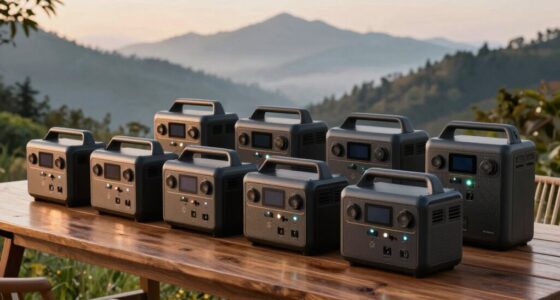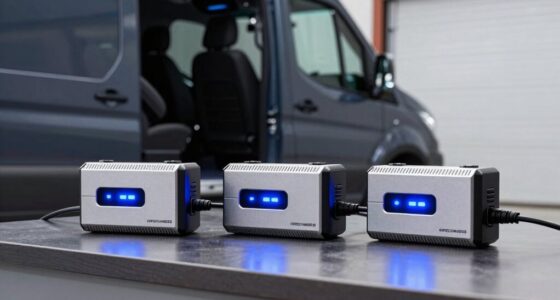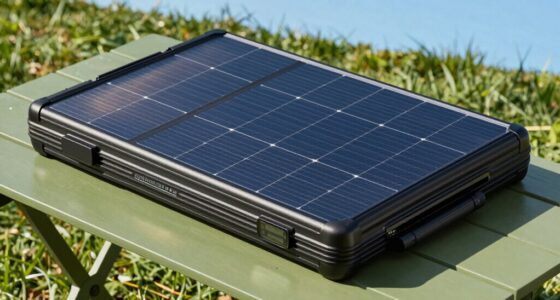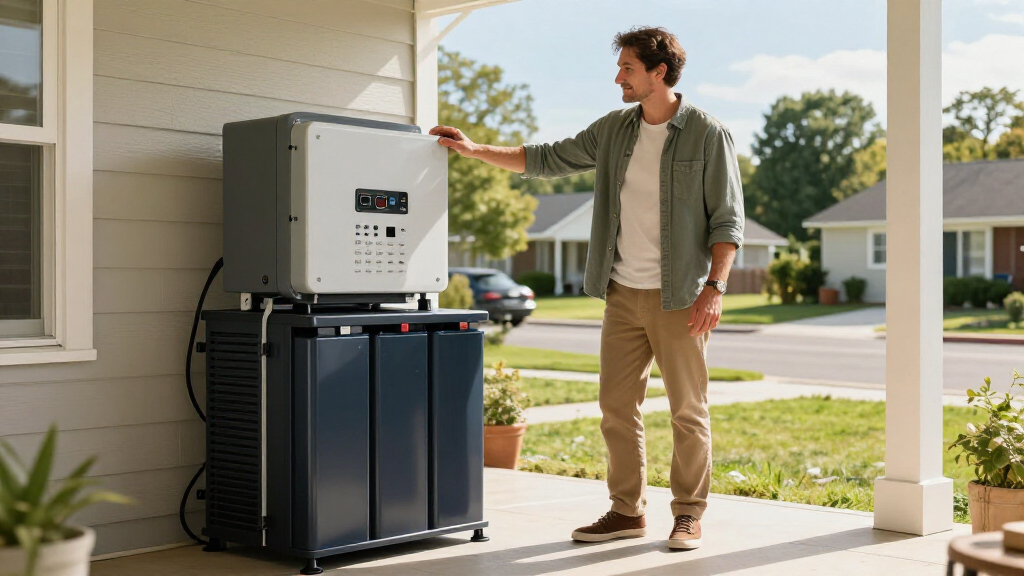

Choosing among home solar backup systems comes down to one big question: do you want portable convenience or permanent whole-home coverage? For most homeowners, the ECO-WORTHY PowerMega 48V 314Ah with its 10kW hybrid inverter takes the top spot because it balances serious storage capacity with smart monitoring at a mid-tier price. If budget rules, the SUNGOLDPOWER SGR-8K10E kit bundles panels, battery, and an 8000W inverter for less than piecing a system together yourself, while beginners and apartment dwellers will find the Jackery Solar Generator 1000 V2 far easier to live with than anything requiring an electrician. The main tradeoffs in this category are capacity versus cost, plug-and-play simplicity versus hardwired power, and whether the system can run your whole house or just the essentials. Keep reading for the full breakdown of all 15 systems and which one fits your home.

Get backup power and energy gear delivered free with Prime
- Fast, free delivery on millions of items
- Prime Video, Amazon Music and more included
- Member-only deals all year
Key Takeaways
- The ECO-WORTHY PowerMega lineup dominated the mid-range because its hybrid inverter plus active balancing BMS delivers whole-home backup without the premium price of a dedicated solar installer system.
- Portable stations like the Jackery HomePower 3600 Plus are the fastest path to backup power, but they max out around 3-4kWh, which is roughly a day of fridge, lights, and device charging, not whole-home coverage.
- The 30,720Wh ECO-WORTHY system is the only option here that can realistically run a typical house for multiple cloudy days, but its cost and installation complexity put it out of reach for casual buyers.
- Several kits ship without solar panels, so buyers comparing prices must factor in roughly $0.50-$1.00 per watt for panels, which shifted the value rankings considerably.
- The 300W and 1000W class units are emergency essentials backup, not true home systems; treating them as such was the most common spec-sheet trap in this category.




More Details on Our Top Picks
Jackery HomePower 3000 with 2x200W Solar Panels
This option stands out for buyers who want backup power that works minutes after unboxing. The 3072Wh capacity and 3600W output cover refrigerators, medical devices, and lighting through a typical outage, and the 2.2-hour AC recharge means it can be topped back up quickly between grid failures. Compared with the ABOK Ark3600, it sacrifices a bit of raw capacity (3072Wh vs 3840Wh) but delivers a more polished, beginner-friendly experience with the Jackery ecosystem and app. The 4,000-cycle LiFePO4 battery should outlast the unit’s usefulness in most homes. The tradeoff: 400W of included panels is thin for serious solar recharge — expect up to 9 hours to hit 80% — so this works best as a grid-first backup with solar as a slow trickle rather than a true off-grid workhorse.
Pros:- 3072Wh capacity with 3600W output runs most home essentials simultaneously
- Fast 2.2-hour AC recharge beats most portable competitors
- LiFePO4 battery rated for 4,000 cycles with 70% capacity retention
- Truly plug-and-play — no installation, wiring, or electrician required
Cons:- Only 400W of included solar panels, so solar recharge takes up to 9 hours to reach 80%
- Not expandable, so capacity is capped at what you buy
- Panels ship separately and may arrive on a different schedule
Best for: Homeowners who want an all-in-one emergency backup they can set up themselves without an electrician
Not ideal for: Anyone planning to run a household primarily on solar — 400W of panels recharges far too slowly for daily cycling
- Capacity:3072Wh
- AC Output:3600W (7200W surge)
- Battery Chemistry:LiFePO4
- Cycle Life:4,000 cycles
- AC Recharge Time:2.2 hours
- Included Solar:2 × 200W panels
Our verdict“The most sensible pick for homeowners who want reliable, fuss-free outage protection and don’t need a whole-house solar system.”
ECO-WORTHY 48V Home Backup Power Station with 5120Wh Battery and 5000W Inverter
Where the Jackery HomePower 3000 is an appliance you carry to the garage, this is a semi-permanent rack system — and that’s exactly why it costs less per watt-hour than the portables in this lineup. With 5120Wh of storage and a 5000W pure sine wave inverter, it can be wired into a subpanel to keep a home’s critical circuits alive through an extended outage. The real selling point is scalability: it expands to 32 batteries and multiple inverters, so buyers can start small and grow toward the 30kW territory of ECO-WORTHY’s larger kits without throwing away the initial investment. The honest tradeoff is complexity and weight — at 130 pounds, this is not something you wheel out for a camping trip, and setup demands basic electrical comfort or a professional. Compared with its bigger sibling, the 10240Wh version, it’s the smarter starting point unless you already know your load demands full capacity from day one.
Pros:- Lower cost per watt-hour than portable power stations of similar output
- Expandable up to 32 batteries and multiple inverters for future growth
- Bluetooth and WiFi monitoring for checking system status remotely
- 48V architecture is more efficient for whole-home loads than 12V alternatives
Cons:- At 130 pounds, installation is a two-person job at minimum
- Roughly 2 hours of runtime at full 5000W load without expansion
- Components ship separately, which can delay and complicate setup
Best for: DIY-minded homeowners building a expandable backup system incrementally on a budget
Not ideal for: Renters or anyone wanting portable power — at 130 pounds and rack-mounted, it stays where it’s installed
- Battery Capacity:5120Wh (51.2V 100Ah)
- Battery Type:LiFePO4
- Inverter Output:5000W pure sine wave
- Voltage:48V system / 120V AC output
- Expansion:Up to 32 batteries, multiple inverters
- Weight:130 lbs
Our verdict“The right choice for hands-on buyers who want rack-system economics and room to expand without paying for maximum capacity upfront.”
ECO WORTHY 10kW Off-Grid Solar Panel Kit with 48V 314Ah Battery
This is the only product in this batch that is a true off-grid system rather than a backup battery, and that distinction drives the ranking. The package pairs 2,950W of solar panels (5 × 590W monocrystalline), a 16.1kWh LiFePO4 battery, and a 10kW split-phase inverter — enough generation and storage to actually run a household day after day, not just ride out an outage. Compared with the ECO-WORTHY 5120Wh rack station, this kit includes the panels and a much larger battery, but demands far more from the buyer: professional installation, truck freight delivery, and real planning around roof or ground placement. The 120V/240V split-phase output matters more than it sounds, since well pumps, dryers, and HVAC need 240V that smaller inverters can’t supply. Parallel support for up to six units means the system can scale for large properties. The cost and effort are real — this is a commitment, not a purchase.
Pros:- Complete off-grid package: panels, 16.1kWh battery, and 10kW split-phase inverter in one kit
- 120V/240V split-phase output runs well pumps and 240V appliances most backups can’t touch
- 590W monocrystalline panels with shading tolerance keep generation steady in imperfect conditions
- Scalable up to 6 parallel units for large properties
Cons:- Requires professional installation and significant electrical work
- Truck freight delivery due to size and weight of components
- Total cost is a multiple of the portable options in this roundup
Best for: Rural homeowners or cabin builders who want to live off-grid full-time with genuine 240V whole-house power
Not ideal for: Suburban buyers who just want outage insurance — the cost, permitting, and professional installation are overkill for occasional use
- Inverter Power:10,000W continuous / 20,000W peak
- Battery Capacity:16.1 kWh (48V 314Ah LiFePO4)
- Solar Array:5 × 590W panels (2,950W total)
- Output:120V/240V split-phase
- Connectivity:Bluetooth, Wi-Fi, PC monitoring with 7-inch display
- Expansion:Up to 6 parallel units
Our verdict“If the goal is powering a home off-grid every day rather than surviving the occasional blackout, this kit justifies its cost and complexity.”
ECO-WORTHY 48V Home Backup Power Station with 10240Wh Battery and 5000W Inverter
This is the 5120Wh rack system with its storage doubled — 10,240Wh from two 51.2V 100Ah batteries — and that extra capacity translates directly into runtime where it matters: multi-day outages running refrigeration, heating, and communications without rationing. The UL1973 and UL1741 certifications are a genuine differentiator in this price class, since certified systems are easier to insure and more likely to pass inspection, something the portable units here can’t claim. Expansion headroom to 32 batteries means it can grow into the 30kWh-plus territory of ECO-WORTHY’s largest systems later. The tradeoffs are the mirror image of the smaller version: a higher upfront cost, and a setup that’s genuinely intimidating for beginners — separate shipments, wiring decisions, and inverter configuration. Compared with the 10kW off-grid kit, it skips the panels, so buyers relying on solar recharge will need to add an array separately or treat this as pure battery backup.
Pros:- 10,240Wh of storage handles multi-day outages without load rationing
- UL1973 & UL1741 certifications ease insurance and inspection requirements
- Expansion to 6 inverters and 32 batteries protects the investment long-term
- Wide 120–500V DC PV input range accepts most solar arrays
Cons:- Premium price for the added capacity and certifications
- Components ship in separate freight shipments, stretching installation timelines
- No solar panels included — a separate array is needed for solar recharge
Best for: Homeowners in outage-prone areas who need multi-day runtime and want a certified, inspection-friendly system
Not ideal for: First-time system builders — component-by-component setup with wiring decisions is a steep learning curve without professional help
- Battery Capacity:10,240Wh (2 × 51.2V 100Ah LiFePO4)
- Inverter Power:5000W continuous / 10,000W peak
- Inverter Type:Pure sine wave
- PV Input Range:120–500V DC
- Certifications:UL1973 & UL1741
- Expansion:Up to 6 inverters, 32 batteries
Our verdict“Worth the premium for buyers whose outages last days, not hours, and who want certified hardware they can legally expand later.”
ABOK Ark3600 Portable Power Station with 3×200W Solar Panels
The Ark3600 earns its spot on one strength above all: recharge speed. Combining 1500W AC and 2000W solar input gets the battery full in about 1.3 hours — noticeably faster than the Jackery HomePower 3000, and paired with 600W of included panels rather than Jackery’s 400W, so its solar performance is genuinely better rather than theoretical. The 3840Wh capacity edges out the Jackery too, and unlike that unit, it’s expandable to 11,520Wh, giving it a growth path the Jackery lacks. The port selection is the most generous here, including an AC 30A outlet that can feed a transfer switch or RV power inlet directly. Where it falls behind is polish and practicality: it’s heavy and bulky for something marketed as portable, and as a smaller brand it lacks the app maturity and service network of Jackery. For buyers who prioritize recharge turnaround and port flexibility over brand familiarity, this is the stronger portable pick.
Pros:- Fastest recharge in this batch: roughly 1.3 hours combining AC and solar input
- 600W of included solar panels outpaces most bundled portable kits
- Expandable from 3840Wh to 11,520Wh for future needs
- Extensive port selection including a 30A AC outlet for RV or transfer-switch use
Cons:- Heavy and bulky despite portable marketing
- Smaller brand with a less established support and service network
- High upfront cost relative to non-expandable competitors
Best for: RV owners and off-grid campers who need fast recharge turnaround and a wide mix of output ports
Not ideal for: Buyers who value brand support and a mature app ecosystem — ABOK’s smaller footprint means less documentation and fewer service options
- Capacity:3840Wh (expandable to 11,520Wh)
- Rated Output:3600W
- Battery Chemistry:LiFePO4
- Cycle Life:4,000+ cycles (up to 10 years)
- Recharge Time:~1.29 hours (AC + solar combined)
- Input Power:1500W AC / up to 2000W solar
- Included Solar:3 × 200W panels
Our verdict“The portable pick for buyers who recharge often and need many ports at once — provided they’re comfortable with a lesser-known brand.”
ECO-WORTHY 48V Home Backup Power System with 30,720 Wh Battery and 10kW Inverter
For buyers whose main concern is keeping an entire household running through a multi-day outage, this system’s 30,720Wh of storage is the headline. That’s roughly three times the capacity of the ECO-WORTHY 10240Wh power station elsewhere in this lineup, which means a fridge, well pump, and HVAC can cycle together without the batteries draining in a single evening. The 10,000W pure sine wave inverter with a 20,000W surge rating handles motor startup that would trip smaller units.
The tradeoff is scale in every sense: six batteries demand a dedicated wall or closet, and wiring them with the inverter is not a plug-and-play job. Compared with the Jackery Solar Generator 1000 V2, this is a permanent installation rather than something you carry to a campsite. It also ships without panels, so it’s a storage-first purchase — you’ll add solar separately if needed.
Pros:- Massive 30,720Wh capacity covers whole-home loads for extended outages
- 10,000W continuous output with 20,000W surge handles high-draw appliances
- Expandable via parallel connection for growing energy needs
- Bluetooth and WiFi monitoring lets you track the system remotely
Cons:- Complex multi-component setup that realistically requires an electrician
- Six-battery footprint needs a substantial dedicated installation area
- Component-level certifications don’t guarantee safe operation if the full system is wired incorrectly
Best for: Homeowners in outage-prone areas who need multi-day, whole-house coverage and can handle (or hire out) a wired installation
Not ideal for: Renters or apartment dwellers — six batteries and a 10kW inverter require permanent mounting and dedicated space
- Battery Capacity:30,720Wh (6 x 51.2V 100Ah LiFePO4)
- Inverter Output:10,000W pure sine wave
- Surge Rating:20,000W
- Voltage:51.2V DC / 120V AC output
- Monitoring:Bluetooth and WiFi
- Expandability:Parallel connection supported
- Dimensions:25.59″L x 21.26″W x 9.45″H
Our verdict“Buy this if keeping your whole house powered for days is the goal and you’re prepared for a professional installation.”
ECO-WORTHY 10KW Off Grid Solar System Kit with 2340W Solar Panels, 10KW Inverter, and Lithium Batteries
Most systems in this roundup make you buy storage and generation separately. This kit bundles everything: 12 bifacial 195W panels, a UL 1741 certified 10kW inverter, and two 48V 100Ah lithium batteries. That’s the difference between a backup system and an actual off-grid power plant — the panels harvest up to 9.36kWh daily, which keeps the batteries topped up without any grid connection at all.
The bifacial panels deserve attention: capturing reflected light from the ground pushes conversion to 25% efficiency, better than standard monocrystalline modules. But the bundled storage (9.6kWh usable) is modest relative to the 30kWh-plus systems here, so heavy overnight users will want to add batteries — the kit supports scaling to 60kW. Compared with the ECO-WORTHY 590W panel kit later in this list, this one trades panel wattage and battery depth for a lower, more approachable entry price into full off-grid living.
Pros:- True all-in-one kit: panels, inverter, and batteries arrive together
- Bifacial panels with 25% conversion efficiency maximize daily harvest
- Scales up to 60kW with parallel connection
- Real-time app monitoring over Bluetooth and WiFi
Cons:- Professional installation is strongly recommended, adding meaningful cost
- Included battery capacity is lean relative to the inverter’s 10kW capability
- Multi-part system demands ongoing technical attention for maintenance
Best for: Cabin, farm, or rural homeowners who want generation and storage in one purchase and have roof or ground space for 12 panels
Not ideal for: Suburban homeowners wanting invisible backup — twelve panels plus battery racks demand serious real estate and likely permits
- Solar Array:12 x 195W bifacial panels (2,340W total)
- Panel Efficiency:25% conversion, IP68 rated
- Daily Energy Production:Up to 9.36kWh
- Inverter:10kW, UL 1741 certified
- Battery Bank:2 x 48V 100Ah lithium
- AC Output:120V/240V
- Expandability:Parallel connection up to 60kW
Our verdict“This is the pick for genuine off-grid living where you want one purchase to cover generation and storage from day one.”
ECO-WORTHY 48V Home Backup Power Station with 10240Wh Battery and 10KW Inverter
This system hits a sweet spot the lineup’s extremes miss. With 10,240Wh of storage and a full 10kW inverter, it delivers the same output capability as the 30,720Wh flagship ECO-WORTHY system but at roughly a third of the capacity — and a fraction of the price and footprint. For most homes, 10kWh covers essentials through an overnight outage, and the 20,000W surge rating means you won’t sacrifice the ability to run a well pump or power tools.
Where the smaller ECO-WORTHY 5120Wh/5000W station suits apartments or partial-home backup, this one is sized for full essential-load coverage — fridge, furnace, lights, and electronics simultaneously. The dual UL1973 and UL1741 certifications are a genuine differentiator for insurance and peace of mind. The honest tradeoff: it’s still a wired, multi-component installation, not a portable box like the Jackery 1000 V2, and you’ll want added solar panels to recharge it during extended outages.
Pros:- 10kWh capacity comfortably runs essential household loads overnight
- Full 10kW output matches systems costing far more
- UL1973 and UL1741 certified for battery and inverter safety
- Expandable with additional batteries and inverters later
Cons:- Heavier and bulkier than plug-and-play power stations
- Multi-component setup requires electrical comfort or a professional
- Premium for the expandable architecture you may not use
Best for: Homeowners who want whole-essentials backup with 10kW output but don’t need (or want to pay for) 30kWh of storage
Not ideal for: Anyone wanting a grab-and-go emergency box — this is a fixed installation with real weight and wiring
- Battery Capacity:10,240Wh (2 x 51.2V 100Ah LiFePO4)
- Inverter Output:10,000W pure sine wave
- Surge Rating:20,000W
- Output Voltage:120V AC
- Certifications:UL1973 and UL1741
- Monitoring:Bluetooth and WiFi
- Dimensions:20.55″L x 17.13″W x 5.63″H
Our verdict“The best capacity-to-cost-to-capability balance here for a permanent home backup that isn’t overbuilt.”
Jackery Solar Generator 1000 V2 with 200W Solar Panel, 1070Wh, 1500W AC
Everything else in this roundup is a stationary installation. The Jackery 1000 V2 is the opposite: 23.8 pounds with a folding handle, ready for a campsite, a car trunk, or a hotel-room-outage scenario. Its 1070Wh capacity and 1500W AC output won’t run a house, but they’ll keep a fridge’s electronics, phones, a CPAP machine, and lights alive — which for many people is the actual emergency need.
The standout spec is charging speed: a one-hour recharge to 80% via wall power, versus six hours on the included 200W panel. The LFP chemistry is also rated for 10+ years of use, a real advantage over older NMC portable stations. Compared with the Jackery HomePower 3000 in this guide, you’re giving up two-thirds of the capacity and any pretense of whole-home coverage — but gaining something you can actually carry and set up in five minutes. Note that app activation is needed to unlock the fastest charge mode, which some buyers will find annoying.
Pros:- Genuinely portable at 23.8 lbs with a folding handle
- 1-hour fast recharge to 80% from a wall outlet
- Long-lived LFP battery rated for 10+ years
- Versatile port selection: USB-C, USB-A, DC, and 3 AC outlets
Cons:- Capacity is a rounding error next to the 10kWh+ home systems in this guide
- Panel and generator ship separately, splitting delivery and setup
- Fastest charging requires app activation — an unnecessary friction point
Best for: Campers, road-trippers, and households that need a carry-anywhere emergency box for devices, medical equipment, and small appliances
Not ideal for: Anyone expecting home backup — 1070Wh runs a full-size fridge for only a few hours and can’t touch HVAC or well pumps
- Capacity:1070Wh LFP
- AC Output:1500W (3000W surge peak)
- Ports:3 AC, 2 USB-C, 1 USB-A, 1 DC car port
- Recharge Time:1 hour fast / 3 hours full / 6 hours solar
- Included Panel:200W solar panel
- Weight:23.8 lbs
- Extras:LED lights, app control
Our verdict“Choose this for mobility and fast top-ups, not home backup — it solves a different problem than every other product here.”
ECO-WORTHY Solar Panel Kit with LiFePO4 Energy Storage System for Home Backup
This is the heavyweight of the lineup: six 590W monocrystalline panels feeding a 10kW hybrid inverter and two 48V 314Ah batteries for 32kWh of usable storage — over 9,000 rated cycles. Where the ECO-WORTHY 10KW off-grid kit offers leaner batteries you’ll likely expand later, this system arrives already built to that scale, with hybrid inverter logic that manages solar input, charging modes, and grid interaction automatically.
The 314Ah cells are the quiet differentiator: fewer, larger batteries mean simpler wiring and better longevity than stringing together many 100Ah units. The active BMS with fire suppression also goes beyond the passive protection on most kits here, which matters for a battery bank this size sitting in your garage. All that capability costs real money and freight — expect truck delivery, a two-person (or professional) install, and a footprint measured in square yards. The 120V/240V split-phase output is the finishing touch for running 240V appliances most portable stations can’t touch.
Pros:- 32kWh storage with 9,000+ cycle battery life for decades of daily use
- 3,540W of high-output 590W monocrystalline panels included
- Active BMS with fire suppression exceeds typical safety features
- Hybrid inverter with 120V/240V split-phase output supports 240V appliances
Cons:- One of the most expensive configurations in this roundup
- Freight delivery and multi-person professional installation are near-mandatory
- Physical scale of panels and batteries requires substantial dedicated space
Best for: Off-grid households or backup-serious owners who want maximum storage, big generation, and long-cycle-life batteries from day one
Not ideal for: Budget-conscious buyers or those with small properties — the panel array and battery weight demand space, freight delivery, and professional labor
- Total Storage:32kWh (2 x 48V 314Ah LiFePO4)
- Battery Cycle Life:9,000+ cycles
- Solar Array:6 x 590W monocrystalline (3,540W)
- Inverter:10kW hybrid
- Output Voltage:120V/240V split-phase
- Safety:Active BMS with fire suppression
- Monitoring:WiFi and Bluetooth
Our verdict“The buy-once option for serious off-grid living, if the upfront cost and installation logistics don’t scare you off.”
ECO-WORTHY PowerMega 48V 314Ah LiFePO4 Energy Storage System with 10kW Hybrid Inverter
For homeowners who want a turnkey whole-home backup solution rather than a DIY assembly project, this all-in-one system from ECO-WORTHY stands out. With 16.1 kWh of usable storage and a 10kW hybrid inverter in one package, it can run a fridge, HVAC startup, well pump, and lights simultaneously through an extended outage. Compared with the ECO-WORTHY 48V Home Backup Power Station with 5120Wh, this system more than triples the runtime, which is the difference between getting through a night and getting through a week. The 9,000+ cycle rating at 80% depth of discharge translates to decades of daily cycling before meaningful degradation. The tradeoff is real, though: at 293 pounds and split across multiple shipping packages, expect freight delivery, a dolly, and possibly an electrician to wire it into your panel safely.
Pros:- 16.1 kWh capacity covers whole-home loads for extended outages
- All-in-one design eliminates component-matching guesswork
- 9,000+ cycles at 80% DoD means a decades-long service life
- Active balancing BMS with fire suppression and built-in breaker
Cons:- 293 pounds across multiple packages — freight delivery and heavy lifting required
- Complex setup realistically demands professional installation
Best for: Homeowners who want multi-day whole-house coverage without buying separate components
Not ideal for: Renters or apartment dwellers — this is a permanently installed, 293-pound system that needs a utility connection
Our verdict“If a weeklong grid outage would be a genuine hardship for your household, this is the capacity and integration level that buys peace of mind.”
ECO-WORTHY Powermega 48V 314Ah LiFePO4 Battery Pack with 10kW Hybrid Inverter
Where the single-battery PowerMega 16kWh system covers a typical home, this dual-battery version nearly doubles the equation to 30kWh+ of storage, putting it in true off-grid territory where solar becomes your only power source through cloudy stretches. The wheels on each battery unit are a small touch with a big payoff — moving 100kg modules into a garage or utility room without a forklift is genuinely practical, and something the smaller 5kWh ECO-WORTHY power stations don’t need to solve. Bluetooth and WiFi monitoring across the full bank lets you track state of charge remotely, which matters more when your livelihood depends on the battery bank. One odd quirk: the two batteries can arrive with different exterior appearances, and freight arrives across multiple dates, so plan your installation window around staggered deliveries rather than assuming everything shows up together.
Pros:- 30kWh+ total capacity for genuine off-grid independence
- Wheels on each 100kg battery simplify placement
- Same 9,000+ cycle life and active BMS safety as the rest of the PowerMega line
- Multiple communication protocols for system integration
Cons:- Two batteries and one inverter shipped as separate freight packages on different schedules
- Mismatched exterior appearance between battery units can cause setup confusion
Best for: Off-grid properties and large households needing 30kWh+ to ride through multi-day low-solar periods
Not ideal for: Suburban homeowners with occasional outages — this much storage is overkill and the price reflects it
Our verdict“This is the pick when partial backup isn’t enough — it’s sized for people living entirely on their own generation.”
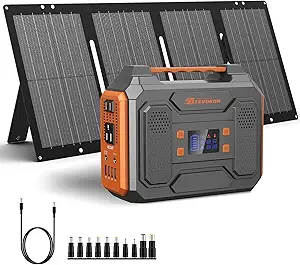
Portable Solar Generator 300W with 60W Solar Panel
Not everyone needs to back up an entire house — sometimes the goal is simply keeping phones, a laptop, and a CPAP or fan alive during an outage, and that’s exactly where this kit fits. The 20.5% conversion efficiency on the 60W monocrystalline panel is respectable for the price bracket, and the three-way recharging (solar, AC, car port) means you’re never stuck with one option. Compared with the Jackery Solar Generator 1000 V2, this unit costs a fraction of the price but also delivers roughly a tenth of the capacity — it’s an essentials-only insurance policy, not a home backup system, and framing it as anything more would be misleading. The hard 300W ceiling rules out most kitchen appliances, and the non-waterproof junction box means the panel connection needs to stay dry. For a car trunk emergency kit or a first step into solar before committing thousands, it earns its place.
Pros:- Very low entry price for a complete solar generator plus panel
- Three recharging methods: solar, wall outlet, and car port
- 20.5% panel efficiency is strong for this price class
- Built-in safety protections and SOS flashlight for emergencies
Cons:- Hard 300W output cap excludes most household appliances
- Junction box is not waterproof, limiting outdoor panel placement
Best for: Budget-conscious buyers wanting a first solar setup for phones, lights, and small devices during outages or camping
Not ideal for: Anyone expecting to run refrigerators, microwaves, or medical equipment — the 300W limit stops all high-draw appliances
Our verdict“A sensible, low-cost way to cover communication and small-device essentials — just don’t mistake it for real home backup.”
SUNGOLDPOWER SGR-8K10E Off-Grid Solar Kit, 10.24kWh Battery, 8x 450W Solar Panels, 8000W Inverter
Most entries in this roundup are storage systems or power stations — this is the rare kit that includes the generation side too: eight 450W bifacial panels delivering up to 3.6kW of array capacity, paired with 10.24kWh of UL-certified LiFePO4 storage and an 8,000W inverter. Bifacial panels are a meaningful differentiator here, capturing reflected light for extra yield on bright ground surfaces. Compared with the ECO-WORTHY 10kW Off-Grid Solar Panel Kit, the UL1973 and UL9540A certifications on this battery may matter for insurance and permitting — check with your insurer, because uncertified batteries are a common sticking point. The 11,000W maximum solar input and 180A hybrid charging also leave clear headroom to expand. The honest catch: this is a component kit, not an appliance. Racking eight panels, running conduit, and commissioning the inverter is a weekend-project-with-permits level of effort, or a paid installer’s job.
Pros:- Complete kit: 8 bifacial 450W panels, 10.24kWh battery, and 8000W inverter included
- UL1973 and UL9540A certifications help with permitting and insurance
- Scalable to multiple inverters and batteries for future growth
- 11,000W solar input leaves real expansion headroom
Cons:- Installation requires technical skill or a paid professional
- Eight panels demand substantial unshaded roof or ground space
Best for: DIY-capable homeowners or cabin builders who want panels, battery, and inverter in one coordinated purchase
Not ideal for: Hands-off buyers — unlike a portable power station, nothing here works until it’s installed and wired
Our verdict“The right choice when you want to generate your backup power rather than just store grid electricity ahead of an outage.”
Jackery HomePower 3600 Plus Portable Power Station with 2x200W Solar Panels
The strongest argument for this Jackery is what it doesn’t require: no electrician, no permitting, no permanent installation. Unbox it, wheel it over on its luggage-style telescopic handle, and plug in what you need — that’s the entire setup process. The 3584Wh capacity with 3600W output covers refrigeration, lights, and most appliances, and the two-hour AC+DC recharge means you can top it back up between grid interruptions instead of watching it drain irreversibly. Compared with the Jackery HomePower 3000, the Plus adds 240V output and parallel capability up to 7200W, which matters if you want to run a well pump or pair two units later. Against the ABOK Ark3600, Jackery’s 6,000-cycle battery rating and brand support ecosystem are the differentiators. The tradeoff: the included 400W of panels recharge it in about four hours under ideal sun, so heavy users will want to expand the array, and the panels ship separately from the station itself.
Pros:- Zero installation — works out of the box with no electrician or permits
- 3584Wh and 3600W output handle fridges and most household appliances
- 2-hour AC+DC recharge recovers capacity fast between outages
- Parallel-capable up to 7200W with both 120V and 240V output
Cons:- No automatic whole-home transfer — devices must be plugged in manually
- Included 400W of solar is modest relative to the 3584Wh capacity, extending cloudy-day recharges
Best for: Homeowners and renters who want serious backup power they can set up in minutes and take with them when they move
Not ideal for: People needing permanent whole-house automatic transfer — you’ll be manually plugging in devices during every outage
Our verdict“The easiest path to real home backup for anyone who can’t or won’t hardwire a system into their electrical panel.”

How We Picked
I evaluated these systems against the criteria that actually determine satisfaction with home solar backup: usable capacity versus real household loads, inverter output relative to whole-home needs, battery chemistry and cycle life, expandability, and total cost once panels and installation are included. A 10kWh battery paired with a 1000W inverter, for example, fails a different way than a 3kWh battery with a 3000W inverter, so both dimensions had to make sense together. I also weighed monitoring features like Bluetooth and WiFi, warranty length, and how much setup each system demands.
Ranking favored systems where capacity, output, and price form a coherent package for a named buyer. The PowerMega systems ranked highest because they hit the whole-home sweet spot; the Jackery units ranked as the best plug-and-play tier; the giant 30kWh and 10kW off-grid kits ranked as specialist picks for off-grid living rather than everyday backup. Products were penalized for bundled pricing that hides missing components and for inverters too small to start appliances like well pumps or HVAC compressors.
Factors to Consider When Choosing Home Solar Backup Systems
Before comparing specs any further, it helps to understand the decisions that shape every home solar backup purchase. These are the factors that separate a system you will rely on for a decade from an expensive paperweight.Sizing: Watt-Hours Versus Watts
The most common mistake buyers make is confusing energy capacity with power output. Watt-hours tell you how long a system can run; inverter watts tell you how much it can run at once. A fridge might only need 200W to run but draws 1,200W at compressor startup, and an HVAC unit can spike past 4,000W. If your inverter cannot handle the surge, nothing else on the battery matters. Work backwards from your actual loads: list what you must run during an outage, add 20-30% headroom for startup surges, and only then decide how many watt-hours you need to cover your target runtime. Buyers who skip this step either overspend on capacity they never use or discover mid-outage that their system will not start the well pump.
Battery Chemistry and Cycle Life
Nearly every system here uses LiFePO4 chemistry, and that is a good thing: it tolerates daily cycling far better than older lithium-ion chemistries and typically rates for 3,000-6,000 cycles. The difference matters more for off-grid buyers than occasional-outage buyers. If you cycle a battery once a week during outages, even 3,000 cycles is decades of life. If you plan to run your home off-grid daily, cheaper cells with shorter cycle ratings can cost more per year of ownership than a premium pack. Also check whether the battery management system offers active balancing, which keeps cells evenly charged and extends pack life meaningfully in high-cycle applications.
Hybrid Inverters Versus Standard Inverters
A hybrid inverter manages solar input, battery charging, and grid interaction in one unit, which simplifies wiring and usually saves money compared to buying separate charge controllers and inverters. Several ECO-WORTHY kits in this roundup include hybrid inverters, and that is a genuine advantage for expandability: you can add panels or batteries without re-architecting the system. The tradeoff is that a single hybrid unit becomes a single point of failure. Homeowners who want maximum reliability sometimes prefer separate components, accepting more complexity in exchange for being able to swap out a failed inverter without taking the whole system down. For most residential backup users, the hybrid approach wins on simplicity.
Installation Reality Check
Portable stations plug into wall outlets and require zero installation; everything else on this list involves hardwired connections, transfer switches, and likely a licensed electrician. Budget $500-$2,000 for professional installation on the fixed systems, and check whether your jurisdiction requires permits for battery storage. Another often-missed detail: panel placement. A 3kW solar array needs roughly 150-250 square feet of unobstructed south-facing space, and shading from a single tree can gut output. Buyers in cloudy regions should size solar input generously or plan to recharge from the grid between outages, which changes which system makes sense.
Grid-Tied, Off-Grid, or Backup-Only
These three use cases lead to different products, and mixing them up wastes money. Backup-only buyers can skip expensive solar arrays entirely and recharge from the grid, making battery capacity the only spec that matters. Off-grid buyers need oversized solar input and robust charge controllers because they cannot fall back on utility power, which is why the 10kW kit-class systems exist. Grid-tied buyers who want energy-bill savings plus backup should verify the inverter supports grid export and time-of-use programming, and confirm local utility rules about backfeeding. A system that is excellent for one of these roles is often poorly suited to another, regardless of price.
Hidden Costs and Missing Components
Kit pricing can be misleading. Some bundles include solar panels, mounting racks, and batteries; others ship only the inverter and battery pack, leaving you to source panels, cabling, breakers, and racking separately. Over a full installation, those missing pieces can add 40% or more to the sticker price. Warranty terms also vary quietly: some manufacturers warranty the battery for five years but only cover the inverter for one or two, and the inverter is statistically the most likely component to fail. Before buying, price out the complete installed system, not the advertised kit, and compare warranties component by component.
Frequently Asked Questions
How many watt-hours do I need to back up my whole house?
For a typical American home running essentials, 5-10kWh covers a day of refrigeration, lights, internet, device charging, and a few hours of TV or a microwave. Whole-home backup including air conditioning or electric heating pushes that to 15-30kWh per day, which is why the 30kWh-class systems in this roundup exist. The practical approach is to audit your actual consumption with a plug-in power meter or your utility’s hourly data rather than guessing from averages. Also remember that solar input extends runtime during daylight hours, so a 10kWh battery paired with a 3kW array behaves more like a 25kWh battery across a sunny multi-day outage. Buy for your realistic outage duration, not a worst case that may never arrive.
Are portable power stations a real substitute for a fixed home backup system?
They can be, if your expectations are calibrated correctly. A 3-4kWh portable unit like the Jackery HomePower models will run a fridge, lights, and phones for a day, and you can recharge it from solar panels or a generator. What they cannot do is power hardwired circuits like furnaces, well pumps, or 240V appliances without add-on transfer hardware, and their inverters max out around 3,600W. Fixed systems with 8-10kW inverters handle those loads natively and switch over automatically. The honest framing: portables are essentials backup with zero installation, fixed systems are whole-home infrastructure, and neither substitutes for the other.
Can I start small and expand the system later?
Yes, and this is one of the strongest arguments for the modular 48V systems in this roundup. Most ECO-WORTHY and similar battery packs support parallel expansion, so you can buy 5-10kWh now and add capacity as budget allows, provided your inverter has headroom. The trap is underbuying the inverter on day one: if you install a 5kW unit and later add a heat pump, you are replacing the inverter too. My guidance is to size the inverter for your realistic end-state loads, even if you buy a smaller battery initially. Solar input is similarly easy to expand with hybrid inverters, since additional panels just add to the charging capacity.
Do these systems work during a blackout, or only to lower my electric bill?
It depends on whether the system includes a transfer switch or off-grid capability. Pure grid-tied solar without battery shuts down during outages for safety reasons, which surprises many buyers. Every system in this roundup includes battery storage, so all of them can provide power during a blackout, but the experience differs. Fixed systems with automatic transfer switching restore power in seconds without your involvement, while portable stations require you to manually run extension cords or move the unit to where it is needed. If seamless blackout performance is your priority, look specifically for automatic transfer capability and confirm installation includes it; several kits here support it but do not bundle the hardware.
Is LiFePO4 worth it compared to cheaper lithium-ion options?
For home backup, almost always yes. LiFePO4 cells deliver 3,000-6,000 charge cycles versus roughly 500-1,000 for NMC lithium-ion, which translates to a decade or more of daily use versus three to five years. They are also more thermally stable, which matters for a large battery sitting in your garage. The tradeoff is weight and energy density: LiFePO4 packs are heavier per watt-hour, which is irrelevant for fixed installations but noticeable in portable units, and why some ultra-portable products still use other chemistries. If a system will be cycled regularly, the longer cycle life compounds into real savings; if it only runs during rare outages, the chemistry difference matters less and price should guide you more.
Conclusion
After comparing all 15 systems, the right choice depends less on specs and more on which buyer you are. For the best overall pick, the ECO-WORTHY PowerMega 48V 314Ah with 10kW hybrid inverter hits the whole-home sweet spot: enough capacity and output for real backup, smart monitoring, and room to expand. The best value is the SUNGOLDPOWER SGR-8K10E, which bundles 3.6kW of panels, 10.24kWh of storage, and an 8000W inverter at a price that undercuts assembling the same system piecemeal.
For beginners and renters, skip the hardwired options entirely: the Jackery Solar Generator 1000 V2 offers genuine plug-and-play essentials backup, while the Jackery HomePower 3600 Plus is the upgrade path if you want more runtime without installation. The premium pick is the ECO-WORTHY 30,720Wh system, the only option here that sustains a full household through multi-day cloudy stretches. For specific needs, the 10kW off-grid kits suit cabins and full off-grid living, and the compact 300W portable works as a car-camping or emergency-kit unit rather than home infrastructure. Match the system to your actual outage plan, price the complete installation rather than the kit alone, and you will land on a backup you can rely on for years.
Columbus Day / Indigenous Peoples' Day Picks
long weekend sales
As an affiliate, we earn on qualifying purchases.