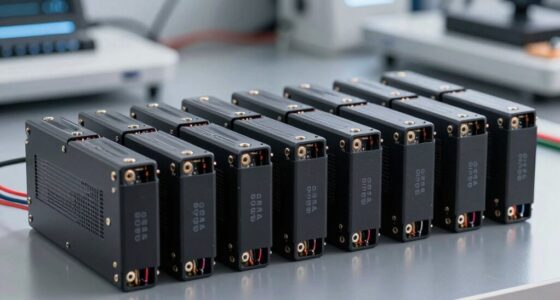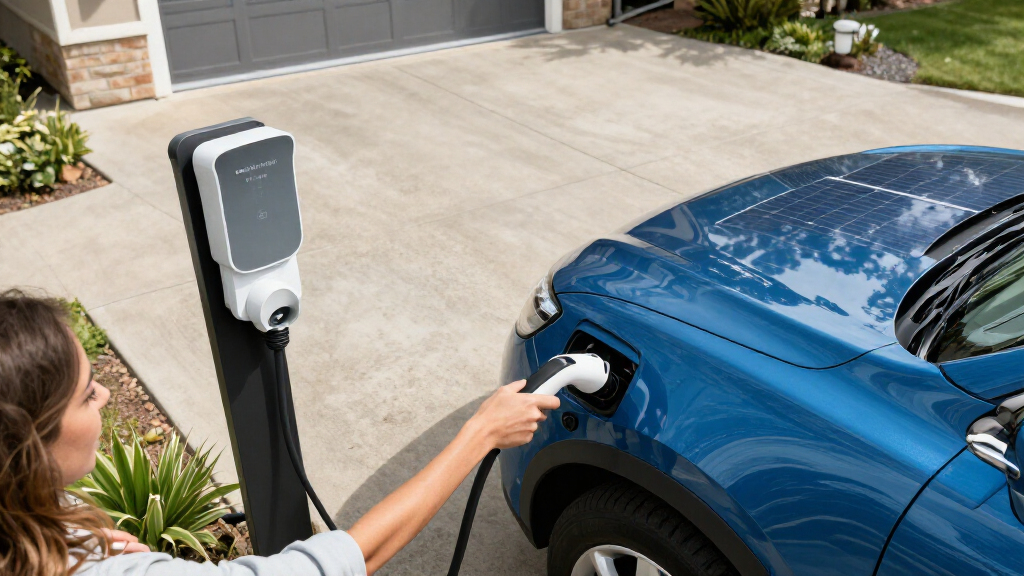
The best electric vehicle charging stations balance charging speed, installation needs, connector fit, and useful features—not just a high amperage rating. I’d put the Emporia Pro 48A on the shortlist for drivers who want smart charging and higher output, while the DEWALT 40A suits buyers who value app connectivity and a portable-plug setup. The Autel hardwired charger is a stronger fit for a fixed installation where higher capacity matters. Your main tradeoffs are plug-in convenience versus hardwiring, J1772 versus NACS compatibility, and added features versus a simpler charger. Read on for the full comparison, ranking logic, and buying advice.

Get backup power and energy gear delivered free with Prime
- Fast, free delivery on millions of items
- Prime Video, Amazon Music and more included
- Member-only deals all year
Key Takeaways
- Installation style separates the leading options: the Emporia Pro and Autel hardwired models suit permanent setups, while several 40A NEMA 14-50 models can be unplugged or relocated more readily.
- Higher amperage only helps when the circuit and vehicle can use it: 48A and 50A models may need hardwiring and a suitably sized circuit, so a 40A plug-in unit can be the more practical fit.
- Connector choice changes the shortlist: most picks use J1772, while the EVIQO EVIPOWER-2 uses NACS; buyers should confirm their vehicle’s inlet and any adapter requirements.
- Portable models serve a different need than fixed home stations: Raylix supports lower-current Level 1 and Level 2 use, while the ELEGRP and EVDANCE offer 40A portability for compatible 240V outlets.
- The range is not just about charging speed: Wi-Fi, Bluetooth, cable length, rugged construction, and brand-specific features help distinguish models that otherwise share similar 40A or 48A ratings.


| electric vehicle charging station | Cable length | Warranty | Voltage | Connector |
|---|---|---|---|---|
| Raylix Portable Level 1 and Le | 21 ft | 2 years | — | SAE J1772 |
| Emporia Pro Level 2 EV Charger | 25 ft | — | 240V AC | SAE J1772 |
| DEWALT Level 2 Electric Vehicl | 25 ft | 3-year limited warranty | — | SAE J1772 |
| ELEGRP Level 2 Portable EV Cha | 25 ft | 2 years | 240V | J1772 |
| EVIQO Level 2 J1772 EV Charger | 25 ft | 3 years | 240V | J1772 |
| BETUMODA Level 2 EV Charger | 25 ft | — | 240V AC | — |
| EVDANCE Level 2 Portable EV Ch | 25 ft | — | 240V | — |
| Lectron J1772 Level 2 EV Charg | 23 ft | 3-year limited | 240V AC | — |
| Autel Home EV Charger up to 50 | 25 ft | — | — | — |
| Emporia Level 2 EV Charger | 25 ft | 3 years | — | SAE J1772 |
| EVIQO EVIPOWER-2 Level 2 NACS | 25 ft | 3 years | 240 V | NACS |
| ChargePoint HomeFlex Level 2 E | 23 ft | 3 years parts | — | J1772 |
| Grizzl-E Avalanche Edition Lev | 24 ft | — | 240 V | — |
| IYILO Level 2 EV Charger | 25 ft | 3 years | 240 V | SAE J1772 |
| Autel MaxiCharger Level 2 EV C | 25 ft | 3 years | 240 V | — |
More Details on Our Top Picks
Raylix Portable Level 1 and Level 2 J1772 EV Charger, 8–16A, NEMA 5-15 and 6-20 Plugs, 21 ft Cable
The Raylix earns its place for drivers who need one portable charger for two outlet types, rather than a high-output wall unit. Its NEMA 5-15 plug allows Level 1 charging from a standard household outlet, while the NEMA 6-20 option supports up to 16 amps at 240 volts. Adjustable current and a delay timer help match charging to the outlet and schedule, and the display makes charging status easy to check.
Compared with the ELEGRP 40A portable charger, the Raylix is much less demanding of a home circuit but also charges more slowly: its Level 2 maximum is 3.68 kW. It is a practical fit for occasional charging, not drivers seeking the faster overnight recovery of a 40A station. Its J1772 connector also means other connector types need an adapter.
Pros:- Works with both NEMA 5-15 and NEMA 6-20 outlets
- Selectable current settings and a 1–12-hour delay timer
- Display shows charging information
- IP65 enclosure and 2-year warranty
Cons:- Level 2 output tops out at 16A and 3.68 kW
- NEMA 5-15 use is limited to 12A
- J1772 connector may require an adapter for other vehicle connector types
Best for: J1772 vehicle owners who need a portable charger for both standard household outlets and NEMA 6-20 access, and can accept slower charging.
Not ideal for: Drivers who need fast daily Level 2 charging, have a NEMA 14-50 outlet, or use a vehicle that needs a connector adapter.
- Connector:SAE J1772
- Charging levels:Level 1 and Level 2
- Current settings:8A, 10A, 12A, or 16A
- Plugs:NEMA 5-15 and NEMA 6-20
- Level 1 output:120V, up to 12A, 1.44 kW
- Level 2 output:240V, 16A, 3.68 kW
- Cable length:21 ft
- Warranty:2 years
Our verdict“Choose the Raylix if outlet flexibility and portability matter more than the higher charging output offered by the ELEGRP or other 40A options.”
Emporia Pro Level 2 EV Charger with PowerSmart, 48 Amp, J1772 Connector, 25-Foot Cable
The Emporia Pro stands out for pairing up to 48A charging with PowerSmart load management. Rather than treating available panel capacity as fixed, the system can adjust charging based on household electrical demand, which may help a home support EV charging without simply reserving the charger’s full output at all times. The included Vue 3 energy monitor and app scheduling add useful visibility into home energy use and charging sessions.
That combination gives it a different advantage from the DEWALT 40A charger, which offers adjustable output and app controls but not the listed whole-home monitor or PowerSmart feature. The Emporia’s higher maximum output can mean faster charging when the electrical setup permits it, but a 48A installation and the choice between plug-in and hardwired mounting may call for an electrician. Tesla drivers also need a separate adapter.
Pros:- PowerSmart adjusts charging to available home electrical capacity
- Includes a Vue 3 whole-home energy monitor
- App supports scheduling and usage tracking
- Offers plug-in or hardwired installation for indoor or outdoor use
Cons:- Installation may require an electrician, especially for hardwired use
- Tesla vehicles need a separate adapter
- The included monitoring and app features may be more than a basic charging setup needs
Best for: Homeowners with a busy electrical panel who want higher-output charging, load management, and whole-home energy monitoring in one system.
Not ideal for: Buyers seeking a simple portable charger or those without a suitable 240V circuit and willingness to arrange installation.
- Maximum output:48A
- Voltage:240V AC
- Connector:SAE J1772
- Cable length:25 ft
- Installation:NEMA 14-50 plug or hardwired
- Connectivity:Wi-Fi and Bluetooth
- Included monitor:Emporia Vue 3 energy monitor
- Certification:UL
Our verdict“Pick the Emporia Pro over the DEWALT if load management and whole-home energy insight matter more than a simpler 40A charger.”
DEWALT Level 2 Electric Vehicle Charger, 40 Amp, 240V, Wi-Fi and Bluetooth, J1772, 25 ft Cable
The DEWALT is a strong match for drivers who want a wall-mounted 40A charger with app control and a durable outdoor-rated enclosure. It provides up to 9.6 kW, lets owners adjust current from 12A to 40A, and pairs Wi-Fi and Bluetooth monitoring with scheduling. Its 25-foot cable can also make it easier to reach a vehicle parked farther from the mounting point.
Compared with the ELEGRP portable charger, this model is better suited to a fixed charging location and adds connected controls, while ELEGRP offers a portable format and a delay timer. The DEWALT’s CSA certification, NEMA 4X enclosure, and IP66 rating support indoor or outdoor placement. Its tradeoffs are a J1772 connector that requires a separate Tesla adapter and installation that may need professional electrical work.
Pros:- Adjustable current from 12A to 40A, with up to 9.6 kW output
- Wi-Fi and Bluetooth support app monitoring and scheduling
- 25-foot cable helps reach vehicles parked farther away
- CSA certified with NEMA 4X and IP66 enclosure ratings
Cons:- Tesla vehicles require a separately sold adapter
- Professional installation may be needed
- Maximum output is lower than the 48A Emporia Pro
Best for: J1772 EV owners setting up a fixed indoor or outdoor charging point who want app scheduling, adjustable current, and a long cable.
Not ideal for: Drivers who need a portable plug-in unit, use a connector other than J1772 without an adapter, or want the higher 48A ceiling of the Emporia Pro.
- Model:DXPAEV040
- Maximum current:40A
- Adjustable current:12–40A
- Maximum power:9.6 kW
- Input voltage:240V
- Connector:SAE J1772
- Cable length:25 ft
- Enclosure:NEMA 4X, IP66
- Warranty:3-year limited warranty
Our verdict“Choose the DEWALT for a connected, weather-ready 40A wall charger, but pick the Emporia Pro if you need more output and load management.”
ELEGRP Level 2 Portable EV Charger, 40A, J1772, 240V NEMA 14-50, 25 ft Cable
For drivers who want 40A charging without committing to a wall-mounted unit, the ELEGRP offers a useful balance of output and portability. Its NEMA 14-50 plug delivers up to 9.6 kW, while five current settings let owners reduce the draw to suit the circuit or charging needs. A delay timer adds scheduling flexibility without relying on the app features found on the DEWALT and EVIQO.
The ELEGRP’s IP67 rating and 25-foot cable make it practical for indoor or outdoor use, and its portable design can suit a garage with an existing 14-50 outlet. Compared with the Raylix, it charges at much higher output but requires a dedicated 240V outlet rather than adapting to ordinary household receptacles. It is also heavier at 13.2 pounds, and Tesla drivers need a separately sold NACS adapter.
Pros:- Up to 40A and 9.6 kW with five current settings
- Portable NEMA 14-50 design
- 25-foot cable and IP67 ingress protection
- Delay timer and 2-year warranty
Cons:- Requires a compatible NEMA 14-50 outlet
- Tesla vehicles need a separately sold NACS adapter
- At 13.2 lb, it is heavier than the Raylix portable charger
Best for: J1772 EV owners with a NEMA 14-50 outlet who want a portable 40A charger with adjustable current and no reliance on app controls.
Not ideal for: Drivers who lack a 240V NEMA 14-50 outlet, need Level 1 charging from a standard household receptacle, or want integrated Wi-Fi scheduling.
- Maximum output:9.6 kW
- Current settings:16A, 20A, 24A, 32A, or 40A
- Voltage:240V
- Connector:J1772
- Plug:NEMA 14-50
- Cable length:25 ft
- Ingress protection:IP67
- Weight:13.2 lb
- Warranty:2 years
Our verdict“Pick the ELEGRP over the Raylix when you have a 14-50 outlet and want portable 40A charging, but skip it if you need household-outlet flexibility.”
EVIQO Level 2 J1772 EV Charger, 40A, NEMA 14-50, 240V
The EVIQO is aimed at drivers who want the convenience of a plug-in 40A charger with app-based control. Its 25-foot J1772 cable and NEMA 14-50 plug suit a garage or other location with a compatible outlet, while the app can manage schedules and track energy use over 2.4 GHz Wi-Fi. The glow-in-the-dark holster is a practical touch for finding the connector in a dim garage.
Compared with the ELEGRP portable charger, the EVIQO adds connected scheduling and energy tracking, while ELEGRP offers adjustable current settings and a delay timer without relying on Wi-Fi. The EVIQO’s IP66/NEMA 4 housing supports indoor or outdoor installation, and its listed certifications and 3-year warranty add reassurance. The tradeoff is that it needs a dedicated 50A circuit and a 2.4 GHz network for its connected features; at 21 pounds, it is also less appealing to move around.
Pros:- App supports charging controls, schedules, and energy tracking
- 25-foot J1772 cable and NEMA 14-50 plug
- IP66 and NEMA 4 weather protection
- UL, ETL, FCC, and Energy Star certifications with a 3-year warranty
Cons:- Requires a NEMA 14-50 outlet on a dedicated 50A circuit
- Wi-Fi features require a 2.4 GHz network
- At 21 lb, it is less convenient to move than the ELEGRP
Best for: J1772 EV and plug-in hybrid owners with a dedicated 240V NEMA 14-50 circuit who want app scheduling and charging-energy records.
Not ideal for: Drivers who need a charger for standard household outlets, want to move the unit between locations often, or rely only on a 5 GHz Wi-Fi network.
- Model:EVIPOWER-2
- Maximum amperage:40A
- Voltage:240V
- Connector:J1772
- Plug type:NEMA 14-50
- Cable length:25 ft
- Wi-Fi:2.4 GHz
- Weather protection:IP66 / NEMA 4
- Warranty:3 years
Our verdict“Choose the EVIQO over the ELEGRP if app scheduling and energy tracking matter more than portable flexibility and manual current selection.”
BETUMODA Level 2 EV Charger, 40A, 240V, 9.6 kW, 25 ft Cable
I’d choose the BETUMODA for a household that needs a portable 40A charger but also wants to lower the current when sharing a circuit or charging from a less capable setup. Its five settings from 8A to 40A offer more adjustment than the EVDANCE’s six listed settings only at the upper end of its range, since EVDANCE starts at 10A. The 25-foot cable can also make parking easier when the outlet is not close to the charge port, and a delay timer lets owners shift charging to a preferred time.
The tradeoff is a more basic feature set than EVDANCE: the BETUMODA description does not specify an outdoor-protection rating or include a carry bag. It is intended for a dry environment and properly grounded outlet, and Tesla drivers need to buy an adapter separately. I’d keep it in contention for adaptable indoor charging, not exposed outdoor installation.
Pros:- Five current settings from 8A to 40A allow charging current to match the available circuit.
- 25-foot cable offers more parking and outlet-position flexibility than shorter leads.
- 1–12-hour delay timer supports scheduled charging.
- Built-in over-voltage, over-current, overheating, and short-circuit protections.
Cons:- Tesla adapter is sold separately.
- Recommended only for dry environments and a properly grounded outlet.
- No weather-resistance rating or carry bag is specified.
Best for: J1772 EV or plug-in hybrid owners who want a portable NEMA 14-50 charger with a low 8A setting and a long cable for indoor, grounded-outlet charging.
Not ideal for: Drivers who need an outdoor-rated charger, a supplied Tesla adapter, or a hardwired station with smart app controls.
- Maximum output:9.6 kW
- Voltage:240V AC
- Maximum current:40A
- Current settings:8A, 16A, 24A, 32A, 40A
- Plug:NEMA 14-50
- Vehicle connector:SAE J1772
- Cable length:25 ft
- Delay timer:1–12 hours
Our verdict“Choose the BETUMODA if you want a portable J1772 charger with a particularly low adjustable-current option and will use it in a dry location.”
EVDANCE Level 2 Portable EV Charger, 40A, 240V, 25 ft Cable
The EVDANCE separates itself from the BETUMODA by pairing a portable NEMA 14-50 design with an IP66 weather-resistance rating. That makes it the more suitable option here for owners who may need to charge outdoors, though the outlet and installation still need to be appropriate for the location. Its 2.4-inch display puts charging information on the unit, while the included carry bag and holders make storage or occasional transport less awkward than with a charger whose accessories are unspecified.
It delivers up to 40A and includes a 1–12-hour delayed start, matching the BETUMODA’s peak output and timer while starting its current range at 10A instead of 8A. The tradeoffs are that Tesla owners need a separate adapter and the charger weighs 11.59 pounds, so it is portable rather than especially light. I’d pick it over the BETUMODA when weather protection matters more than the lower current setting.
Pros:- IP66 weather-resistance rating supports use in more exposed settings than the BETUMODA, which is recommended for dry environments.
- 25-foot cable and included carry bag support flexible parking and storage.
- 2.4-inch TFT display shows charging information at the unit.
- Adjustable current and a 1–12-hour delayed start add control over charging.
Cons:- Tesla vehicles require a separately purchased J1772-to-Tesla adapter.
- At 11.59 pounds, it is not a particularly light option for frequent transport.
- Its lowest listed current is 10A, above the BETUMODA’s 8A setting.
Best for: J1772 EV and plug-in hybrid owners who want a portable 40A charger for indoor or outdoor use and value a display, storage bag, and weather protection.
Not ideal for: Buyers who need current adjustment below 10A, an included Tesla adapter, or a lightweight charger for frequent carrying.
- Charging level:Level 2
- Maximum output:9.6 kW
- Voltage:240V
- Maximum current:40A
- Current settings:10A, 16A, 20A, 24A, 32A, 40A
- Plug and connector:NEMA 14-50; J1772
- Cable length:25 ft
- Weather resistance:IP66
- Display:2.4-inch TFT
Our verdict“Pick the EVDANCE over the BETUMODA if portable weather protection and an onboard display matter more than having an 8A setting.”
Lectron J1772 Level 2 EV Charger (40A, 240V) with NEMA 14-50 Plug
The Lectron is the most straightforward plug-in choice in this group for buyers who want a defined set of safety credentials rather than a portable charger’s extra controls. It delivers up to 40A through a NEMA 14-50 outlet, so it avoids the hardwiring required by the Autel and Emporia units. Its listed UL and ETL certifications, IP66 rating, and included holder make it a practical fit for a fixed indoor or outdoor charging spot, assuming the right outlet is already installed.
Compared with the EVDANCE, the Lectron has a slightly shorter 23-foot cable and its supplied details do not list a display, adjustable current, or delay timer. That makes it less flexible for monitoring and charging schedules, but simpler for someone who just wants to plug in and charge. Tesla owners need an adapter, and the NEMA 14-50 requirement can add installation work if the home lacks that outlet.
Pros:- Plugs into a NEMA 14-50 outlet, unlike the hardwired Autel and Emporia models.
- IP66 rating supports indoor or outdoor placement.
- Listed UL and ETL certifications provide specific safety and construction credentials.
- Includes a holder for keeping the charger organized at its mounting location.
Cons:- Requires a NEMA 14-50 outlet, which may require electrical work if one is not present.
- 23-foot cable is shorter than the 25-foot leads on the EVDANCE and BETUMODA.
- The supplied product details do not list adjustable current, a display, or a delay timer.
Best for: J1772 vehicle owners with a suitable NEMA 14-50 outlet who want a certified, weather-rated plug-in charger for a regular home parking spot.
Not ideal for: Buyers who need hardwired higher-power charging, a cable longer than 23 feet, or adjustable current and timer features.
- Maximum output:9.6 kW
- Voltage:240V AC
- Amperage:40A
- Plug:NEMA 14-50
- Vehicle connector:J1772
- Cable length:23 ft
- Weather resistance:IP66
- Certifications:UL 2594, UL 2231, UL 2251, UL 817; ETL listed
- Warranty:3-year limited
Our verdict“Choose the Lectron if you already have a NEMA 14-50 outlet and want a certified, weather-rated plug-in charger without the hardwired installation of the Autel.”
Autel Home EV Charger up to 50A J1772 Hardwired Level 2 Charger with 25 ft Cable
The Autel is the stronger fit for a permanent installation where hardwired 50A charging and outdoor durability matter more than portability. Its 12 kW output exceeds the 40A plug-in options from Lectron, EVDANCE, and BETUMODA, while the NEMA 4X enclosure is designed for indoor or outdoor installation. Autel also specifies a cable that stays flexible down to −40°C, a useful distinction for drivers charging through harsh winters rather than bringing a portable unit inside.
That capability comes with a bigger installation commitment: unlike the Lectron, the Autel does not plug into a NEMA 14-50 outlet, and professional electrical work may be needed. It is also heavier and less suited to moving between locations. Wi-Fi, Bluetooth, and Ethernet app connectivity add scheduling and monitoring options, but buyers who want a simple plug-in unit may find the EVDANCE or Lectron a more convenient fit.
Pros:- Up to 12 kW and 50A output exceed the 40A plug-in options in this group.
- NEMA 4X rating supports indoor or outdoor installation.
- 25-foot cable is specified to remain flexible down to −40°C.
- Wi-Fi, Bluetooth, and Ethernet connectivity support app-based monitoring and charging schedules.
Cons:- Hardwired installation may require a professional electrician.
- At 18.21 pounds and with a sizable enclosure, it is less convenient to mount or relocate than a portable charger.
- Fixed installation makes it a poor match for drivers who need charging at multiple locations.
Best for: EV owners planning a fixed 50A home installation who need outdoor-rated equipment and a cable specified to remain flexible in severe cold.
Not ideal for: Renters, drivers who need a portable charger, or households that want to avoid hardwiring and possible professional installation.
- Model:AC LW12
- Maximum output:12,000W (12 kW)
- Maximum current:50A
- Installation:Hardwired
- Cable length:25 ft
- Cable temperature specification:Flexible to −40°C
- Connectivity:Wi-Fi, Bluetooth, Ethernet
- Weight:18.21 lb
Our verdict“Choose the Autel if you want a permanent, cold-weather-ready 50A installation; choose the Lectron or EVDANCE if you need a plug-in charger instead.”
Emporia Level 2 EV Charger, 48A, 240V, Wi-Fi, J1772, 25-ft Cable, Hardwired, White
The Emporia earns a distinct place for drivers who want 48A hardwired charging paired with Wi-Fi monitoring and schedules. Its stated charging rate of up to 46 miles of range per hour makes it the highest-output choice in this batch, ahead of the Autel’s 50A rating and the 40A portable chargers. The 25-foot cable gives it useful reach for a fixed garage installation, while UL listing and ENERGY STAR certification offer clear credentials for a charger intended to stay installed.
Compared with the Autel, the Emporia’s supplied details emphasize energy monitoring and scheduled charging, while Autel adds Wi-Fi, Bluetooth, and Ethernet plus a NEMA 4X rating and extreme-cold cable specification. The Emporia is not a plug-in option: hardwiring is recommended to be handled by a professional. Its J1772 connector also means NACS vehicles need a suitable adapter, so it suits owners who prioritize connected charging over portability.
Pros:- 48A output and a stated rate of up to 46 miles of range per hour make it the highest-output option in this batch.
- 2.4 GHz Wi-Fi supports energy monitoring and charging schedules.
- 25-foot cable offers reach around a fixed home parking area.
- UL listed, ENERGY STAR certified, and backed by a 3-year warranty.
Cons:- Hardwired installation is recommended to be completed by a professional.
- J1772 connector needs a suitable adapter for vehicles with NACS charge ports.
- Fixed installation lacks the flexibility of the EVDANCE, BETUMODA, and Lectron plug-in chargers.
Best for: J1772 EV owners with a fixed home parking space who want high-output hardwired charging, Wi-Fi energy monitoring, and scheduled sessions.
Not ideal for: Renters, buyers who need a portable or plug-in charger, or drivers who want native NACS compatibility without an adapter.
- Output voltage:240V
- Current:48A
- Connector:SAE J1772
- Cable length:25 ft
- Connectivity:2.4 GHz Wi-Fi
- Installation:Hardwired with whip
- Certifications:UL listed; ENERGY STAR certified
- Warranty:3 years
Our verdict“Choose the Emporia if Wi-Fi energy monitoring and high-output hardwired charging matter more than portability or a plug-in installation.”
EVIQO EVIPOWER-2 Level 2 NACS EV Charger, 40A, NEMA 14-50, 25 ft Cable
I’d choose the EVIQO EVIPOWER-2 when a Tesla or another NACS-equipped vehicle is the main reason for installing a home charger. Its NACS connector avoids the adapter needed by the ChargePoint HomeFlex for Tesla use, while the 25-foot cable gives more reach around a garage or driveway. App controls add scheduling and energy tracking, and the IP66/NEMA 4 enclosure suits indoor or outdoor placement. The tradeoff is that this is a plug-in 40A unit, so buyers need a compatible NEMA 14-50 outlet on a dedicated circuit; it is not a simple outlet-free installation. Owners of J1772 vehicles must also budget for a separate adapter, and app connectivity depends on 2.4 GHz Wi-Fi. UL and ETL certifications and a three-year warranty add useful reassurance, but this is a specialized NACS pick rather than the most universal connector choice.
Pros:- NACS connector works directly with Tesla and other NACS-port vehicles
- 25-foot cable offers useful reach for varied parking positions
- App includes charging controls, scheduling, and energy tracking
- IP66/NEMA 4 enclosure, UL and ETL certifications, and three-year warranty
Cons:- Requires a NEMA 14-50 outlet on a dedicated 50A circuit
- J1772 adapter is sold separately
- App connectivity requires 2.4 GHz Wi-Fi
Best for: Tesla and other NACS-EV owners with a compatible NEMA 14-50 outlet who want app scheduling and a long cable.
Not ideal for: Households centered on J1772 vehicles that do not want to buy an adapter, or buyers without a dedicated 50A circuit and suitable outlet.
- Connector:NACS
- Maximum current:40 A
- Voltage:240 V
- Outlet:NEMA 14-50
- Cable length:25 ft
- Connectivity:2.4 GHz Wi-Fi
- Certifications:UL, ETL, FCC, Energy Star
- Warranty:3 years
Our verdict“Choose this EVIQO if your vehicle uses NACS and you want a weatherproof, app-connected plug-in charger without relying on an adapter.”
ChargePoint HomeFlex Level 2 EV Charger with J1772 Connector and NEMA 14-50 Plug
The ChargePoint HomeFlex is a sensible fit for J1772 drivers who want charging controls and useful session information in a familiar app. ChargePoint adds reminders, charging details, and station locations, giving it a broader app role than the simpler scheduling and energy tracking offered by the Autel MaxiCharger. Its stated rate of up to 45 miles of range per hour can help shorten home charging stops, though actual results depend on the vehicle. The 23-foot cold-resistant cable is practical for garages and colder conditions, and the unit is UL-certified for indoor or outdoor installation. The tradeoff is a slightly shorter cable than several 25-foot options in this group, including the Autel and EVIQO EVIPOWER-2. It also needs a 240V NEMA 14-50 outlet and a 40A or 50A circuit; Tesla drivers need an adapter. This is a J1772-first choice, not a universal plug solution.
Pros:- App provides charging controls, reminders, charging information, and station locations
- Up to 45 miles of range per hour, depending on the vehicle
- Cold-resistant 23-foot cable
- UL-certified for indoor or outdoor installation
Cons:- Requires a 240V NEMA 14-50 outlet and a 40A or 50A circuit
- Tesla vehicles require a separate adapter
- 23-foot cable is shorter than the 25-foot cables on the Autel and EVIQO EVIPOWER-2
Best for: J1772 EV owners who value charging reminders, session information, and station-location tools in one app.
Not ideal for: Drivers who need a NACS connector without an adapter, or buyers who need a 25-foot cable or hardwired installation.
- Connector:J1772
- Plug:NEMA 14-50
- Output voltage:240 V
- Charging rate:Up to 45 miles of range per hour, vehicle-dependent
- Cable length:23 ft
- Certification:UL
- Warranty:3 years parts
Our verdict“Pick the HomeFlex if you drive a J1772 EV and want a feature-rich charging app more than a longer cable or direct NACS compatibility.”
Grizzl-E Avalanche Edition Level 2 EV Charger, 40A, NEMA 14-50 Plug
I’d favor the Grizzl-E Avalanche Edition for buyers who want to match charging current to the circuit they already have, rather than depend on app features. Four settings—16A, 24A, 32A, and 40A—make it more adaptable than the fixed-maximum-current ChargePoint HomeFlex in this lineup. Its IP67 water resistance, fire-resistant construction, built-in GFCI, and other electrical protections suit an exposed garage or outdoor installation. The 24-foot cable is nearly as long as the 25-foot leads on the Autel and EVIQO models. This is a more straightforward charger than app-connected alternatives: the supplied details do not list Wi-Fi, scheduling, or energy monitoring. It also still requires a NEMA 14-50 outlet, and reaching 40A calls for a 50A breaker. I’d pick it for current flexibility and a rugged enclosure, not for smart-home controls or the longest cable.
Pros:- Four current settings from 16A to 40A accommodate different circuit capacities
- IP67 water resistance and fire-resistant design support indoor or outdoor use
- Built-in GFCI and multiple electrical protections
- 24-foot cable and compatibility with North American EVs and PHEVs
Cons:- Requires a NEMA 14-50 outlet
- A 50A breaker is required to use the 40A maximum setting
- Listed product details do not include app controls or Wi-Fi features
Best for: EV and PHEV owners who want adjustable charging current, outdoor-ready protection, and a plug-in setup.
Not ideal for: Drivers who prioritize app scheduling, energy monitoring, or a cable longer than 24 feet.
- Maximum current:40 A
- Current settings:40 A, 32 A, 24 A, 16 A
- Voltage:240 V
- Plug:NEMA 14-50
- Charging power:10 kW
- Cable length:24 ft
- Water resistance:IP67
- Certifications:UL tested and certified; Energy Star certified
Our verdict“Choose the Grizzl-E if adaptable current settings and a rugged weather-resistant design matter more than app-connected charging.”
IYILO Level 2 EV Charger, 48A, 11.5 kW, 240V, J1772, 25 ft Cable
The IYILO-RA48 is the high-output pick here for J1772 drivers prepared for a hardwired installation. Its 48A maximum and 11.5 kW output offer more charging capacity than the 40A plug-in Autel MaxiCharger, while current can be adjusted in 1A steps from 6A to 48A. That fine control, along with power sharing, scheduling, energy monitoring, and RFID charging, can make it more useful in a household with multiple charging needs. The 25-foot cable also gives it practical reach, and connector temperature monitoring can stop charging if it detects excessive heat. The tradeoff is installation: this unit needs a 60A breaker and a licensed electrician, unlike the NEMA 14-50 plug-in models. It uses 2.4 GHz Wi-Fi, and Tesla owners need a separate NACS adapter. I’d choose it for a planned permanent installation, not for a quick outlet-based setup.
Pros:- Up to 48A and 11.5 kW, with current adjustable from 6A to 48A in 1A increments
- App supports scheduling, energy tracking, and RFID charging
- Power sharing and connector temperature monitoring with automatic stop above 221°F
- 25-foot cable, NEMA 4 rating, and three-year warranty
Cons:- Hardwired installation requires a 60A breaker and licensed electrician
- Wi-Fi connectivity supports 2.4 GHz only
- Tesla models require a separate NACS adapter
Best for: J1772 EV owners planning a permanent hardwired installation who want up to 48A output, adjustable current, and smart controls.
Not ideal for: Renters, buyers who need a plug-in charger, or Tesla owners who do not want to source a separate adapter.
- Maximum current:48 A; adjustable from 6 A to 48 A in 1 A increments
- Power:11.5 kW
- Voltage:240 V
- Connector:SAE J1772
- Installation:Hardwired; 60A breaker and licensed electrician required
- Cable length:25 ft
- Connectivity:2.4 GHz Wi-Fi
- Certifications:ETL, Energy Star, CSA; UL 2594 test report
- Warranty:3 years
Our verdict“Choose the IYILO if you want higher-output hardwired charging and smart controls, and are ready for the required electrical work.”
Autel MaxiCharger Level 2 EV Charger, 40A, 240V, 25-Foot Cable, NEMA 14-50 Plug
The Autel MaxiCharger makes a strong case for buyers who want a straightforward NEMA 14-50 charger with more than one current setting. Its 16A, 24A, 32A, and 40A options let owners match output to their circuit, much like the Grizzl-E Avalanche Edition; Autel adds app-based schedules and has a longer 25-foot cable. NEMA 4X protection supports indoor or outdoor use, and the three-year warranty is a useful part of the package. At 40A, though, it does not offer the higher maximum output of the hardwired 48A IYILO. Its supplied details also do not specify a connector type, so buyers should confirm vehicle compatibility before choosing it. A compatible NEMA 14-50 receptacle is required, and RFID start/stop is optional rather than a standard feature. This suits buyers who want a flexible plug-in unit without needing a higher-power hardwired installation.
Pros:- Four current settings: 16A, 24A, 32A, and 40A
- 25-foot cable provides useful reach
- NEMA 4X-rated enclosure supports indoor and outdoor use
- App offers charging schedules and the unit includes a three-year warranty
Cons:- Requires a compatible NEMA 14-50 receptacle
- 40A maximum output is below the hardwired 48A IYILO
- RFID start and stop functionality is optional, and connector type is not specified in the supplied product data
Best for: EV owners with a compatible NEMA 14-50 receptacle who want adjustable charging current, app scheduling, and a 25-foot cable.
Not ideal for: Drivers seeking 48A hardwired output, or buyers who need confirmed connector compatibility before purchase and cannot verify it.
- Maximum current:40 A
- Adjustable current:16 A, 24 A, 32 A, or 40 A
- Voltage:240 V
- Receptacle:NEMA 14-50
- Cable length:25 ft
- Ports:1
- Certification:CSA
- Warranty:3 years
Our verdict“Pick the Autel for adjustable, app-scheduled plug-in charging if its connector is compatible with your vehicle and you do not need 48A output.”
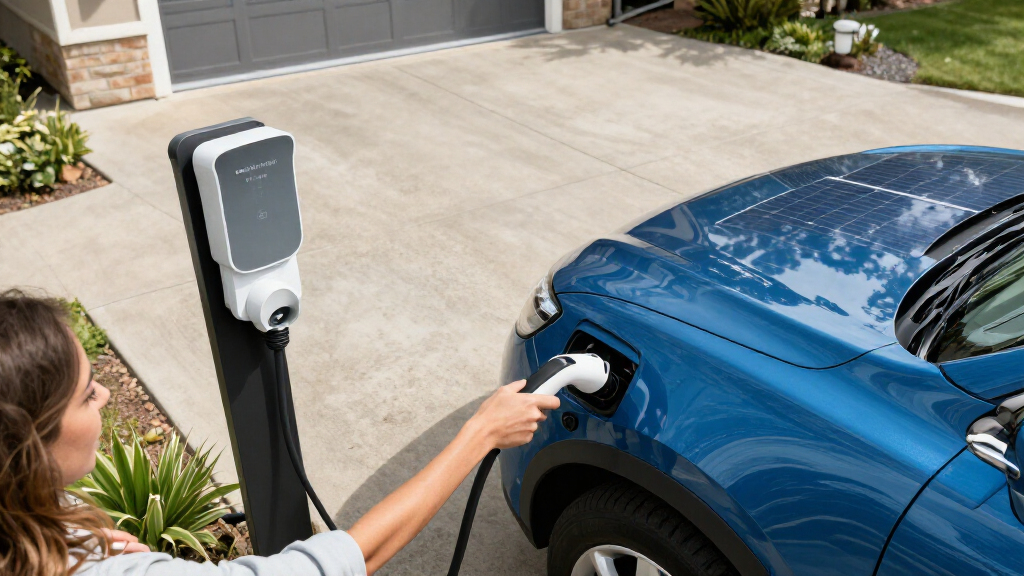
How We Picked
I compared these 15 stations around the decisions that affect daily ownership: charging output, installation type, connector compatibility, cable reach, portability, and smart controls. I also looked at whether the listed setup is plug-in or hardwired, what buyers may need to verify about their home circuit, and how each charger’s design fits a fixed garage, shared parking area, or occasional travel use. A charger’s stated amperage matters only when the vehicle and electrical installation can support it.
The ranking gives priority to broad usefulness and clear buyer fit, then separates specialized choices by their advantages and limitations. Higher-output and connected models rank well when their added capability has practical value, but a simple 40A plug-in charger can be a better choice for an existing NEMA 14-50 outlet. Portability, ruggedness, and connector type create distinct roles rather than automatic upgrades. Since the list does not establish vehicle-specific compatibility or installation conditions, I treat those as checks buyers must make before purchase.
| electric vehicle charging station | Connector |
|---|---|
| Raylix Portable Level 1 and Le | SAE J1772 |
| Emporia Pro Level 2 EV Charger | SAE J1772 |
| DEWALT Level 2 Electric Vehicl | SAE J1772 |
| ELEGRP Level 2 Portable EV Cha | J1772 |
| EVIQO Level 2 J1772 EV Charger | J1772 |
| BETUMODA Level 2 EV Charger | — |
| EVDANCE Level 2 Portable EV Ch | — |
| Lectron J1772 Level 2 EV Charg | — |
| Autel Home EV Charger up to 50 | — |
| Emporia Level 2 EV Charger | SAE J1772 |
| EVIQO EVIPOWER-2 Level 2 NACS | NACS |
| ChargePoint HomeFlex Level 2 E | J1772 |
| Grizzl-E Avalanche Edition Lev | — |
| IYILO Level 2 EV Charger | SAE J1772 |
| Autel MaxiCharger Level 2 EV C | — |
Factors to Consider When Choosing Best Electric Vehicle Charging Stations
I’d choose a charging station by working backward from the car, the parking spot, and the home electrical setup. A model with more features is not automatically the better match if it needs a costly circuit change or has the wrong connector. These checks can narrow the field before comparing individual chargers.
Match Charger Output to the Car and Circuit
A charger’s maximum amperage is a ceiling, not a promise that every vehicle will charge at that rate. Check the vehicle’s onboard AC charging limit, then compare it with the circuit capacity and the charger’s installation instructions. Many buyers overlook the continuous-load rules that affect EV charging circuit sizing, so a qualified electrician should confirm the circuit before installation. A 48A unit may be useful for a compatible vehicle on a suitable hardwired circuit, but it can be wasted capacity on a lower-limit car. If your setup is limited to a 240V receptacle and a 40A charger, prioritize a compatible plug-in model over a higher number on the box. Faster charging is only useful when the whole electrical path supports it.
Decide Between Plug-In and Hardwired Installation
A plug-in charger can make replacement or relocation simpler when you already have a compatible outlet, but the receptacle itself must be properly installed and rated for sustained EV charging. Hardwiring can support higher output and remove the plug-and-outlet connection, though it generally makes the charger a more permanent fixture. Buyers sometimes assume a NEMA 14-50 outlet is ready for any 40A charging load; have an electrician verify the wiring, breaker, outlet condition, and local code. Also check whether the charger’s amperage can be configured to match the circuit rather than assuming it will adjust automatically. If you expect to move soon or share a charger, plug-in may be more convenient. For a long-term installation, hardwiring may better suit the planned capacity.
Check the Connector Against Your Vehicle
Confirm the inlet on the specific vehicle and model year before choosing between J1772 and NACS equipment. Connector standards and adapter availability can vary by vehicle, and an adapter may affect convenience even when charging is supported. A J1772 charger is the common fit across many non-Tesla vehicles, while the EVIQO NACS model targets vehicles with a compatible NACS inlet. Do not rely on a general statement about a vehicle brand: verify the owner’s manual and charging port. If your household has cars with different inlets, think through which vehicle will use the station most often and whether an approved adapter is practical. That small compatibility check can prevent buying a charger that needs extra hardware or is awkward to share.
Measure the Route From Charger to Charge Port
Cable length matters most when the parking position cannot be controlled. Measure the distance from the likely mounting point to the vehicle’s charge port with the car parked in its usual position, and allow enough slack to route the cable without stretching it. A 25-foot cable can provide more parking flexibility than a shorter lead, but it can also take more wall space and need careful storage. Consider whether the port is at the front, rear, or side of the vehicle, especially if two cars share a driveway. Avoid routing cables across walkways or where a vehicle can roll over them. A portable charger may be easy to move, but portability does not remove the need for a safe, reachable outlet.
Separate Useful Smart Features From Extras
Wi-Fi, Bluetooth, scheduling, and power-management tools can help shift charging to preferred hours or track energy use, but their value depends on your routine and home setup. Before paying for connected features, check whether the charger can still operate if the network is down and whether its controls work through an app, onboard settings, or both. Power-sharing features matter more when multiple EVs or large household loads compete for electrical capacity. App requirements, account setup, and software support can affect long-term convenience, so review how the manufacturer handles updates and support. If you only need overnight charging, a simpler unit may be easier to maintain. Choose smart controls for a specific task, not just because they appear on the feature list.
Plan for Weather, Cable Care, and Long-Term Use
A charger mounted outside faces rain, temperature changes, dust, and possible impact, so review its stated environmental protections and installation guidance rather than assuming every Level 2 station is outdoor-ready. Cable flexibility in cold conditions and a secure holster can matter as much as the charger enclosure. In a garage, wall space and cable management may be the bigger concerns; outdoors, placement and protection from vehicle traffic deserve extra attention. A rugged model can make sense in a demanding location, but durability claims should be checked against the actual rating and warranty terms. Think about who will maintain the station and whether the cable can be stored without sharp bends. Good placement can reduce wear and make daily use easier regardless of brand.
Frequently Asked Questions
Should I choose a 40A charger or a 48A charger?
I’d start with the vehicle’s onboard AC charging limit and the home circuit, not the charger label alone. A 48A station can deliver more power only when the vehicle and electrical installation support it, and many such installations require hardwiring. A 40A plug-in model may be a better match for a suitable NEMA 14-50 setup and can be simpler to relocate. Ask an electrician to confirm circuit capacity and code requirements before selecting a unit. If your car cannot accept the extra output, the higher rating may not shorten charging time.
Can I use a plug-in EV charger with my existing NEMA 14-50 outlet?
Possibly, but the presence of a NEMA 14-50 receptacle does not by itself confirm that it is appropriate for continuous EV charging. Have an electrician check the outlet’s condition, wiring, breaker, and installation against the charger’s instructions and local requirements. Confirm that the charger’s plug matches the receptacle and that its current setting is compatible with the circuit. Avoid using extension cords or adapters unless the manufacturer specifically permits them. If the outlet is old, loose, or improperly wired, repair or replacement may be needed before charging.
Will a J1772 charger work with a vehicle that has a NACS port?
It may work with a suitable, vehicle-approved adapter, but compatibility depends on the car and the adapter rather than the charger alone. Check the owner’s manual for supported AC charging adapters and any limits on charging current. The lineup includes many J1772 options and one NACS model, so buyers with a NACS vehicle can compare native connector fit against the flexibility of an adapter. If more than one vehicle will use the station, consider the connector needs of each car. Verify the exact model year and inlet before ordering.
Do I need a Wi-Fi-enabled charger for home charging?
No. Wi-Fi can add scheduling, usage information, and remote controls, but a connected charger is not required for basic home charging. It is more useful if you want to coordinate charging with household energy use or manage a station from your phone. Check whether the charger retains its core charging function when the network is unavailable, and see what controls remain accessible without an app. For straightforward overnight charging, a simpler model may reduce setup and account-management steps. Choose connected features when they solve a real routine or energy-management need.
When is a portable EV charger a better choice than a wall-mounted station?
A portable model makes more sense when you need to move the charger between locations, travel with it, or avoid committing to a permanent mount. It still needs an appropriate power source at each location, and the outlet and circuit must be safe for the charger’s load. A wall-mounted station is usually easier to store and use every day in a fixed parking spot. Compare cable reach, plug type, and weather guidance before treating portability as a substitute for installation planning. For frequent home charging, choose based on the regular parking setup first and occasional travel second.
Conclusion
For the broadest mix of higher output and smart charging, I’d start with the Emporia Pro 48A as the best overall pick, provided the vehicle and hardwired circuit can use its capacity. The DEWALT 40A is a strong value-oriented choice for buyers who want connected features in a 240V plug-in format, while the Autel hardwired model is the premium fit for a permanent installation with higher-output needs. Beginners with a compatible NEMA 14-50 outlet may find a straightforward 40A plug-in model easier to plan around, after an electrician verifies the circuit. For portability, compare Raylix for Level 1 and Level 2 flexibility with the 40A portable options; for a NACS inlet, look closely at the EVIQO EVIPOWER-2. My final pick would depend on the connector, circuit, and parking layout first—then on smart features and extra capacity.