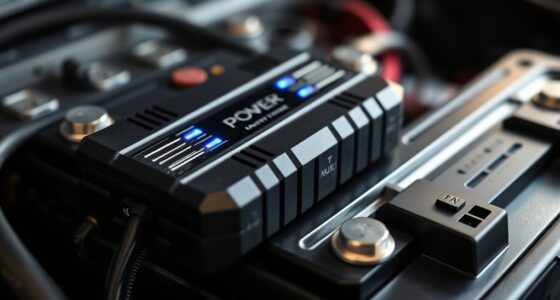
The best NACS EV home chargers balance charging speed, installation needs, and everyday ease of use. I rank the Emporia Level 2 Charger as my best overall pick for its 48A output, NEMA 14-50 connection, and listed UL and ENERGY STAR credentials. The Autel 50A hardwired charger stands out for buyers who want a smart, fixed installation, while the ELEGRP 40A plug-in charger offers a simpler route for homes with a suitable 14-50 outlet. The main tradeoff is between plug-in convenience and hardwired power, with amperage, cable reach, and electrical capacity shaping the right choice. Read on for my full comparison and guidance on matching a charger to your home.

Get backup power and energy gear delivered free with Prime
- Fast, free delivery on millions of items
- Prime Video, Amazon Music and more included
- Member-only deals all year
Key Takeaways
- Emporia is my best overall pick because it combines 48A charging with a NEMA 14-50 setup and listed UL and ENERGY STAR credentials; buyers still need to confirm their outlet and circuit can support the selected current.
- Hardwired models target a different buyer than plug-in units: Autel, Star Charge Juno, and the 48A EVIQO model suit fixed installations, while plug-in models are easier to remove or relocate when the home already has the right outlet.
- Amperage alone does not determine charging speed: a vehicle’s onboard charger and the home circuit can limit how much power a 48A or 50A EVSE delivers.
- The lineup has useful lower-current choices: AIMILER and EVDANCE offer 32A options for buyers prioritizing a less demanding setup over the higher output listed for several 40A–50A models.
- Similar product names can hide major installation differences: EVIQO’s 40A plug-in and 48A hardwired versions, and IYILO’s 32A, 40A, and 48A offerings, should be compared by connection type and output rather than brand name alone.
| ELEGRP 40A Level 2 EV Charger with NACS Connector and NEMA 14-50 Plug |  | Best Smart Plug-In Balance | Charging level: Level 2 | Maximum output: 40A / 9.6 kW | Connector: NACS | VIEW LATEST PRICE | See Our Full Breakdown |
| Autel Level 2 Home Smart EV Charger NACS, Up to 50A, Hardwired 240V, Indoor/Outdoor, 25-Foot Cable, Tesla Compatible |  | Best for High-Output Hardwired Charging | Connector: NACS | Input voltage: 240 V | Maximum current: 50 A | VIEW LATEST PRICE | See Our Full Breakdown |
| AIMILER Level 2 EV Charger, 32A, 25 ft Cable, NEMA 14-50 Plug, NACS Connector |  | Best for Straightforward 32A Charging | Connector: NACS | Plug: NEMA 14-50 | Input voltage: 240 V | VIEW LATEST PRICE | See Our Full Breakdown |
| IYILO Level 2 EV Charger, 48A, 11.5 kW, 240V |  | Best J1772 Option for Mixed-EV Homes | Connector: SAE J1772 | Maximum current: 48 A | Maximum power: 11.5 kW | VIEW LATEST PRICE | See Our Full Breakdown |
| SEGUMA 40A Level 2 EV Charger with NACS Connector and NEMA 14-50 Plug |  | Best for At-a-Glance Charging Status | Connector: NACS | Plug: NEMA 14-50 | Maximum output: 40A, 240V, 9.6 kW | VIEW LATEST PRICE | See Our Full Breakdown |
| EVIQO EVIPOWER-2 Level 2 NACS EV Charger, 40A, NEMA 14-50, 25 ft Cable |  | Best Overall Plug-In NACS Charger | Maximum current: 40A | Outlet: 240V NEMA 14-50 | Circuit requirement: Dedicated 50A circuit | VIEW LATEST PRICE | See Our Full Breakdown |
| EVDANCE Level 2 Portable EV Charger, 32A, 7.68 kW |  | Best Portable NACS Pick | Charging level: Level 2 | Output: 32A, 7.68 kW | Input voltage: 240V | VIEW LATEST PRICE | See Our Full Breakdown |
| IYILO Level 2 EV Charger for Tesla and NACS Vehicles, 48A, 11.5 kW |  | Best for High-Speed Hardwired Charging | Maximum output: 48A, 11.5 kW | Installation: Hardwired; 60A breaker and licensed electrician required | Adjustable current: 6A to 48A in 1A increments | VIEW LATEST PRICE | See Our Full Breakdown |
| Emporia Level 2 EV Charger, NEMA 14-50 EVSE with NACS, Compatible with Tesla, 48 A, 240 V, UL/ENERGY STAR, 25-ft Cable, White |  | Best for Flexible Installation | Voltage: 240V | Hardwired current: 48A | NEMA 14-50 current: 40A | VIEW LATEST PRICE | See Our Full Breakdown |
| IYILO Level 2 EV Charger for Tesla, 40A, 9.6 kW, NEMA 14-50 |  | Best Adjustable Plug-In Charger | Maximum current: 40A; adjustable from 6A to 40A in 1A increments | Maximum power: 9.6 kW | Plug type: NEMA 14-50 | VIEW LATEST PRICE | See Our Full Breakdown |
| Star Charge Juno Level 2 EV Charger, 50A, 240V, NACS, Hardwired |  | Best for Adjustable Charging | Charging level: Level 2 | Maximum output: 50A; up to 12 kW | Voltage: 240V | VIEW LATEST PRICE | See Our Full Breakdown |
| ChargePoint HomeFlex Level 2 Hardwired EV Charger with NACS Connector |  | Best for Tesla Drivers Who Want Networked App Control | Output voltage: 240V | Connector: NACS (Tesla) | Ports: 1 | VIEW LATEST PRICE | See Our Full Breakdown |
| EVIQO EVIPOWER-2 48A Hardwired NACS Level 2 EV Charger |  | Best for Certified Outdoor Installation | Charger type: Hardwired Level 2 | Maximum current: 48A; up to 50A with DIP-switch settings and a 70A circuit | Voltage: 240V | VIEW LATEST PRICE | See Our Full Breakdown |
| NACS EV home charger | Connector | Cable length | Warranty |
|---|---|---|---|
| ELEGRP 40A Level 2 EV Charger | NACS | 25 ft | 2 years |
| Autel Level 2 Home Smart EV Ch | NACS | 25 ft | 3 years |
| AIMILER Level 2 EV Charger | NACS | 25 ft | — |
| IYILO Level 2 EV Charger | SAE J1772 | 25 ft | 3 years |
| SEGUMA 40A Level 2 EV Charger | NACS | 25 ft | 1 year |
| EVIQO EVIPOWER-2 Level 2 NACS | NACS | 25 ft | 3 years |
| EVDANCE Level 2 Portable EV Ch | — | 25 ft | — |
| IYILO Level 2 EV Charger for T | NACS | 25 ft | — |
| Emporia Level 2 EV Charger | NACS | 25 ft | — |
| IYILO Level 2 EV Charger for T | NACS | 25 ft | 3 years |
| Star Charge Juno Level 2 EV Ch | NACS | 25 ft | — |
| ChargePoint HomeFlex Level 2 H | NACS (Tesla) | — | 3 years |
| EVIQO EVIPOWER-2 48A Hardwired | NACS | 25 ft | 3 years |
More Details on Our Top Picks
ELEGRP 40A Level 2 EV Charger with NACS Connector and NEMA 14-50 Plug
I’d put the ELEGRP near the top for buyers who want app features without giving up a plug-in setup. Its 40A output reaches 9.6 kW, while adjustable current lets you dial back charging to suit the circuit or household schedule. The 25-foot cable offers more parking flexibility than a short lead, and app scheduling, energy monitoring, and RFID access give it more control than the simpler display-led SEGUMA. It also has a Type 4-rated enclosure for indoor or outdoor placement. The tradeoff is that 40A operation needs a 50A breaker and a NEMA 14-50 outlet, so it is not a solution for homes that need hardwiring. Its two-year warranty is shorter than Autel’s three-year coverage.
Pros:- Up to 40A and 9.6 kW output with adjustable current from 8A to 40A
- App supports charging schedules and energy monitoring
- Includes RFID access control and a 25-foot cable
- Type 4-rated enclosure is designed for indoor and outdoor use
Cons:- 40A charging requires a 50A breaker and NEMA 14-50 outlet
- Two-year warranty is shorter than the three-year coverage listed for Autel
- Lower maximum output than the hardwired 50A Autel charger
Best for: NACS drivers with an existing 240V NEMA 14-50 outlet who want scheduling, energy tracking, and RFID access in one plug-in charger.
Not ideal for: Homeowners seeking maximum charging output or a hardwired installation; this unit tops out at 40A and requires a compatible outlet.
- Charging level:Level 2
- Maximum output:40A / 9.6 kW
- Connector:NACS
- Plug:NEMA 14-50
- Cable length:25 ft
- Current adjustment:8A–40A
- Connectivity:2.4 GHz Wi-Fi and app
- Access control:RFID card
- Warranty:2 years
Our verdict“Choose the ELEGRP if you want a feature-rich NACS charger that plugs into an existing NEMA 14-50 outlet rather than requiring hardwiring.”
Autel Level 2 Home Smart EV Charger NACS, Up to 50A, Hardwired 240V, Indoor/Outdoor, 25-Foot Cable, Tesla Compatible
For a homeowner planning a permanent installation, the Autel’s 50A, 12 kW output is the clearest reason to choose it over plug-in options such as the ELEGRP and SEGUMA, both rated at 40A. That added capacity can shorten charging sessions when the vehicle and home circuit support it. Autel also pairs its output with a 25-foot cold-resistant cable, a NEMA 4X enclosure, and app controls for scheduling, firmware updates, and RFID access. Its Wi-Fi, Bluetooth, and Ethernet connectivity provide more connection choices than the 2.4 GHz Wi-Fi-only IYILO J1772 model. The tradeoff is a fully hardwired installation that calls for a qualified electrician; there is no outlet-plug option. Its NACS connector also means other EVs may need an adapter.
Pros:- Up to 50A and 12 kW output
- 25-foot cable is designed to remain flexible in extreme cold
- NEMA 4X enclosure suits indoor and outdoor installation
- App scheduling, OTA updates, RFID access, and Wi-Fi, Bluetooth, and Ethernet connectivity
Cons:- Hardwired installation requires a qualified electrician
- No plug-in option for homes with a suitable outlet
- Non-NACS EVs require an adapter
Best for: Tesla and NACS EV owners adding a hardwired home circuit who prioritize higher charging capacity, outdoor durability, and connected controls.
Not ideal for: Renters, outlet-based installations, or households with non-NACS vehicles that do not want to use an adapter.
- Connector:NACS
- Input voltage:240 V
- Maximum current:50 A
- Maximum power:12 kW
- Cable length:25 ft
- Installation:Hardwired, wall mount
- Connectivity:Bluetooth, Wi-Fi, Ethernet
- Enclosure:NEMA 4X
- Warranty:3 years
Our verdict“Pick the Autel for a permanent NACS installation where higher output and an outdoor-ready build matter more than plug-in convenience.”
AIMILER Level 2 EV Charger, 32A, 25 ft Cable, NEMA 14-50 Plug, NACS Connector
The AIMILER is the lower-output plug-in choice for NACS drivers who want useful controls without stepping up to 40A models such as the ELEGRP or SEGUMA. At 32A and 7.68 kW, it trades charging speed for a more modest capacity, while adjustable current from 16A to 32A helps match charging to the available circuit. Its screen shows charging and voltage information at the unit, so basic status checks do not depend on opening an app. Plug-and-charge operation keeps everyday use simple, with app scheduling available when desired. The 25-foot cable and NEMA Type 4-rated enclosure add flexibility, though the listing advises against direct sunlight or rain exposure. Initial app setup requires 2.4 GHz Wi-Fi, and J1772 vehicles need a separate adapter.
Pros:- Adjustable current from 16A to 32A
- On-device screen displays charging and voltage information
- 25-foot cable supports flexible parking positions
- Plug-and-charge operation with app control and scheduling
Cons:- Maximum output is 7.68 kW, below the ELEGRP and SEGUMA 40A models
- Initial app connection requires 2.4 GHz Wi-Fi
- Listing advises against direct sunlight or rain exposure
Best for: NACS drivers with a NEMA 14-50 outlet who want a clear on-device display and adjustable charging at up to 32A.
Not ideal for: Drivers seeking faster 40A-or-higher charging, or households that need a charger suited to exposed outdoor placement.
- Connector:NACS
- Plug:NEMA 14-50
- Input voltage:240 V
- Maximum current:32 A
- Maximum charging power:7.68 kW
- Current adjustment:16A–32A
- Cable length:25 ft
- Water protection:NEMA Type 4; approximately IP66 as described
- Safety protection:Built-in CCID-20 leakage detection and protection
Our verdict“Choose the AIMILER if a 32A ceiling meets your needs and you value an on-unit display over the extra output of 40A plug-in alternatives.”
IYILO Level 2 EV Charger, 48A, 11.5 kW, 240V
This IYILO is the lineup’s J1772 option, so its place in a NACS-focused roundup depends on whether a home has more than one connector standard. Its 48A, 11.5 kW output exceeds the 40A plug-in ELEGRP and SEGUMA, but reaching full output requires hardwiring and a 60A breaker. The J1772 cable works directly with compatible North American EVs and plug-in hybrids; Tesla and other NACS drivers need a separate adapter. That makes it a better fit for a mixed household than the NACS-only Autel, though less direct for a Tesla-only garage. App scheduling, energy tracking, RFID access, and over-the-air updates add control, while connector temperature monitoring can stop charging if it overheats. The main compromise is installation complexity, along with 2.4 GHz-only Wi-Fi.
Pros:- Up to 48A and 11.5 kW output
- Adjustable current from 6A to 48A in 1A increments
- J1772 connector supports compatible EVs and plug-in hybrids
- App scheduling, energy tracking, RFID access, and connector overheat protection
Cons:- Maximum output requires hardwiring, a 60A breaker, and a licensed electrician
- Tesla and other NACS vehicles need an adapter that is not included
- Wi-Fi supports 2.4 GHz only
Best for: Households with J1772 EVs or plug-in hybrids that want high-output hardwired charging and can use an adapter for a NACS vehicle.
Not ideal for: Tesla-only homes seeking a native NACS connector or buyers who want a plug-in charger without a major electrical installation.
- Connector:SAE J1772
- Maximum current:48 A
- Maximum power:11.5 kW
- Voltage:240 V
- Current adjustment:6A–48A in 1A increments
- Cable length:25 ft
- Installation:Hardwired; 60A breaker required for 48A output
- Wi-Fi:2.4 GHz only
- Warranty:3 years
Our verdict“Choose this IYILO when J1772 compatibility matters more than a native NACS connector and a hardwired 48A installation suits your home.”
SEGUMA 40A Level 2 EV Charger with NACS Connector and NEMA 14-50 Plug
The SEGUMA earns a distinct spot for drivers who want charging information visible on the unit rather than primarily in an app. Its 2.4-inch TFT display shows charging rate, voltage, and elapsed time, while a delay-start timer and selectable current settings make it practical for scheduled home charging. With 40A and 9.6 kW maximum output, it matches the ELEGRP on power and cable length, but favors a simple display-and-timer approach over ELEGRP’s app-based energy monitoring and RFID access. The IP66 rating and included storage bag suit buyers who may move or store the charger, though it still needs a NEMA 14-50 outlet. Its one-year warranty is notably shorter than the ELEGRP’s two years, and the listing does not specify the same app controls.
Pros:- 40A, 9.6 kW maximum output with selectable current settings
- 2.4-inch TFT display shows charging rate, voltage, and time
- 25-foot cable and included storage bag support portable use
- IP66-rated design with multiple electrical protections
Cons:- Requires a compatible 240V NEMA 14-50 outlet
- One-year warranty is shorter than the ELEGRP’s two-year coverage
- Does not list the app-based energy monitoring and RFID access offered by ELEGRP
Best for: NACS drivers who want a portable NEMA 14-50 charger with an easy-to-read display, delay timer, and storage bag.
Not ideal for: Buyers who prioritize app-based energy tracking, RFID access, or longer warranty coverage; the ELEGRP offers a stronger fit for those needs.
- Connector:NACS
- Plug:NEMA 14-50
- Maximum output:40A, 240V, 9.6 kW
- Current settings:10A, 16A, 20A, 24A, 32A, 40A
- Cable length:25 ft
- Display:2.4-inch TFT
- Ingress protection:IP66
- Operating temperature:-22°F to 122°F
- Warranty:1 year
Our verdict“Pick the SEGUMA if an on-device display and portability matter more to you than app-based monitoring or longer warranty coverage.”
EVIQO EVIPOWER-2 Level 2 NACS EV Charger, 40A, NEMA 14-50, 25 ft Cable
The EVIQO EVIPOWER-2 is a strong fit for drivers who want a capable NACS charger without committing to hardwired installation. Its 40A output and 25-foot cable give it more charging headroom than the fixed 32A EVDANCE, while the NEMA 14-50 connection keeps installation straightforward when a suitable outlet and dedicated circuit are already in place. The app adds scheduling and energy tracking, useful for setting a routine and monitoring household charging.
Compared with the hardwired IYILO 48A, this EVIQO gives up peak output but avoids that model’s 60A-breaker and electrician requirements. Its IP66 / NEMA 4 weather protection supports indoor or outdoor placement. The tradeoffs are the required 50A circuit, 2.4 GHz-only Wi-Fi, and a J1772 adapter sold separately.
Pros:- Native NACS connector works with compatible vehicles without an adapter.
- 40A output exceeds the fixed 32A EVDANCE charger.
- App supports scheduling, charging controls, and energy tracking.
- IP66 / NEMA 4 protection and a 25-foot cable suit varied mounting locations.
Cons:- Needs a NEMA 14-50 outlet on a dedicated 50A circuit.
- J1772 adapter is not included.
- App connectivity requires 2.4 GHz Wi-Fi.
Best for: NACS drivers with a dedicated NEMA 14-50 outlet who want app scheduling, outdoor-rated construction, and more output than a 32A portable charger.
Not ideal for: Drivers without a 50A circuit, households seeking maximum hardwired charging speed, or owners who need included J1772 compatibility.
- Maximum current:40A
- Outlet:240V NEMA 14-50
- Circuit requirement:Dedicated 50A circuit
- Connector:NACS
- Cable length:25 ft
- Wi-Fi:2.4 GHz
- Weather protection:IP66 / NEMA 4
- Certifications:UL, ETL, FCC, Energy Star
- Warranty:3 years
Our verdict“Choose the EVIQO EVIPOWER-2 if you have the required outlet and want a well-equipped, outdoor-capable plug-in NACS charger.”
EVDANCE Level 2 Portable EV Charger, 32A, 7.68 kW
The EVDANCE Level 2 Portable EV Charger is the straightforward choice for drivers who value portability over higher charging output. It delivers 32A at 7.68 kW and includes a 25-foot cable, making it useful for a garage setup that may also need to travel. Its IP66 weather resistance and protections against overvoltage, overcurrent, and overheating add practical safeguards for everyday charging.
It is less powerful than the 40A EVIQO EVIPOWER-2 and IYILO 40A, so it will take longer to replenish a vehicle when both are connected to suitable circuits. In return, its appeal is a simpler, portable design rather than app-based controls: the supplied information does not list scheduling or energy tracking. It still depends on a compatible NEMA 14-50 outlet, and adapters for other outlet types are separate purchases.
Pros:- Portable design and 25-foot cable offer flexibility between suitable charging locations.
- IP66 weather protection supports outdoor use.
- Includes overvoltage, overcurrent, and overheating protection.
- Compatible with Tesla Model S, 3, X, and Y and other NACS vehicles.
Cons:- Fixed 32A output is lower than the 40A EVIQO and IYILO plug-in chargers.
- Requires a compatible NEMA 14-50 outlet on a 40A or 50A circuit.
- Adapters for other outlet types are sold separately, and app features are not listed.
Best for: Tesla and other NACS vehicle owners who want a portable 240V charger with a long cable and basic built-in safety protections.
Not ideal for: Drivers who need faster charging than 32A provides, app scheduling or energy tracking, or a charger that works with their existing outlet without a separate adapter.
- Charging level:Level 2
- Output:32A, 7.68 kW
- Input voltage:240V
- Cable length:25 ft
- Weather resistance:IP66
- Outlet compatibility:NEMA 14-50
- Circuit requirement:40A or 50A circuit
- Safety features:Overvoltage, overcurrent, and overheating protection
Our verdict“Pick the EVDANCE if portability and basic weather and electrical protections matter more to you than higher output or app controls.”
IYILO Level 2 EV Charger for Tesla and NACS Vehicles, 48A, 11.5 kW
For drivers planning a permanent installation, the IYILO 48A makes the strongest case for output: it delivers up to 11.5 kW with adjustable current from 6A to 48A. That flexibility can help match charging to a home’s electrical capacity, while power sharing lets two chargers use one circuit. App tools cover scheduling, time-of-use rates, and energy tracking, and connector temperature monitoring can reduce power or shut the unit off if heat rises above its stated threshold.
Compared with the plug-in EVIQO EVIPOWER-2, this model can charge faster but requires hardwiring, a 60A breaker, and a licensed electrician. Its 25-foot cable matches the EVIQO’s reach, though the IYILO is the better fit when installation permanence and higher output matter more than a plug. The J1772 adapter is not included, and Wi-Fi is limited to 2.4 GHz.
Pros:- Up to 48A and 11.5 kW, with current adjustable in 1A increments.
- Power sharing supports two chargers on one circuit.
- App includes scheduling, time-of-use features, and energy tracking.
- Connector temperature monitoring can reduce output or shut off charging.
Cons:- Hardwired installation requires a 60A breaker and licensed electrician.
- J1772 adapter is required for those vehicles and is not included.
- Wi-Fi supports 2.4 GHz only; dynamic load balancing requires an optional energy meter.
Best for: NACS vehicle owners with a suitable electrical panel who want high-output hardwired charging, adjustable current, or power sharing for two chargers.
Not ideal for: Renters, buyers who need a plug-in installation, households without capacity for a 60A breaker, or owners who need included J1772 support.
- Maximum output:48A, 11.5 kW
- Installation:Hardwired; 60A breaker and licensed electrician required
- Adjustable current:6A to 48A in 1A increments
- Connector:NACS
- Cable length:25 ft
- App connectivity:2.4 GHz Wi-Fi
- Power management:Power sharing for two chargers; dynamic load balancing requires optional energy meter
- Safety feature:Connector temperature monitoring; reduces power or shuts off above 221°F (105°C)
- Certifications:ETL, Energy Star, CSA; UL 2594 test report
Our verdict“Choose this IYILO when you can support a hardwired 60A installation and want adjustable output beyond what plug-in options such as the EVIQO EVIPOWER-2 provide.”
Emporia Level 2 EV Charger, NEMA 14-50 EVSE with NACS, Compatible with Tesla, 48 A, 240 V, UL/ENERGY STAR, 25-ft Cable, White
The Emporia Level 2 EV Charger stands apart by offering two installation paths: a NEMA 14-50 plug at up to 40A or hardwiring for up to 48A. That lets a buyer start with an existing suitable outlet or choose higher output through a hardwired installation, unlike the 48A IYILO, which is hardwired only. Native NACS connection avoids an adapter for compatible vehicles, and Wi-Fi scheduling and energy monitoring provide useful control over charging routines.
Emporia lists up to 38 miles of range per hour on the NEMA setup and up to 46 miles per hour when hardwired; actual results depend on the vehicle and conditions. The tradeoff is that the higher-output option requires a hardwired installation, while the plug-in configuration gives up some charging speed. Its stated connection choices are limited to NEMA 14-50 or hardwired, and Wi-Fi is 2.4 GHz.
Pros:- Offers both NEMA 14-50 plug-in and hardwired installation options.
- Native NACS connector works with compatible vehicles without an adapter.
- Hardwired configuration supports up to 48A and a stated 46 miles of range per hour.
- Wi-Fi supports charging schedules and energy monitoring.
Cons:- NEMA 14-50 configuration is limited to 40A and a stated 38 miles of range per hour.
- Hardwired installation is needed for maximum output and may require professional work.
- Wi-Fi is limited to 2.4 GHz.
Best for: NACS vehicle owners deciding between a plug-in setup and a higher-output hardwired installation, especially those who want scheduling and energy monitoring.
Not ideal for: Buyers who need an installation option beyond NEMA 14-50 or hardwiring, or who want maximum output without hardwired installation.
- Voltage:240V
- Hardwired current:48A
- NEMA 14-50 current:40A
- Connector:NACS
- Cable length:25 ft
- Charging speed:Up to 46 miles/hour hardwired; up to 38 miles/hour on NEMA 14-50
- Wi-Fi:2.4 GHz
- Certifications:UL listed, Energy Star certified
Our verdict“Choose Emporia if you want the choice of a 40A plug-in setup or 48A hardwired charging, rather than the hardwired-only IYILO 48A.”
IYILO Level 2 EV Charger for Tesla, 40A, 9.6 kW, NEMA 14-50
The IYILO 40A NEMA 14-50 gives plug-in buyers a useful middle ground: it reaches 9.6 kW and lets the user set current from 6A to 40A in 1A steps. That adjustability is a practical distinction from the fixed 32A EVDANCE, particularly when a driver wants to tailor charging to a home circuit or a preferred charging schedule. Its app supports scheduling and energy tracking, while temperature monitoring and electrical protections add another layer of oversight.
Compared with the EVIQO EVIPOWER-2, both are 40A NACS plug-in options with 25-foot cables, but this IYILO adds adjustable current and temperature monitoring. The supplied details specify a NEMA 4 waterproof rating and ETL, Energy Star, and UL 2594 credentials. It still needs a compatible 240V NEMA 14-50 outlet, and its app is limited to 2.4 GHz Wi-Fi. J1772 drivers need a separate adapter.
Pros:- Current adjusts from 6A to 40A in 1A increments.
- App provides scheduled charging and energy tracking.
- Temperature monitoring and overcurrent, overvoltage, leakage, and short-circuit protections are listed.
- 25-foot cable and NEMA 4 waterproof rating suit a range of home installations.
Cons:- Requires a compatible 240V NEMA 14-50 outlet.
- J1772 adapter is not included.
- Wi-Fi supports 2.4 GHz only.
Best for: NACS drivers with a NEMA 14-50 outlet who want app scheduling and the ability to tune charging current below the 40A maximum.
Not ideal for: Drivers without a compatible 240V outlet, J1772 owners who do not want to buy an adapter, or households that rely on 5 GHz Wi-Fi for connected devices.
- Maximum current:40A; adjustable from 6A to 40A in 1A increments
- Maximum power:9.6 kW
- Plug type:NEMA 14-50
- Voltage:240V
- Connector:NACS
- Cable length:25 ft
- Connectivity:2.4 GHz Wi-Fi
- Certifications:ETL, Energy Star, UL 2594
- Warranty:3 years
Our verdict“Pick the IYILO 40A if you want a plug-in NACS charger with adjustable output and app controls, rather than the EVDANCE’s fixed 32A design.”
Star Charge Juno Level 2 EV Charger, 50A, 240V, NACS, Hardwired
The Star Charge Juno pairs a high 50A maximum output with fine-grained current adjustment from 6A to 50A, giving households more flexibility to match charging to their electrical setup. Its 25-foot NACS cable can reach across varied parking positions, while app scheduling and Alexa control suit drivers who want to manage sessions remotely. Compared with the ChargePoint HomeFlex, Juno offers a higher stated maximum amperage and broader current adjustment, but ChargePoint lists a three-year warranty and a cold-resistant cable. Juno’s NEMA 4 enclosure supports indoor or outdoor placement, though hardwiring calls for a qualified electrician. The app also depends on 2.4 GHz Wi-Fi, and owners of J1772 vehicles need to supply a separate adapter.
Pros:- Up to 50A and 12 kW output, with current adjustment in 1A steps
- 25-foot NACS cable offers flexible reach to the vehicle
- App scheduling, charging records, shared access, and Alexa control
- NEMA 4 enclosure and built-in electrical protections support indoor or outdoor installation
Cons:- Hardwired installation requires a qualified electrician
- J1772 adapter is not included
- App features require a 2.4 GHz Wi-Fi network
Best for: NACS-vehicle households seeking high output, adjustable charging current, and Alexa or app-based scheduling.
Not ideal for: Renters or drivers who need a plug-in installation, use only J1772 vehicles without an adapter, or lack 2.4 GHz Wi-Fi.
- Charging level:Level 2
- Maximum output:50A; up to 12 kW
- Voltage:240V
- Connector:NACS
- Cable length:25 ft
- Installation:Hardwired, rear-entry
- Connectivity:2.4 GHz Wi-Fi; Alexa voice control
- Current adjustment:6–50A in 1A steps
Our verdict“Choose the Juno if you want 50A charging with precise current control and smart features, and are prepared for hardwired installation.”
ChargePoint HomeFlex Level 2 Hardwired EV Charger with NACS Connector
The ChargePoint HomeFlex is a focused choice for Tesla households that value a familiar charging app and access to ChargePoint’s charging network. It is rated for up to 45 miles of range per hour, depending on the vehicle, and its cold-resistant cable is a practical plus for outdoor installations in colder conditions. Against the Star Charge Juno, HomeFlex gives up some stated peak output—the Juno reaches 50A, while this model is listed at up to 45 miles per hour—but adds a three-year warranty and network access. Its listed circuit requirement spans 20A or 80A, so buyers should confirm the right electrical configuration with an electrician before purchase. The Tesla-focused compatibility is a limit for mixed-connector households, and hardwired installation rules it out for anyone seeking a plug-in setup.
Pros:- NACS connector is specified for Tesla vehicles
- Charging speed listed at up to 45 miles of range per hour, depending on vehicle
- App controls and access to ChargePoint’s charging network
- Cold-resistant cable, indoor or outdoor installation, and three-year warranty
Cons:- Hardwired installation requires an electrician
- Product compatibility is listed for Tesla vehicles, limiting its fit for other connector types
- Circuit requirement is listed as 20A or 80A, so installation needs careful electrical planning
Best for: Tesla owners who want a hardwired NACS charger with app controls, a cold-resistant cable, and ChargePoint network access.
Not ideal for: Households with J1772-only vehicles or buyers who need a plug-in charger or a clearly stated adjustable amperage range.
- Output voltage:240V
- Connector:NACS (Tesla)
- Ports:1
- Charging speed:Up to 45 miles of range per hour, depending on vehicle
- Circuit requirement:20A or 80A circuit
- Installation:Hardwired; indoor or outdoor
- Certification:UL-certified; NEMA
- Warranty:3 years
Our verdict“Pick HomeFlex if you drive a Tesla and value ChargePoint app and network access more than the higher stated amperage of the Star Charge Juno.”
EVIQO EVIPOWER-2 48A Hardwired NACS Level 2 EV Charger
The EVIQO EVIPOWER-2 makes a strong case for buyers who want a hardwired NACS charger with a clearly stated certification set: UL, ETL, FCC, and Energy Star. It delivers up to 48A on a dedicated 60A circuit, and its 25-foot cable helps when the parking spot is not directly beside the charger. App scheduling and energy tracking add useful control, while the weather-protected housing and glow-in-the-dark holster suit outdoor use. Compared with the Star Charge Juno, EVIQO has a lower standard maximum current, though its specifications allow up to 50A with DIP-switch settings and a 70A circuit. That higher setting requires an even more demanding electrical setup. The three-year warranty is a plus, but J1772 cars need a separate adapter, and app connectivity requires 2.4 GHz Wi-Fi.
Pros:- UL, ETL, FCC, and Energy Star certifications are listed
- 25-foot NACS cable supports flexible parking layouts
- App offers charging controls, scheduling, and energy tracking
- Weather-protected housing, glow-in-the-dark holster, and three-year warranty
Cons:- 48A operation requires a dedicated 60A circuit and licensed electrician
- J1772 vehicles need a separate adapter
- App connectivity requires a 2.4 GHz Wi-Fi network
Best for: Homeowners installing a hardwired NACS charger outdoors who want listed safety certifications, a long cable, and app-based energy tracking.
Not ideal for: Drivers without a dedicated circuit and licensed electrician, or J1772 owners who do not want to source an adapter separately.
- Charger type:Hardwired Level 2
- Maximum current:48A; up to 50A with DIP-switch settings and a 70A circuit
- Voltage:240V
- Connector:NACS
- Cable length:25 ft
- Wi-Fi:2.4 GHz
- Certifications:UL, ETL, FCC, Energy Star
- Warranty:3 years
Our verdict“Choose EVIQO for a certification-focused outdoor installation with a long cable, but compare its 48A standard setup with the Star Charge Juno if maximum output is your priority.”

How We Picked
I ranked these chargers around the decisions that shape a home installation: electrical connection, maximum current, compatibility with NACS vehicles, cable reach, and day-to-day usability. I gave extra weight to clearly stated specifications and listed safety or efficiency credentials, while treating advertised amperage as a ceiling rather than a promise of vehicle charging speed. A charger’s useful output depends on the vehicle’s onboard charger and the circuit available at the home.
The ranking favors options with a practical balance of capability, installation flexibility, and clear buyer fit. That puts the Emporia plug-in model ahead for its combination of 48A output and stated credentials, while hardwired picks rise for buyers seeking a permanent installation or higher listed current. Lower-current and portable models remain relevant for different electrical setups and travel needs, but they rank lower for buyers whose main goal is a permanent, high-output home charger. I do not treat product names or similar model numbers as proof that versions share the same specifications.
| NACS EV home charger | Connector |
|---|---|
| ELEGRP 40A Level 2 EV Charger | NACS |
| Autel Level 2 Home Smart EV Ch | NACS |
| AIMILER Level 2 EV Charger | NACS |
| IYILO Level 2 EV Charger | SAE J1772 |
| SEGUMA 40A Level 2 EV Charger | NACS |
| EVIQO EVIPOWER-2 Level 2 NACS | NACS |
| EVDANCE Level 2 Portable EV Ch | — |
| IYILO Level 2 EV Charger for T | NACS |
| Emporia Level 2 EV Charger | NACS |
| IYILO Level 2 EV Charger for T | NACS |
| Star Charge Juno Level 2 EV Ch | NACS |
| ChargePoint HomeFlex Level 2 H | NACS (Tesla) |
| EVIQO EVIPOWER-2 48A Hardwired | NACS |
Factors to Consider When Choosing Best NACS EV Home Chargers
Before choosing among these NACS chargers, I would start with the home’s electrical capacity and the vehicle’s charging limit—not the charger’s headline amperage. These broader checks can prevent an expensive mismatch and help distinguish a convenient plug-in unit from a better-fitting permanent installation.
Match Charger Output to Your Circuit and Vehicle
A charger’s maximum amperage describes its capacity, not the power every car will receive. The vehicle’s onboard AC charger can set a lower ceiling, and a restricted household circuit can limit the EVSE as well. Have an electrician confirm the circuit rating and the appropriate continuous load before choosing a 40A, 48A, or 50A unit. Avoid selecting the highest number on a product page without checking those limits. If your vehicle cannot use the extra output, a lower-current charger may meet your needs without requiring a larger electrical project.
Choose Plug-In or Hardwired Based on the Installation
A NEMA 14-50 charger can be convenient when a correctly installed outlet is already available and rated for the intended load. A plug does not make an unsuitable or undersized outlet safe, and repeated high-current use can expose problems with poor wiring or receptacle quality. Hardwired chargers avoid the outlet connection and can suit a permanent installation, but they require fixed wiring and are less straightforward to take with you. Ask an electrician to compare installation requirements before ordering, especially if a new circuit is needed. The right choice depends on the home and your plans to move or replace the charger, not simply on which connection looks easier.
Treat Cable Length as a Parking-Layout Decision
A 25-foot cable, listed on several models here, can make it easier to reach a charge port on different parts of a parked vehicle. Still, the best length depends on where the panel, charger, and parking spaces sit relative to one another. Measure the real cable path, allowing for turns and for the charger’s mounting position, rather than measuring only the straight-line distance. An overly short cable may force awkward parking, while extra length can become harder to store neatly. Check the vehicle’s charge-port location and whether the cable can reach without crossing a walkway or driveway route.
Separate NACS Connector Fit From Vehicle Charging Capability
A NACS connector identifies the plug style at the vehicle end, but it does not by itself establish charging speed or compatibility with every vehicle and installation. Confirm that the exact charger version is intended for your vehicle and check the vehicle maker’s guidance on home AC charging. Model names can cover different amperage or wiring versions, as the IYILO and EVIQO entries in this roundup show. Verify the product’s complete model number and supplied connector before buying. If you may change vehicles, check the next car’s charging inlet and whether an approved adapter or a different EVSE will be needed.
Decide Whether Smart Features Will Change Your Routine
App controls and scheduled charging can help coordinate charging with a vehicle’s settings or a utility’s time-of-use plan. They add less value if you prefer simple plug-in charging or your vehicle already handles scheduling reliably. Check which controls work without an internet connection, whether the charger needs Wi-Fi at its mounting location, and what information the app provides. Do not assume that a smart label means every feature is available with every vehicle or utility plan. Choose connected functions that solve a specific routine problem rather than paying attention to feature lists alone.
Check Certification, Installation Support, and Future Service
Before ordering, verify safety certification for the exact model and version, not just a brand or product family. Credentials listed for one unit should not be assumed to apply to another charger from the same manufacturer. Review the installation instructions, warranty terms, and support channels so you know who handles a fault or replacement. A clear specification sheet also helps an electrician confirm compatibility before installation. These checks can matter more over the charger’s service life than a small difference in maximum current.
Frequently Asked Questions
Will a 48A or 50A NACS charger charge my EV faster than a 40A model?
Only if your vehicle’s onboard AC charger and home circuit can accept the higher output. The charger’s amperage rating is its upper limit, not a guaranteed charging rate for every car. A vehicle with a lower AC charging limit will not gain speed from a higher-rated EVSE. A higher-output unit can still make sense if you plan to keep it through a vehicle change, but the circuit and installation must support it. Compare the vehicle specification and have an electrician verify the circuit before choosing between the 40A, 48A, and 50A options.
Can I plug a 40A or 48A charger into any NEMA 14-50 outlet?
No. The outlet, wiring, breaker, and circuit must be suitable for the charger’s intended continuous load, and an existing receptacle may not meet that requirement. A NEMA 14-50 label alone does not confirm that the outlet was installed or maintained for regular EV charging. Ask an electrician to inspect the circuit and confirm the permitted charging current. Follow the charger maker’s instructions rather than assuming the unit can run at full output from every 14-50 socket. If the outlet or circuit needs substantial work, compare the cost and practicality of a hardwired installation.
Should I buy a plug-in charger or a hardwired NACS charger?
A plug-in model can suit a home with a verified compatible outlet, and it is generally easier to remove if you move or change the setup. Hardwired units are fixed in place and may be a better match for a permanent installation or a home without a suitable receptacle. Neither connection style is automatically faster or safer; the result depends on the specific charger and electrical work. Installation cost, circuit capacity, and the charger’s instructions should guide the choice. For a new installation, ask an electrician to quote both approaches before settling on a model.
Do I need a 25-foot cable for a home NACS charger?
Not necessarily; the right length depends on the charger location, parking position, and where the vehicle’s charge port sits. Measure the route the cable must take, including turns and the distance needed to reach the port comfortably. A longer cable can accommodate more parking positions, but it also needs a safe place to hang when not in use. Avoid relying on an extension cord unless the charger maker explicitly permits the exact setup. If more than one vehicle uses the charger, check reach for both before choosing a cable length.
What should I check before buying a NACS charger for a second EV?
Confirm that both vehicles can use the charger’s connector and charging protocol, and compare each car’s maximum AC charging rate. A charger that suits one vehicle may deliver less power to the other, or require a manufacturer-approved adapter. Check that the cable reaches both charge ports from the intended parking position. If the vehicles charge on different schedules, app controls or each car’s own scheduling settings may help avoid routine conflicts. Also check the electrical circuit’s capacity before planning for frequent back-to-back charging.
Conclusion
For most buyers seeking a capable home setup, I recommend the Emporia 48A NEMA 14-50 model as the best overall, provided the outlet and circuit are confirmed suitable. The best value fit is the ELEGRP 40A plug-in option for a buyer with a compatible 14-50 outlet who does not need the higher listed output; the AIMILER 32A is another sensible lower-current route. For a premium, fixed installation, compare the Autel 50A and Star Charge Juno hardwired models, then choose based on the exact features and electrical requirements that matter to you. I’d point a first-time home charger buyer toward a clearly matched plug-in unit only after an electrician verifies the circuit, while a shopper wanting a permanent higher-output setup should focus on hardwired options such as the 48A EVIQO. Choose by verified installation fit, vehicle capability, and cable reach—not by amperage alone.
Halloween Picks

12-Foot Inflatable Pumpkin Halloween Archway with LED Lights

11.2-Foot Halloween Inflatable Pumpkin with LED Lights

Spirit Halloween 54-Inch Sitting Scarecrow Animatronic
As an affiliate, we earn on qualifying purchases.