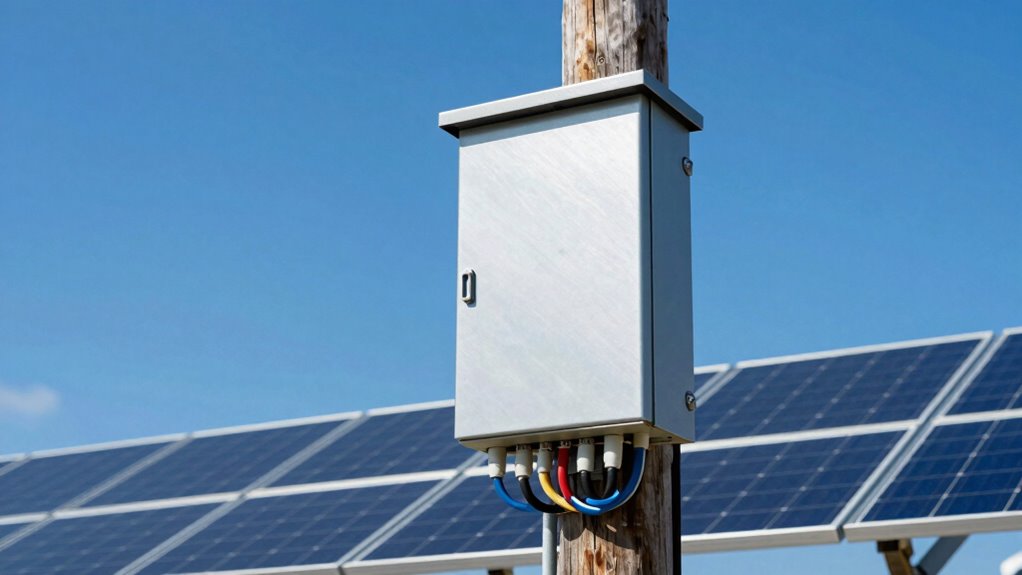

A solar combiner box is essential if you have multiple solar panel strings and need to connect them efficiently to your inverter. It simplifies wiring, consolidates your system’s energy, and improves safety and performance. However, if your system is small with just a few panels, a combiner box may not be necessary, and simple connections could suffice. To determine the right setup and ensure your system operates smoothly, understanding more details can be very helpful.
Key Takeaways
- Use a combiner box when connecting multiple solar strings to simplify wiring and improve system management.
- Avoid a combiner box in small systems with only one or two panels, where direct wiring is sufficient.
- Install a combiner box if system safety features like fuses and circuit breakers are needed for protection.
- Opt out of a combiner box if system complexity or size doesn’t require centralized collection points.
- Choose to use a combiner box when planning for future system expansion or easier maintenance.
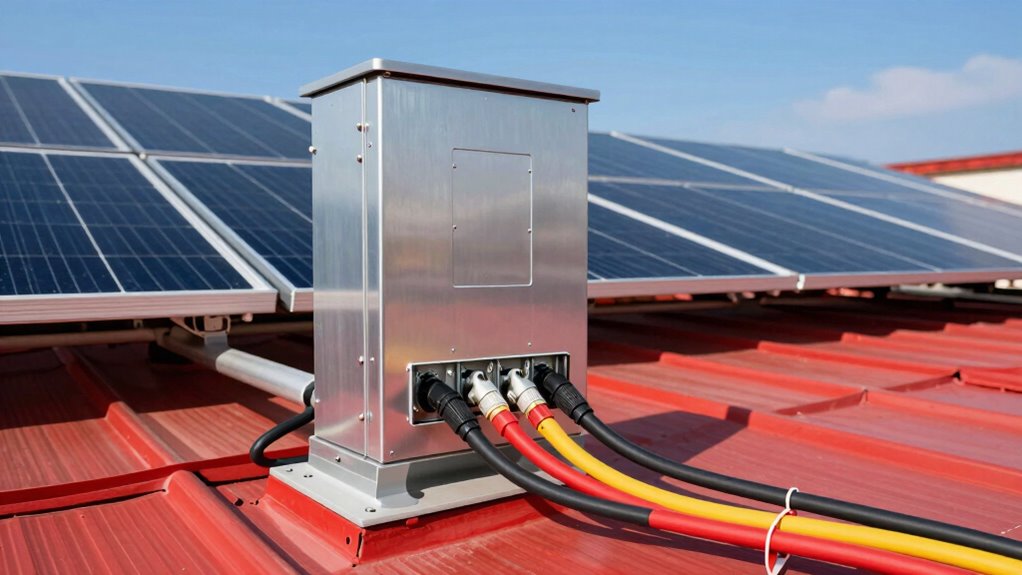
Solar combiner boxes are vital components in a photovoltaic system that streamline the connection of multiple solar panels. They serve as central hubs, collecting the electrical output from various strings of panels and directing it toward the inverter. If you’re setting up a solar array, understanding how to properly handle solar combiner boxes installation is essential. Proper installation ensures safety, peak performance, and ease of maintenance down the line. When you’re installing a solar combiner box, you need to follow manufacturer guidelines carefully, making sure all connections are tight and secure. Use high-quality connectors and cables rated for outdoor use to prevent corrosion and electrical faults. Mount the box in a sheltered, ventilated area to protect it from weather elements, and ensure it’s grounded correctly to prevent electrical hazards. Once installed, your focus shifts to solar combiner boxes maintenance, which is equally important for long-term efficiency. Regular inspections can help you catch loose connections, corrosion, or damage early before they cause system failures. Cleaning dust, dirt, or debris from the box’s exterior and vents helps keep cooling efficient and prevents overheating. Check all fuses and circuit breakers periodically to verify they’re functioning properly, replacing any faulty components immediately. You should also verify that all wiring remains intact and that no rodents or pests are gnawing on cables, which can cause shorts or open circuits. Maintaining a clean, dry environment around the combiner box can extend its lifespan, and applying dielectric grease on connections can prevent moisture buildup. Remember, safety should always be your top priority when working on solar combiner boxes. Always shut off power before performing any maintenance, and use insulated tools to avoid shocks. If you notice any signs of wear, corrosion, or damage, don’t hesitate to call a professional to assess the situation. While solar combiner boxes simplify wiring and improve system performance, improper installation or neglecting maintenance can lead to costly repairs or safety risks. Whether you’re installing a new system or maintaining an existing one, investing time in correct setup and regular upkeep can save you money and headaches in the long run. Keep a schedule for routine checks, and stay alert to any irregularities in system performance. Proper electrical connections and understanding of system components are crucial for safe and efficient operation. With proper care, your solar combiner box will serve as a reliable component, helping your solar energy system operate smoothly and efficiently for years to come.
Frequently Asked Questions
Can Combiner Boxes Be Used for Off-Grid Solar Systems?
Yes, you can use combiner boxes for off-grid applications to streamline system integration. They help connect multiple solar panels efficiently, making maintenance easier and reducing wiring clutter. However, off-grid systems often have simpler setups, so a combiner box isn’t always necessary. If your system involves many panels or complex wiring, a combiner box can improve safety and reliability, ensuring your off-grid solar setup runs smoothly.
How Do I Choose the Right Size Combiner Box?
Thinking about a solar combiner box? You should pick one that matches your system’s load capacity and enclosure size. To do this, estimate your total current and future expansion needs. Choose a box with a slightly higher load capacity to avoid overload risks and guarantee it fits comfortably in your planned space. Proper sizing keeps your system safe, efficient, and ready for growth.
Are There Safety Certifications for Solar Combiner Boxes?
Yes, there are safety certifications for solar combiner boxes, like UL certification, which guarantees they meet strict safety and fire safety standards. When selecting a combiner box, always check for UL certification to guarantee it has been tested for electrical safety and fire resistance. This certification helps you avoid potential hazards and ensures your system complies with industry regulations, keeping your installation safe and reliable.
What Maintenance Is Required for a Combiner Box?
Think of your combiner box as the heart of your solar system. To keep it healthy, you need regular wiring inspections to catch loose connections early and prevent potential failures. Additionally, applying corrosion prevention measures protects it from environmental damage. You should also check for any signs of wear or moisture, ensuring all connections are tight. Maintaining these simple steps keeps your system running smoothly and safely.
Can a Combiner Box Handle Multiple Solar Arrays?
Yes, a combiner box can handle multiple solar arrays. It’s designed to accommodate various wiring configurations, making it compatible with different solar panel setups. When selecting a combiner box, verify it matches your solar panel compatibility and can manage the total current from all arrays. Proper wiring and capacity are essential for safe, efficient operation, especially if you’re combining multiple arrays into one system.
Conclusion
Think of a solar combiner box as the conductor of your solar symphony, bringing together each panel’s energy into a harmonious flow. When your system grows and complexity increases, it’s your baton, guiding everything smoothly. But if your setup is simple, don’t feel the need to summon the conductor just yet. Sometimes, keeping things straightforward allows your energy journey to shine naturally—like sunlight breaking through clouds, effortless and bright.