
Self-discharge in rechargeable batteries happens because chemical reactions inside them naturally occur even when not in use, causing energy loss over time. Factors like battery chemistry and storage temperature impact how quickly this happens—lithium-ion batteries self-discharge less than NiMH ones, especially at cooler temperatures. To reduce self-discharge, store batteries in a cool, dry place and keep them partially charged. Keep exploring to discover more effective ways to extend your batteries’ life.
Key Takeaways
- Self-discharge occurs due to internal chemical reactions that cause energy loss even when batteries are idle.
- Battery chemistry influences self-discharge rates; lithium-ion batteries typically retain charge longer than NiMH.
- Higher storage temperatures accelerate chemical reactions, increasing self-discharge; cooler environments help mitigate this.
- Storing batteries at partial charge (40-60%) and in a cool, dry place reduces self-discharge and prolongs lifespan.
- Advances in battery technology and proper storage practices are essential for minimizing self-discharge effects.
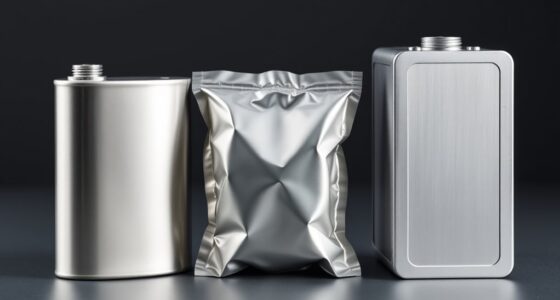
Self-discharge is a common issue that affects all rechargeable batteries, causing them to lose their stored energy even when they’re not in use. This natural process is influenced heavily by the battery’s chemistry and the conditions in which you store it. Different types of batteries, such as lithium-ion, nickel-metal hydride (NiMH), or lead-acid, each have unique chemical compositions that determine their rate of self-discharge. For instance, lithium-ion batteries generally have a lower self-discharge rate compared to NiMH batteries, making them more suitable for long-term storage. The core of this difference lies in the battery chemistry, which affects how easily ions and electrons can move within the cell, leading to energy loss even when the battery is idle. Additionally, advancements in battery technology are continually reducing self-discharge rates, offering longer-lasting energy storage options. Storage temperature plays a crucial role in managing self-discharge. When a battery is kept at higher temperatures, the chemical reactions inside accelerate, increasing the rate at which energy is lost. Conversely, colder environments slow down these reactions, helping to preserve the battery’s charge for longer periods. For ideal storage, you should keep rechargeable batteries in a cool, dry place—ideally around 15°C (59°F)—to minimize self-discharge caused by heat. If you need to store batteries for an extended period, consider refrigeration, but avoid freezing, as this can damage the internal components or cause condensation that harms the battery. Understanding the interplay between battery chemistry and storage temperature allows you to make smarter decisions about battery maintenance and storage. For example, if you have lithium-ion batteries, keeping them in a temperature-controlled environment will considerably extend their shelf life. Similarly, if you’re storing NiMH batteries, maintaining a cooler environment will slow their natural energy drain. It’s also important to note that frequent charge and discharge cycles can sometimes influence self-discharge rates, but temperature remains the most controllable factor. To mitigate self-discharge, always store batteries in a partially charged state, typically around 40-60%, especially if they won’t be used for some time. Regularly checking the charge level and recharging when necessary can prevent deep discharge, which can harm the battery’s lifespan. Additionally, following manufacturer guidelines regarding storage conditions—such as recommended temperature ranges and storage duration—can help you keep your rechargeable batteries in prime condition for longer. Recognizing how battery chemistry and storage temperature impact self-discharge empowers you to extend the usability of your batteries and avoid unexpected failures when you need them most.
Frequently Asked Questions
How Does Temperature Affect Battery Self-Discharge Rates?
You’ll notice that higher temperatures increase battery self-discharge rates because thermal effects accelerate chemical reactions inside the cell. This means your battery loses energy faster at elevated temperatures, reducing its overall lifespan. Conversely, cooler temperatures slow down these reactions, helping preserve charge. To minimize self-discharge, store batteries in a cool, dry place, and avoid exposing them to extreme heat, which worsens thermal effects and speeds up chemical reactions.
Can Self-Discharge Occur in All Types of Rechargeable Batteries?
Yes, self-discharge can occur in all types of rechargeable batteries, regardless of battery chemistry or manufacturing quality. You’ll notice it because, over time, the battery loses charge even when not in use. While some chemistries, like lithium-ion, have lower self-discharge rates, poor manufacturing quality can increase self-discharge across all types. To minimize this, choose high-quality batteries and store them properly.
What Are the Signs of Excessive Self-Discharge in a Battery?
Think of your battery like a leaking faucet—you’ll notice it gradually loses water even when not in use. Excessive self-discharge shows up as a significant battery capacity decline and unexpected power loss, even after charging. If your device’s battery drains faster than usual or needs frequent recharges, it’s a sign that self-discharge is happening. Keep an eye out for these clues to catch the problem early.
Are There Any Ways to Test a Battery’s Self-Discharge Rate at Home?
Yes, you can DIY test your battery’s self-discharge rate by tracking its voltage over time. First, fully charge your battery and record its initial voltage. Then, leave it untouched in a stable environment for a few days, periodically checking and recording the voltage. Significant voltage drops indicate higher self-discharge. This simple voltage tracking method helps you assess your battery’s health without specialized tools.
How Does Aging Influence a Battery’s Self-Discharge Behavior?
As your battery ages, it experiences degradation that increases its self-discharge rate. Over time, capacity fade reduces the battery’s ability to hold a charge, making it discharge faster even when not in use. You might notice shorter usage times and more frequent recharging needs. Aging impacts the internal chemistry, causing higher self-discharge and diminishing overall performance, so keeping your battery well-maintained can help slow these effects.
Conclusion
Think of your rechargeable battery like a leaky faucet—you might forget it’s dripping, but over time, it loses energy. Studies show some batteries can lose up to 5% of their charge monthly, even when not in use. By understanding causes and applying proper care, you can stop the drip and keep your battery flowing smoothly. Just like fixing that faucet saves water, proper maintenance keeps your battery reliable longer.