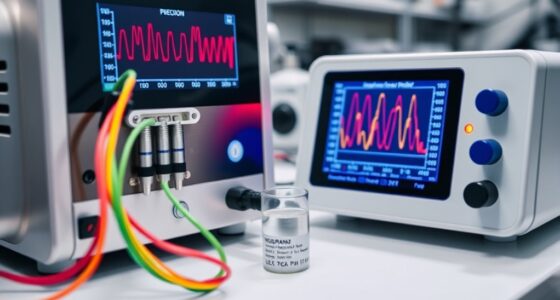
If you want your appliances to run smoothly and last longer, a simple test can show whether a pure sine or modified sine inverter suits you best. Plug in your sensitive device—like a computer or audio gear—and see if it hums, heats up, or starts malfunctioning. If it does, a pure sine inverter is likely needed for clean, stable power. Want to discover more ways to compare these waveforms and choose wisely? Keep exploring for the full scoop.
Key Takeaways
- Sensitive appliances like computers and medical devices perform better and last longer with pure sine wave inverters.
- Modified sine wave can cause humming, overheating, or startup issues in certain electronics.
- High-quality, stable power from pure sine wave reduces long-term device malfunction risk.
- Energy-efficient operation with pure sine wave minimizes heat, noise, and energy costs.
- For critical or sensitive equipment, a pure sine wave inverter makes the appliance test’s choice obvious.

Have you ever wondered what sets pure sine wave inverters apart from modified sine wave inverters? It all comes down to power quality and energy efficiency. When you’re powering sensitive electronics or appliances that demand stable, clean power, the difference becomes clear. Pure sine wave inverters produce a smooth, consistent waveform that closely resembles the power supplied by your utility grid. This means your devices receive high-quality power, which reduces the risk of malfunction, overheating, or damage. Modified sine wave inverters, on the other hand, generate a stepped, approximation of a sine wave. While they work for many simple devices, they often introduce electrical noise or irregularities that can impair performance or shorten the lifespan of your appliances.
Pure sine wave inverters provide clean, stable power that protects sensitive electronics and improves efficiency.
Power quality is the key factor here. Sensitive electronics like computers, medical equipment, or audio and video gear require clean, stable power to operate correctly. When powered by a modified sine wave, these devices might experience humming, overheating, or reduced efficiency. You’ll notice that your gadgets could run noisier or have trouble starting up. Conversely, pure sine wave inverters deliver a consistent waveform, ensuring your electronics work smoothly and without interruption. This is especially important if you rely on your inverter for critical or delicate equipment. The improved power quality also helps prevent long-term damage, saving you money on repairs and replacements. Additionally, choosing a inverter with superior power quality can enhance the longevity of your appliances and safeguard your investments.
Energy efficiency plays another essential role. Pure sine wave inverters typically convert energy more effectively because they produce a waveform that matches the grid’s power. This means less energy is wasted, and your appliances operate at peak levels. When devices run more efficiently, they draw less current and generate less heat, which can extend their lifespan and reduce your energy bills. Modified sine wave inverters, due to their less precise waveform, often cause devices to work harder or generate more heat, leading to lower efficiency and potential wear and tear over time. Although modified sine wave inverters tend to be cheaper upfront, they might cost you more in the long run through increased energy consumption and maintenance needs.
Ultimately, the choice boils down to your specific needs. If you want dependable, high-quality power for sensitive or valuable equipment, a pure sine wave inverter is the smarter investment. It guarantees superior power quality and energy efficiency, protecting your devices and saving you money over time. If your power needs are minimal or your budget is tight, a modified sine wave inverter might suffice. However, for peace of mind and optimal appliance performance, understanding the importance of power quality and energy efficiency makes the difference clear: a pure sine wave inverter is the better, more reliable choice.
Frequently Asked Questions
Do All Appliances Perform Better With Pure Sine Wave Inverters?
Not all appliances perform better with pure sine wave inverters. Devices with sensitive electronics, like medical equipment or audio gear, experience less wave distortion and operate more efficiently on pure sine waves. However, simple appliances like lights or power tools often work fine with modified sine waves, which can be more budget-friendly. Consider your appliance’s sensitivity and power efficiency needs to decide if investing in a pure sine wave inverter is worth it.
Can Modified Sine Wave Inverters Damage Sensitive Electronics?
Modified sine wave inverters can indeed damage sensitive electronics. About 30% of electronic devices struggle with lower power quality and increased electrical interference from modified sine waves, risking overheating or malfunction. These inverters produce a rougher waveform, which can cause overheating, data loss, or even permanent damage to sensitive components. To protect your electronics, especially delicate devices, a pure sine wave inverter is often the safer, more reliable choice.
Are There Cost Differences Between Pure Sine and Modified Sine Inverters?
You’ll find that pure sine inverters are generally more expensive than modified sine inverters due to their advanced technology, impacting cost efficiency. They often require more complex installation, which can add to overall costs. Meanwhile, modified sine inverters are more budget-friendly and simpler to install, making them a practical choice if your appliances can handle the wave form. Consider your needs carefully to balance upfront costs with long-term performance.
Is Maintenance More Complicated for Pure Sine Wave Inverters?
You might find pure sine wave inverters slightly more involved to maintain, but it’s usually manageable. Installation complexity can be higher, especially if you’re optimizing for warranty considerations, since proper setup guarantees longevity. Regular checks on connections and components keep things smooth, and most users find that with some attention, these inverters perform reliably without much fuss. A little care helps maintain peak performance and peace of mind.
How Long Do Pure Sine Wave Inverters Typically Last?
Pure sine wave inverters typically last around 5 to 10 years, depending on inverter durability and how well you maintain them. Factors like operating temperature, load size, and quality influence their lifespan. To maximize longevity, guarantee proper ventilation, avoid overloading, and choose a reputable brand. With good care, your inverter can serve reliably for many years, providing consistent power and performance.
Conclusion
So, now that you’ve seen the key differences, isn’t it clear which power source suits your needs better? Pure sine wave inverters offer smoother, more reliable power for sensitive appliances, while modified sine wave inverters are more budget-friendly but less versatile. Think about the appliances you’ll run—do you want to risk potential damage or enjoy peace of mind? Ultimately, choosing the right inverter depends on your priorities, but why settle for less when your devices deserve the best?