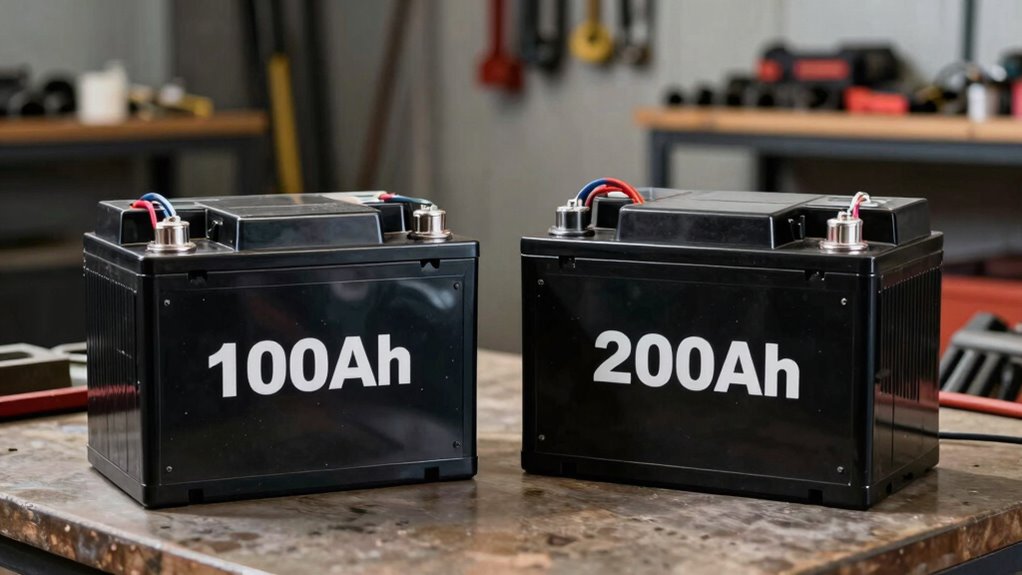

Upgrading from a 100Ah to a 200Ah battery boosts your energy storage, offering longer usage and more power for multiple devices. However, you’ll face challenges like increased weight, longer charging times, and potential installation complexities. While the added capacity can enhance performance, it might not justify the higher costs or fit your needs. Understanding these trade-offs is vital for making an informed choice, and there’s more to evaluate that could impact your decision.

Get backup power and energy gear delivered free with Prime
- Fast, free delivery on millions of items
- Prime Video, Amazon Music and more included
- Member-only deals all year
Key Takeaways
- Doubling battery capacity to 200Ah enhances energy storage but comes with higher upfront costs compared to 100Ah units.
- Larger batteries may require longer charging times, impacting their suitability for quick recharge needs.
- Increased weight of 200Ah batteries can hinder portability and complicate installation processes.
- Assessing actual power needs is crucial to determine if the added capacity justifies the investment.
- Upgrading may necessitate additional safety measures and professional installation, increasing overall project costs.
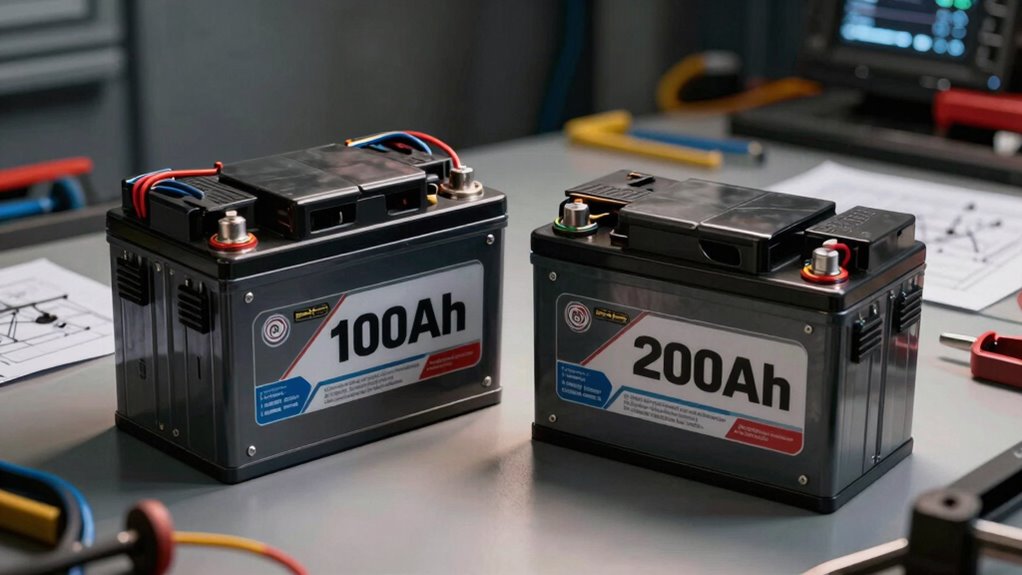
When you contemplate upgrading your device’s battery, it’s vital to weigh the benefits against potential downsides. A common dilemma arises when you think about moving from a 100Ah to a 200Ah battery. The capacity comparison seems appealing at first glance. Doubling your battery capacity means more energy to power your devices longer. However, this increase doesn’t come without its challenges.
First, let’s talk about cost analysis. A 200Ah battery typically costs considerably more than a 100Ah unit. You need to assess whether the added capacity justifies the price. If you’re only using a fraction of the 100Ah battery’s potential, spending extra for a 200Ah might not make sense. It’s imperative to evaluate your actual power needs before making that financial leap.
Assessing the cost of upgrading to a 200Ah battery is crucial; ensure the added capacity aligns with your actual power needs.
Charging efficiency is another factor to examine. A larger battery often requires more time to charge, depending on your charging system. You might find that while a 200Ah battery stores more energy, it can take longer to recharge fully. This can be a downside if you frequently need to recharge your devices quickly. Review your charging habits; if you’re often in a hurry, a larger battery may not be the best fit. Additionally, charging system efficiency can influence how quickly your battery charges and how it impacts your overall energy management. Being aware of battery capacity and its relationship to charging times can help you make a more informed decision.
Weight consideration also plays a role in your decision. A 200Ah battery is heavier than its 100Ah counterpart, which could affect portability and ease of installation. If you’re using this battery for a mobile application, the added weight might hinder performance. Always think about how the additional weight will impact your setup and mobility.
Speaking of installation complexity, upgrading to a larger battery can complicate the installation process. You might need new connectors or adjustments to your setup to accommodate the bigger unit. If you’re not comfortable with installation, you may have to factor in professional help, which adds to your overall costs. Additionally, larger batteries can sometimes require additional safety measures to ensure proper handling and operation. Considering battery management systems can help optimize lifespan and safety.
Additionally, considering the lifespan characteristics of larger batteries is important, as they can differ significantly from smaller units depending on usage and maintenance. While larger batteries can offer more capacity, they may also have different lifespan characteristics. Depending on how you use them, a 200Ah battery might not outlast two 100Ah batteries used in rotation.
As an affiliate, we earn on qualifying purchases.
Frequently Asked Questions
How Do Temperature Extremes Affect Battery Performance?
Temperature extremes greatly impact battery performance. When it’s too hot or too cold, you’ll notice performance variability, leading to reduced efficiency and shorter lifespan. Cold temperatures can slow down chemical reactions, causing your battery to deliver less power. Conversely, excessive heat can lead to faster degradation and potential failure. To maintain peak performance, try to keep your battery within a recommended temperature range, ensuring longevity and reliability in your usage.
What Is the Lifespan Difference Between 100AH and 200AH Batteries?
Imagine a race between two athletes, one with a 100Ah battery and the other with 200Ah. The 200Ah battery typically lasts longer due to its higher capacity longevity, allowing for deeper discharges without sacrificing performance. While discharge rates vary, the 200Ah can handle heavier loads better over time. So, if you’re looking for durability and extended use, the 200Ah is worth considering. Your choice impacts how long your power source stays strong.
Are There Weight Differences Between These Battery Sizes?
Yes, there are weight differences between 100Ah and 200Ah batteries. Typically, the 200Ah battery is heavier, affecting battery portability. When considering weight, you should think about energy density and how it impacts your application suitability. A heavier battery might provide more energy but can limit your mobility. Balancing weight considerations with your specific needs will help you choose the right battery for your situation.
Can I Mix Battery Sizes in a System?
You can mix battery sizes in a system, but it’s like trying to dance with two left feet! Battery compatibility issues may arise, leading to charging efficiency problems. If you do this, the larger battery could hog the spotlight, charging faster while the smaller one lags behind. This mismatch can cause uneven wear and tear, reducing overall performance. So, if you can, stick to similar sizes for harmony in your setup!
What Maintenance Do These Batteries Require?
Your batteries need regular maintenance to stay in top shape. Start by cleaning the terminals to prevent corrosion, which can affect performance. Monitor the water levels, especially in flooded lead-acid batteries, and top them off as needed. Keep track of charge cycles to maximize lifespan; avoid deep discharges. By staying on top of these tasks, you’ll guarantee your batteries run efficiently and last longer.
Conclusion
When deciding between a 100Ah and a 200Ah battery upgrade, you might think it’s all about capacity. But here’s the twist: you could end up with a lighter load and longer lifespan with the smaller option—if your needs align. It’s like finding a hidden gem in your backyard; the right choice isn’t always what it seems. So, take a moment to weigh your actual usage against the upgrade. You might just uncover the perfect fit for your power needs.
Halloween Picks
halloween
As an affiliate, we earn on qualifying purchases.