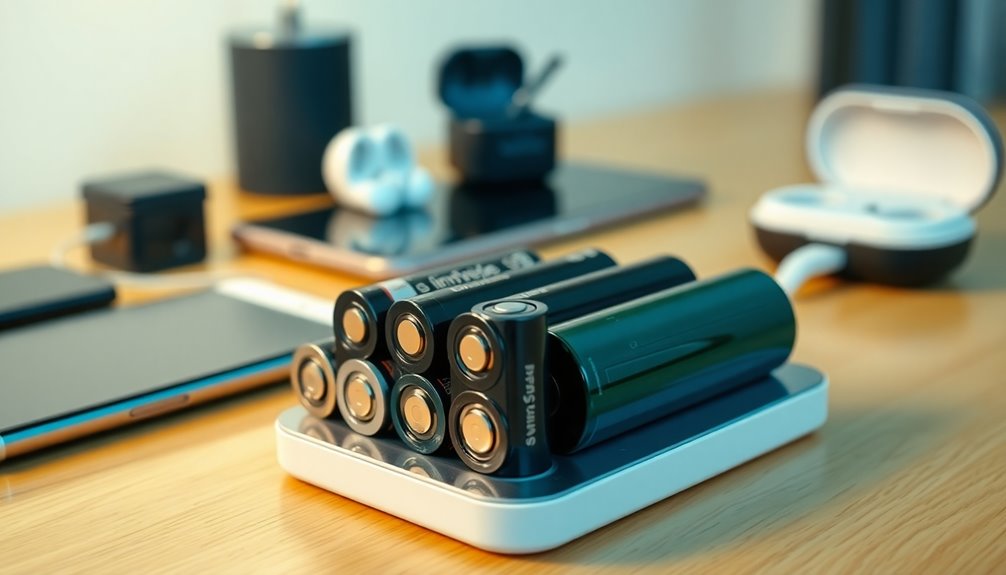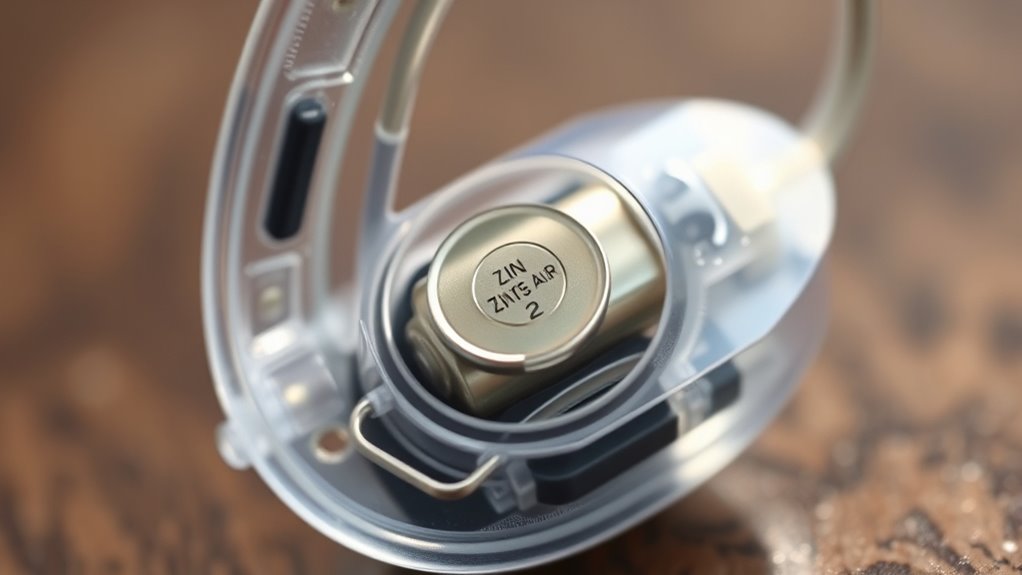

Zinc-air batteries operate by using zinc as the anode and oxygen from the air as the cathode, creating electricity through chemical reactions. They’re popular in hearing aids because they offer high energy density, are lightweight, and eco-friendly. These batteries are also used in portable storage devices, thanks to their efficiency and sustainability. If you want to understand how they work and why they’re ideal for these applications, there’s more to explore ahead.
Key Takeaways
- Zinc-air batteries generate power through zinc oxidation and oxygen reduction, offering high energy density for hearing aids and storage.
- They rely on ambient oxygen, eliminating the need to carry oxidizers, making them lightweight and efficient.
- Widely used in hearing aids due to their long-lasting, compact, and environmentally friendly power source.
- They use abundant, recyclable, and non-toxic materials, resulting in minimal environmental impact during disposal.
- Ongoing technological advancements improve their lifespan, performance, and potential for broader applications in renewable energy storage.
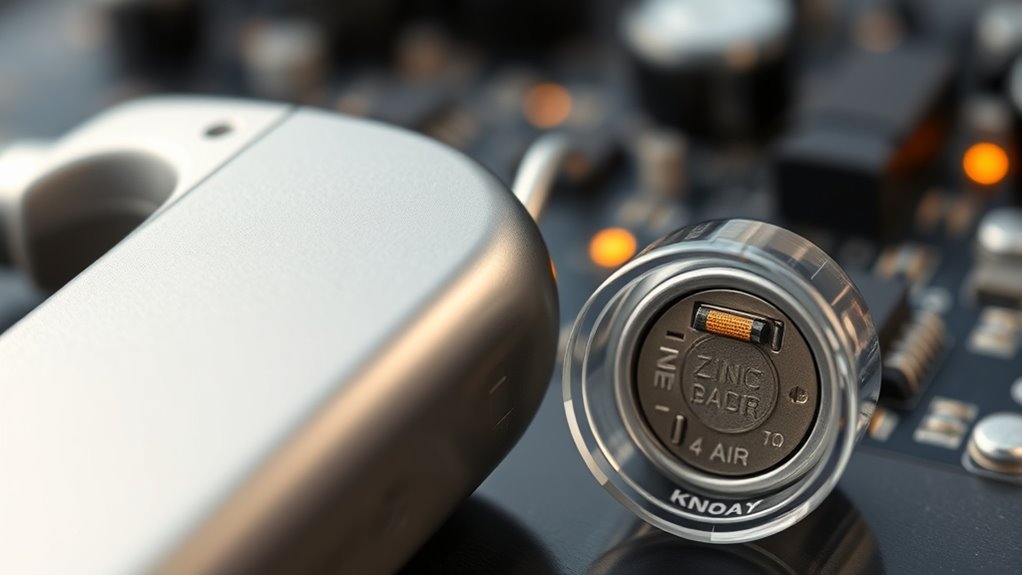
Zinc-air batteries are a type of energy storage device that offers high energy density and environmental friendliness. Their unique battery chemistry relies on zinc metal as the anode and oxygen from the air as the cathode, which makes them lightweight and efficient. Unlike traditional batteries that contain heavy metals or toxic chemicals, zinc-air batteries produce minimal environmental impact during use and disposal, making them an attractive choice for sustainable energy solutions. This eco-friendly aspect is especially important as we look for greener alternatives in electronics and renewable energy storage.
Zinc-air batteries are eco-friendly, high-energy, lightweight power sources ideal for sustainable, portable devices.
In terms of battery chemistry, zinc-air batteries operate through an electrochemical reaction where zinc oxidizes at the anode, releasing electrons, while oxygen from the air combines with the zinc ions at the cathode. This process generates electricity with a high energy density because oxygen is freely available in the environment, meaning the battery itself doesn’t need to carry its oxidizer. As a result, zinc-air batteries can store more energy in a smaller, lighter package compared to other types of batteries, which is why they’re especially useful in devices like hearing aids, where size and weight are critical considerations. Additionally, advancements in battery technology continue to improve their performance and lifespan.
When it comes to environmental impact, zinc-air batteries stand out because they use abundant, non-toxic materials and produce fewer hazardous waste products. Since the zinc is recyclable and the oxygen comes from the environment, they generate less pollution than lithium-ion or lead-acid batteries. Their disposal is relatively simple, and the materials can often be recycled, reducing long-term waste concerns. This contributes to a smaller carbon footprint during manufacturing and after disposal, aligning with global efforts to reduce environmental harm caused by battery waste.
You’ll find zinc-air batteries most commonly in hearing aids, where their high energy density and small size make them ideal. They can provide long-lasting power without adding much weight to the device, improving comfort and usability for users. Furthermore, their environmentally friendly nature aligns well with the increasing demand for sustainable medical devices. Their ability to operate efficiently in low-maintenance, compact forms makes them a practical choice for portable applications.
Frequently Asked Questions
How Long Do Zinc-Air Batteries Typically Last in Hearing Aids?
You can expect zinc-air batteries to last about 3 to 10 days in your hearing aids, depending on usage factors like volume, streaming, and listening habits. The battery lifespan varies based on how often you use your device and the type of hearing aid. To maximize longevity, remove the tab when ready to use and store unused batteries in a cool, dry place.
Are Zinc-Air Batteries Environmentally Friendly and Recyclable?
Imagine a battery that powers your hearing aid yet leaves behind minimal environmental impact; zinc-air batteries are more eco-friendly and recyclable than many alternatives. They contain recyclable materials, reducing waste, though their overall environmental impact depends on proper disposal. You can help by recycling used batteries at designated centers, ensuring their materials are reused. This way, you contribute to sustainability while enjoying the benefits of this efficient, eco-conscious power source.
Can Zinc-Air Batteries Be Recharged or Reused?
You can’t recharge zinc-air batteries, as rechargeability concerns prevent their reuse. They’re designed for single-use, and attempting to reuse them can cause leakage or reduced performance. The reuse limitations mean you should replace them once depleted. If you’re looking for rechargeable options, consider lithium-ion or nickel-metal hydride batteries instead, which are built for multiple cycles and better suit frequent use.
How Do Temperature and Humidity Affect Zinc-Air Battery Performance?
You’ll find that temperature effects can substantially impact zinc-air battery performance; they work best at room temperature. High humidity impacts these batteries by increasing the risk of corrosion, which can reduce lifespan. Conversely, very dry conditions may cause the battery to dry out faster. About 80% humidity is ideal for preserving zinc-air batteries, ensuring they operate efficiently without premature degradation. Keep your environment stable for the best results.
What Safety Precautions Are Necessary When Handling Zinc-Air Batteries?
When handling zinc-air batteries, you should follow proper handling protocols to prevent accidents. Always keep batteries away from heat and moisture to avoid leakage, which can damage devices or cause skin irritation. Wear gloves when handling, and avoid puncturing or exposing batteries to pressure. Store batteries in a cool, dry place, and dispose of any leaking batteries carefully to prevent harm. Following these precautions guarantees safe, effective use.
Conclusion
You see zinc-air batteries power hearing aids with quiet reliability, yet their energy storage remains complex. They’re simple in design but essential in function. While they may seem fragile, their longevity proves otherwise. Their ability to deliver steady power contrasts with their sensitivity to environmental factors. In this balance, zinc-air batteries remind you that innovation often lies in the harmony between simplicity and sophistication, quietly transforming how you hear and store energy every day.