Nickel–Iron (NiFe) batteries are the oldest rechargeable type, known for their incredible durability and long lifespan. They can last decades with proper care, handle deep discharges, and endure rough handling, making them ideal for stationary or industrial uses. Although they have lower energy density compared to modern batteries and require slower charging, their eco-friendliness and robustness make them a sustainable choice. To discover more about these resilient batteries, keep exploring their unique history and benefits.
Key Takeaways
- Nickel–Iron (NiFe) batteries, developed in the early 1900s, are among the oldest rechargeable battery types with proven durability.
- Known for exceptional longevity and resilience to deep discharges, they can last decades with proper maintenance.
- NiFe batteries have a lower energy density, making them less suitable for portable electronics but ideal for stationary storage.
- They are environmentally friendly due to fewer toxic materials and a long lifespan that reduces waste.
- Despite their age, NiFe batteries remain relevant for industrial applications requiring reliable, durable, and eco-friendly energy storage.
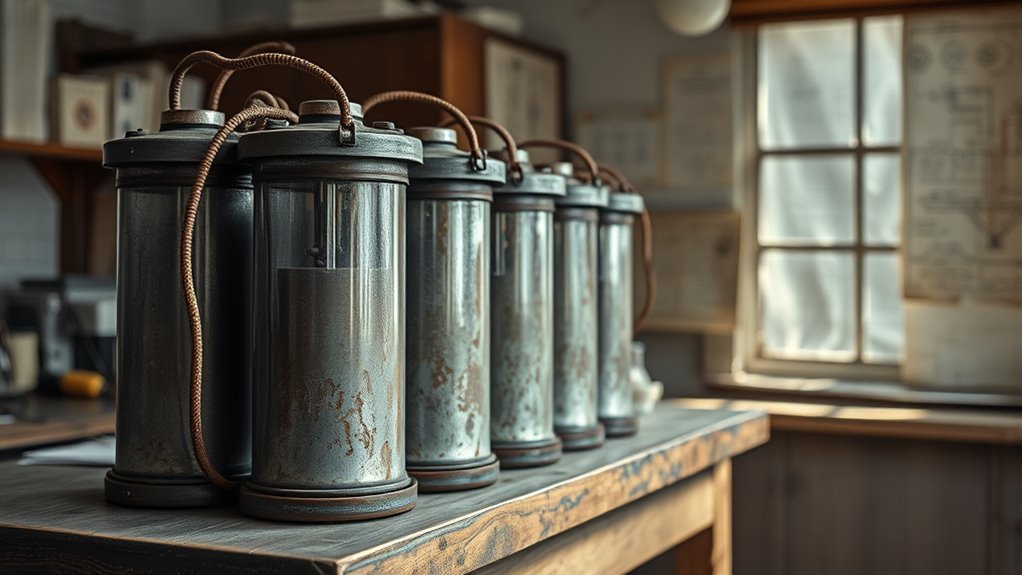
Nickel–iron batteries, also known as Ni–Fe batteries, are a type of rechargeable energy storage device that has been around for over a century. They were first developed in the early 1900s and gained popularity for their durability and robustness. Unlike many modern batteries, Ni–Fe batteries are celebrated for their impressive battery longevity. You can expect these batteries to last for several decades with proper maintenance, often outlasting other rechargeable options by a significant margin. This extended lifespan makes them an attractive choice for applications where long-term reliability is essential, reducing the need for frequent replacements and waste. Their resilience to deep discharges and ability to withstand rough handling contribute greatly to their enduring performance. Additionally, their high cycle life makes them suitable for repeated charging and discharging cycles without significant capacity loss.
When considering environmental impact, Ni–Fe batteries stand out as a more eco-friendly option compared to many contemporary alternatives. They contain fewer toxic materials, which means they pose less risk to the environment if disposed of improperly. Unlike lithium-ion or lead-acid batteries, Ni–Fe batteries don’t contain highly hazardous chemicals, making their recycling process less complicated and less harmful. Additionally, their long lifespan means fewer batteries need to be produced and replaced over time, reducing overall resource consumption and waste generation. This durability aligns with sustainability goals, helping you minimize your ecological footprint when choosing energy storage solutions.
However, it’s worth noting that Ni–Fe batteries are not without their drawbacks. They tend to have a lower energy density, so they store less power relative to their size and weight compared to newer technologies. This means they may not be suitable for applications requiring compact, lightweight batteries, such as portable electronics or electric vehicles. Instead, they excel in stationary or industrial uses where size and weight are less critical. Their charging characteristics are also different; they require a slower, more controlled charging process, which can be less convenient but ultimately contributes to their longevity and stability.
Frequently Asked Questions
How Does Nife Battery Efficiency Compare to Modern Alternatives?
You’ll find that NiFe batteries have lower battery efficiency compared to modern alternatives like lithium-ion or nickel-metal hydride batteries. Their energy performance isn’t as high because they lose more energy during charge and discharge cycles. While NiFe batteries are durable and long-lasting, they don’t deliver the same level of efficiency or energy density, making them less suitable for applications requiring high performance and quick charging today.
What Are the Environmental Impacts of Nife Battery Disposal?
Think of disposing NiFe batteries like tossing a heavy metal key into the earth’s treasure chest. When you don’t recycle them properly, they can leach heavy metals, causing pollution. Unlike modern batteries, NiFe ones are more durable but still need careful battery recycling to prevent heavy metal pollution. If left unchecked, they can harm ecosystems, making responsible disposal essential for protecting our environment.
Can Nife Batteries Be Used in Portable Electronics Today?
You can still use NiFe batteries in portable electronics today, but they’re not common. Their battery portability is limited because they’re heavier and bulkier than modern batteries. Additionally, device compatibility can be an issue, as many current devices aren’t designed to work with NiFe batteries’ voltage and size. While reliable and durable, they’re better suited for specialized applications rather than everyday portable electronics.
What Advancements Have Improved Nife Battery Lifespan?
Think of NiFe batteries as vintage cars that keep running smoothly with a few modern upgrades. Improvements in electrode materials and electrolyte stability have markedly extended their lifespan. These advancements reduce corrosion and enhance charge retention, allowing your NiFe batteries to last decades longer. By focusing on these factors, manufacturers guarantee your battery remains reliable over time, making it a resilient choice for long-term energy storage.
Are Nife Batteries Suitable for Renewable Energy Storage?
Yes, NiFe batteries are suitable for renewable energy storage because they’re durable and can handle deep cycling. You benefit from their long lifespan, especially when they feature nickel plating that enhances performance. Plus, their recyclability makes them environmentally friendly. You can easily recycle NiFe batteries, reducing waste and supporting sustainability efforts, making them a reliable choice for storing renewable energy over the long term.
Conclusion
You now see that nickel–iron batteries are truly a hidden gem, standing the test of time despite their age. They may not be the flashiest option, but they prove that good things come to those who wait. With their durability and eco-friendly nature, these batteries remind you that sometimes, the old ways are the best ways. In the end, it’s clear that giving these batteries a second look might just be the smartest move you can make.