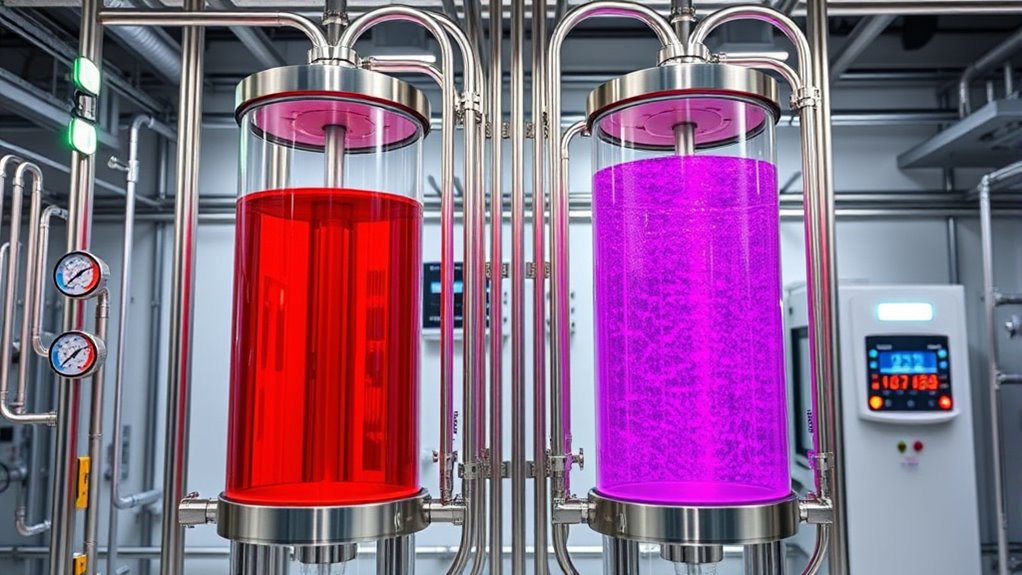

Flow batteries like vanadium and zinc-bromine systems are key for large-scale grid storage because they store energy in liquid electrolytes that flow through electrochemical cells. Vanadium batteries are praised for their electrolyte stability and ability to cycle many times, while zinc-bromine systems require careful electrolyte management due to corrosiveness. Scaling these systems involves challenges like the need for large tanks and maintaining electrolyte stability. To understand how these technologies are evolving, keep exploring their materials and innovations.
Key Takeaways
- Vanadium and zinc-bromine flow batteries are prominent for large-scale grid energy storage due to their scalable liquid electrolyte systems.
- Vanadium flow batteries offer high electrolyte stability and long cycle life, making them suitable for reliable grid applications.
- Zinc-bromine systems utilize bromine solutions but face challenges related to electrolyte management and corrosiveness.
- Scaling these systems involves complex engineering to maintain electrolyte stability, flow uniformity, and manage infrastructure costs.
- Ongoing research aims to improve electrolyte stability and develop modular designs for easier scalability and enhanced grid integration.
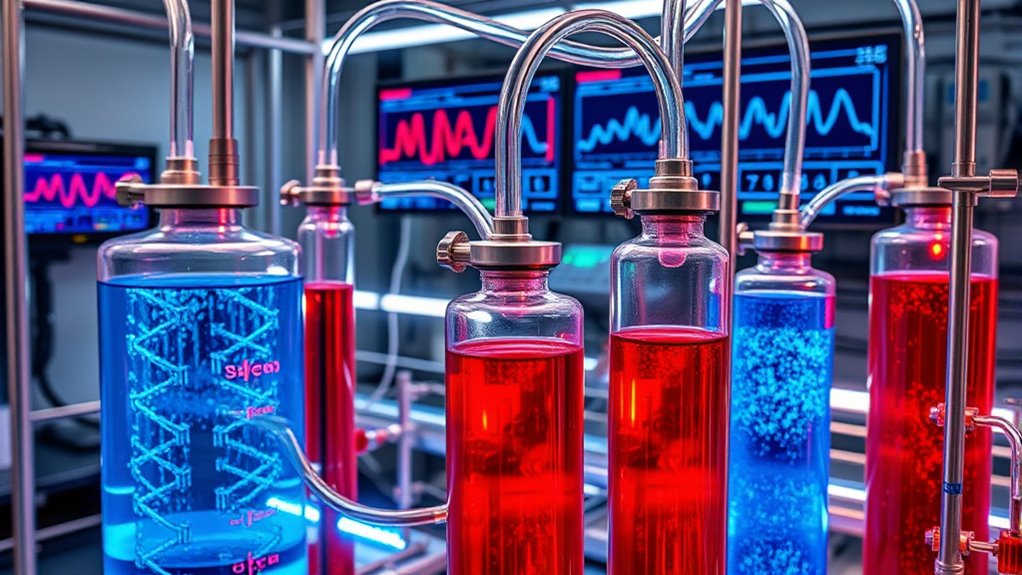
Have you ever wondered how large-scale energy storage works efficiently? Flow batteries are an innovative solution designed to meet the demands of grid storage, and understanding their core mechanics reveals why they hold such promise. At their heart are liquid electrolytes that store energy, flowing through electrochemical cells during charge and discharge cycles. The key to their effectiveness lies in electrolyte stability, which ensures consistent performance over many cycles. Stable electrolytes prevent degradation that could reduce capacity or cause safety issues, making long-term operation feasible. For instance, vanadium flow batteries leverage vanadium electrolytes, which are inherently stable across different oxidation states, providing reliable energy storage. Similarly, zinc-bromine systems use bromine solutions that, when managed properly, maintain their chemical integrity over time. Yet, despite their advantages, these systems face significant scalability challenges. As the demand for larger energy storage solutions grows, scaling up flow batteries isn’t just a matter of increasing electrolyte volume; it involves overcoming engineering and economic hurdles. Larger tanks mean more space, higher material costs, and complex fluid management systems. Maintaining uniform flow rates and preventing issues like electrolyte mixing or sedimentation becomes increasingly difficult at bigger scales. Additionally, the infrastructure needed to support high-capacity flow batteries must be robust and adaptable, which can drive up initial investments. This is especially true for vanadium systems, where the scarcity and cost of vanadium can limit widespread deployment, and for zinc-bromine batteries, which require careful handling of corrosive bromine solutions. These scalability challenges are compounded by the need to ensure electrolyte stability throughout the expanded system, as any instability could compromise performance or safety. Researchers are actively working on solutions, such as developing more stable electrolyte formulations, improving membrane technology to reduce degradation, and designing modular systems that can be expanded incrementally. These innovations aim to address the economic and technical barriers that hinder large-scale implementation. Ultimately, the success of flow batteries in grid storage hinges on overcoming these scalability challenges while maintaining electrolyte stability. When these issues are managed effectively, flow batteries can deliver long-lasting, efficient, and scalable energy storage, making renewable energy sources more viable and helping stabilize power grids against fluctuations. As you explore the future of energy storage, understanding these intricacies highlights why flow batteries are considered a promising technology—one that, with continued advancements, could transform how we store and use electricity on a massive scale.
Frequently Asked Questions
What Are the Environmental Impacts of Flow Battery Disposal?
When you dispose of flow batteries, you should consider environmental hazards, like potential chemical leaks. Proper recycling processes are essential to prevent these hazards, as they allow for safe recovery of valuable materials like vanadium or zinc. If not managed correctly, harmful substances can contaminate soil and water, posing risks to ecosystems. Consequently, responsible disposal and recycling are vital to minimize environmental impacts of flow battery end-of-life management.
How Do Flow Batteries Compare in Cost to Lithium-Ion Batteries?
A penny saved is a penny earned, and when comparing flow batteries to lithium-ion, you see that flow systems often have higher upfront costs but lower long-term expenses. The cost comparison shows flow batteries can be more economically feasible over time due to longer lifespan and easier scalability. While lithium-ion batteries are cheaper initially, their limited cycle life may make flow batteries a smarter investment for large-scale grid storage.
What Are the Main Challenges in Large-Scale Flow Battery Deployment?
You face significant scalability challenges with flow batteries, mainly due to their size and complexity. Material durability also poses problems, as the electrolytes and components can degrade over time, affecting performance and lifespan. To deploy them widely, you’ll need to address these issues by developing more durable materials and optimizing system design. Overcoming these hurdles is essential for making flow batteries a practical, large-scale energy storage solution.
Can Flow Batteries Be Recycled Efficiently?
They say “waste not, want not,” and you can recycle flow batteries efficiently with proper recycling processes. You’ll find that material recovery from vanadium and zinc-bromine systems is achievable through specialized methods that reclaim valuable components. While challenges exist, advancements in recycling techniques mean you can reuse materials, reduce environmental impact, and make grid storage more sustainable, proving that smart recycling truly makes a difference.
How Long Do Flow Batteries Typically Last in Grid Applications?
Flow batteries typically last between 10 to 20 years in grid applications. Their battery lifespan depends on proper maintenance requirements, like monitoring electrolyte quality and preventing corrosion. You should regularly check the system to guarantee peak performance and extend its operational life. With proper upkeep, these batteries can provide reliable energy storage for decades, making them a cost-effective choice for large-scale grid stability.
Conclusion
While some might worry about the complexity of flow batteries, their scalability and long lifespan make them a smart choice for grid storage. You don’t need to fear frequent replacements or high costs—they’re designed for durability and efficiency. As renewable energy grows, flow batteries like vanadium and zinc-bromine systems offer reliable, sustainable solutions that can adapt to your energy needs. Embrace this technology to power a greener, more resilient future.