Voltage alone doesn’t tell the full story about e-bike batteries since chemistry, energy density, and cycle life play vital roles in performance and safety. A higher voltage might seem better, but it doesn’t guarantee longer life or better capacity. Factors like how you charge, temperature, and overall battery chemistry impact longevity and reliability. To truly understand what makes a good battery, look beyond voltage—there’s more to the story that you’ll uncover as you explore further.
Key Takeaways
- Voltage indicates potential power but doesn’t reflect overall battery capacity or lifespan.
- Battery chemistry determines safety, performance, and how voltage affects longevity.
- Higher voltage doesn’t always mean better; chemistry and design impact real performance.
- Focusing solely on voltage ignores factors like cycle life, temperature, and usage habits.
- Proper maintenance based on chemistry and routines extends battery life beyond voltage considerations.
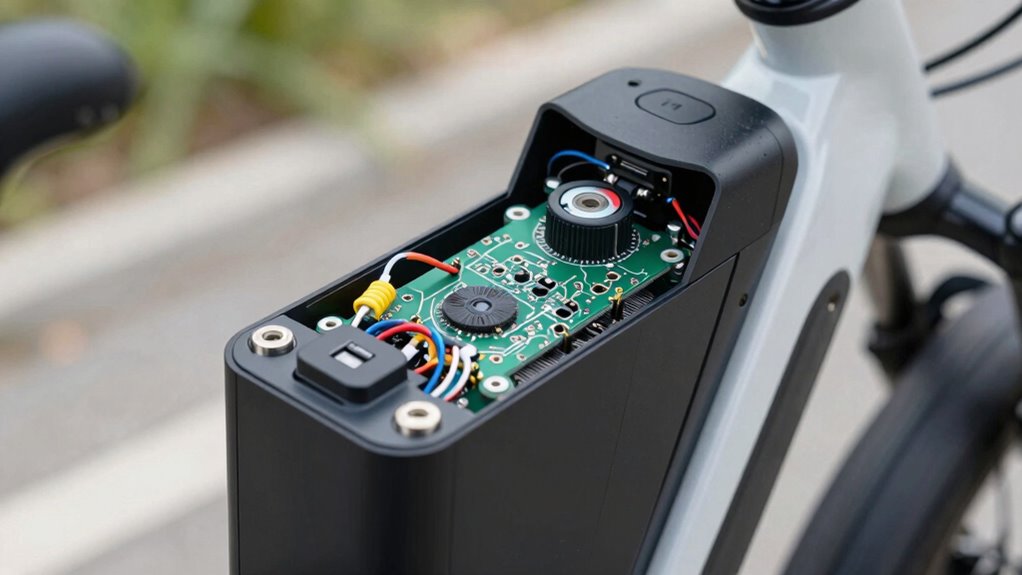
E-bike batteries are the heart of your electric bike, providing the power needed to ride smoothly and efficiently. But understanding what makes a battery perform well isn’t just about looking at voltage ratings. Instead, you need to weigh factors like battery chemistry and how charging cycles impact overall lifespan. Battery chemistry refers to the materials and chemical processes inside the battery, such as lithium-ion, lithium-polymer, or newer chemistries like solid-state. Each chemistry has its benefits and limitations, influencing energy density, safety, and longevity. For example, lithium-ion batteries are common because they offer a good balance of weight, capacity, and lifespan. Knowing the chemistry helps you understand how your battery will behave over time, how fast it drains, and how it responds to charging routines.
Charging cycles are another vital aspect. A charging cycle is defined as one full charge and discharge, but it doesn’t have to be a single continuous process. Partial charges—say, topping up your battery from 50% to 80%—still count as a fraction of a cycle. Each cycle wears down your battery slightly, so the fewer cycles you go through, the longer your battery will last. Most e-bike batteries are rated for hundreds of cycles—sometimes up to 1,000—before their capacity drops considerably. This means that if you take good care of your battery, limiting deep discharges and avoiding constant full charges, you’ll extend its lifespan. Proper charging habits matter more than simply looking at voltage ratings; a higher voltage doesn’t automatically mean a better or longer-lasting battery.
You also need to understand that factors like temperature, usage patterns, and charging routines all influence your battery’s health. Keeping your battery in a cool, dry place and avoiding frequent deep discharges can preserve its chemistry and prolong the number of charging cycles it endures. It’s also helpful to be aware of how battery chemistry influences overall performance and safety. It’s easy to get caught up in the specs, but paying attention to these real-world factors helps you make smarter decisions. Don’t just focus on the voltage; instead, weigh the chemistry and how you handle charging. When you do, you’ll get the most out of your e-bike’s battery, ensuring it remains reliable, safe, and efficient for miles to come.
Frequently Asked Questions
How Does Battery Capacity Affect E-Bike Range?
Battery capacity directly impacts your e-bike range, as larger capacities hold more energy, allowing you to ride farther on a single charge. This also influences battery longevity, since higher capacity batteries tend to last longer over time with proper care. Plus, a bigger capacity helps uphold power consistency, so you experience smooth acceleration and reliable performance throughout your ride. Ultimately, choosing the right capacity ensures you get the most out of your e-bike.
What’s the Importance of Battery Chemistry in Performance?
You should care about battery chemistry because it directly impacts your e-bike’s performance and longevity. A chemistry with high chemical stability guarantees your battery remains reliable over time, maintaining consistent power output. Choosing the right chemistry can extend your battery’s lifespan, reduce degradation, and keep your e-bike running smoothly longer. By understanding these factors, you’ll make smarter decisions and enjoy more dependable rides with fewer replacements.
How Do Temperature Changes Impact Battery Life?
Temperature changes impact your e-bike battery’s life through thermal effects. When it gets too hot or cold, it can cause chemical reactions that degrade the battery’s capacity and shorten its lifespan. Proper temperature management is essential; avoid leaving your e-bike in extreme heat or cold, and store it in a cool, dry place. Keeping the battery within ideal temperature ranges ensures better performance and longer-lasting battery life.
Can I Upgrade My E-Bike Battery Easily?
You can upgrade your e-bike battery, but it’s not always straightforward. Check your bike’s specifications and compatibility first. When upgrading, consider battery recycling options to dispose of old batteries responsibly. Follow proper charging tips to extend your new battery’s life, like avoiding overcharging and storing it in a cool, dry place. If you’re unsure, consult a professional to guarantee a safe and effective upgrade.
What Safety Features Should I Look for in Batteries?
Ah, in the age of chivalry, safety is vital. You should look for batteries with built-in battery safety features like overcharge protection, thermal cutoff, and short-circuit prevention. These features help prevent fires and ensure reliable operation. Fire prevention is essential, so choose batteries with quality protections and certifications. Always buy from reputable brands to guarantee your e-bike’s battery meets safety standards and keeps you riding worry-free.
Conclusion
Remember, while voltage matters, it’s not the only factor in choosing an e-bike battery. Did you know that a battery’s capacity—measured in amp-hours—can profoundly impact your ride time? A higher capacity means you can enjoy longer adventures without recharging. So, don’t just focus on voltage; consider the whole package. By understanding these details, you’ll find the perfect battery to keep you moving further and faster on every ride.