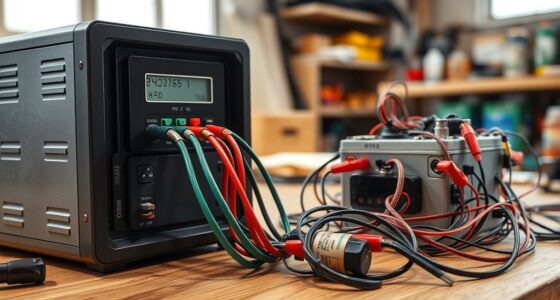
Multimeters and load testers are essential tools for reconditioning electrical systems and batteries. A multimeter helps you quickly check voltage, continuity, and resistance, revealing potential faults. Load testers simulate real-world conditions, helping you evaluate battery performance under load and detect hidden issues. Using both tools together ensures a thorough diagnosis and prevents unnecessary replacements. Keep exploring to discover how mastering these devices can improve your reconditioning skills and achieve better results.
Key Takeaways
- Multimeters quickly assess battery voltage and circuit continuity, identifying basic electrical issues during reconditioning.
- Load testers simulate real operational conditions to detect internal battery faults and performance under load.
- Combining both tools enables comprehensive diagnostics, improving accuracy and reducing unnecessary replacements.
- Understanding how these devices work enhances troubleshooting and ensures system reliability before reactivation.
- Using multimeters and load testers together streamlines the reconditioning process, saving time and ensuring electrical system safety.
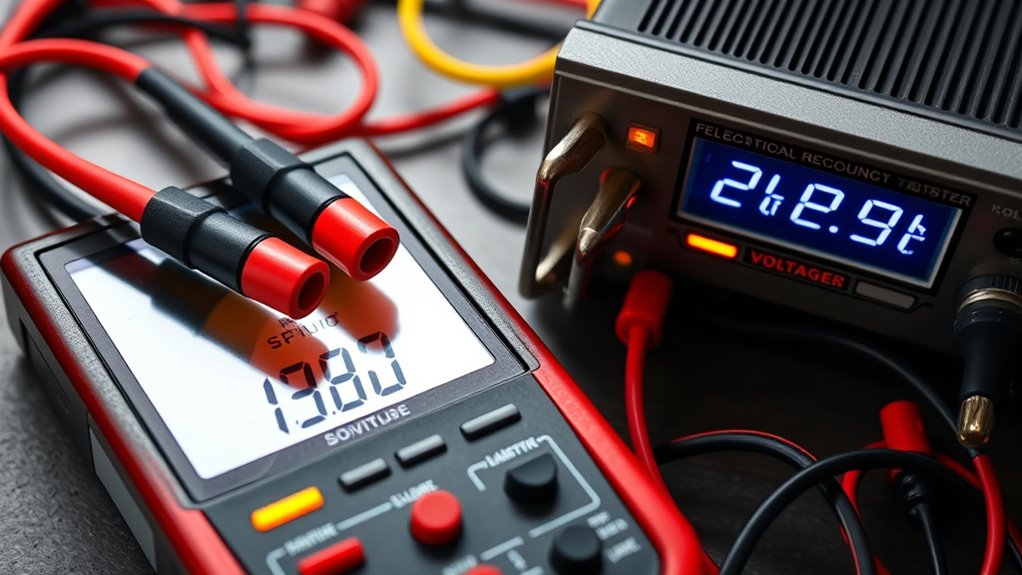
Multimeters and load testers are vital tools for diagnosing electrical issues and guaranteeing proper system performance. When you’re working on reconditioning batteries, these devices become your best allies. A multimeter allows you to measure key parameters like battery voltage, giving you a clear picture of the battery’s health. If the voltage is too low, the battery might be failing or need recharging. Conversely, a healthy battery typically shows a voltage within the expected range, indicating it’s capable of holding a charge and delivering power efficiently. With a multimeter, you can also verify circuit continuity, which helps identify broken or damaged wiring. Simply connect the probes across the circuit; if the multimeter beeps or shows a low resistance, the circuit is continuous and intact. If not, you know where to focus your repair efforts.
Multimeters verify battery health and circuit continuity, aiding efficient diagnostics and repairs.
Load testers complement the multimeter by simulating real-world conditions, pushing the battery or circuit to see how it performs under load. This is especially useful when the battery voltage appears normal but the battery still underperforms during actual use. You might notice that a battery with good voltage no longer supplies sufficient current under load, indicating internal issues not visible on a simple voltage check. When testing with a load tester, you apply a controlled load and observe how the voltage drops. A significant voltage dip suggests the battery’s internal resistance is high, pointing to aging or damage. Similarly, load testers can help you assess whether a circuit can handle the expected current without overheating or failing, guaranteeing your system’s reliability.
Using these tools together streamlines your diagnostic process. Start with a multimeter to check battery voltage and circuit continuity. This quick assessment can identify obvious faults and save you time. If the battery voltage is low or circuit continuity is compromised, a load tester can help determine if the battery can still perform under real conditions or if it needs replacement. For circuits, load testing ensures that wires, connectors, and components can handle the operational currents. This proactive approach prevents future failures, saving you money and frustration.
Understanding the underlying principles of how these devices work, such as circuit analysis, enhances your troubleshooting accuracy. In reconditioning projects, understanding the state of your batteries and circuits is vital. Multimeters and load testers provide precise, actionable data, allowing you to make informed decisions. They help you identify weak points, verify repairs, and confirm that your system is functioning efficiently before putting it back into service. By mastering their use, you enhance your ability to troubleshoot effectively, extend the lifespan of your batteries and components, and guarantee your electrical systems operate safely and reliably.
Frequently Asked Questions
How Do I Choose the Right Multimeter for My Needs?
You should choose a multimeter based on your measurement accuracy needs and user interface preferences. Look for one with high precision for detailed work, and verify it’s user-friendly so you don’t struggle with controls. Consider features like auto-ranging and clear displays. If you’re reconditioning, a reliable multimeter with accurate readings and an intuitive interface helps you get precise measurements quickly, making your tasks more efficient and safer.
Can Load Testers Identify All Types of Battery Failures?
Load testers can’t identify all battery failures. They primarily evaluate battery capacity and internal resistance, which helps determine if a battery can deliver power under load. However, they might miss issues like subtle corrosion or internal damage not affecting capacity or resistance. For thorough diagnosis, combine load testing with other methods like visual inspections and multimeter checks, ensuring you catch all potential problems before reconditioning or replacing the battery.
What Safety Precautions Should I Follow When Using These Tools?
Safety is your top priority; don’t let sparks fly! Always wear protective gear like gloves and eye protection, and guarantee proper grounding before testing. Keep your workspace dry and free of clutter to avoid accidents. Follow manufacturer instructions carefully, and never bypass safety features. Remember, a cautious approach keeps you safe, and you won’t be caught with your pants down when unexpected issues arise.
How Often Should I Calibrate My Multimeter?
You should calibrate your multimeter at least once a year or more frequently if you notice inconsistent readings. Incorporate calibration frequency into your maintenance routines to confirm accuracy. Regular calibration helps prevent measurement errors that could affect your work. Always follow the manufacturer’s recommendations and keep records of calibration dates. Consistent maintenance routines ensure your multimeter remains reliable, so you can confidently perform precise tests and avoid costly mistakes.
Are Digital or Analog Multimeters Better for Reconditioning Tasks?
Digital multimeters are generally better for reconditioning tasks because they offer greater ease of use and more precise readings. While analog meters provide a visual needle that some find intuitive, digital models are easier to read and often come with additional features. You’ll find digital multimeters quicker to operate, making them ideal for efficient, accurate diagnostics during reconditioning. Overall, digital meters are the preferred choice for most reconditioning applications.
Conclusion
In summary, using multimeters and load testers is vital for effectively reconditioning batteries. Did you know that properly tested batteries last up to 30% longer? By investing in these essential tools, you guarantee safety, reliability, and better performance. Keep honing your skills and stay equipped—these tools make all the difference in maintaining peak battery health and extending its lifespan. Don’t overlook their value; your batteries will thank you!