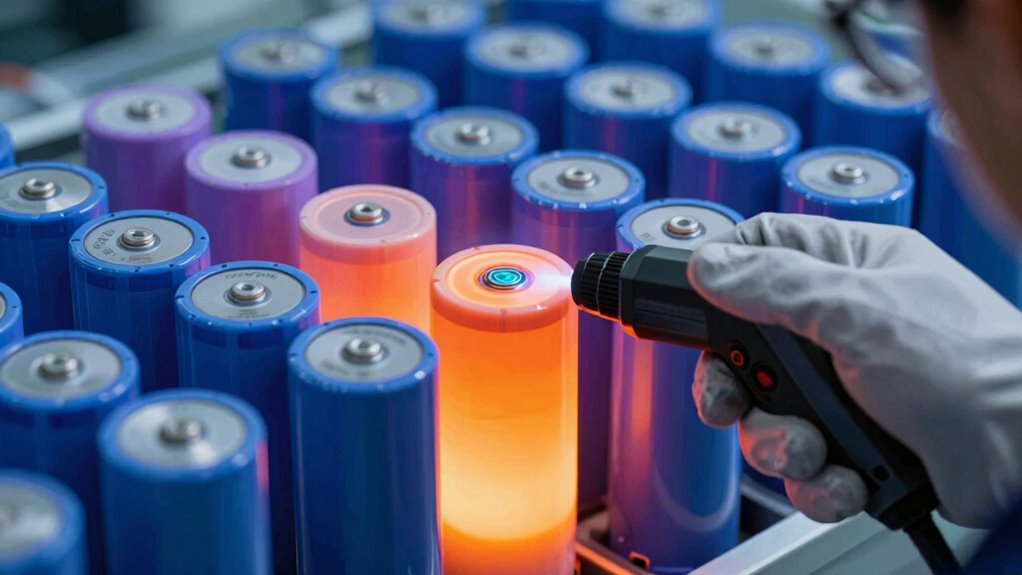

The fastest way to find a weak cell in your LiFePO4 pack is to combine voltage monitoring during charge and discharge cycles with thermal imaging scans. First, fully charge the battery and measure each cell’s voltage to spot any that lag behind. Then, use thermal imaging to identify cells producing excess heat. Correlating voltage drops with hot spots helps pinpoint weak or failing cells quickly—keep going for more tips to guarantee your pack remains balanced and safe.
Key Takeaways
- Fully charge the pack and monitor individual cell voltages during controlled discharge for quick identification of weak cells.
- Use a thermal camera to scan the pack during operation, spotting hotspots indicating higher internal resistance.
- Compare voltage readings and temperature data simultaneously to pinpoint cells that are both undervoltage and warmer.
- Focus on cells showing significant voltage drops or elevated temperatures during testing for rapid diagnosis.
- Prioritize testing after a full charge and during discharge cycles for the fastest detection of weak or failing cells.

Identifying a weak cell in a LiFePO4 pack is essential for maintaining overall battery performance and safety. When a single cell starts to degrade or malfunction, it can compromise the entire pack’s efficiency, cause uneven charging, or even lead to safety hazards. The key to rapid detection lies in understanding the importance of battery balancing and how thermal imaging can be your most effective tools. Battery balancing ensures each cell maintains an equal state of charge, preventing weak cells from drifting far from healthy ones. If you notice persistent imbalance during charging or discharging cycles, it’s a clear sign that some cells may be weaker or deteriorating. Regularly monitoring the pack’s voltage levels helps you identify cells that lag behind, enabling you to target specific weak spots before they cause more serious issues.
Thermal imaging provides a visual, non-invasive method to detect anomalies within your battery pack. By scanning the entire pack with an infrared camera, you can quickly pinpoint hot spots or temperature irregularities that often indicate a failing cell. Weak cells tend to generate excess heat during operation because their internal resistance increases as they degrade. When thermal imaging reveals uneven temperature distribution—particularly areas that are noticeably warmer than the rest—you can focus your inspection on those specific cells. This technique allows for fast, accurate detection without dismantling the pack or performing complex electrical tests. Additionally, maintaining proper battery management practices helps prolong the lifespan of your cells and ensures safe operation.
In practice, start by fully charging your LiFePO4 pack and then monitor the voltages of each cell during discharging. Cells that don’t maintain the expected voltage levels are likely weaker. Simultaneously, use thermal imaging to scan the pack while it’s in operation or during a controlled test cycle. Any abnormal heat signatures will guide you directly to problematic cells. Combining these methods ensures you’re not just guessing but making informed decisions based on real data. If you find a cell that’s both voltage-deviant and warmer than its neighbors, it’s time to replace or service that cell to restore balance. This proactive approach helps prevent cascading failures, extends the lifespan of your battery, and keeps your system running smoothly and safely.
Frequently Asked Questions
Can Temperature Variations Indicate a Weak Cell?
Yes, temperature variations can indicate a weak cell. Using thermal imaging, you can spot hotspots that suggest abnormal heat from a cell. Additionally, voltage fluctuation during charging or discharging points to inconsistent performance. If you notice a cell with higher temperature or fluctuating voltage, it’s likely weaker or compromised, so inspecting it further helps prevent potential pack failures.
How Long Does a Typical Test Take?
Ever wonder how quickly you can identify a weak cell? Typically, a test takes about 15 to 30 minutes. During this time, you monitor voltage sag and check cell balancing. Why wait longer if you can pinpoint issues fast? The process involves measuring voltage differences and observing how cells respond under load. This efficient testing guarantees you find weak cells swiftly, preventing further damage and maintaining ideal pack performance.
Is Specialized Equipment Necessary for Testing?
You don’t necessarily need specialized equipment to test a LiFePO4 battery, but it helps guarantee accuracy. Basic testing can be done with a multimeter to measure voltage, but for precise results on battery chemistry and cell health, advanced testing equipment is recommended. This specialized gear can detect subtle issues and weak cells more reliably, saving you time and preventing potential pack failures.
What Safety Precautions Should I Follow?
You must prioritize battery safety during testing—think of it as safeguarding a treasure chest. Always wear insulated gloves and eye protection, guarantee proper ventilation, and avoid short circuits. Follow testing precautions meticulously to prevent sparks or overheating. Never test a damaged or swollen cell, and keep flammable materials away. These safety steps are your shield, ensuring you stay safe while efficiently identifying weak cells in your LiFePO4 pack.
Can a Weak Cell Cause Overall Pack Failure?
Yes, a weak cell can cause overall pack failure. When you neglect cell balancing and voltage monitoring, the weak cell’s voltage drops, putting stress on the entire pack. Over time, this imbalance can lead to reduced capacity, overheating, or even catastrophic failure. Regularly checking voltages and ensuring proper cell balancing helps identify and address weak cells early, maintaining pack health and preventing failure.
Conclusion
Now that you know how to spot a weak cell in your LiFePO4 pack, you’re like a detective with a magnifying glass, ready to uncover hidden issues. Regular testing keeps your pack healthy and prevents unexpected failures. Think of it as tending a garden—you need to prune the weak links to let the strongest thrive. With this knowledge, you’ll keep your battery pack performing at its best, ensuring your projects stay powered without a hitch.