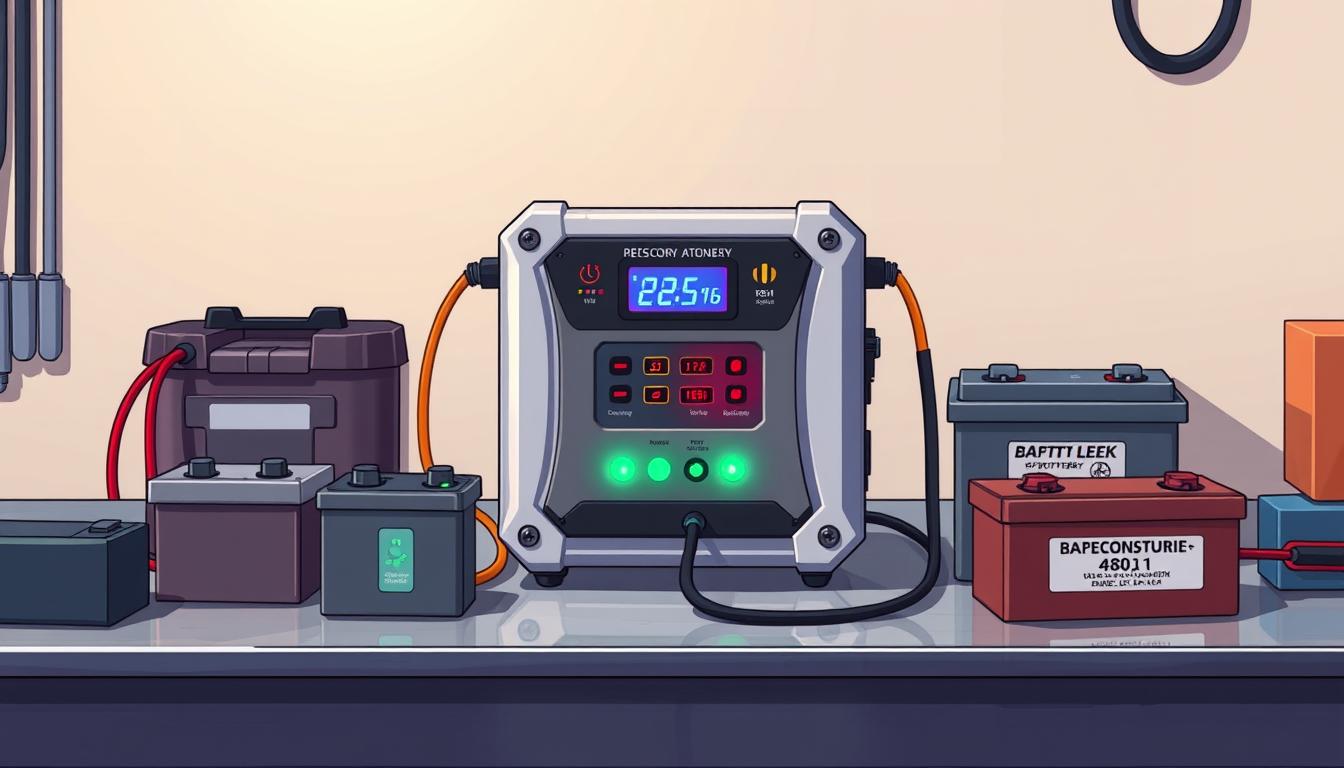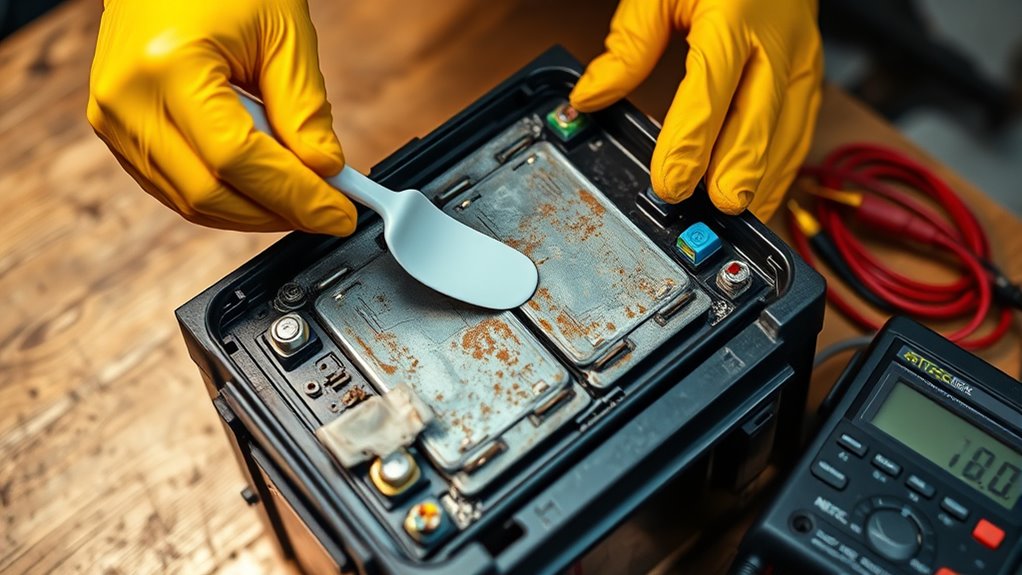

To desulfate your lead-acid battery, start by disconnecting it and inspecting for dirt or corrosion. Use specialized desulfation tools or pulse repair devices that deliver controlled electrical pulses to break down sulfate crystals. Connect the device according to the manufacturer’s instructions, and monitor voltage and current carefully to avoid overcharging. Proper techniques and tools can restore capacity and extend your battery’s life; more tips await if you keep exploring.
Key Takeaways
- Use specialized desulfating devices or pulse chargers designed to deliver controlled electrical pulses to break down lead sulfate crystals.
- Disconnect the battery from any connected devices before applying desulfation to prevent damage.
- Follow manufacturer instructions carefully, setting appropriate voltage and current levels for safe and effective treatment.
- Ensure the battery is clean and free of dirt or corrosion before desulfation for optimal results.
- Regularly monitor voltage and current during the process to avoid overcharging and ensure proper desulfation.
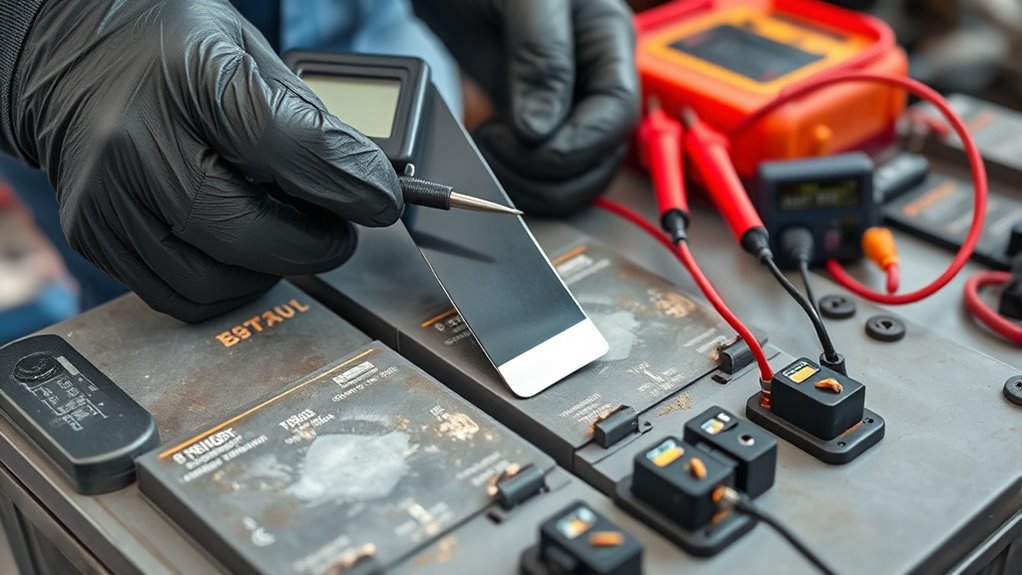
A desulfate lead-acid battery is a type of rechargeable battery that has been restored from a sulfation buildup, which commonly reduces its capacity and lifespan. Over time, sulfation occurs when lead sulfate crystals form on the battery plates, hindering the flow of electricity and diminishing overall performance. To keep your battery functioning at its best, proper battery maintenance is essential, especially when it comes to sulfation removal. Recognizing early signs of sulfation, such as slow cranking or decreased run time, allows you to address issues before they become severe.
Proper maintenance prevents sulfation, extends battery life, and ensures optimal performance.
One of the most effective ways to combat sulfation is through the use of specialized desulfating tools. These tools typically deliver controlled electrical pulses designed to break down lead sulfate crystals. For instance, desulfator chargers or pulse repair devices are popular options that you can connect directly to the battery. When used correctly, these devices facilitate sulfation removal, restoring battery capacity and extending its lifespan. Before starting, verify your battery is clean and free of corrosion, as dirt and debris can interfere with the process. Disconnect the battery from any devices or chargers, and carefully connect the desulfator according to the manufacturer’s instructions.
In addition to using electronic desulfation tools, regular battery maintenance plays a significant role in preventing sulfation buildup. Keep your battery charged and avoid letting it sit in a discharged state for extended periods. If your battery is not in use, consider using a maintenance charger or float charger that supplies a steady, low current to maintain its charge level. This helps prevent sulfation from forming prematurely. When performing sulfation removal, always monitor the voltage and current levels during the process. Overcharging or applying excessive voltage can damage the battery further, so follow the recommended settings closely.
Additionally, understanding the resources and tools available for battery maintenance can help you choose the most effective method for your specific needs. Proper battery maintenance also includes regularly checking water levels (for flooded lead-acid batteries) and ensuring terminals are clean and tight. By consistently following these practices, you can minimize sulfation buildup and maintain peak battery performance over time. Remember, early intervention with effective sulfation removal methods can dramatically improve your battery’s capacity, reliability, and lifespan, saving you money and hassle in the long run.
Frequently Asked Questions
How Often Should I Desulfate My Lead-Acid Battery?
You should desulfate your lead-acid battery every 3 to 6 months as part of regular battery maintenance. This helps prevent sulphation build-up, which hampers performance. During electrolyte treatment, you can use specific desulfation methods or chargers to restore efficiency. Regularly checking your battery’s condition and performing electrolyte treatment when needed guarantees longer life and reliable performance, especially if your battery shows signs of reduced capacity or slow charging.
Can I Desulfate a Completely Dead Battery?
You can attempt to desulfate a completely dead lead-acid battery, but it’s challenging because sulfation often prevents proper charging. Battery chemistry makes it harder to revive, so you should try specialized charging techniques like high-frequency pulses or desulfation chargers. Keep in mind, if the battery is severely sulfated or beyond recovery, desulfation might not work, and replacing it could be your best option for reliable performance.
Does Desulfating Improve Battery Lifespan?
Yes, desulfating can improve your battery’s lifespan by restoring its capacity and preventing further sulfation. Proper battery maintenance and using correct charging techniques are essential to avoid sulfation in the first place. Regularly desulfating your lead-acid battery helps keep it healthy and reliable, ultimately extending its life. Make sure to monitor your battery’s condition and follow recommended charging practices to maximize its performance and longevity.
Are There Safety Precautions During Desulfation?
You should always prioritize safety during desulfation because electrical hazards can be dangerous. Wearing personal protective equipment, like gloves and goggles, protects you from acid splashes and electrical shocks. Always work in a well-ventilated area, disconnect the battery properly, and avoid sparks or open flames. These precautions help prevent accidents, ensuring you stay safe while effectively desulfating your lead-acid battery.
What Are Signs My Battery Needs Desulfation?
You’ll notice your battery needs desulfation if you see increased battery corrosion around the terminals or a reduced electrolyte level, indicating sulfation buildup. Additionally, if your battery struggles to hold a charge or experiences shortened run times, it’s a sign sulfation is affecting performance. Regular inspection of these signs helps you catch the need for desulfation early, ensuring your battery stays healthy and functional.
Conclusion
Remember, a stitch in time saves nine. Regularly desulfating your lead-acid battery can prolong its life and save you money. Use the right tools and follow proper methods to keep it in top shape. Don’t ignore signs of sulfation; addressing issues early prevents bigger problems down the road. When it comes to battery maintenance, staying proactive makes all the difference. Keep your battery healthy, and it’ll serve you well longer.