
TL;DR

Get backup power and energy gear delivered free with Prime
- Fast, free delivery on millions of items
- Prime Video, Amazon Music and more included
- Member-only deals all year
A GreenBuildingAdvisor Q&A published November 2, 2026, examines a North Texas owner-designer’s choice between central ducted HVAC and four single-zone minisplit heat pumps. The owner estimates the minisplits could cost about $500 each to purchase and install, but that figure and the system’s suitability are not independently verified in the report.
GreenBuildingAdvisor published a Q&A on November 2, 2026, examining whether a planned 1,200-square-foot North Texas home should use central ducted heating and cooling or four single-zone minisplit heat pumps. The owner-designer favors individual units, but the reported cost estimate is his own, and the article does not establish which design will perform better in the finished house.
The homeowner, identified in the report as forum member “big_o” and referred to as Big, is planning a two-bedroom home in Climate Zone 3A. It will also include an 800-square-foot conditioned attic. Big estimates the house’s heating load at about 21,000 Btu per hour.
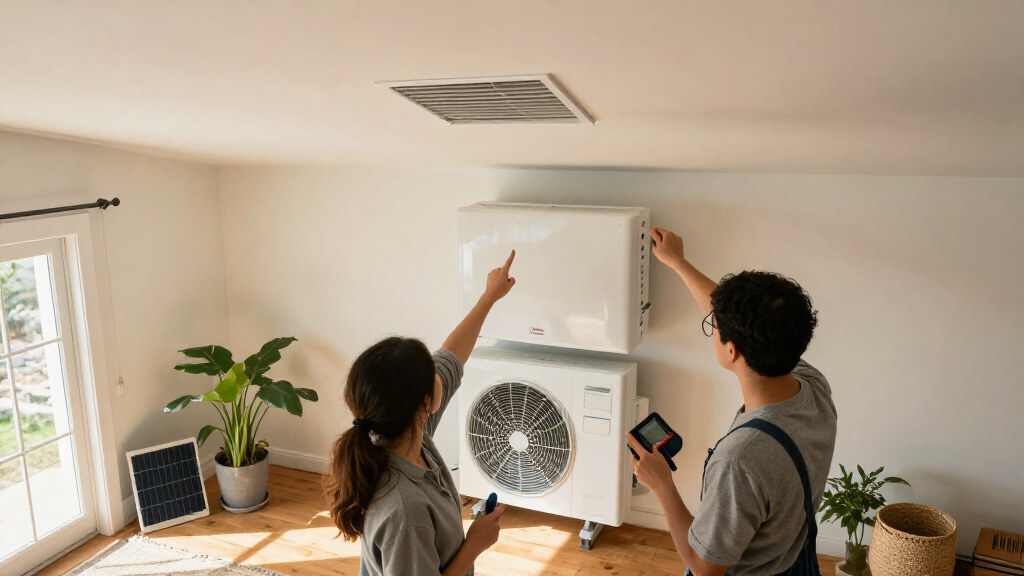
His original proposal is to install four single-zone minisplit heat pumps: one in each bedroom, one in the living room and one in the attic. Big estimates that four 9,000-Btu-per-hour units could be purchased and installed for roughly $500 each. That is the homeowner’s estimate as reported by GreenBuildingAdvisor, not a confirmed market price or a project bid.
Big says responses from an online group favored central ducted equipment. He questions whether ductwork makes sense for his design. The article describes trade-offs rather than reporting a final selection: ducts can support even temperatures, centralized filtration and whole-house humidity control, while individual minisplits can provide room-by-room control and operate only in spaces needing heating or cooling.
System Choice Shapes Comfort and Cost
The decision affects more than the location of indoor equipment. It can influence installation cost, usable space, operating efficiency and comfort across the home. Ductwork occupies space and can lose efficiency if poorly designed or installed; a ducted system can also make it easier to centralize filtration and humidity control.
Separate minisplits offer independent room controls and may allow occupants to condition only selected areas. Whether that translates into lower costs or better performance in this particular house is not established by the report. The answer depends on the equipment, design, installation and the home’s actual heating and cooling needs.
Products Worth Considering

DJI Osmo Mobile 8 Gimbal with Mic Mini Transmitter, Infinity Black

DJI Mic 3 Wireless Microphone System (2 Transmitters, 1 Receiver, Charging Case)

Amazon Kindle Scribe Colorsoft, 64GB, 11-Inch Color Display with Premium Pen
As an affiliate, we earn on qualifying purchases.
Why This Home Raises the Question
Heating and cooling choices can be especially consequential in small, energy-efficient homes, where the heating load may be modest but the system still needs to serve multiple rooms and conditioned areas. Here, the design includes two bedrooms, a living room and an attic, prompting Big to consider a separate unit for each area rather than a central network of ducts.
The Q&A places the discussion alongside earlier GreenBuildingAdvisor coverage of single-zone and multisplit heat pumps. It notes that central ducted systems have their own advantages, including less-visible equipment and easier integration of whole-house filtration and humidity control. It does not provide a completed comparison of bids or measured operating results for this project.
“I’ve thought about it a lot, and a ducted system makes even less sense.”
— Big, the homeowner and owner-designer, as quoted by GreenBuildingAdvisor
Costs and Final Design Remain Open
The report does not say whether Big has chosen a system, obtained contractor bids or completed a detailed equipment design. It also does not establish whether the $500-per-unit estimate includes all installation work, electrical requirements, controls and other project costs. The estimate should not be treated as a confirmed total for four installed systems.
Other unresolved details include the home’s cooling load, equipment sizing and performance across the home’s rooms and conditioned attic. The reported heating-load estimate alone does not settle whether four 9,000-Btu-per-hour units are appropriate. The article provides no post-installation data, so claims about comparative energy use, comfort or savings for this home remain unproven.
A Project-Specific Comparison Is Needed
The next informative step would be a project-specific design and cost comparison of the ducted option and the proposed individual units, including equipment capacity, installation scope and how each design would handle the bedrooms, living area and attic. GreenBuildingAdvisor’s report does not announce a decision or a follow-up milestone.
Until the homeowner’s plans or measured results are available, readers can treat the discussion as a design question—not a verdict on which system is cheaper or better. A final choice would depend on the home’s loads, layout, installation details and priorities for room-by-room control, filtration and humidity management.
Key Questions
What heating and cooling options is the homeowner considering?
Big is weighing a central ducted system against four single-zone minisplit heat pumps, with one proposed for each bedroom, the living room and the conditioned attic.
How large is the planned home?
The report describes a two-bedroom, 1,200-square-foot house in North Texas, plus an 800-square-foot conditioned attic. Big estimates its heating load at about 21,000 Btu per hour.
Is the reported $500 cost for each minisplit confirmed?
No. GreenBuildingAdvisor attributes the approximately $500-per-unit purchase-and-installation estimate to Big. The report does not verify it with bids or explain the full scope of work included.
Does the report say which system the homeowner selected?
No. It reports the design discussion and competing considerations, but gives no final system choice or measured comparison of the options in the completed house.
Source: greenbuildingadvisor.com